1. Introduction
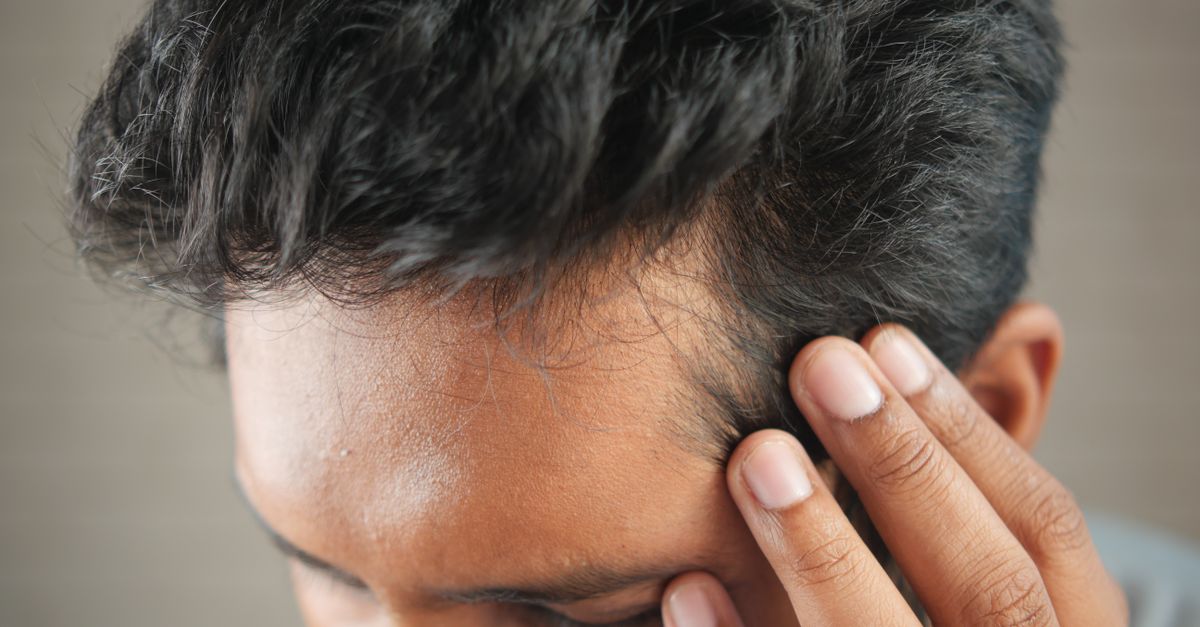
A sudden sharp pain in the right temple while chewing is primarily caused by a strain or an active trigger point within the temporalis muscle, a massive, fan-shaped muscle directly responsible for closing the jaw. Less commonly, but more seriously, it can represent referred pain from a dysfunctional temporomandibular joint or serve as an early clinical indicator of temporal arteritis, an urgent inflammatory condition affecting the blood vessels in the scalp. Because the act of chewing requires immense muscular force and precise neurological coordination, any inflammation or structural fault in the masticatory system often refers intense pain upward into the temple region.
2. Anatomy of the Masticatory Muscles
The ability to chew food efficiently relies on a coordinated group of powerful muscles known collectively as the muscles of mastication. The two primary engines of this system are the masseter muscle, located at the angle of the jaw, and the temporalis muscle.
These muscles work in tandem to elevate the mandible, forcefully closing the teeth together to crush and grind food. The intricate neurovascular network supplying these muscles is derived primarily from the trigeminal nerve, the massive cranial nerve responsible for both motor control of chewing and all sensory perception across the face and scalp.
3. The Temporalis Muscle Structure and Function
To understand temple pain, one must examine the specific architecture of the temporalis muscle. This broad, fan-shaped muscle originates along the temporal bone on the side of the skull, covering the entire temple region. Its muscle fibers converge downward, passing beneath the cheekbone to attach to the coronoid process of the mandible.
The temporalis is a highly active muscle. It is not only responsible for the heavy lifting of crushing food but also for maintaining the resting posture of the jaw against gravity and pulling the jaw backward during complex chewing motions. Because it spans such a large area of the skull, fatigue or injury within this muscle is felt distinctly as a severe, tightening pain directly in the temple.
4. Mechanism of Temporalis Muscle Strain
A sharp pain during chewing frequently indicates a localized strain or acute fatigue of the temporalis muscle. This muscle is designed for endurance, but it can be overwhelmed by sudden, intense force or chronic overuse. Chewing exceptionally tough or chewy foods, such as tough meat or dense bagels, requires the temporalis to contract at maximum force repetitively.
If the muscle fibers are subjected to mechanical demand that exceeds their structural capacity, microscopic tears occur within the muscle belly. This microtrauma initiates an acute inflammatory response. The localized swelling and accumulation of lactic acid irritate the local sensory nerves, resulting in a sudden, sharp, cramping pain in the temple every time the muscle is recruited for chewing.
5. Trigger Points and Myofascial Pain Syndrome
Chronic overuse of the temporalis muscle often leads to the development of myofascial trigger points. A trigger point is a hyper-irritable, palpable nodule within a taut band of muscle fibers. It represents a microscopic area of muscle tissue that has become locked in a state of continuous contraction, unable to release.
These locked fibers compress local capillaries, leading to a state of localized ischemia, or oxygen deprivation. When the individual attempts to chew, they force this already ischemic and contracted knot to work harder. The trigger point responds by firing severe, sharp pain signals. Trigger points in the temporalis classically refer pain throughout the temple and into the upper teeth.
6. The Role of Bruxism
The most common catalyst for chronic temporalis fatigue is bruxism, the medical term for involuntary teeth grinding or jaw clenching. This parafunctional habit frequently occurs during sleep, driven by psychological stress, sleep architecture disruptions, or sleep apnea.
During a severe bruxism episode, the masseter and temporalis muscles contract with forces far exceeding normal chewing pressure, often sustaining this immense tension for hours. When the individual wakes up, the temporalis muscle is profoundly exhausted and inflamed. Consequently, the simple, routine act of chewing breakfast triggers a sharp, exhausted spasm in the overworked temple muscle.
7. Referred Pain from the Temporomandibular Joint
The pain felt in the temple may not actually originate in the temporalis muscle. It is frequently referred pain from pathology within the temporomandibular joint itself. The joint is located just millimeters below the temple.
If the articular disc within the joint is displaced, or if there is osteoarthritis degrading the cartilage, the joint space becomes severely inflamed. The sensory nerves supplying the joint capsule share neurological pathways with the nerves supplying the temple. When the mechanical action of chewing agitates the damaged joint, the central nervous system struggles to localize the precise source of the distress, often referring the sharp pain upward into the broader area of the temple.
8. Unilateral Chewing Habits
Pain strictly localized to the right temple often suggests a mechanical asymmetry in how the individual chews. If a patient has a painful cavity, a missing tooth, or an ill-fitting dental crown on the left side of their mouth, they will instinctively shift all chewing activity to the right side to avoid discomfort.
This phenomenon is known as unilateral chewing. While it solves the immediate problem of tooth pain, it doubles the mechanical workload required of the right temporalis and right masseter muscles. This chronic asymmetrical loading inevitably leads to rapid, severe muscle fatigue and localized spastic pain strictly on the overused side.
9. Dental Malocclusion and Bite Asymmetry
The alignment of the teeth, known as occlusion, dictates how the masticatory muscles function. When the upper and lower teeth meet perfectly, the muscular forces are distributed evenly across the skull. However, if a patient suffers from malocclusion—a misaligned bite—the jaw must shift into an unnatural posture to bring the teeth together.
This constant, forced deviation requires the temporalis muscle on one side to pull harder and maintain an unnatural tension compared to the other side. This constant mechanical strain predisposes the muscle to severe trigger points and sharp cramping whenever dynamic chewing motion is initiated.
10. Temporal Arteritis: A Critical Differential Diagnosis
While muscular pain is common and benign, a sharp, throbbing pain in the temple while chewing requires the exclusion of a severe medical condition known as temporal arteritis, or giant cell arteritis. This is a systemic autoimmune disease characterized by the inflammation of large and medium-sized arteries, most notably the superficial temporal artery that runs directly over the temple.
The inflammation causes the walls of the artery to swell, severely narrowing the vessel and restricting blood flow. The defining symptom of this condition is jaw claudication. As the individual chews, the masticatory muscles demand increased oxygen. Because the inflamed artery cannot deliver adequate blood flow, the muscles rapidly become ischemic, triggering a severe, cramping pain in the temple and jaw that forces the patient to stop chewing.
11. Distinguishing Muscular Pain from Arteritis
Recognizing the clinical differences between a muscle strain and an inflammatory vascular disease is critical, as untreated temporal arteritis can lead to sudden, permanent blindness.
| Clinical Feature | Temporalis Muscle Strain | Temporal Arteritis (Medical Emergency) |
|---|---|---|
| Nature of Pain | Aching, sharp upon specific bite forces. | Severe throbbing, cramping that worsens as chewing continues. |
| Associated Symptoms | Jaw stiffness, teeth grinding history. | Scalp tenderness, fever, vision changes, fatigue. |
| Demographics | Common in all ages, high-stress individuals. | Almost exclusively affects adults over the age of 50. |
Any patient over fifty presenting with new-onset temple pain while chewing must undergo immediate medical evaluation.
12. Trigeminal Neuralgia Considerations
Another distinct neurological condition that causes sharp facial pain is trigeminal neuralgia. This disorder involves a dysfunction of the trigeminal nerve, often caused by a blood vessel compressing the nerve root near the brainstem.
The pain of trigeminal neuralgia is uniquely excruciating. It is typically described as a sudden, violent, electric shock that shoots across the face and temple. Unlike a muscle strain, which aches with the sustained effort of chewing, trigeminal neuralgia can be triggered by the lightest touch, a gust of wind, or the initial movement of the jaw, and the agonizing shock lasts only for a few seconds before vanishing.
13. Immediate Conservative Management
For standard muscular pain, conservative interventions aim to break the cycle of spasms and inflammation. Applying a warm, moist compress to the temple and the side of the face for fifteen minutes induces vasodilation. This increased blood flow flushes accumulated metabolic waste products out of the fatigued muscle and softens taut bands of tissue.
Patients must strictly adopt a soft food diet. Eliminating the need for forceful chewing allows the temporalis muscle the necessary biological downtime to repair microtears. Conscious resting posture is also vital; the teeth should never touch unless actively eating or swallowing. The lips should remain together with the teeth slightly apart to keep the temporalis entirely disengaged.
14. Physical Therapy and Dental Correction
If the temple pain is chronic, a multidisciplinary approach is often required. Physical therapy focusing on the temporomandibular joint and cervical spine can relieve the referred tension pattern. A therapist may utilize intra-oral massage to manually release severe trigger points within the masticatory muscles.
A comprehensive dental evaluation is essential to address the root mechanical cause. If bruxism is identified, the dentist will fabricate a rigid, custom-fitted occlusal guard. Worn at night, this splint provides a smooth surface for the teeth to glide on, actively preventing the temporalis muscle from achieving maximum contraction, thereby protecting the muscle from exhaustion and eliminating the daytime temple pain.
15. Frequently Asked Questions FAQ
1. Can tension headaches cause pain while chewing?
Yes, a tension headache is fundamentally caused by sustained contraction of the pericranial muscles, including the temporalis. If you have an active tension headache, the temporalis is already inflamed and tight, making the act of chewing sharply painful.
2. Why is my temple tender to the touch even when I am not eating?
If you have an active trigger point in the temporalis muscle from grinding your teeth at night, that specific knot of muscle fiber remains inflamed and highly sensitive to external pressure throughout the day.
3. Does chewing gum help stretch the muscle out?
Absolutely not. Chewing gum is highly destructive for an inflamed temporalis muscle. It subjects the muscle to thousands of unnecessary, continuous contractions, which will severely worsen the fatigue, inflammation, and sharp pain.
4. Can a bad posture at my computer cause temple pain?
Yes, forward head posture places immense strain on the muscles of the neck. Because the neck and jaw muscles are neurologically linked to stabilize the heavy skull, severe neck tension frequently refers pain upward into the temporalis muscle.
5. How is temporal arteritis diagnosed if I suspect I have it?
If temporal arteritis is suspected, a physician will order an immediate blood test to check inflammatory markers like the erythrocyte sedimentation rate. A definitive diagnosis requires a minor surgical biopsy of the temporal artery in the scalp.
16. Bibliography
Disclaimer: The content is for informational purposes only and does not replace medical advice. Always consult your doctor for personalized treatment.