
1. Introduction
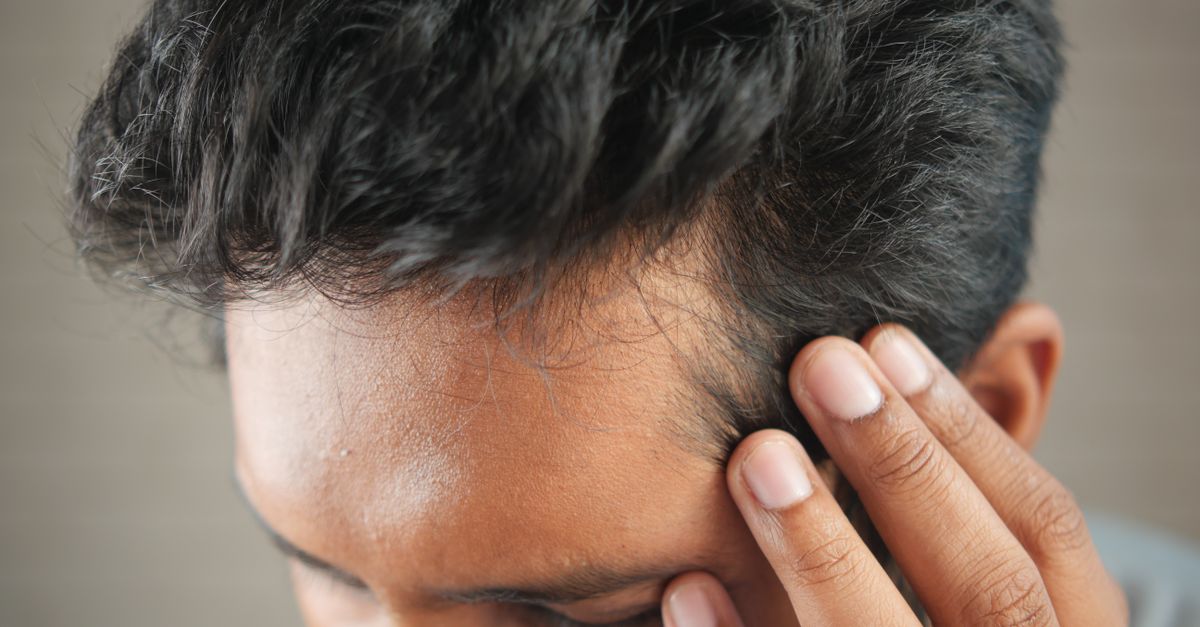
The sensation of hair follicles physically hurting during a fever is a neurological phenomenon known as cutaneous allodynia, triggered by the systemic inflammatory response to an infection. When the body fights a pathogen, it releases circulating inflammatory proteins called cytokines that lower the pain threshold of peripheral nerve endings in the scalp. Consequently, non-painful stimuli, such as the natural resting position of hair or light touch, are amplified and perceived by the central nervous system as active pain.
Experiencing a painful scalp during an illness can be highly disconcerting. Patients frequently report that simple actions, like brushing their hair, tying it back, or even resting their head on a pillow, provoke a deep, burning ache. The hair strands themselves possess no nerves; the pain originates entirely within the densely innervated skin and the tiny muscles anchored to each follicle.
Understanding the mechanisms behind cutaneous allodynia provides significant reassurance. The symptom is not indicative of an impending dermatological crisis or permanent hair loss. Instead, it is a fascinating, albeit uncomfortable, side effect of a robust immune system performing its necessary systemic duties. As the fever breaks and the inflammatory chemical cascade subsides, the nerve endings reset to their normal thresholds, completely resolving the scalp discomfort.
2. Anatomy of the Scalp and Hair Follicles
The scalp is one of the most densely innervated regions of the human body. It is supplied by an intricate network of sensory nerves originating from the trigeminal nerve at the front and the occipital nerves at the back of the head. These nerves terminate in millions of microscopic sensory receptors embedded within the dermis.
Each individual hair follicle is a complex miniature organ. The follicle is anchored deeply in the skin and is wrapped in an extensive web of sensitive nerve endings known as the hair follicle plexus. These nerves are designed to detect minute tactile changes, such as a light breeze moving the hair.
Additionally, attached to the base of every hair follicle is a tiny muscle called the arrector pili. When this muscle contracts, it pulls the hair strand upright. The entire complex is heavily vascularized, relying on a continuous supply of blood, making it highly reactive to any systemic physiological shifts.
3. Defining Cutaneous Allodynia
Allodynia is a specific clinical term describing a condition where pain is caused by a stimulus that does not normally elicit a painful response. Cutaneous allodynia refers specifically to this phenomenon occurring on the skin.
In a normal, healthy state, touching the hair or moving the scalp sends simple tactile data to the brain, which registers as a benign sensation. During a state of allodynia, the sensory pathways become hyper-excitable. The incoming tactile signals are misinterpreted by the sensitized nervous system.
Instead of registering as a light touch, the central nervous system amplifies the signal, interpreting it as a noxious, painful event. The patient literally feels pain when the hair shifts, leading to the accurate description that their hair hurts.
4. The Role of Inflammatory Cytokines
When an individual contracts an infection, white blood cells mobilize to neutralize the threat. As part of this defense, they release large quantities of signaling proteins called cytokines, such as interleukin-1 and interleukin-6, into the bloodstream.
These cytokines are responsible for traveling to the hypothalamus in the brain to initiate a fever. However, they also circulate throughout the peripheral vascular system, bathing the tissues of the scalp.
Cytokines possess a profound ability to alter the chemical environment surrounding the peripheral nerve endings. They interact directly with the receptors on the nerve membranes, increasing their excitability and forcing them to fire spontaneous signals even in the absence of severe physical trauma.
5. Prostaglandins and Nerve Sensitization
Alongside cytokines, the immune response triggers the synthesis of prostaglandins. Prostaglandins are lipid compounds that play a crucial role in mediating inflammation, regulating blood flow, and sensitizing pain pathways.
In the scalp, elevated levels of prostaglandins locally lower the activation threshold of the nociceptors, the specialized nerve endings designed to detect pain.
Because of this chemical sensitization, the mechanical force exerted simply by the weight of the hair pulling slightly against the follicle is no longer ignored by the nervous system. The prostaglandins ensure that this minor mechanical stress is registered as a continuous, tender ache across the scalp.
6. The Trigeminal and Occipital Nerve Pathways
The pain signals generated at the sensitized hair follicles do not remain local; they must travel to the brain to be perceived. For the anterior portion of the scalp, these signals travel via the ophthalmic division of the trigeminal nerve. The posterior scalp utilizes the greater and lesser occipital nerves.
During a febrile illness, particularly one associated with severe headaches or migraines, the entire trigeminal neural network can become centrally sensitized. This means the neurons within the brainstem itself become hyper-reactive.
When central sensitization occurs, the threshold for pain across the entire head and face plummets. The scalp becomes exquisitely tender, and the pain pathways essentially form a feedback loop, maintaining the allodynic state until the central inflammation is resolved.
7. Piloerection: The Goosebump Effect
A classic symptom of a rising fever is the sudden onset of chills and shivering. The hypothalamus commands the body to generate and retain heat to fight the infection. One mechanism for heat retention is piloerection.
Piloerection is the involuntary contraction of the arrector pili muscles attached to the hair follicles, commonly known as getting goosebumps. In furry mammals, this traps a layer of insulating air. In humans, it provides minimal insulation but still exerts physical force on the follicle.
When these tiny muscles contract violently and continuously during fever-induced chills, they pull tightly on the sensitized skin and nerve plexuses. This sustained microscopic muscular cramping contributes significantly to the physical soreness felt at the root of the hair.
8. Vasodilation and Increased Blood Flow
Fever dynamics deeply impact the cardiovascular system. As the body attempts to radiate excess heat away from the core, it dilates the superficial blood vessels in the skin, particularly on the head and face, leading to a flushed appearance.
This vasodilation engorges the dense vascular network of the scalp. The swollen blood vessels take up more physical space within the tight dermal layers, applying subtle but continuous mechanical pressure against the adjacent, highly sensitized nerve endings.
Patients often perceive this vascular engorgement as a throbbing sensation on the surface of the head. The combination of pulsating blood vessels and sensitized nociceptors makes the scalp feel hot, tight, and physically painful to the touch.
9. How Fever Alters Pain Perception
The experience of pain is not strictly objective; it is heavily modulated by the brain’s overall state. During a severe illness, the central nervous system undergoes a general state of malaise and fatigue, often referred to as sickness behavior.
Sickness behavior is an evolutionary adaptation designed to force the individual to rest and conserve energy for the immune system. Part of this behavioral shift involves a generalized decrease in pain tolerance and an increase in emotional irritability.
Because the brain is in a state of high alert and generalized distress, its ability to filter out minor sensory annoyances is compromised. The minor discomfort of a resting hair follicle, which would normally be ignored, is thrust into the conscious awareness as a prominent pain.
10. Differentiating Scalp Allodynia from Dermatological Conditions
It is clinically important to distinguish fever-induced scalp allodynia from genuine dermatological infections or structural hair issues. Allodynia presents as a generalized tenderness across a visually normal-looking scalp without localized lesions.
Conversely, conditions like folliculitis—a bacterial or fungal infection of the hair follicles—present with visible redness, swelling, and often pustules or pimples at the base of the hair shafts.
Similarly, contact dermatitis from a harsh shampoo or a localized herpes zoster outbreak will feature noticeable rashes, scaling, or blistering. If the scalp hurts during a fever but the skin appears entirely clear and intact, the cause is almost certainly systemic neural sensitization.
11. The Impact of Hydration on Nerve Function
Adequate hydration is critical for maintaining optimal cellular function, including the precise balance of electrolytes required for normal nerve conduction. Febrile illnesses frequently lead to systemic dehydration through increased sweating and respiration.
When the body becomes dehydrated, the fluid matrix within the dermis of the scalp loses volume. This subtle tissue shrinkage can increase the mechanical friction around the hair follicles.
Furthermore, electrolyte imbalances directly affect the sodium and potassium channels on the nerve membranes. Dehydrated nerve cells are prone to erratic firing and increased excitability, exacerbating the intensity of the allodynic pain.
12. Managing Fever-Induced Nerve Sensitization
Treating scalp allodynia requires addressing the root cause: the systemic inflammatory cascade. The administration of antipyretic medications, particularly nonsteroidal anti-inflammatory drugs like ibuprofen, is the most direct intervention.
These medications act by inhibiting the cyclooxygenase enzymes, which are responsible for synthesizing prostaglandins. By cutting off the supply of prostaglandins, the medication directly reduces the chemical sensitization of the peripheral nerves in the scalp.
Acetaminophen is also highly effective, working centrally to raise the pain threshold and lower the fever. As the core body temperature normalizes, the intense vasodilation and the cytokine storm subside, allowing the hair follicle nerves to return to their baseline resting state.
13. Gentle Grooming and Scalp Care During Illness
While waiting for pharmacological interventions to take effect, patients must modify their grooming habits to minimize mechanical triggers. The hair should be left completely loose; tying it in ponytails, buns, or braids places constant tension on the sensitized follicles.
Brushing should be avoided unless necessary, and if required, performed with a very soft-bristled brush using gentle, superficial strokes. Patients should avoid hot showers directly on the scalp, as the heat can cause further localized vasodilation and temporary spikes in discomfort.
Using a cool, damp cloth pressed very lightly against the forehead and the crown of the head can provide soothing relief. The localized cooling promotes slight vasoconstriction, reducing the throbbing vascular pressure against the irritated nerves.
14. Indicators for Professional Clinical Evaluation
Scalp pain accompanying a standard viral fever is generally benign and self-limiting. However, specific clinical presentations require professional medical evaluation to rule out more severe pathologies.
If the scalp pain is strictly unilateral—affecting only one side of the head—and is accompanied by a severe, throbbing headache and visual disturbances, it could indicate temporal arteritis or a severe migraine variant requiring specific neurological care.
Additionally, if the scalp tenderness persists for weeks after the fever has completely resolved, or if it is accompanied by sudden, unexplained, patchy hair loss, a consultation with a dermatologist or neurologist is necessary to investigate autoimmune or chronic neuropathic conditions.
| Factor | Role in Scalp Allodynia |
|---|---|
| Prostaglandins | Chemicals that lower the pain threshold of sensory nerves. |
| Cytokines | Inflammatory proteins that make nerve endings hyper-excitable. |
| Piloerection (Chills) | Muscle contractions pull physically on the inflamed follicles. |
| Vasodilation | Swollen blood vessels apply mechanical pressure to the dense nerve network. |
15. Frequently Asked Questions (FAQ)
1. Will the pain in my hair follicles cause my hair to fall out?
No, the pain is purely a sensory nerve reaction to systemic inflammation. It does not damage the hair root or the structural integrity of the follicle. Temporary shedding post-fever is sometimes seen, but it is due to cellular stress, not the pain itself.
2. Why does my scalp hurt worse when my fever spikes?
As a fever spikes, the body rapidly releases a surge of cytokines and prostaglandins to elevate the core temperature. This sudden influx of inflammatory chemicals causes an acute, dramatic sensitization of the scalp nerves.
3. Should I wash my hair to make the pain go away?
Washing the hair involves massaging the scalp and manipulating the strands, which will likely severely aggravate the allodynia. It is best to avoid washing the hair until the fever and the acute scalp tenderness have subsided.
4. Is this pain similar to a migraine headache?
Yes, the mechanism is very similar. Both conditions involve the sensitization of the trigeminal and occipital nerve pathways. In fact, many individuals who suffer from chronic migraines experience cutaneous allodynia on their scalp during an attack.
5. Does taking a cold shower help numb the painful hair follicles?
While extreme cold can temporarily numb nerve endings, a cold shower during a fever can induce violent shivering. This severe shivering causes profound piloerection, which will violently pull on the hair follicles and likely increase the pain. Gentle, cool compresses are much safer.
16. Bibliography
- Read relevant clinical studies on PubMed
- Search for academic articles on Google Scholar
- Read relevant clinical studies on PubMed
- Search for academic articles on Google Scholar
Disclaimer: The content is for informational purposes only and does not replace medical advice. Always consult your doctor for personalized treatment.
