1. Introduction
Experiencing sharp pain in the thumb joint when using heavy scissors is primarily caused by severe mechanical compression of the carpometacarpal joint and acute strain on the surrounding collateral ligaments. The rigid metal loops of heavy shears act as a fulcrum that forces the thumb into unnatural angles, grinding the articular cartilage and irritating the local tendons during the repetitive closing motion. As the hand continuously combats the weight of the tool and the resistance of the material being cut, the localized tissues endure profound biomechanical stress.
The human thumb provides exceptional dexterity, but its skeletal structure is vulnerable to lateral shear forces. Using standard scissors requires the thumb to forcefully adduct and oppose simultaneously, while pushing against a hard, unforgiving metal barrier. This action concentrates the entire mechanical load directly into the base of the thumb, near the wrist.
Understanding the internal architecture of the thumb and the specific physics of scissor operation clarifies why this pain occurs so predictably. The sharp discomfort serves as a critical neurological warning that the joint capsule and surrounding tendons are experiencing inflammatory micro-trauma. By implementing ergonomic modifications and targeted rest, individuals can protect the basal joint and prevent chronic structural degradation.
2. Anatomy of the Carpometacarpal Joint
The thumb’s extraordinary mobility relies on the carpometacarpal joint, commonly referred to as the basal joint. It is a specialized saddle-shaped articulation where the first metacarpal bone of the thumb connects to the trapezium, a small carpal bone in the wrist.
This saddle shape permits movement across multiple planes, allowing the thumb to flex, extend, and pivot across the palm. While this design is perfect for precision grips, it sacrifices inherent structural stability. The joint relies heavily on a complex array of surrounding ligaments to keep the bones properly aligned during heavy lifting or forceful squeezing.
When a crafter squeezes thick material with heavy scissors, the compressive forces bypass the soft tissues and are absorbed directly by the thin layer of articular cartilage covering these bones. Any misalignment during this compression causes the bones to grind rather than glide, precipitating localized joint trauma.
3. The Biomechanics of Scissor Operation
Operating scissors involves a first-class lever system. The central screw of the scissors acts as the fulcrum. The fingers and thumb apply the effort force on the handle loops to overcome the resistance of the material between the blades.
Because heavy shears are usually made of solid steel, the weight of the tool alone requires constant isometric contraction of the hand muscles just to hold it level. When the cutting motion begins, the thumb loop pushes back against the thumb with a force equal to the resistance of the fabric or cardboard being cut.
The thumb is frequently wedged awkwardly into the metal loop. Instead of the force distributing evenly down the axis of the thumb bone, the metal ring twists the thumb sideways. This lateral twisting force tears at the joint capsule and severely leverages the carpometacarpal joint.
4. Compressive Forces on Articular Cartilage
Articular cartilage is a smooth, resilient tissue that caps the ends of bones, providing a frictionless surface for joint movement. It acts as the body’s natural shock absorber. However, cartilage lacks a direct blood supply, making it slow to heal when subjected to repeated blunt force.
During the repetitive squeezing of heavy scissors, the first metacarpal is jammed downward into the trapezium. This severe compression forces the lubricating synovial fluid out of the joint space, resulting in dry, mechanical friction between the cartilaginous surfaces.
Over an extended cutting session, this friction causes microscopic fraying of the cartilage. The immune system registers this tissue damage and initiates an inflammatory response, leading to the sharp, localized joint pain that peaks during the downward cutting stroke.
5. Ligament Strain and Joint Instability
The stability of the basal joint is heavily dependent on the anterior oblique ligament. This tough band of connective tissue prevents the first metacarpal bone from sliding backward off the trapezium during pinch or grip maneuvers.
When heavy scissors force the thumb into awkward, splayed angles, the anterior oblique ligament is stretched beyond its physiological limit. Repeating this forceful stretching dozens of times during a project creates micro-tears within the ligament fibers, leading to a clinical sprain.
A strained ligament becomes lax and fails to hold the joint securely. This acquired instability allows the metacarpal bone to shift abnormally during movement, causing sudden, sharp jolts of pain as the misaligned bones collide.
6. De Quervain Tenosynovitis Activation
The mechanical stress of using heavy scissors extends beyond the bones to the tendons that control thumb movement. Two critical tendons, the abductor pollicis longus and extensor pollicis brevis, run along the thumb side of the wrist and are essential for opening the scissor blades.
The continuous, forceful spreading of the thumb and fingers to open heavy, stiff scissor blades forces these tendons to glide forcefully through a narrow anatomical tunnel. This repetitive friction causes the tendons and their protective sheaths to swell.
This inflammation is known as De Quervain tenosynovitis. It presents as a sharp, burning pain at the base of the thumb that radiates up the forearm. The pain is particularly sharp when the user attempts to spread the scissors open wide to make a long cut.
7. The Impact of Scissor Weight and Metal Loops
The physical design of the tool plays a massive role in the resulting physiological strain. Heavy tailor shears require significant forearm strength to manipulate. As the forearm fatigues, the user inevitably alters their technique, often relying on the thumb to bear more of the weight.
Furthermore, traditional metal scissor loops offer zero shock absorption. The hard, narrow edges of the metal concentrate the compressive force into a tiny surface area on the skin of the thumb, crushing the underlying capillary beds and nerve endings.
This direct localized crushing creates an ischemic environment—a lack of blood flow—around the joint. Tissues starved of oxygenated blood are highly susceptible to cramping and generate a deep, throbbing ache that outlasts the actual cutting activity.
8. Osteoarthritis and Bone Spurs
For individuals who have used heavy scissors professionally or for extensive hobbies over many years, the sharp pain may signify the presence of basal joint osteoarthritis. The accumulated decades of compressive force eventually wear away the articular cartilage completely.
When the cartilage is gone, the raw bone surfaces grind directly against each other. To stabilize this failing joint, the body often grows new, disorganized bone tissue, forming osteophytes or bone spurs around the edges of the trapezium.
These bone spurs alter the mechanical clearance of the joint. When the thumb is engaged to squeeze the scissors, the moving bones pinch the sensitive synovial lining against these sharp spurs, generating acute, breath-catching pain.
9. Ischemic Compression of Palmar Nerves
The thumb is supplied with sensation by the digital branches of the median nerve. These delicate nerve fibers run superficially along the sides of the thumb.
When the thumb is jammed deeply into a tight metal scissor loop, the hard edge of the ring can compress these nerves directly against the underlying phalanx bones. This compression disrupts the electrochemical signals traveling to the brain.
While prolonged compression leads to numbness, intermittent forceful compression during the cutting motion causes the nerve to misfire. This misfiring is interpreted by the central nervous system as sudden, sharp, electrical shocks shooting down the length of the thumb.
10. Micro-trauma and Synovial Inflammation
The internal capsule enclosing the carpometacarpal joint is lined with a synovial membrane. This membrane secretes the fluid that lubricates the joint. Subjecting the thumb to the forceful torque of heavy scissors aggravates this sensitive lining.
The micro-trauma from the unnatural cutting angles induces synovitis, an acute inflammation of the synovial membrane. The tissue swells and produces excess, low-quality fluid, increasing the internal hydrostatic pressure of the joint.
An inflamed, pressurized joint capsule is exquisitely tender. Any application of force, such as closing the scissor blades, squeezes the swollen tissues, triggering a sharp spike of localized pain right at the junction of the thumb and wrist.
11. Differentiating Acute Strain from Chronic Pathology
It is clinically vital to distinguish between a temporary strain caused by an unusually long cutting session and a chronic degenerative pathology. Acute strains present with a generalized ache that resolves after a few days of rest and avoidance of the aggravating tool.
Chronic pathology, such as advanced osteoarthritis or severe ligamentous laxity, presents with a specific pattern. The pain is usually sharp and stabbing, isolated to the very base of the thumb, and occurs immediately upon attempting to squeeze the scissors, even for a few seconds.
If the joint exhibits a visible bony prominence, makes a harsh grinding sound during movement, or if the user experiences a profound loss of pinch strength, the condition has progressed beyond a simple strain and requires orthopedic assessment.
12. Ergonomic Interventions and Tool Modification
The most direct solution to scissor-induced thumb pain is modifying the tool. Transitioning from heavy, solid steel shears to lightweight, modern cutting tools drastically reduces the baseline isometric strain on the hand.
Ergonomic scissors feature oversized, padded, or angled handles designed specifically to distribute the mechanical force over the entire palm and multiple fingers, rather than concentrating it solely on the thumb joint.
Spring-assisted scissors are particularly beneficial for individuals with existing joint pain. These tools feature a mechanism that automatically opens the blades after each cut, entirely eliminating the severe extensor tendon strain required to pull the blades apart manually.
13. Rest and Immobilization Strategies
When sharp pain occurs, the immediate physiological requirement is structural rest. The inflamed joint capsule and stretched ligaments require an absolute cessation of the traumatic activity to initiate the cellular repair process.
Wearing a rigid thumb spica splint during periods of rest, particularly overnight, immobilizes the carpometacarpal joint. The splint prevents unconscious bending or twisting, ensuring the traumatized tissues remain in a neutral, relaxed alignment.
Applying cold packs to the base of the thumb for fifteen minutes immediately following a painful cutting session induces localized vasoconstriction. This limits the acute inflammatory swelling and provides a temporary numbing effect to the irritated synovial tissues.
14. Targeted Strengthening of the Thenar Muscles
Once the acute inflammation has subsided, building the intrinsic muscular support of the thumb is essential for preventing future injury. The thenar muscles at the base of the thumb can be conditioned to act as a dynamic brace, absorbing some of the mechanical force before it reaches the joint cartilage.
Squeezing a soft therapy putty or performing gentle isometric pressing exercises helps strengthen these muscles without subjecting the joint to severe sheer stress. A stronger thenar eminence provides better control and stability when manipulating heavy tools.
Hand therapists often teach specific joint protection techniques, instructing users to keep the thumb in a rounded, C-shaped posture during gripping tasks to maximize biomechanical efficiency and minimize collateral ligament strain.
15. When to Seek Orthopedic Evaluation
While ergonomic adjustments resolve many cases of tool-induced pain, persistent sharp symptoms require professional medical evaluation. If the pain prevents the performance of daily tasks, such as turning a key or opening a jar, structural damage is likely present.
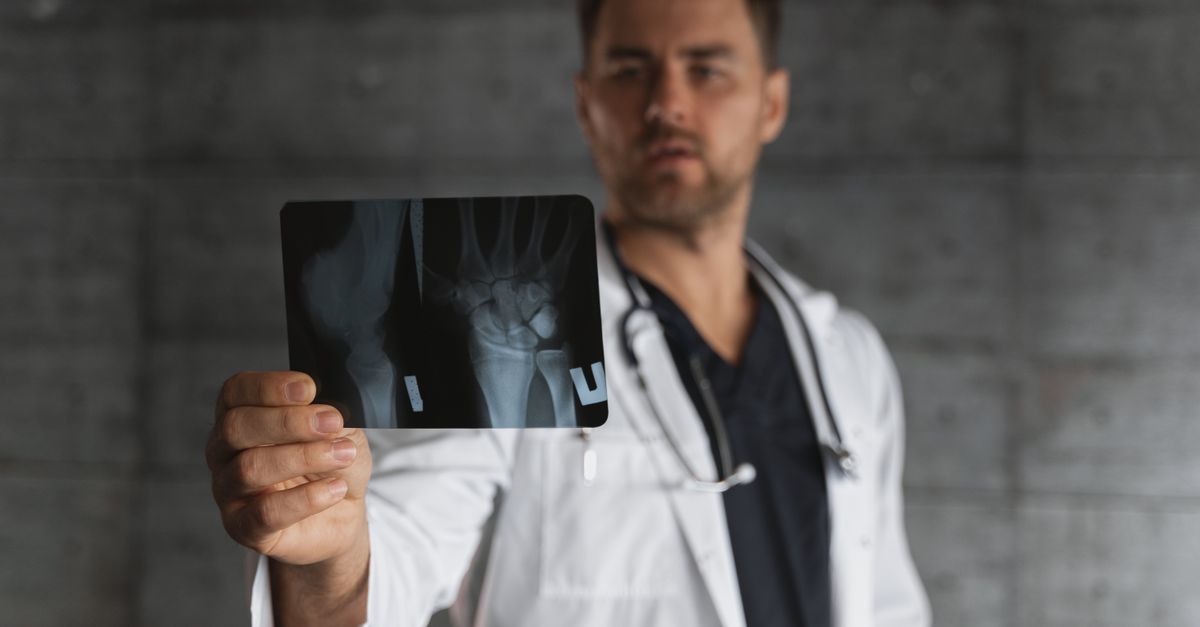
An orthopedic hand specialist can perform diagnostic X-rays to assess the degree of cartilage loss and bone spur formation in the carpometacarpal joint. Ultrasound imaging can identify active tenosynovitis or hidden ganglion cysts.
For severe cases, physicians may administer targeted corticosteroid injections directly into the joint space to rapidly suppress chronic inflammation. In cases of advanced joint destruction, surgical interventions, such as joint reconstruction or arthroplasty, may be discussed to restore pain-free function.
| Biomechanical Stressor | Physiological Result in the Thumb |
|---|---|
| Heavy Tool Weight | Isometric fatigue and lactic acid buildup in thenar muscles. |
| Hard Metal Loops | Crushes digital nerves, causing sharp electrical pain. |
| Lateral Twisting Force | Strains the anterior oblique ligament, causing joint instability. |
| Forceful Closing Action | Compresses articular cartilage, leading to bone-on-bone friction. |
16. Frequently Asked Questions (FAQ)
1. Should I wrap my thumb in tape to stop the pain while cutting?
Wrapping the thumb tightly in athletic tape provides minimal structural support and may actually restrict vital blood flow to the area. It is far safer to switch to an ergonomic, spring-loaded pair of scissors that eliminates the mechanical strain.
2. Does the way I sharpen my scissors affect my thumb joint?
Yes, dull scissors require exponentially more mechanical force to cut through material. Keeping the blades professionally sharpened reduces the resistance, meaning your thumb has to exert significantly less pressure during each closing stroke.
3. Why does my thumb hurt worse the morning after using the scissors?
During the night, the body’s inflammatory response peaks as it attempts to heal the micro-trauma in the joint. Furthermore, the lack of movement during sleep causes the synovial fluid to thicken, leading to a stiff, painful joint upon waking.
4. Can I develop carpal tunnel syndrome specifically from using scissors?
While heavy scissor use primarily stresses the thumb joint and tendons, the awkward wrist angles sometimes adopted during cutting can increase pressure in the carpal tunnel, potentially contributing to median nerve compression over time.
5. Are rotary cutters safer for my thumb than standard scissors?
Yes, rotary cutters rely on downward pressure from the arm and shoulder rather than a forceful pinching motion from the thumb. They bypass the carpometacarpal joint entirely, making them an excellent alternative for crafters with basal joint pain.
17. Bibliography
- Read relevant clinical studies on PubMed
- Search for academic articles on Google Scholar
- Read relevant clinical studies on PubMed
- Search for academic articles on Google Scholar
Disclaimer: The content is for informational purposes only and does not replace medical advice. Always consult your doctor for personalized treatment.