1. Introduction
Lower back pain from leaning over a baby crib is primarily caused by severe spinal flexion coupled with the mechanical disadvantage of holding a dynamic weight away from the body’s center of gravity. When a caregiver bends forward over the crib rail, the natural protective curve of the lumbar spine flattens, forcing the posterior ligaments to overstretch and the erector spinae muscles to sustain an isometric contraction. This sustained mechanical load rapidly exhausts local oxygen supplies, leading to pronounced muscular fatigue and acute compression of the intervertebral discs.
The daily routine of placing a sleeping infant into a standard crib represents a unique physical challenge. Unlike standard lifting tasks where the object is held close to the chest, crib mechanics force the parent to reach outward while leaning downward. This specific posture multiplies the gravitational torque applied to the lower back, turning a ten-pound infant into a substantial physiological burden on the lumbar vertebrae.
Understanding the precise biomechanics of spinal flexion offers crucial validation for the profound ache many parents experience. The discomfort is a direct structural response to mechanical disadvantage and localized tissue fatigue. By analyzing the anatomical structures involved and modifying lifting techniques, caregivers can successfully reduce the strain on their lumbar spine and prevent the development of chronic repetitive injuries.
2. Anatomy of the Lumbar Spine
The lumbar spine consists of five robust vertebrae designed to bear the weight of the upper body. These bones are stacked upon one another, separated by intervertebral discs that function as shock absorbers.
In a healthy, upright posture, the lumbar spine possesses a natural inward curve known as lordosis. This lordotic curve is essential for distributing mechanical forces evenly across the vertebral bodies and the discs. It allows the spine to function as a flexible, supportive column.
A complex network of paraspinal muscles, particularly the erector spinae group, runs parallel to the spine. These muscles, along with a dense web of posterior ligaments, stabilize the vertebrae and govern the extension of the back, working continuously against the downward pull of gravity.
3. The Biomechanics of Spinal Flexion
Leaning over a crib requires the caregiver to bend forward at the waist. This action, called spinal flexion, reverses the natural lordotic curve of the lower back. The spine transitions from a stable arch into a vulnerable, forward-rounded C-shape.
During spinal flexion, the vertebrae pivot forward. The front edges of the vertebral bodies pinch together, while the rear edges separate. This separation places an immediate, profound stretch on the supraspinous and interspinous ligaments that run along the back of the spine.
When the ligaments are stretched to their maximum capacity, they provide a structural stopping point. However, hanging in this fully stretched position while bearing the weight of an infant forces the ligaments to absorb shear forces they are not biologically designed to handle repetitively.
4. The Lever Effect and Load Multiplication
The human spine functions as a first-class lever system. The facet joints in the lower back act as the fulcrum, the back muscles provide the counterforce, and the upper body and the infant represent the load.
When a parent holds an infant close to their chest, the lever arm is short, minimizing the strain on the back muscles. When the parent extends their arms outward to lower the baby over a crib railing, the lever arm lengthens significantly.
Physics dictates that the force required to support a load increases exponentially as the load moves further from the fulcrum. An infant weighing fifteen pounds can generate a force equivalent to sixty or seventy pounds of pressure on the lower lumbar discs due to this extended lever effect.
5. Ligamentous Creep and Stretching
Prolonged or repetitive bending introduces a biomechanical phenomenon known as ligamentous creep. Connective tissues, such as ligaments and joint capsules, possess a specific viscoelastic property. When subjected to a constant stretch, they slowly elongate and deform.
Holding a forward-leaning posture while waiting for a baby to settle allows creep to occur in the posterior spinal ligaments. The ligaments stretch and temporarily lose their elastic recoil.
When the caregiver eventually stands up, the elongated ligaments fail to provide adequate immediate stability to the vertebrae. This transient structural looseness forces the lumbar muscles to spasm defensively to protect the spine, triggering a sudden, sharp ache in the lower back.
6. Intervertebral Disc Compression
The intervertebral discs consist of a tough outer ring, the annulus fibrosus, and a gel-like center, the nucleus pulposus. These discs thrive on evenly distributed pressure.
When the spine is in deep flexion over a crib, the anterior pinching of the vertebrae squeezes the front of the intervertebral discs. This wedge-like compression forces the gel-like nucleus pulposus backward, pressing it against the posterior wall of the annulus fibrosus.
Repetitive anterior compression creates structural fatigue in the rear fibers of the disc. Over time, this backward pressure causes the disc wall to bulge, which can irritate the adjacent spinal nerves and produce a deep, aching discomfort across the lumbar region.
7. Erector Spinae Muscle Exhaustion
The erector spinae muscles are tasked with bringing the spine back to an upright position. When leaning over a crib, these muscles perform an eccentric contraction—they lengthen while remaining under tension to control the downward descent of the torso.
Once the parent reaches the bottom of the movement, the muscles must hold the posture isometrically. Isometric contractions restrict local blood flow, cutting off the supply of oxygenated blood and preventing the clearance of metabolic waste.
Without oxygen, the muscle cells switch to anaerobic metabolism, producing lactic acid. The accumulation of lactic acid chemically irritates the local nerve endings, creating the profound, burning ache that radiates across the lower back.
8. The Impact of Postpartum Core Weakness
For mothers, the physical strain of crib mechanics is often compounded by postpartum core weakness. During pregnancy, the expanding uterus severely stretches the transverse abdominis and rectus abdominis muscles, compromising their structural integrity.
The core musculature functions as an internal corset, providing essential anterior support to the lumbar spine. When these muscles are weakened, they cannot generate the intra-abdominal pressure necessary to stabilize the lower back during a lift.
Consequently, the erector spinae and the spinal ligaments must bear the entire physical burden. This lack of core support rapidly accelerates muscular fatigue and dramatically increases the risk of sustaining a mechanical lumbar strain while performing routine nursery tasks.
9. Hormone Relaxin and Joint Laxity
The hormone relaxin is produced in substantial quantities during pregnancy to loosen the pelvic ligaments for childbirth. However, relaxin affects connective tissue systemically, including the ligaments of the lumbar spine and the sacroiliac joints.
Levels of relaxin can remain elevated for several months postpartum, particularly in women who are breastfeeding. This residual hormonal presence keeps the spinal ligaments artificially pliable and loose.
Leaning over a crib with hormonally relaxed ligaments means the spine relies entirely on muscular bracing for stability. The combination of loose connective tissue and exhausted musculature creates a perfect environment for joint subluxations and continuous dull aching.
10. Cumulative Micro-trauma in Daily Parenting
The ache experienced from the crib is rarely the result of a single, catastrophic event. It is the culmination of cumulative micro-trauma. Caregivers lean over the crib, changing table, and playpen dozens of times a day.
Each forward bend inflicts a microscopic amount of wear and tear on the discs, ligaments, and muscle fibers. If the interval between these tasks is too short, the body lacks the necessary time to repair the cellular damage.
This continuous cycle of strain and inadequate recovery results in chronic localized inflammation. The lower back enters a state of persistent hyper-sensitivity, where even minor movements provoke a profound, throbbing ache.
11. Differentiating Muscle Fatigue from Disc Herniation
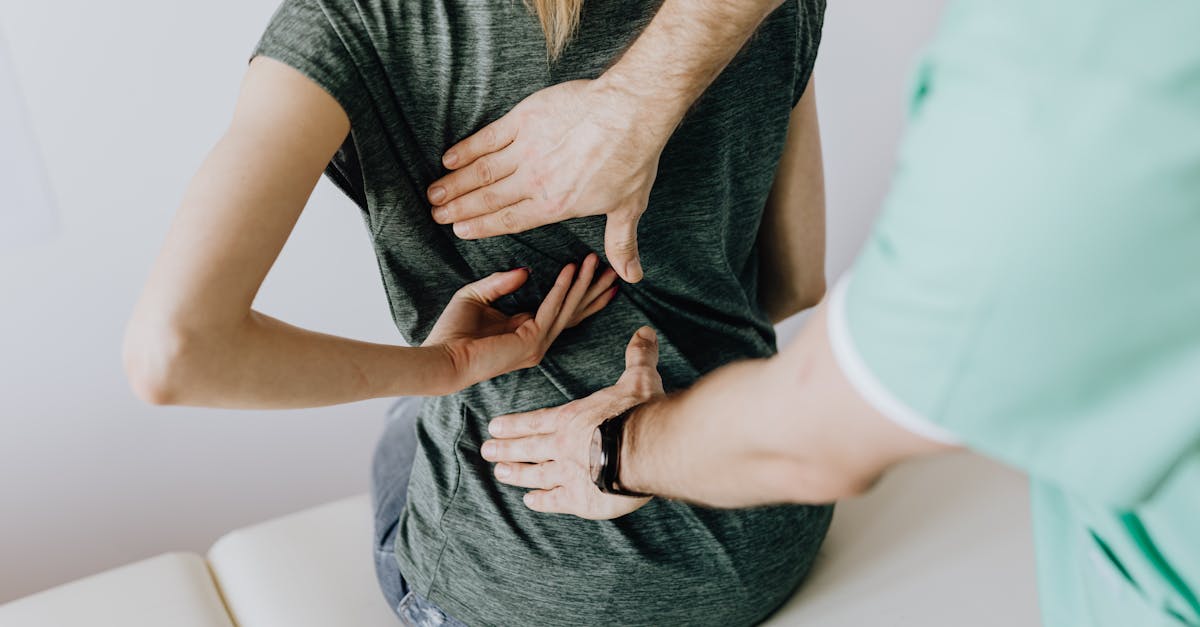
It is clinically vital to differentiate the benign ache of muscular fatigue from the serious symptoms of a lumbar disc herniation. Muscular aches generally feel broad, tight, and throbbing across the lower back. The pain typically resolves after lying flat and resting for a short duration.
Conversely, a disc herniation occurs when the gel-like center of the disc tears through the outer wall and compresses a spinal nerve root. This produces a sharp, electrical pain that shoots down the buttocks and into the legs.
If the crib-related backache is accompanied by numbness, tingling in the toes, or a sudden weakness in the leg muscles, the mechanical load has likely caused a structural failure of the disc, requiring prompt neurological evaluation.
12. Ergonomic Crib Setup and Modifications
Preventing the terrible ache requires environmental intervention. Standard cribs feature tall railings and deep mattresses, inherently forcing the caregiver into a position of biomechanical disadvantage.
Adjusting the crib mattress to its highest safe setting reduces the depth the parent must reach. The less distance the caregiver must bend forward, the less severe the spinal flexion and the shorter the lever arm acting upon the lumbar spine.
If the crib rail is tall, utilizing a wide, stable step stool allows the caregiver to elevate their center of gravity. Standing taller relative to the mattress allows the parent to hinge at the hips rather than rounding the lower back, preserving the protective lordotic curve.
13. Proper Lifting Mechanics
Modifying the physical approach to the crib significantly mitigates spinal strain. Instead of keeping the legs straight and bending purely from the waist, the caregiver should adopt a wide stance, placing one foot slightly ahead of the other.
This staggered stance provides a wider base of support and allows the parent to shift their body weight from the back foot to the front foot as they lower the infant. This weight transfer relies on the powerful muscles of the legs rather than isolating the lower back.
When lifting the child out of the crib, the parent should bring the infant as close to their chest as possible before standing upright. Minimizing the distance between the baby and the caregiver’s torso drastically reduces the multiplied gravitational force on the lumbar discs.
14. Strengthening the Lumbar Stabilizers
Addressing the root cause of the fatigue requires conditioning the muscles of the posterior chain. A targeted strengthening program focuses on rebuilding the endurance of the erector spinae, the glutes, and the deep core stabilizers.
Exercises such as the bird-dog and pelvic tilts engage the multifidus muscles, which are tiny stabilizing muscles attached directly to the vertebrae. Strengthening these structures provides a dynamic internal brace that protects the spine during forward flexion.
Physical therapy often emphasizes rebuilding the transverse abdominis to restore the intra-abdominal pressure necessary to support the spine from the front, correcting the specific muscular deficits frequently present in the postpartum period.
15. Rest and Recovery Protocols
When the lower back is actively throbbing, structural rest is imperative. Lying supine (flat on the back) with the knees bent and supported by pillows removes the gravitational load from the spine, allowing the intervertebral discs to rehydrate and the muscles to relax.
Applying a warm compress to the lower back induces vasodilation. The widened blood vessels bring oxygen-rich blood to the exhausted erector spinae muscles, rapidly flushing out the accumulated lactic acid and soothing the irritated nerve endings.
Over-the-counter nonsteroidal anti-inflammatory medications can provide temporary relief by dampening the localized inflammatory response within the strained ligaments. However, medication should be utilized to facilitate pain-free rehabilitative stretching, not as a long-term solution for poor lifting mechanics.
| Biomechanical Flaw | Physiological Consequence on Lumbar Spine |
|---|---|
| Straight-Leg Bending | Forces maximum spinal flexion, reversing the natural lordotic curve. |
| Extended Arms (Long Lever) | Multiplies the baby’s weight, exponentially increasing disc pressure. |
| Sustained Hovering | Causes isometric muscle fatigue and lactic acid buildup (aching). |
| Repetitive Bending | Induces ligamentous creep, leaving joints temporarily unstable. |
16. Frequently Asked Questions (FAQ)
1. Will wearing a back brace help while I am putting the baby in the crib?
A soft lumbar support belt can provide proprioceptive feedback that reminds you to keep your core engaged, but it should not be relied upon as a permanent crutch. Overusing a brace can cause your natural core muscles to weaken further.
2. Is it better to lower the crib rail if my crib has that feature?
Yes, drop-side cribs were designed specifically to reduce the biomechanical lever arm. However, many drop-side cribs have been recalled due to safety hazards for the infant. If your crib has a safe, functional lowering mechanism, using it will significantly spare your back.
3. Why does my back only hurt when I am putting the baby down, not picking them up?
Putting a baby down requires a slow, controlled eccentric muscle contraction to lower the weight gently. Eccentric contractions cause more microscopic muscle tearing and fatigue than the concentric contractions used to simply lift the child up.
4. Can leaning over the crib cause my pelvis to shift out of alignment?
Yes, if you constantly lean over the crib while resting your weight on one leg, you introduce asymmetrical shear forces to the sacroiliac joints. Over time, this can cause subtle pelvic misalignment and referred pain.
5. Does my height affect how much my back hurts at the crib?
Yes, shorter caregivers often have to stand on their tiptoes and lean their entire torso over the rail, increasing the lever arm. Taller caregivers must bend further downward, increasing spinal flexion. Both extremes create significant mechanical disadvantages.
17. Bibliography
Disclaimer: The content is for informational purposes only and does not replace medical advice. Always consult your doctor for personalized treatment.