
1. Introduction
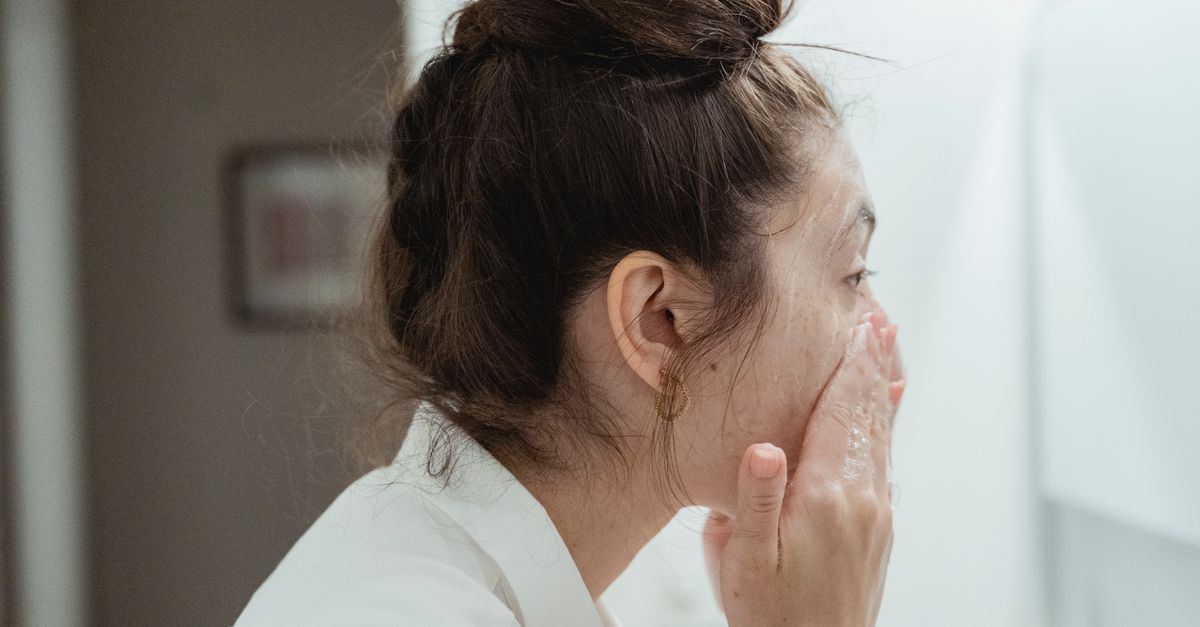
Persistently greasy eyelids despite frequent washing are primarily caused by the overproduction of lipids from the sebaceous glands of the skin and the meibomian glands along the eyelid margins. The eyelids possess exceptionally thin skin with a unique glandular anatomy designed to continuously lubricate the ocular surface. When individuals attempt to remove this natural oil by scrubbing with harsh soaps, they inadvertently strip the protective moisture barrier, paradoxically stimulating the glands to produce even more sebum in a desperate attempt to protect the delicate tissues.
The human eyelid is an intricate structure serving a dual purpose: physically protecting the globe of the eye and maintaining the chemical balance of the tear film. The oils secreted here are vital for preventing the rapid evaporation of tears. However, when hormonal fluctuations, environmental stress, or underlying dermatological conditions disrupt this balance, lipid production enters overdrive.
The persistent greasy sensation is not a sign of poor hygiene; it is a manifestation of glandular dysregulation or localized inflammation, such as seborrheic dermatitis or ocular rosacea. Frequently washing the area with aggressive facial cleansers creates a destructive cycle of desiccation and reactive hyper-seborrhea.
Understanding the specific anatomy of the eyelid margin and the chemistry of the tear film is essential for breaking this cycle. Addressing greasy eyelids requires abandoning harsh astringents in favor of gentle, specialized ophthalmic hygiene practices that regulate lipid flow without provoking a defensive overproduction response.
2. Anatomy of the Eyelid Glands
The eyelid is a complex, multi-layered structure containing several specialized types of secretory glands. The skin covering the outer eyelid is the thinnest on the human body and contains standard sebaceous glands, usually associated with tiny hair follicles. These glands secrete sebum, a lipid mixture that moisturizes the skin surface.
The most critical glands for ocular health are the meibomian glands, located deep within the tarsal plate—the dense connective tissue that gives the eyelid its structure. There are approximately thirty to forty meibomian glands in the upper eyelid and twenty to thirty in the lower eyelid.
The ducts of the meibomian glands open directly onto the eyelid margin, just behind the eyelash line. Unlike typical sebaceous glands, meibomian glands do not empty into hair follicles. They secrete meibum, a highly specialized, clear lipid fluid, directly onto the margin of the eye.
Additionally, the glands of Zeis and glands of Moll are located at the base of the eyelashes, contributing minor amounts of lipid and sweat to the local environment. An overactivity in any of these glandular networks creates a profound sensation of heavy, greasy eyelids.
3. Meibomian Gland Function and Lipids
The primary function of the meibomian glands is to construct the outer lipid layer of the tear film. Every time a person blinks, the mechanical action squeezes a microscopic amount of meibum out of the glands and spreads it smoothly across the aqueous (watery) layer of the tears covering the cornea.
This lipid layer is an absolute biological necessity. It lowers the surface tension of the tears, allowing them to spread evenly, and acts as an impermeable seal that prevents the watery layer from evaporating into the air.
When these glands function properly, the oil remains on the eye. However, in conditions of meibomian gland overactivity or dysfunction, the glands produce an excess of thickened, poor-quality lipids.
This excess meibum spills over the eyelid margin and coats the surrounding skin, leaving the eyelids feeling persistently slick and heavy. The poor quality of the oil also irritates the surface of the eye, causing a stinging sensation that prompts frequent rubbing, which smears the grease further across the face.
4. Sebaceous Gland Overactivity
While meibomian glands affect the margin, the sebaceous glands on the outer skin of the eyelid can also become hyperactive, a condition known as seborrhea. Sebum production is heavily regulated by androgens, a type of hormone.
Individuals with genetically oily skin types have sebaceous glands that are highly sensitive to these hormonal signals, producing large volumes of sebum continuously. The eyelid skin, being extremely thin, cannot absorb or disperse this volume of oil efficiently.
The excess sebum accumulates in the deep crease of the upper eyelid, creating a shiny, greasy appearance. This accumulation causes cosmetic issues, such as eye makeup dissolving or smudging within an hour of application.
Seborrhea of the eyelids is often accompanied by oily skin on the forehead, nose, and chin (the T-zone), confirming a systemic tendency toward high lipid production rather than an isolated ocular issue.
5. The Rebound Effect of Harsh Cleansers
The most common mistake individuals make when dealing with greasy eyelids is aggressively washing them with standard facial soaps, foaming cleansers, or astringents containing alcohol.
These harsh surfactants act as chemical detergents. They are incredibly efficient at stripping away all traces of lipids from the skin surface. However, the skin of the eyelid requires a baseline level of lipid protection to maintain its barrier function and prevent microscopic cracking.
When a harsh soap completely eradicates this barrier, the skin becomes acutely dehydrated and stressed. The local nervous system detects this severe lack of protective moisture and sends an emergency signal to the sebaceous and meibomian glands to increase production immediately.
This physiological response is known as the rebound effect. The more aggressively you wash the oil away, the faster and more profusely the glands produce oil to replace it, locking you into a never-ending cycle of greasy eyelids.
6. Seborrheic Dermatitis of the Eyelids
A frequent clinical cause of greasy, irritated eyelids is seborrheic dermatitis. This is a chronic inflammatory skin condition driven by an abnormal immune response to Malassezia, a naturally occurring yeast that thrives in lipid-rich environments on the skin.
In seborrheic dermatitis, the sebaceous glands overproduce oil, creating a rich feeding ground for the yeast. The yeast’s metabolic byproducts trigger severe inflammation in the skin.
On the eyelids, this condition presents as greasy, yellowish scales or crusts accumulating at the base of the eyelashes, accompanied by persistent redness and itching.
The skin feels oily, yet simultaneously flaky and irritated. Standard soaps cannot treat seborrheic dermatitis; it requires specialized antifungal or mild anti-inflammatory treatments to reset the microbiological balance of the eyelid margin.
7. Hormonal Influences on Sebum Production
The entire glandular network of the face and eyelids is exquisitely sensitive to hormonal fluctuations. Androgens, primarily testosterone and its derivatives, stimulate the sebaceous and meibomian glands to enlarge and increase their secretory output.
Hormonal surges during puberty, menstruation, pregnancy, or periods of severe psychological stress can trigger sudden bouts of eyelid greasiness.
Conversely, a decrease in estrogen, which typically counteracts the effects of androgens and keeps sebum production in check, can also alter the lipid profile. This is frequently observed during menopause, where women may experience a paradoxical mix of dry eyes and excessively greasy eyelid skin due to altered meibum quality.
Understanding that the greasiness is chemically driven by internal hormones explains why external scrubbing with soap is a futile endeavor.
8. Ocular Rosacea and Inflammation
Rosacea is a chronic inflammatory condition primarily affecting the face, but up to sixty percent of patients also develop ocular rosacea. This condition severely impacts the eyelids and the meibomian glands.
Ocular rosacea causes chronic inflammation of the eyelid margins, leading to telangiectasia (visible, dilated red blood vessels). This inflammation alters the glandular environment, prompting the meibomian glands to secrete excessive amounts of thick, turbid oil.
The eyelids feel constantly slick, heavy, and hot. The excess oil irritates the conjunctiva, causing the eyes to appear bloodshot and feel chronically gritty.
Treating the greasy eyelids associated with ocular rosacea requires managing the underlying inflammatory disease, often utilizing oral antibiotics like doxycycline for its potent anti-inflammatory properties on the meibomian glands, rather than simply washing the skin.
9. The Tear Film Lipid Layer and Evaporative Dry Eye
A paradoxical clinical presentation is experiencing greasy eyelids while simultaneously suffering from dry eye syndrome. This occurs in evaporative dry eye, driven by meibomian gland dysfunction.
In this state, the meibomian glands produce a large volume of low-quality oil that lacks the correct biochemical structure to seal the tear film. Because the oil fails to form a uniform layer over the eye, the watery tears evaporate instantly.
The eye feels severely dry and irritated. In response, the lacrimal gland produces a massive flood of reflex watery tears, while the meibomian glands pump out even more poor-quality oil in a failed attempt to stabilize the surface.
This chaotic mix of excess water and structural lipid failure spills over the eyelid margins, leaving the skin feeling constantly wet, sticky, and profoundly greasy. For readers dealing with systemic skin and immune responses, reviewing our guide on swollen lymph nodes provides insight into broad inflammatory mechanisms.
10. Dermatological Conditions of the Eyelid Table
To assist in clinical differentiation, the following table compares common causes of greasy eyelids.
| Condition | Visual Presentation | Distinguishing Characteristics |
|---|---|---|
| Sebaceous Hyperactivity | Shiny, oily skin, makeup smudging | Painless, often accompanies an oily T-zone on face |
| Rebound Seborrhea | Greasy shortly after aggressive washing | Skin feels tight/dry underneath the oil layer |
| Seborrheic Dermatitis | Greasy, yellowish scales at lash base | Itchy, red skin, flaking eyebrows |
| Ocular Rosacea | Red, swollen margins, visible blood vessels | Eyes feel gritty and burn, chronic redness |
11. Environmental Factors and Humidity
The external environment heavily influences the perception of eyelid greasiness. High humidity and hot temperatures increase the flow rate of sebum and meibum, making the secretions more fluid and prone to spreading across the skin.
Conversely, spending long hours in heavily air-conditioned, dry environments accelerates tear evaporation. The body responds by ramping up lipid production to compensate for the dryness, leading to an oily buildup on the lids by the end of the workday.
Airborne pollutants and dust can mix with the natural oils on the eyelid, creating a thick, grimy paste that makes the eyelids feel heavier and greasier than they actually are. Proper environmental management and the use of a humidifier can stabilize the tear film and reduce reactive lipid production.
12. Gentle Eyelid Hygiene Protocols
To break the cycle of the rebound effect, you must abandon harsh facial soaps and adopt a gentle eyelid hygiene protocol. The goal is to remove excess, stagnant oil and debris without stripping the basal lipid layer required for barrier protection.
Utilize specialized, commercially prepared eyelid scrubs or micellar water formulations designed specifically for ophthalmic use. These products contain mild, non-detergent cleansing agents that gently dissolve heavy lipids without damaging the cellular membrane of the skin.
Apply the cleanser to a sterile cotton pad and gently swipe across the closed eyelid in a single, smooth motion. Do not scrub back and forth.
Alternatively, a highly diluted solution of baby shampoo (one drop in a cup of warm water) can be used, as it lacks the aggressive surfactants found in adult facial cleansers. After cleansing, gently pat the eyelids dry; never rub them.
13. Warm Compresses and Gland Expression
If the meibomian glands are producing thick, poor-quality oil that smears over the eyelids, applying heat can alter the viscosity of the lipids and restore healthy glandular flow.
Apply a warm compress (such as a clean washcloth soaked in warm water or a specialized microwaveable eye mask) over the closed eyelids for five to ten minutes. The heat melts the stagnant, waxy meibum trapped within the glands.
Following the warm compress, perform gentle eyelid massage. Use a clean fingertip to roll downward on the upper eyelid and upward on the lower eyelid. This light mechanical pressure expresses the melted oil out of the glands and into the tear film where it belongs, preventing it from backing up and seeping onto the outer eyelid skin.
14. Dietary Impact on Lipid Composition
The biochemical makeup of the lipids produced by your sebaceous and meibomian glands is directly influenced by your diet. Consuming a diet high in processed trans fats and refined sugars promotes systemic inflammation and alters the quality of the sebum, making it thicker and more irritating to the skin.
Incorporating Omega-3 fatty acids, found abundantly in salmon, flaxseeds, and walnuts, is a clinically proven method for improving meibomian gland function. Omega-3s possess potent anti-inflammatory properties and fundamentally change the composition of the meibum, making the oil thinner, clearer, and more effective at lubricating the eye.
A diet rich in antioxidants and healthy fats supports a stable tear film and normalizes sebaceous gland output, reducing the sensation of persistent, heavy greasiness on the eyelids.
15. When to See an Ophthalmologist or Dermatologist
While a gentle hygiene routine manages most cases of greasy eyelids, persistent or inflammatory symptoms require professional medical evaluation.
If the greasy eyelids are accompanied by chronic redness, severe itching, burning, or a loss of eyelashes, a dermatologist or ophthalmologist must evaluate for seborrheic dermatitis, blepharitis, or ocular rosacea.
If you develop a painful, red, swollen lump on the eyelid margin (a stye or chalazion), a meibomian gland has become completely blocked and infected. Do not attempt to forcefully pop or squeeze it; seek ophthalmic care for safe drainage or prescription antibiotic ointments.
Professionals can perform a specialized imaging procedure called meibography to visualize the structural health of your meibomian glands, ensuring that your long-term glandular function is preserved.
16. Frequently Asked Questions (FAQ)
1. Should I use acne face wash containing salicylic acid on my greasy eyelids?
Absolutely not. The skin on the eyelid is far too thin for chemical exfoliants like salicylic acid or benzoyl peroxide. These chemicals will cause severe chemical burns to the eyelid skin and extreme irritation if they enter the eye, significantly worsening the problem.
2. Why does my eye makeup slide off within an hour of putting it on?
The excess sebum and meibum act as a powerful solvent that dissolves the waxes and pigments in your makeup. Until the glandular overactivity is managed with gentle cleansers and warm compresses, the continuous oil flow will prevent any cosmetic from adhering properly to the skin.
3. Will using a moisturizer on my eyelids make them more greasy?
Paradoxically, using a lightweight, oil-free, hyaluronic acid-based eye gel can reduce greasiness. By providing hydration (water) to the skin, it signals the sebaceous glands that the skin is protected, preventing the rebound overproduction of oil (sebum).
4. Can lack of sleep cause my eyelids to get greasy?
Yes. Sleep deprivation places the body in a state of stress, elevating cortisol levels. High cortisol triggers an increase in androgen activity, which directly stimulates the sebaceous glands to produce a surge of heavy, greasy oil on the face and eyelids.
5. Are cleansing wipes safe for daily use on greasy eyelids?
Pre-packaged makeup remover wipes often contain alcohol, fragrances, and harsh preservatives that strip the skin barrier and trigger the rebound oil effect. Specialized ophthalmic eyelid wipes formulated without alcohol are safe for daily use, but standard cosmetic wipes should be avoided.
17. Bibliography
Disclaimer: The content is for informational purposes only and does not replace medical advice. Always consult your doctor for personalized treatment.


