
1. Introduction
When a mosquito bite swells into a large, hard welt, it indicates an exaggerated, localized allergic reaction known clinically as Skeeter syndrome. This pronounced swelling is driven by an intense immune system response to the complex salivary proteins injected by the mosquito during a blood meal. The rapid release of histamine and other inflammatory mediators causes significant vascular permeability, fluid accumulation, and tissue induration, transforming a typical minor papule into a pronounced, firm, and highly pruritic lesion.
The human immune system is designed to identify and neutralize foreign proteins. For most individuals, a mosquito bite triggers a mild, self-limiting reaction characterized by a small, itchy bump. However, in individuals with an acquired hypersensitivity, the immune system drastically overreacts to the specific polypeptides found in the saliva of the mosquito.
Understanding this biological mechanism is crucial for differentiating a severe, localized allergic reaction from a dangerous secondary bacterial infection like cellulitis. Proper identification allows for targeted pharmacological management to reduce the localized tissue inflammation and alleviate the severe discomfort.
2. The Mechanics of a Mosquito Bite
The feeding apparatus of a female mosquito, the proboscis, is an intricate piece of biological machinery. It is not a single needle, but a complex bundle of six microscopic stylets. When a mosquito lands on a host, it uses these stylets to pierce the skin, actively searching for a subcutaneous capillary.
To ensure a smooth, uninterrupted blood meal, the mosquito must prevent the host blood from clotting. Therefore, as it extracts blood through one channel, it simultaneously injects its own saliva into the tissue through a separate channel.
This saliva is a sophisticated biochemical cocktail. It contains vasodilators to keep the blood vessels open, anticoagulants to stop the blood from clotting, and local anesthetics to delay the pain response of the host, allowing the insect to feed undetected.
3. Salivary Proteins and the Immune Response
The saliva injected by the mosquito contains dozens of distinct, foreign proteins. The human immune system immediately recognizes these proteins as non-self antigens. In a typical response, specialized immune cells called dendritic cells detect these antigens and present them to the T-cells of the immune system.
In response, the body produces immunoglobulin E or immunoglobulin G antibodies specifically tailored to bind to the mosquito proteins. These antibodies bind to the surface of mast cells, which are abundant in the dermal layer of the skin.
When the individual is bitten again, the mosquito salivary proteins bind directly to these pre-formed antibodies on the mast cells. This binding acts as a biological trigger, causing the mast cell to degranulate and dump its payload of inflammatory chemicals directly into the surrounding tissue.
4. Histamine Release and Vascular Permeability
The primary chemical released during mast cell degranulation is histamine. Histamine is a powerful inflammatory mediator that binds to H1 receptors on the endothelial cells lining the local blood vessels.
When histamine binds to these receptors, it causes the blood vessels to rapidly dilate (vasodilation) and become highly permeable. The widened, leaky vessels allow plasma fluid, white blood cells, and other immune proteins to rush out of the bloodstream and into the extracellular spaces of the skin.
This sudden, massive influx of fluid into the confined dermal tissue creates the visible swelling and redness. Furthermore, histamine heavily stimulates the local sensory nerve endings, generating the intense, unrelenting sensation of itchiness, or pruritus.
5. Skeeter Syndrome and Allergic Hypersensitivity
Skeeter syndrome is the clinical designation for a severe, localized allergic reaction to a mosquito bite. It is classified as an exaggerated immune response, far beyond the typical mild swelling.
In patients with Skeeter syndrome, the mast cell degranulation is exceptionally robust. The resulting welt can grow to several centimeters in diameter, occasionally engulfing an entire joint or causing significant facial swelling if the bite occurs near the eye. The area becomes fiercely hot to the touch, swollen, and painful.
This syndrome is most frequently observed in young children, whose immune systems have not yet developed natural desensitization to local mosquito populations, and in adults who are exposed to a new, non-native species of mosquito carrying unfamiliar salivary proteins.
6. Delayed Cutaneous Reactions and Cellular Immunity
While the initial wheal and flare reaction is driven by histamine occurring within minutes, the large, hard welt that develops hours or days later is driven by a different immunological pathway. This is known as a delayed-type hypersensitivity reaction, mediated by T-cells.
T-cells migrate to the site of the bite over a period of twenty-four to forty-eight hours. Once there, they release their own inflammatory cytokines, coordinating a secondary wave of immune response.
This cell-mediated reaction recruits dense clusters of macrophages and lymphocytes to the tissue. The physical packing of these cells, combined with ongoing fluid retention, creates the distinct firmness and induration characteristic of a severe bite reaction.
7. Inflammatory Induration and Tissue Hardness
The hardness of the welt, clinically termed induration, is a direct mechanical consequence of the intense inflammatory cascade. The dermal layer of the skin is a tightly woven matrix of collagen and elastin fibers.
When the massive volume of plasma fluid and thousands of recruited immune cells flood into this restricted matrix, the pressure inside the tissue skyrockets. The skin essentially becomes over-inflated from the inside out.
Because the fluid and cells are trapped within the rigid collagen framework, the skin becomes taut, firm, and unyielding to the touch. This induration typically resolves very slowly as the lymphatic system works over several days to clear the trapped fluid and cellular debris from the area.
8. Differentiating an Allergic Welt from Cellulitis
A critical clinical distinction must be made between Skeeter syndrome and cellulitis, a dangerous secondary bacterial infection of the deep skin layers. Both conditions cause redness, swelling, and heat, making them difficult for patients to distinguish.
Skeeter syndrome develops rapidly, usually within hours of the bite, and is overwhelmingly itchy. The swelling, while large, remains somewhat defined around the puncture site.
Cellulitis typically develops a few days after the bite, usually resulting from the introduction of bacteria via scratching. The redness and swelling spread progressively outward, tracking up the limb. Cellulitis is profoundly painful rather than itchy, and it frequently causes systemic symptoms like high fever, chills, and swollen lymph nodes, requiring immediate antibiotic therapy.
9. The Role of Scratching and Secondary Infection
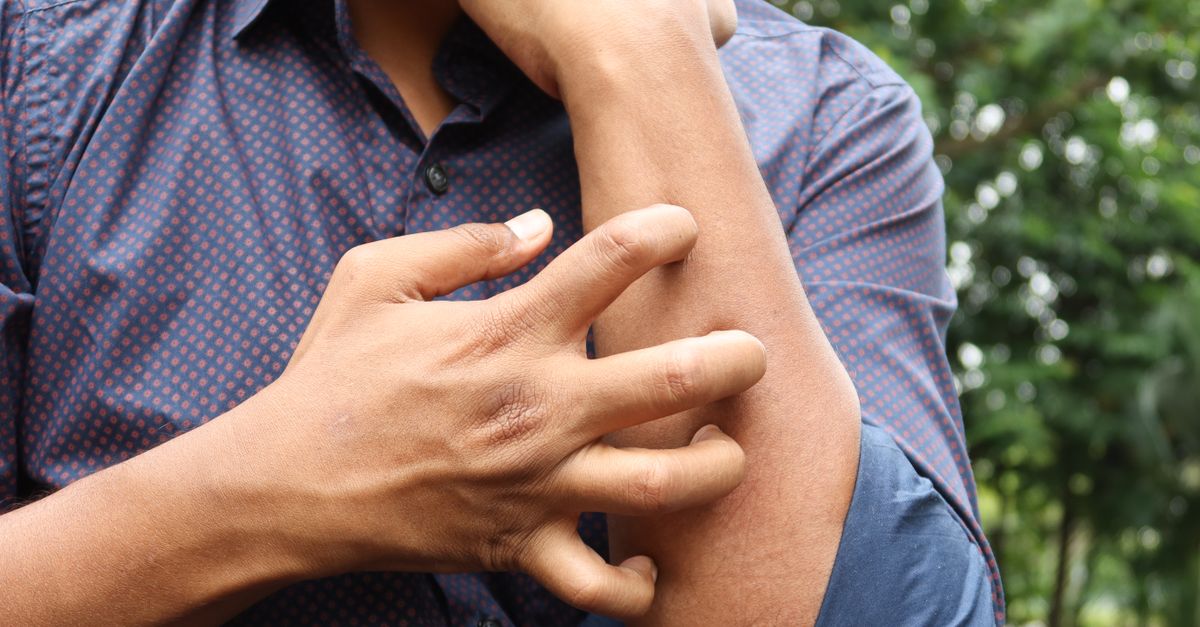
The intense pruritus caused by the histamine release makes avoiding scratching nearly impossible, particularly for children. However, scratching is exceptionally detrimental to the healing process.
Fingernails harbor significant amounts of bacteria, notably Staphylococcus aureus and Streptococcus pyogenes. Aggressively scratching the bite excoriates the protective epidermis, creating an open portal for these bacteria to enter the deep dermal tissues.
Furthermore, scratching physically traumatizes the skin, causing more mast cells to rupture and release additional histamine. This creates a vicious cycle: scratching generates more itch, damages the tissue, and dramatically increases the risk of transforming a sterile allergic welt into an acute bacterial infection.
10. Prophylactic Measures and Vector Avoidance
For individuals prone to severe localized reactions, prophylaxis is the most effective management strategy. Utilizing insect repellents containing DEET, picaridin, or oil of lemon eucalyptus creates a chemical barrier that disrupts the olfactory receptors of the mosquito, preventing them from locating the host.
Physical barriers are equally crucial. Wearing long, loose-fitting clothing prevents the proboscis from reaching the skin. Tight clothing is ineffective, as many mosquito species can easily bite through thin, tight fabrics like leggings.
Environmental control involves eliminating standing water around the home, as mosquitoes require stagnant water for their larval development stage. Utilizing mosquito netting and ensuring window screens are intact further prevents vector exposure.
11. Structured Data: Mosquito Bite Reactions
The following table highlights the clinical differences between a normal bite, an allergic reaction, and an infected bite.
| Reaction Type | Characteristics | Underlying Mechanism |
|---|---|---|
| Normal Reaction | Small red bump (under 2 cm), mildly itchy, resolves quickly. | Standard, mild histamine release. |
| Skeeter Syndrome | Large (over 3 cm), firm, hot, hard welt, intensely itchy. | Exaggerated immune hypersensitivity to saliva. |
| Cellulitis (Infection) | Spreading redness, severe pain, pus, possible fever. | Bacterial invasion of the deep skin layers. |
12. Pharmacological Management of Exaggerated Reactions
Treating a large, hard welt focuses on suppressing the hyperactive immune response and managing the localized tissue pressure. Oral second-generation antihistamines, such as cetirizine or loratadine, block the H1 receptors systemically, reducing both the swelling and the intense pruritus.
Topical corticosteroids, applied directly to the welt, are highly effective at penetrating the epidermis to suppress the localized inflammation and T-cell activity. Ice packs wrapped in cloth provide immediate symptomatic relief; the cold temperature induces vasoconstriction, reducing the fluid leaking into the tissue and numbing the sensory nerves.
In cases where the swelling is profound enough to interfere with joint movement or vision, a physician may prescribe a short course of oral corticosteroids to rapidly shut down the systemic inflammatory cascade.
13. When to Seek Urgent Clinical Evaluation
While a large welt is alarming, it is usually managed safely at home. However, immediate emergency medical attention is required if the bite is accompanied by signs of systemic anaphylaxis.
If the individual experiences sudden difficulty breathing, swelling of the throat or tongue, a generalized full-body hive outbreak, or a sudden drop in blood pressure causing dizziness, this indicates a life-threatening anaphylactic reaction requiring the immediate administration of epinephrine.
Clinical evaluation is also mandatory if the redness begins streaking up the arm or leg, or if the patient develops a systemic fever, as these are cardinal signs of an advancing bacterial infection. Proper management relies on rapid intervention, utilizing protocols similar to those applied for sudden, unexplained headache and fever to rule out systemic illness.
14. Frequently Asked Questions (FAQ)
1. Can you become immune to mosquito bites over time?
Yes. With repeated, continuous exposure to the same species of mosquito, the immune system often undergoes a natural desensitization process. The body stops producing the specific antibodies that trigger the massive histamine release, which is why older adults generally react less severely than young children.
2. Why do I get huge welts when I travel, but not at home?
Different regions host entirely different species of mosquitoes. The saliva of a foreign mosquito contains proteins your immune system has never encountered. Your body mounts an aggressive, naive immune response to these novel proteins, resulting in a much larger welt than you experience from native mosquitoes.
3. Is it helpful to put an “X” in the bite with my fingernail?
No. Pressing an “X” into the bite momentarily distracts the brain with a pain signal, temporarily overriding the itch signal. However, it physically damages the skin barrier, forces the mosquito saliva deeper into the tissue, and vastly increases the risk of bacterial infection.
4. Will taking an allergy pill before going outside prevent the welt?
Yes, taking a non-drowsy oral antihistamine an hour before known exposure can act as a prophylactic. It occupies the histamine receptors in your blood vessels beforehand, so when the mosquito bites, the released histamine cannot bind to the vessels, significantly blunting the swelling response.
5. How long does it take for the hard welt to go away?
A severe Skeeter syndrome welt typically reaches its maximum size and hardness within forty-eight hours. Because it is a cellular immune response, the hard induration can take anywhere from three to ten days to completely soften and resolve as the lymphatic system clears the cellular debris.
15. Bibliography
Disclaimer: The content is for informational purposes only and does not replace medical advice. Always consult your doctor for personalized treatment.

