1. Introduction
Numb and cold toes after wearing tight dress shoes are the direct result of localized arterial compression and mechanical impingement of the interdigital nerves. Narrow toe boxes forcefully squeeze the metatarsal bones together, restricting the flow of warm, oxygenated blood through the tiny digital arteries. Simultaneously, this structural squeezing compresses the delicate sensory nerves caught between the bones, interrupting their electrical signal transmission and causing the brain to register a profound lack of sensation and thermal warmth.
The human foot is a biomechanical masterpiece engineered to support the weight of the entire body, absorb shock, and provide dynamic propulsion. To accomplish this, the bones of the forefoot naturally splay, or spread outward, when weight is applied. Dress shoes, particularly those with pointed toes and rigid leather uppers, completely prohibit this natural expansion. They force the toes into a cramped, unnatural wedge shape.
This physical confinement creates an environment of immense mechanical pressure. The soft tissues, blood vessels, and nerves are relentlessly crushed against the unyielding bones of the foot and the rigid walls of the shoe. When the arterial blood flow is restricted, the toes lose their primary source of thermal energy, rapidly becoming cold.
Concurrently, the crushed sensory nerves lose their ability to transmit tactile information to the brain, manifesting as a dull, heavy numbness. Understanding the precise vascular and neurological pathways compromised by ill-fitting footwear is critical for preventing permanent tissue damage and ensuring long-term podiatric health.
2. Anatomy of the Forefoot and Digits
The forefoot is composed of five long bones called metatarsals, which connect to the phalanges, the smaller bones that make up the toes. Between each of the metatarsal bones runs a vital bundle of neurovascular tissue, containing both the digital arteries and the interdigital nerves that supply the toes.
During a normal, barefoot stride, as the heel lifts and the weight shifts forward onto the ball of the foot, the transverse arch of the forefoot flattens slightly, allowing the metatarsal bones to fan out. This splaying action creates necessary anatomical space, ensuring that the nerves and blood vessels are protected from friction and compression.
Tight dress shoes possess a tapered toe box that aggressively counters this natural anatomy. By violently pushing the first toe (the big toe) and the fifth toe (the pinky toe) inward toward the center line, the shoe binds the metatarsal heads tightly together.
This binding obliterates the protective anatomical spaces. The neurovascular bundles are trapped in a vise, crushed between the heads of the adjacent metatarsal bones with every single step taken in the rigid shoes.
3. Peripheral Vascular Supply to the Toes
The perception of coldness in the toes is a direct consequence of compromised blood flow. Blood is the body’s primary mechanism for distributing heat generated by the core organs to the distant extremities. The toes receive this warm blood via the digital arteries, which are incredibly small, terminal branches of the circulatory system.
Because these arteries are so narrow, they are highly susceptible to external mechanical pressure. The rigid constraints of a tight dress shoe exert a compressive force that exceeds the internal hydrostatic pressure of the blood pushing through the tiny arteries.
As a result, the arteries are physically clamped shut, or their diameter is severely reduced. This condition, known as localized ischemia, drastically cuts off the supply of warm, oxygen-rich arterial blood.
Without the continuous influx of thermal energy from the core, the tissues of the toes rapidly lose their heat to the surrounding environment. The toes turn pale or slightly blue, and the individual experiences a deep, penetrating cold sensation that cannot be resolved merely by wearing thicker socks, as the core issue is restricted flow, not lack of insulation.
4. Interdigital Nerve Compression
The profound numbness experienced in the toes is the result of direct mechanical trauma to the interdigital nerves. Nerves are essentially biological wires that require an uninterrupted flow of electrical ions and a dedicated blood supply to function properly.
When the narrow toe box crushes the metatarsal bones together, the interdigital nerves are pinched. This compression causes localized ischemia within the nerve tissue itself (the vasa nervorum, the tiny blood vessels feeding the nerve, are blocked). Starved of oxygen, the nerve cell membranes lose their ability to generate and conduct electrical action potentials.
The brain suddenly stops receiving sensory input from the toes. It interprets this sudden silence as numbness, a deadened feeling, or a thick, heavy sensation, often described as feeling like wearing a thick, invisible sock.
If the compression is brief, the nerve function returns rapidly upon removing the shoe, usually accompanied by a temporary, painful tingling sensation (pins and needles) as the nerve fibers chaoticly fire back to life.
5. Morton Neuroma Pathophysiology
Chronic wearing of tight dress shoes can transition simple, temporary nerve compression into a permanent, painful structural pathology known as a Morton’s neuroma. This most commonly occurs between the third and fourth toes, where the anatomical space is inherently the narrowest and two nerve branches converge.
When the interdigital nerve is repeatedly crushed between the metatarsal heads day after day, the body’s repair mechanism responds to the chronic friction. It lays down thick, fibrous scar tissue around the nerve in an attempt to protect it from the mechanical trauma.
This accumulation of scar tissue results in a benign enlargement of the nerve, creating a distinct mass or “neuroma.” Ironically, this protective enlargement makes the nerve even thicker, meaning it becomes compressed even faster and more severely the next time a tight shoe is worn.
Individuals with a Morton’s neuroma often describe the sensation of walking on a marble or a pebble bundled in their sock, accompanied by sharp, burning pain and permanent numbness radiating into the adjacent toes, regardless of whether they are currently wearing shoes or not.
6. The Mechanics of High Heels
The negative effects of a narrow toe box are exponentially magnified if the dress shoe also features a high heel. Elevating the heel fundamentally alters the biomechanical distribution of body weight across the foot.
In a flat shoe, the weight is distributed relatively evenly between the heel and the forefoot. In a high heel, gravity forces the foot to slide forward on the inclined plane. The vast majority of the body’s weight is transferred directly onto the small metatarsal heads at the ball of the foot.
This massive downward force acts as a wedge, driving the toes deeper into the narrow, unyielding tip of the shoe. The compressive forces on the blood vessels and nerves are drastically multiplied.
The combination of the extreme vertical load and the tight lateral constraints guarantees rapid, severe ischemia and neurological impingement, explaining why numbness and freezing toes occur much faster in stilettos or high-heeled boots compared to flat dress shoes.
7. Venous Pooling and Fluid Dynamics
While tight shoes restrict arterial blood from entering the toes, they also obstruct venous blood and lymphatic fluid from exiting. The veins in the foot rely on the rhythmic contraction of the foot and calf muscles to pump blood back up to the heart against gravity.
Rigid dress shoes splint the foot, severely limiting the natural articulation of the joints and reducing muscular contraction. The tight leather across the top of the foot (the instep) acts as a mechanical tourniquet, compressing the superficial veins.
Because arterial blood enters under high pressure but venous blood returns under low pressure, the veins are pinched shut more easily. This causes deoxygenated blood to pool in the toes, contributing to a dusky or purple discoloration.
The increased hydrostatic pressure from the trapped blood forces fluid out into the tissues, causing the toes to swell. This swelling further reduces whatever tiny anatomical space was left in the shoe, creating a vicious cycle of increasing pressure and worsening numbness.
8. Differentiating Shoe Fit from Systemic Neuropathy
It is critical to distinguish between transient numbness caused by bad footwear and systemic neurological issues that require medical management.
| Characteristic | Shoe-Induced Numbness | Systemic Peripheral Neuropathy |
|---|---|---|
| Onset | Occurs specifically when wearing particular shoes. | Present constantly; often worse at night. |
| Resolution | Improves significantly upon removing the shoes. | Persists regardless of footwear or barefoot state. |
| Distribution | Localized to the toes compressed by the shoe. | Stocking-glove pattern; affects the whole foot symmetrically. |
| Risk Factors | Narrow, pointed, or high-heeled footwear. | Diabetes, chronic alcoholism, vitamin deficiencies. |
If numbness persists long after the shoes are removed, or if it is accompanied by non-healing wounds on the feet, a thorough medical evaluation by a physician or podiatrist is mandatory to assess for underlying systemic disease.
9. Thermal Regulation and Raynaud Phenomenon
In some individuals, the coldness experienced in tight shoes triggers a secondary, exaggerated vascular response known as Raynaud phenomenon. This condition is characterized by a hyperactive sympathetic nervous system response to cold or stress.
When the tight shoe restricts blood flow, the slight drop in tissue temperature acts as a trigger. The tiny arteries in the toes abruptly go into a complete, spastic lock-down, halting all blood flow entirely.
The toes will turn stark, ghost white, followed by a bluish hue as the remaining oxygen is depleted. When the shoe is finally removed and the spasm breaks, a rush of blood returns, turning the toes bright red and causing a severe, throbbing, burning pain.
For individuals with Raynaud’s, wearing tight footwear is uniquely dangerous, as the mechanical compression initiates a severe vasospastic cycle that can quickly lead to painful tissue damage and chilblains if not promptly managed.
10. Acute Restoration of Blood Flow
When toes become numb and cold, immediate action is required to restore circulation and prevent cellular damage. The individual must remove the restrictive shoes and socks as soon as possible to eliminate the mechanical compression.
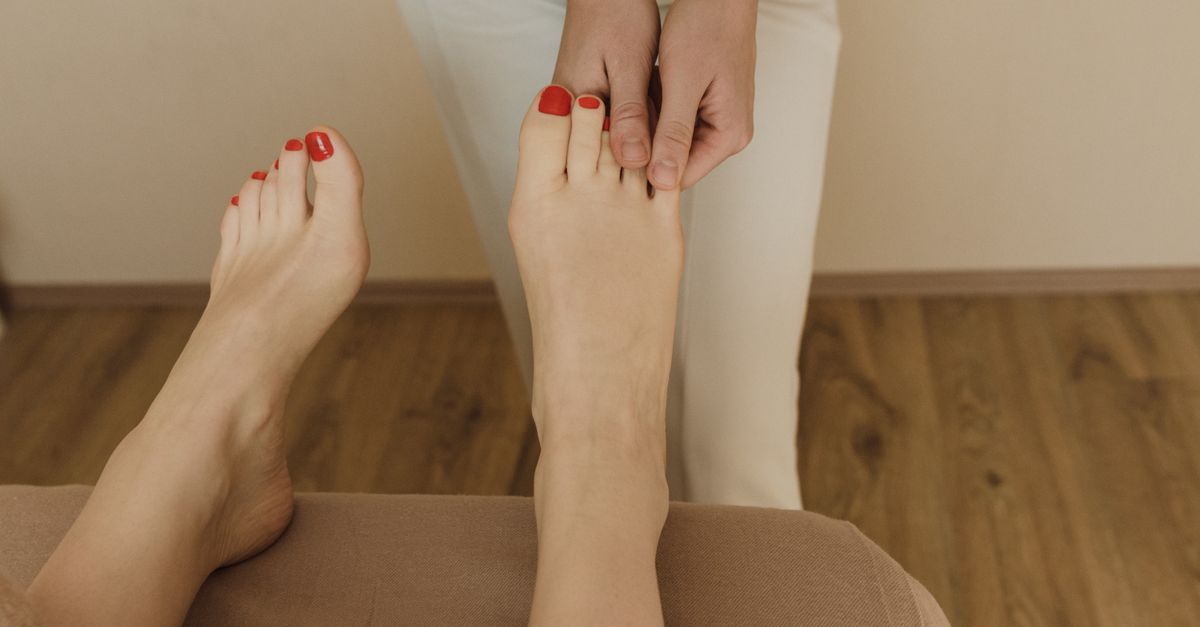
Vigorous rubbing or massaging of the toes is highly effective. Massage physically stimulates the local capillary beds and engages the skeletal muscle pump, forcing the pooled venous blood out and encouraging fresh, warm arterial blood to rush back into the digits.
Wiggling the toes and performing ankle circles restores the dynamic movement that the rigid shoe prevented. This movement reactivates the nerve pathways and helps dissipate any accumulated interstitial fluid that is causing localized swelling.
If the toes are profoundly cold, soaking the feet in warm (not hot) water will induce rapid vasodilation, opening the clamped arteries and quickly restoring normal tissue temperature and sensory function.
11. Footwear Selection and Toe Splay
Preventing numb toes relies entirely on respecting the natural anatomy of the foot when selecting footwear. A proper dress shoe must feature a toe box that is anatomically shaped—meaning it is widest at the tips of the toes, not at the ball of the foot.
When standing, there should be enough room within the shoe to actively wiggle and splay all five toes without them pressing tightly against the side materials. If the shoe forces the big toe to angle inward toward the second toe, the toe box is too narrow and will inevitably cause nerve compression.
Soft, supple leathers or accommodating fabrics are superior to rigid, patent leathers, as they can stretch slightly to accommodate the natural expansion of the foot throughout the day.
Lace-up dress shoes offer better control than slip-on loafers. Laces allow the wearer to secure the shoe firmly around the instep and heel, preventing the foot from sliding forward and jamming the toes into the front of the shoe during walking.
12. The Importance of Proper Sizing
A significant percentage of the population wears shoes that are fundamentally the wrong size, primarily because foot size and shape change with age, weight fluctuations, and gravity.
Feet naturally swell over the course of the day due to gravity and physical activity. Therefore, shoe shopping and fitting should always be done in the late afternoon or evening, when the feet are at their maximum physiological volume.
When assessing the length, there must be at least a half-inch of space (roughly the width of a thumb) between the tip of the longest toe and the end of the shoe. It is crucial to remember that the longest toe is often the second toe, not the big toe.
Measuring for width is equally critical. Shoes that are long enough but too narrow will still crush the metatarsal heads. Utilizing a professional Brannock device to measure both length and precise width ensures the mechanical pressures of the shoe do not exceed the foot’s structural limits.
13. Orthotics and Metatarsal Support
For individuals who must wear formal dress shoes for professional reasons, specific orthotic modifications can mitigate the compressive forces.
A metatarsal pad is a small, teardrop-shaped cushion placed inside the shoe, resting just behind the ball of the foot. When positioned correctly, this pad gently lifts and separates the central metatarsal bones.
This lifting action physically opens up the anatomical space between the metatarsal heads, providing immediate pressure relief for the crushed interdigital nerves and blood vessels, significantly delaying the onset of numbness and pain.
Custom orthotics can also redistribute the weight more evenly across the entire plantar surface of the foot, preventing the excessive point-loading on the forefoot that drives the toes into the narrow tip of the shoe.
14. Long-Term Preventative Foot Care
Chronic use of tight shoes leads to structural deformities, such as bunions and hammertoes, which permanently alter the architecture of the foot and make finding comfortable footwear nearly impossible.
Preventative care involves spending significant time barefoot or in wide-toed, minimalist shoes to allow the intrinsic muscles of the foot to strengthen and the toes to splay naturally.
Toe spacers, worn while relaxing at home, can gently stretch the tight ligaments and muscles between the toes, reversing the unnatural binding caused by dress shoes and restoring healthy anatomical alignment.
Recognizing numbness and coldness not as minor inconveniences, but as acute biological warning signs of tissue starvation, empowers individuals to prioritize functional, accommodating footwear, ensuring the long-term health and vitality of their lower extremities.
15. Frequently Asked Questions (FAQ)
1. Is it normal for my toes to tingle painfully when I finally take my tight shoes off?
Yes. The painful tingling (pins and needles) is the neurological sensation of your sensory nerves “waking up” as the mechanical pressure is released and oxygen-rich blood rapidly returns to the nerve tissue.
2. Can wearing tight shoes cause permanent nerve damage?
Yes. While occasional numbness is temporary, wearing tight shoes daily causes chronic friction that leads to a Morton’s neuroma—a permanent thickening of the nerve tissue that causes chronic pain and numbness, often requiring medical intervention or surgery.
3. Will wearing thicker socks help keep my toes warm in tight shoes?
No, thicker socks will actually make the problem much worse. The coldness is caused by restricted blood flow. Adding a thick sock takes up even more physical space inside the shoe, crushing the arteries further and cutting off the blood flow faster.
4. Why does only my pinky toe go numb?
The pinky toe and the big toe bear the brunt of the lateral compressive force from the narrow sides of the shoe. The pinky toe is particularly vulnerable as it is easily pushed inward and underneath the adjacent toe, pinching its specific nerve branch.
5. How do I know if my shoes are too narrow?
Remove the insole from the shoe and stand on it. If your toes, particularly the big toe or the pinky toe, hang over the edges of the insole, the shoe is too narrow and will structurally crush your foot when worn.
16. Bibliography
Disclaimer: The content is for informational purposes only and does not replace medical advice. Always consult your doctor for personalized treatment.