
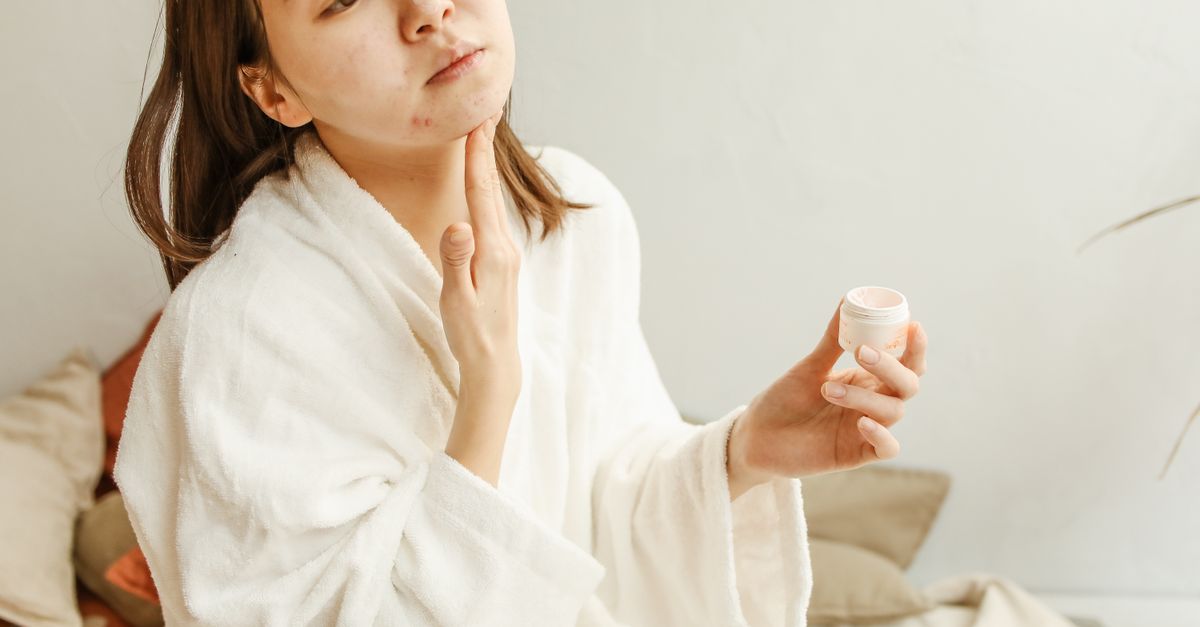
1. Introduction & Mechanism of Action of Blemish Buster Solution Acne Treatment
Blemish Buster Solution Acne Treatment relies on sulfur as its primary active ingredient to manage mild to moderate acne breakouts. The fundamental side effect most patients experience is localized skin dryness and mild exfoliation at the application site. Sulfur operates as a keratolytic and mild antibacterial agent, helping to clear the pores of excess cellular debris and reduce the microbial load on the skin surface.
The precise mechanism of sulfur involves interacting with cysteine present within the stratum corneum. This interaction promotes the shedding of dead skin cells, preventing the microscopic plugging of hair follicles that leads to comedone formation. Furthermore, sulfur demonstrates mild bacteriostatic properties against Propionibacterium acnes, the primary bacteria implicated in inflammatory acne lesions.
By facilitating targeted epidermal desquamation and regulating localized sebum presentation, sulfur prevents the maturation of early acne lesions. The clinical profile of this element makes it a reliable therapeutic option for patients requiring an alternative to benzoyl peroxide or other aggressive topical antimicrobials.
2. Warnings & Before Taking Sulfur Topicals
Prior to initiating therapy with Blemish Buster Solution Acne Treatment, patients must evaluate their skin sensitivity and dermatological history. Sulfur is a potent exfoliating agent and can exacerbate compromised epidermal barriers. Individuals with active eczema, severe rosacea, or currently sunburned skin should delay treatment until the epidermal tissue fully recovers.
Concurrent use of multiple drying topical agents requires careful clinical consideration. Applying sulfur alongside prescription retinoids, highly concentrated alpha-hydroxy acids, or abrasive physical exfoliants increases the risk of severe cumulative irritation. Patients should disclose all current skincare regimens to their healthcare provider to establish a safe integration plan.
Allergic hypersensitivity to topical elemental sulfur is uncommon but remains a clinical possibility. Patients with a known history of severe contact dermatitis triggered by sulfur-containing cosmetics should avoid this formulation. A localized patch test on a small area of skin is clinically advised before full facial application to rule out idiosyncratic inflammatory responses.
3. Indications & Dosage Guide for Blemish Buster Solution Acne Treatment
Blemish Buster Solution Acne Treatment is indicated for the topical management of acne vulgaris, specifically targeting papules, pustules, and closed comedones. It serves effectively as localized spot therapy to accelerate the resolution of active inflammatory lesions.
The standard clinical application involves cleansing the affected area thoroughly with a gentle, non-medicated cleanser. Once the skin is completely dry, a thin layer of the sulfur solution should be applied directly to the blemishes. Treatment generally commences with one application daily. Depending on clinical tolerance and therapeutic response, the frequency may be increased to two or three times daily.
If bothersome dryness or flaking occurs, the application frequency should be reduced to once daily or every other day. Consistent application is necessary to maintain the keratolytic effect, though over-application does not enhance clinical efficacy and solely increases the likelihood of epidermal barrier disruption.
4. In-Depth Side Effects Analysis of Sulfur
The dermatological response to Blemish Buster Solution Acne Treatment is generally localized to the application site. The side effects relate directly to the intrinsic desquamating and sebum-reducing properties of sulfur.
Common Side Effects
The most frequently documented reactions involve mild epidermal compromise. Patients often report localized erythema, superficial peeling, and a sensation of skin tightness. These responses typically emerge during the initial days of therapy as the skin acclimates to the keratolytic action. An inherent characteristic of sulfur is its distinct odor, which some patients find aesthetically displeasing but poses no medical risk.
Serious Side Effects You Should Report
While systemic reactions are highly improbable with topical application, severe localized cutaneous reactions warrant clinical evaluation. Manifestations such as profound blistering, intense burning sensations, or swelling of the application site indicate severe contact dermatitis. Patients experiencing these symptoms must cease application immediately and seek dermatological consultation.
Rare Side Effects
In exceptional cases, prolonged application of high-concentration sulfur on broken skin can lead to localized hyperpigmentation, particularly in individuals with darker skin phototypes. True allergic contact dermatitis presenting with diffuse urticaria is scientifically documented but exceptionally rare.
Side Effects That Usually Do Not Require Medical Attention
Transient tingling immediately following application and microscopic flaking resolving with standard moisturizers are expected physiological responses. These symptoms reflect the therapeutic action of the medication and typically subside without medical intervention as cellular turnover normalizes.
| Side Effect Category | Specific Symptoms |
|---|---|
| Common Dermatological | Dryness, mild peeling, transient erythema, sulfur odor |
| Serious Dermatological | Blistering, severe burning, facial swelling, oozing |
| Rare Responses | Post-inflammatory hyperpigmentation, severe contact dermatitis |
5. Overdose Symptoms and Management for Sulfur Topicals
Systemic toxicity resulting from the over-application of Blemish Buster Solution Acne Treatment is virtually non-existent due to poor systemic absorption of topical sulfur. However, localized overdose is a frequent clinical occurrence when patients apply excessive volumes of the product in an attempt to rapidly clear lesions.
Symptoms of localized over-application include pronounced erythema, severe scaling, fissuring of the skin, and intense stinging. The compromised skin barrier becomes highly vulnerable to secondary bacterial infections and environmental irritants.
If a patient applies excessive amounts, the immediate protocol requires washing the area gently with tepid water and a mild, soap-free cleanser. The application of a bland, non-comedogenic barrier cream will help restore epidermal hydration. Active therapy should be suspended until the skin returns to its baseline physiological state.
6. Missed Dose & What to Avoid While Using Sulfur
Since Blemish Buster Solution Acne Treatment is utilized for ongoing maintenance and spot therapy, a missed application poses no clinical danger and simply delays the keratolytic process. Patients should resume their standard application schedule at the next appropriate time interval. Applying a double layer of the solution to compensate for a missed dose is explicitly advised against, as it significantly elevates the risk of localized irritation.
While undergoing therapy, patients must actively avoid harsh environmental elements and abrasive mechanical skincare practices. The use of facial scrubs, motorized cleansing brushes, and astringents containing high concentrations of denatured alcohol should be suspended. These physical and chemical stressors compound the drying effects of sulfur, leading to acute barrier disruption.
Furthermore, prolonged unprotected ultraviolet light exposure should be minimized. While sulfur itself is not classically photosensitizing, the newly exfoliated stratum corneum is more susceptible to actinic damage, necessitating the diligent use of a broad-spectrum, non-comedogenic sunscreen.
7. What Drugs Interact with Blemish Buster Solution Acne Treatment?
Topical sulfur preparations present a low risk for true pharmacokinetic interactions. The primary concern lies in pharmacodynamic interactions where multiple topical agents produce cumulative dermatological toxicity.
Concomitant use of salicylic acid, prescription tretinoin, adapalene, or tazarotene requires meticulous medical supervision. The overlapping desquamating effects can cause profound erythema and skin denudation. If combination therapy is clinically necessary, providers typically recommend alternating applications, utilizing one agent in the morning and the other in the evening.
Additionally, topical products containing high amounts of alcohol, peeling agents like resorcinol, or heavily fragranced cosmetics should be avoided. A specific chemical interaction to note is the concurrent use of topical mercury-containing products, which can lead to the formation of hydrogen sulfide, producing a foul odor and potential dark staining of the skin.
8. Precautions, Safety & Duration of Action for Sulfur
Safety considerations for Blemish Buster Solution Acne Treatment center on preserving the structural integrity of the epidermis. Patients should apply the product exclusively to intact skin, avoiding open wounds, actively bleeding comedones, and the sensitive mucosal membranes surrounding the eyes, nostrils, and lips.
The duration of clinical action is limited to the period of active application. The keratolytic and antimicrobial effects peak within hours of application and diminish once the product is washed away or naturally exfoliates with the skin cells. Consistent clinical improvement is typically observed within three to four weeks of steady usage.
For pregnant or lactating individuals, topical sulfur is generally considered safe due to negligible systemic absorption. Nevertheless, it is prudent clinical practice to consult an obstetrician or dermatologist prior to initiating any new pharmacological regimen during gestation.
9. How to Stop Taking Blemish Buster Solution Acne Treatment & Storage
Discontinuing the use of this topical solution does not require a complex tapering protocol. Patients may cease application abruptly without risking physical withdrawal symptoms or a physiological rebound effect. However, abrupt cessation may lead to a gradual return of baseline acne symptoms as the underlying follicular hyperkeratosis resumes.
Proper storage of the sulfur solution is critical to maintain formulation stability. The medication should be kept at controlled room temperature, safely away from direct sunlight, ambient moisture, and extreme heat sources. The container must remain tightly sealed when not in use to prevent the evaporation of the solvent base, which could alter the concentration of the active ingredient.
Disposal of expired or unused medication should follow standard environmental safety guidelines. The product should not be flushed down plumbing systems or poured into municipal drainage, as chemical accumulation poses risks to local water processing facilities.
10. When to See a Doctor Regarding Sulfur Side Effects
Medical intervention is necessary if the anticipated localized side effects escalate into severe, unmanageable cutaneous reactions. Patients must seek a clinical assessment if they observe signs of secondary skin infection, characterized by weeping exudate, spreading warmth, or localized honey-colored crusting over the treated lesions.
A dermatological consultation is also warranted if there is no observable improvement in acne severity after six to eight weeks of compliant daily therapy. Persistent lesions may indicate a need for systemic oral therapy or a differing topical pharmacological approach.
Any presentation of systemic allergy, though highly improbable, requires immediate emergency evaluation. Symptoms including sudden facial angioedema, respiratory distress, or generalized hives demand urgent medical attention.
Frequently Asked Questions (FAQ)
1. Can I use a moisturizer over this sulfur treatment?
Yes, applying a non-comedogenic, fragrance-free moisturizer over the treated area is highly recommended. Wait until the sulfur solution has completely dried before applying hydration to mitigate the common side effect of epidermal dryness.
2. Does sulfur permanently bleach skin or clothing?
Sulfur does not possess the bleaching properties of benzoyl peroxide. It will not permanently alter the color of your skin, towels, or clothing, though it may leave a temporary powdery residue that washes out easily.
3. Why does the medication smell unpleasant?
The distinct odor is an intrinsic chemical property of elemental sulfur. Formulators often attempt to mask this scent, but a faint, characteristic aroma is expected and indicates the presence of the active therapeutic ingredient.
4. Can I pop a pimple before applying the solution?
Rupturing an acne lesion mechanically compromises the skin barrier. Applying sulfur to an open, extracted comedone significantly increases the risk of severe burning, prolonged erythema, and post-inflammatory hyperpigmentation.
5. Is sulfur safe for cystic acne?
While sulfur is highly effective for superficial pustules and papules, it lacks the deep dermal penetration required to resolve nodulocystic acne. Patients with deep, painful cysts require evaluation for prescription systemic treatments.
6. How long does it take for sulfur to work?
Reduction in the size and localized inflammation of a minor blemish can be observed within twenty-four to forty-eight hours. Comprehensive clearing of the treated area generally requires consistent use over several weeks.
7. Can I use makeup immediately after applying it?
Cosmetics can be applied once the solution has completely dried on the skin. It is medically advisable to select oil-free, non-comedogenic makeup formulations to prevent the occlusion of pores and counteracting the medication’s therapeutic purpose.
8. What should I do if the medication gets in my eye?
Immediate irrigation with copious amounts of sterile saline or cool tap water is required for at least fifteen minutes. If ocular stinging or visual disturbances persist after thorough flushing, seek immediate ophthalmological evaluation.
Bibliography
Disclaimer: The content is for informational purposes only and does not replace medical advice. Always consult your doctor or pharmacist for personalized treatment.
