
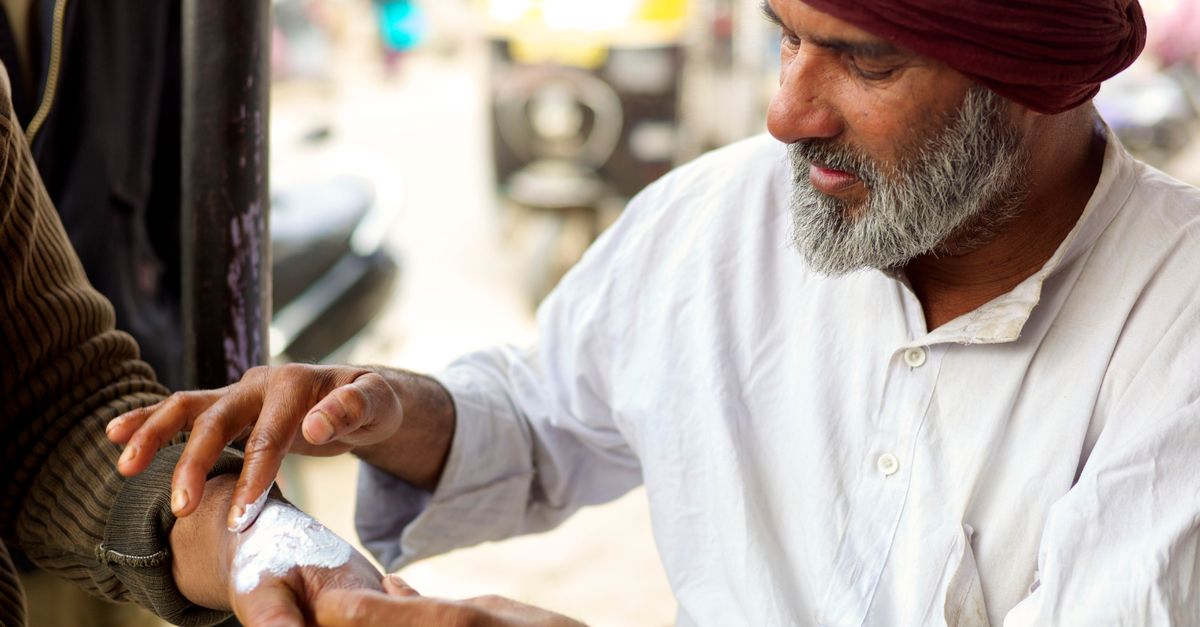
Salvacine is a complex topical botanical formulation utilizing olive leaf, yarrow, calendula, and plantain extracts to support natural wound healing and soothe localized skin inflammation. The most notable side effect involves allergic contact dermatitis, primarily triggered by hypersensitivity to the Asteraceae botanical extracts, which can paradoxically exacerbate dermal irritation.
1. Introduction & Mechanism of Action of Salvacine
This polypharmacy botanical preparation relies on the synergistic actions of multiple plant extracts to promote epidermal repair. Ingredients such as Calendula officinalis and Achillea millefolium are rich in anti-inflammatory flavonoids and triterpenoids. These compounds actively inhibit the release of pro-inflammatory cytokines at the site of tissue injury, significantly reducing localized erythema and swelling.
Furthermore, Plantago major and Olea europaea leaf extract contain high concentrations of natural antioxidants and mucilaginous compounds. These biochemical agents stimulate cell proliferation and accelerate tissue regeneration while creating a soothing, microbially hostile microenvironment on the surface of minor scrapes. Together, these extracts form a protective barrier that facilitates optimal wound healing and reduces the discomfort associated with superficial abrasions.
2. Warnings & Prerequisites Before Using Salvacine
While composed of natural botanicals, this formulation necessitates strict immunological precautions. Patients with a known hypersensitivity to plants in the Asteraceae family, including ragweed, chrysanthemums, and daisies, must avoid this product entirely. The high concentrations of calendula and yarrow guarantee cross-reactivity and will trigger severe allergic responses.
Furthermore, Salvacine is strictly contraindicated for application on deep puncture wounds, severe weeping thermal burns, or actively bleeding lesions. Applying thick botanical salves into deep fascial defects can trap opportunistic, anaerobic bacteria, vastly increasing the risk of deep-tissue infections and significantly delaying natural epithelialization.
3. Clinical Indications & Salvacine Dosage Guide
Salvacine is clinically indicated for the daily management and symptomatic relief of minor superficial abrasions, localized patches of contact dermatitis, mild environmental skin chafing, and superficial epidermal fissures resulting from extreme dehydration.
For optimal therapeutic benefit, the affected skin must be thoroughly cleansed with mild soap and water and patted entirely dry before application. A thin, even layer of the botanical ointment should be applied directly to the affected area two to three times daily. A sterile, non-adherent bandage may be placed over the treated area to protect the healing tissue from environmental friction.
4. In-Depth Salvacine Side Effects Analysis
Due to its application on intact but compromised skin, the adverse event profile for this botanical blend is predominantly restricted to localized immunological and mild follicular reactions.
Common Side Effects
The most universally encountered side effect is transient, mild stinging immediately upon application to raw or recently abraded skin. The heavy lipid bases used to suspend the botanical extracts frequently cause localized occlusion. This occasionally results in mild, transient exacerbations of folliculitis in areas dense with hair follicles if the ointment is applied too thickly.
Serious Side Effects You Should Report
Severe localized hypersensitivity requires immediate cessation of therapy and medical intervention. Patients must seek urgent clinical evaluation if the application site erupts in a rapidly spreading, intensely pruritic rash characterized by weeping, fluid-filled vesicles. Additionally, the sudden onset of generalized hives, facial swelling, or severe respiratory distress indicates an acute systemic anaphylactic reaction to the botanical proteins, representing a medical emergency.
Rare Side Effects
In exceedingly rare instances involving highly sensitive individuals, prolonged exposure to yarrow extract can induce mild phototoxicity. This rare reaction makes the specifically treated skin hyper-reactive to ultraviolet radiation, leading to painful, localized sunburns upon standard sun exposure. Chronic use of thick, occlusive salves can rarely trigger miliaria by completely blocking the eccrine sweat ducts.
Side Effects That Usually Do Not Require Medical Attention
A lingering, earthy or intensely herbal odor is entirely normal and expected due to the unrefined botanical extracts. Minor, temporary pinkness of the skin that fades rapidly after the physical friction of application generally requires no medical attention and simply reflects increased local capillary blood flow.
| Side Effect Category | Specific Symptoms |
|---|---|
| Dermatological | Mild stinging on broken skin, temporary pinkness |
| Allergic | Severe contact dermatitis, blistering, localized hives |
| Phototoxic | Hyper-reactivity to sunlight at the application site |
| Follicular | Miliaria, localized folliculitis from occlusive bases |
5. Recognizing a Salvacine Overdose
A systemic overdose through proper topical application on intact or superficially abraded skin is physiologically impossible, as the complex botanical polysaccharides and heavy lipid bases cannot penetrate in volumes required to enter the systemic circulation. Applying excessively thick layers simply wastes the product and drastically increases the risk of pore occlusion.
Accidental oral ingestion of the formulation constitutes a minor toxicological event. Ingestion typically results in mild to moderate gastrointestinal distress, presenting as nausea, localized stomach cramping, and diarrhea due to the heavy lipid base and the complex plant resins. Emergency medical services should be contacted for supportive care guidelines.
6. Missed Dose & What to Avoid While Using Salvacine
Since this botanical ointment is utilized strictly on an as-needed basis for barrier repair and wound soothing, there is no formal dosing schedule. If an application is missed and the wound becomes dry and irritated, the patient should simply apply a fresh layer to re-establish the protective barrier.
Patients must strictly avoid applying this heavy botanical salve to skin that is actively infected with a fungal or severe bacterial pathogen. Thick ointments lack systemic antimicrobial properties; applying them over an active infection will aggressively trap the heat and moisture required for the pathogen to proliferate rapidly, severely worsening the underlying clinical condition.
7. Salvacine Drug & Topical Interactions
Systemic pharmaceutical interactions are entirely non-existent. However, topical interactions must be managed with clinical precision. Salvacine must not be layered concurrently over prescription topical treatments, such as high-potency hydrocortisone or topical antibiotics, unless explicitly directed by a dermatologist.
If directed to utilize both, the prescription medication must be applied first and allowed to absorb completely into the epidermis for at least twenty minutes. Applying the dense botanical barrier first will completely block the absorption of the prescription drug, rendering the targeted pharmaceutical therapy entirely ineffective.
8. Precautions, Safety Profile & Duration of Action for Salvacine
The immediate soothing and physical barrier protection begins instantly upon application. The pharmacological anti-inflammatory properties typically require consistent application over several days to significantly reduce chronic erythema and promote sustained epidermal healing.
The safety profile of this blend is generally excellent for patients without specific botanical allergies. However, care must be taken to maintain the sterility of the container. Patients should use clean hands or a sterile applicator to scoop the product from jars to prevent introducing environmental bacteria into the lipid base, which could rapidly spoil the natural extracts.
9. How to Safely Stop Salvacine & Storage Guidelines
Use of the botanical ointment can be discontinued immediately once the superficial wound has fully closed and the epidermal barrier has fully repaired. Continuing heavy ointment application on fully healed skin is unnecessary and drastically increases the risk of developing localized folliculitis.
Store the product at controlled room temperature, strictly protected from extreme heat and direct sunlight. High temperatures will cause the heavy lipid bases to melt and separate from the active botanical extracts, severely compromising the physical integrity of the protective barrier. Ensure the cap is secured tightly to prevent contamination.
10. When to Seek Medical Attention for Salvacine Side Effects
Urgent medical assessment is required if the superficial wound shows no clinical improvement after ten days of continuous, proper treatment, or if the skin begins to display deep fissures that bleed continuously. Furthermore, if the patient develops a systemic fever, or if the wound begins to present with foul-smelling yellow pus and red streaks, a physician must evaluate the patient immediately for a secondary bacterial skin infection requiring oral antibiotics.
Frequently Asked Questions FAQ
1. How does this botanical blend repair my superficial scrape?
It works in two ways. The heavy lipid bases physically seal the wound to prevent dehydration, while ingredients like Calendula and Plantago major actively reduce the cellular inflammation that causes redness and pain, allowing the tissue to regenerate efficiently.
2. Why did my skin break out in an itchy, blistering rash after using this salve?
You are likely experiencing allergic contact dermatitis. People who are allergic to ragweed or daisies frequently have severe cross-reactive allergies to the Calendula and Yarrow in this product. You must stop using it immediately.
3. Can I apply this ointment directly onto a deep, bleeding puncture wound?
No. You must never apply complex botanical salves deep into actively bleeding or gaping wounds. It can trap bacteria and cause a deep tissue infection. It is meant exclusively for surface-level abrasions and intact skin.
4. Is it safe to use this product on my child’s scraped knee?
Yes, it is generally safe for minor pediatric scrapes, provided the child does not have allergies to the specific plants listed and the wound is thoroughly washed with soap and water first.
5. Will this ointment prevent a bacterial infection in the scrape?
While some botanical extracts possess very mild antimicrobial properties, they do not replace proper wound washing and they do not possess the strength of prescription antibiotics for heavily contaminated injuries.
6. Why do I need to keep the treated area out of the bright sun?
Some botanical components can make your skin highly sensitive to ultraviolet light. Exposing the treated area to direct, intense sunlight can cause a severe, painful chemical sunburn.
7. What should I do if the scrape starts oozing thick yellow fluid?
Stop using the ointment immediately. Yellow, foul-smelling fluid indicates a severe bacterial infection, such as staphylococcus, which requires prompt medical evaluation and a prescription antibiotic treatment.
Bibliography
Disclaimer: The content is for informational purposes only and does not replace medical advice. Always consult your doctor or pharmacist for personalized treatment.
