
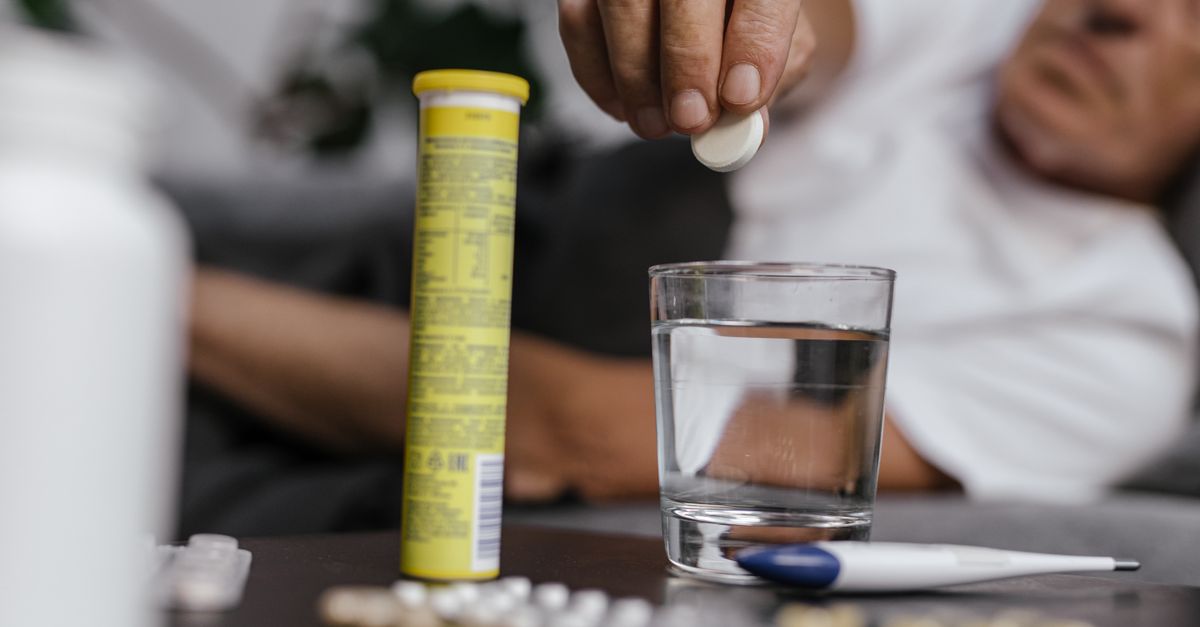
Alka Seltzer Plus Cold Day and Night Effervescent is a combination over-the-counter medication utilized to relieve multiple symptoms associated with the common cold and influenza. The most notable adverse effects stem from its multi-ingredient formulation, frequently presenting as gastrointestinal irritation from the analgesic component or mild cardiovascular stimulation from the decongestant. This preparation contains aspirin for pain and fever reduction, dextromethorphan hydrobromide for cough suppression, and phenylephrine bitartrate to alleviate nasal congestion.
1. Introduction & Mechanism of Action of Alka Seltzer Plus Cold Day And Night
This effervescent medication relies on a tripartite pharmacological approach to manage upper respiratory symptoms. Aspirin operates as a nonsteroidal anti-inflammatory drug by irreversibly inhibiting the cyclooxygenase enzymes. This blockade significantly reduces the synthesis of prostaglandins, which are the primary chemical messengers responsible for pain signaling and fever generation within the central nervous system.
Dextromethorphan hydrobromide functions centrally within the medulla oblongata to elevate the coughing threshold. It achieves this by acting as an uncompetitive antagonist at the N-methyl-D-aspartate receptors, providing potent antitussive effects without the respiratory depression associated with opioid cough suppressants. Meanwhile, phenylephrine bitartrate acts as a direct alpha-1 adrenergic receptor agonist. By stimulating these receptors within the nasal mucosa, it induces localized vasoconstriction, thereby decreasing mucosal edema and improving airway patency.
2. Warnings & Before Taking Alka Seltzer Plus Effervescent
Patients must approach this multi-symptom formulation with clinical caution due to the specific risks associated with its active ingredients. The aspirin component carries a well-documented risk of gastrointestinal ulceration and bleeding. Individuals with a history of peptic ulcer disease, bleeding disorders, or those who consume three or more alcoholic beverages daily face a significantly elevated risk of hemorrhagic complications.
Furthermore, phenylephrine bitartrate can elevate systemic blood pressure. Patients with pre-existing hypertension, hyperthyroidism, ischemic heart disease, or closed-angle glaucoma must consult a physician before initiation. A critical contraindication exists regarding dextromethorphan and monoamine oxidase inhibitors. Co-administration can precipitate a life-threatening hypermetabolic state known as serotonin syndrome. This medication must never be administered to children or teenagers recovering from viral infections like chickenpox due to the risk of Reye syndrome, a rare but highly lethal neurological complication linked to aspirin.
3. Indications & Dosage Guide for Alka Seltzer Plus Cold
This effervescent therapy is clinically indicated for the temporary relief of minor aches, headache, sore throat, fever, cough, and nasal congestion associated with the common cold or seasonal influenza. The formulation is specifically engineered to dissolve rapidly in water, providing a liquid dose that promotes rapid gastric emptying and faster mucosal absorption compared to solid solid tablets.
The precise dosage is strictly governed by the product labeling. Adults and children over twelve years of age typically dissolve two tablets in four ounces of water. The resulting solution is ingested every four hours while symptoms persist. Patients must never exceed eight tablets within a twenty-four-hour window. The medication should be consumed entirely while effervescing to ensure the full dose of active ingredients is delivered.
4. In-Depth Side Effects Analysis of Alka Seltzer Plus Cold
Because this product combines three potent active pharmacological agents, the side effect profile is diverse and requires vigilant patient monitoring.
Common Side Effects
The most frequently reported mild adverse reactions involve the gastrointestinal and central nervous systems. Aspirin can cause dyspepsia, mild epigastric discomfort, and transient nausea. Phenylephrine frequently induces mild localized nasal dryness, occasional jitteriness, or mild insomnia if taken late in the evening. Dextromethorphan may produce slight somnolence or mild dizziness in sensitive individuals.
Serious Side Effects You Should Report
Immediate medical intervention is required if the patient exhibits signs of gastrointestinal hemorrhage. Symptoms include vomiting blood, passing black or tarry stools, or experiencing sudden, severe abdominal pain. Uncontrolled hypertension triggered by phenylephrine may manifest as a severe pounding headache, blurred vision, or palpitations.
Rare Side Effects
Rare but severe complications include aspirin-induced bronchospasm, particularly in patients with pre-existing asthma and nasal polyps. Severe dermatological hypersensitivity, such as Stevens-Johnson syndrome, is extremely rare but possible. Some patients may experience a paradoxical central nervous system excitation from dextromethorphan, leading to extreme restlessness rather than sedation.
Side Effects That Usually Do Not Require Medical Attention
Minor physiological responses such as a temporary sour taste in the mouth from the effervescent citric acid or slight belching as the dissolved gas is released into the stomach require no medical management. These effects resolve spontaneously as the liquid is digested.
| Side Effect Category | Specific Symptoms |
|---|---|
| Common | Dyspepsia, mild jitteriness, transient nausea |
| Rare | Aspirin-induced bronchospasm, paradoxical excitation |
| Severe Medical | Gastrointestinal bleeding, severe palpitations, tarry stools |
5. Overdose Symptoms with Alka Seltzer Plus
An intentional or accidental overdose of this complex formulation presents a multi-faceted toxicological emergency. Salicylate poisoning from the aspirin component initially causes severe tinnitus, hyperventilation, and vomiting, potentially progressing to profound metabolic acidosis and cardiovascular collapse.
Simultaneously, toxic levels of dextromethorphan can induce severe lethargy, altered mental status, visual hallucinations, and shallow breathing. An overdose of phenylephrine will precipitate a hypertensive crisis, placing the patient at immediate risk for a cerebral hemorrhage or myocardial infarction. Emergency management requires immediate stabilization in a hospital setting, including gastric decontamination and the administration of intravenous sodium bicarbonate for the salicylate toxicity.
6. Missed Dose & What to Avoid While Taking Alka Seltzer Plus
This medication is intended solely for symptomatic relief and is administered on an as-needed basis. Consequently, a missed dose poses no physiological withdrawal risks. The patient should simply take the next dose when symptoms return, ensuring they do not exceed the twenty-four-hour maximum limit or dose more frequently than every four hours.
Patients must rigorously avoid co-administering any other over-the-counter or prescription medications containing nonsteroidal anti-inflammatory drugs. Utilizing ibuprofen or naproxen concurrently will exponentially increase the risk of massive gastric hemorrhage. Additionally, patients should avoid consuming other cold remedies containing decongestants to prevent dangerous cumulative cardiovascular stimulation.
7. Drug & Alcohol Interactions with Alka Seltzer Plus
The aspirin component demonstrates profound interactions with systemic anticoagulants. Co-administration with drugs like warfarin or novel oral anticoagulants drastically amplifies the risk of uncontrollable systemic bleeding. Aspirin also competes for renal excretion with certain medications, potentially increasing the toxicity of agents like methotrexate.
Concurrent use of central nervous system depressants or alcohol will severely exacerbate the dizziness and somnolence associated with dextromethorphan. More critically, heavy alcohol consumption synergizes with aspirin to rapidly degrade the gastric mucosal barrier, making hemorrhagic ulcers highly probable. Patients must absolutely avoid alcohol for the duration of this therapy.
8. Precautions, Safety & Duration of Action of Alka Seltzer Plus
A critical safety precaution is recognizing the boundaries of self-medication. This preparation is designed for acute, short-term management of viral symptoms. It is not formulated to treat underlying bacterial infections such as streptococcal pharyngitis or bacterial pneumonia.
The therapeutic duration of a single dose generally spans four to six hours. If the patient requires continuous dosing for more than seven consecutive days, or if the fever persists beyond three days, the underlying illness has likely progressed beyond the scope of a standard viral infection. Extended use without medical supervision is strictly prohibited due to the cumulative risks of salicylate exposure.
9. How to Stop Taking Alka Seltzer Plus & Storage/Disposal
Discontinuation of this cold remedy is immediate and requires no tapering protocol. Once the cough, fever, and congestion have subsided to a tolerable level, the patient should abruptly cease using the effervescent tablets. Rebound symptoms associated with withdrawal are not a clinical concern with this specific chemical profile.
The foil pouches containing the tablets must be stored in a cool, dry environment away from extreme humidity. Exposure to moisture will trigger the effervescent chemical reaction prematurely, degrading the active ingredients. Expired or unsealed tablets should be safely discarded in standard household waste, securely contained to prevent accidental ingestion by pets.
10. When to See a Doctor While on Alka Seltzer Plus
Medical evaluation is mandatory if the patient develops a new, persistent high fever above 103 degrees Fahrenheit while taking the medication. Furthermore, if the cough becomes highly productive with thick, discolored sputum, a secondary bacterial chest infection is likely present and requires targeted antimicrobial therapy.
Patients must seek emergency care if they experience severe shortness of breath, sudden chest pain, or noticeable swelling in the face or extremities. These symptoms indicate either a severe hypersensitivity reaction or a critical cardiovascular event exacerbated by the pharmacological components of the medication.
11. Frequently Asked Questions FAQ
1. Why must the tablets be dissolved in water before taking?
The effervescent format requires water to trigger a chemical reaction that creates a buffered solution. Swallowing the tablets whole can cause severe, highly concentrated chemical burns to the stomach lining.
2. Can I take this medicine if I am already taking daily low-dose aspirin for my heart?
You must consult your cardiologist. Taking this medication adds a significant amount of extra aspirin to your system, dangerously increasing your risk of internal bleeding.
3. Will the dextromethorphan ingredient make me fall asleep?
While dextromethorphan is not a primary sedative, it can cause mild drowsiness or dizziness in sensitive individuals, making it unsafe to operate heavy machinery until you know how it affects you.
4. Is it safe for a teenager with a bad flu?
No. Aspirin-containing products must never be given to anyone under the age of nineteen during a viral illness due to the potentially fatal risk of Reye syndrome.
5. Can I use this if I have high blood pressure?
Patients with hypertension should avoid this product unless explicitly cleared by a doctor. The phenylephrine component forcefully constricts blood vessels and will elevate blood pressure further.
6. Does the effervescent liquid contain a lot of sodium?
Yes. The chemical reaction that creates the fizz utilizes sodium bicarbonate. Patients on strict low-sodium diets for heart or kidney disease must be extremely cautious.
7. How long can I safely take this medication?
Do not use this product for more than seven consecutive days for pain or cough, or for more than three days for fever, without direct medical supervision.
8. Can I mix the tablets with juice instead of water?
It is highly recommended to use plain water. Acidic juices can alter the intended pH of the buffered solution and potentially interfere with optimal gastric absorption.
9. What should I do if the foil packet is puffed up or inflated?
Discard the packet immediately. A swollen foil wrapper indicates that moisture has breached the seal and the chemical reaction has already occurred, rendering the medicine useless.
10. Will this cure my cold faster?
No. This medication provides only symptomatic relief to make you more comfortable while your immune system naturally clears the viral infection.
12. Bibliography
Disclaimer: The content is for informational purposes only and does not replace medical advice. Always consult your doctor or pharmacist for personalized treatment.
