
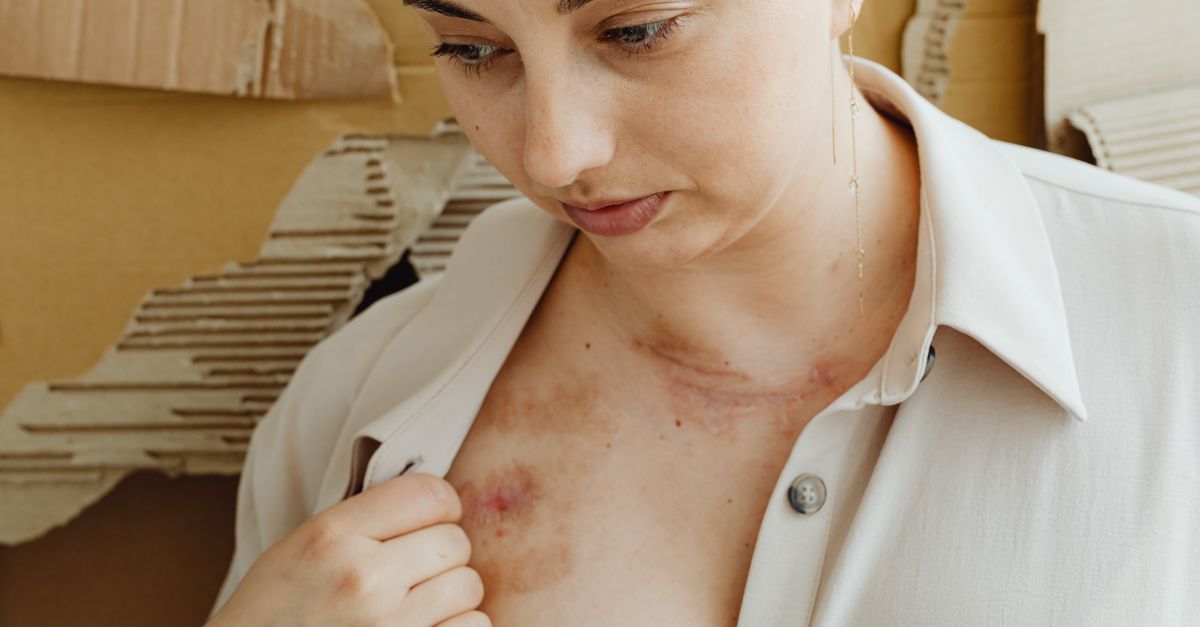
DCH Scar is a topical dermatological gel utilizing allantoin to aggressively promote tissue repair, enhance deep epidermal hydration, and soften the raised appearance of hypertrophic scars. Because allantoin is an endogenous metabolic byproduct and highly biocompatible, side effects are exceedingly rare, limited primarily to very mild contact dermatitis triggered by the inactive carrier ingredients.
1. How DCH Scar Works in the Body
DCH Scar relies on the multifaceted pharmacological properties of allantoin to alter the structural matrix of healing tissue. Allantoin is a naturally occurring diureide of glyoxylic acid. When applied consistently to heavily scarred tissue, allantoin penetrates the stratum corneum and exerts a profound keratolytic effect. It actively targets and breaks down the rigid intracellular desmosomes that bind dead, inflexible keratinocytes together over the surface of a scar.
By chemically dissolving this hardened layer of dead skin, allantoin forces the scar tissue to become significantly softer and more pliable. Concurrently, allantoin acts as a highly potent humectant and skin protectant. It heavily increases the extracellular water content in the dermal tissue, locking moisture deeply into the rigid scar matrix. This massive influx of hydration flattens raised, hypertrophic scars by reducing the mechanical tension on the healing skin.
Furthermore, allantoin is a powerful stimulant for cellular proliferation and epithelialization. It actively encourages the rapid generation of healthy, normal skin cells to replace the damaged, fibrotic tissue. By combining intense keratolytic softening, profound structural hydration, and aggressive cellular regeneration, the gel meticulously breaks down thick scar tissue over time, causing it to fade and blend seamlessly with the surrounding healthy skin.
2. Critical Warnings Before Using DCH Scar
CRITICAL WARNING: OPEN WOUND CONTRAINDICATION
Patients must rigorously avoid applying this highly concentrated scar gel to open, unhealed, or actively bleeding wounds. Allantoin is formulated exclusively to alter the structure of fully healed, closed scar tissue. Applying a potent keratolytic and hydrating agent directly into a fresh surgical incision or deep, gaping laceration will severely disrupt the natural coagulation cascade, destroy the delicate fibrin matrix, and heavily promote the overgrowth of dangerous anaerobic bacteria. The gel must only be applied once the wound has entirely closed and the sutures have been completely removed.
Patients with a known, documented hypersensitivity to allantoin or any of the botanical carrier extracts within the gel must strictly avoid this formulation. While true allergic reactions to allantoin are incredibly rare due to its biocompatible nature, application in hypersensitive individuals can precipitate severe allergic contact dermatitis, transforming the healing scar into a violently weeping, blistering, and intensely pruritic eruption.
Furthermore, extreme clinical caution must be exercised when applying the gel near the delicate mucosal tissues of the eyes or mouth. If accidental ocular exposure occurs, it will cause severe chemical stinging and mechanical irritation, mandating immediate and prolonged flushing with cool water to prevent corneal damage.
3. Indications and Proper Dosage for DCH Scar
DCH Scar is formally indicated for the targeted topical treatment and structural improvement of both old and new scars. It is highly effective for softening and flattening hypertrophic scars and keloids resulting from severe burns, major surgical incisions, severe cystic acne, and deep traumatic lacerations.
Proper dosage requires meticulous and highly consistent application to ensure complete structural remodeling of the fibrotic tissue. The patient must thoroughly wash the scarred area with mild soap and warm water, ensuring the tissue is completely dry before application. A thin, even layer of the gel should be gently and firmly massaged directly into the thick scar tissue.
The gel must be applied precisely three to four times daily. The most critical aspect of the dosage protocol is the immense duration required for scar therapy. The medication must be applied consistently for exactly eight weeks on new scars, and heavily massaged into the skin for three to six continuous months for older, highly resistant scars. Stopping the treatment prematurely will reliably guarantee an immediate halt to the structural flattening process.
4. In-Depth Side Effects Analysis of DCH Scar
Because allantoin is applied topically, is highly biocompatible, and is poorly absorbed into the systemic bloodstream, adverse medical events are incredibly rare. The side effect profile is almost entirely restricted to localized tissue reactions driven by the inactive carrier base.
| Side Effect Category | Specific Symptoms |
|---|---|
| Dermatological | Mild burning, localized stinging, intense erythema, superficial peeling |
| Immunological | Contact dermatitis, localized hives, severe blister formation |
| Infectious (Secondary) | Wound dehiscence if applied prematurely to open surgical incisions |
Common Side Effects
The most prevalent localized side effect is a mild, transient stinging or cooling sensation immediately upon applying the gel to the sensitive skin surrounding a relatively new scar. The gel may also cause localized dryness and superficial flaking precisely over the scar as the keratolytic action forces the thick, inflamed top layer of dead skin to shed off aggressively during the healing process.
Serious Side Effects You Should Report
Any signs pointing to an acute allergic reaction or structural wound failure require immediate medical intervention. If the application site suddenly develops severe, weeping blisters, massive swelling, or intractable pain that radiates beyond the scar, the patient must discontinue use immediately. Furthermore, if the previously closed scar begins to split open (dehiscence) or discharge thick, yellow pus accompanied by a foul odor, this strongly indicates a severe secondary staphylococcal infection requiring emergency surgical evaluation.
Rare Side Effects
True systemic hypersensitivity reactions presenting as widespread urticaria, facial edema, or difficulty breathing are exceptionally rare from topical allantoin but represent a life-threatening medical emergency.
Side Effects That Usually Do Not Require Medical Attention
Mild redness that fades within twenty minutes of the deep massage application and a brief, sharp sting upon initial contact with sensitive new skin are expected physiological responses to the friction and typically require absolutely no clinical intervention.
5. Symptoms of Allantoin Overdose and Necessary Actions
Topical overdose of allantoin resulting in systemic toxicity is physiologically impossible due to its remarkably poor percutaneous absorption and endogenous nature. Applying an excessively massive layer of the gel to the scar will simply create a highly uncomfortable, sticky environment that wastes the product and rubs off onto clothing, but it carries absolutely no risk of systemic internal poisoning.
Accidental oral ingestion is the primary toxicological risk, particularly for young children in the household. Swallowing the scar gel will cause severe gastrointestinal mucosal irritation. Symptoms include intense nausea, severe abdominal cramping, and profuse vomiting. The caregiver should clear the child’s mouth, provide small sips of water to dilute the stomach contents, and contact a local poison control center immediately. Vomiting should not be induced unless directed by medical professionals.
6. Managing a Missed Dose of DCH Scar and What to Avoid
If a scheduled application is missed, the patient should apply the gel as soon as they remember, provided it is not close to the next scheduled dose. If the next dose is imminent, the missed dose must be skipped entirely. Maintaining consistent, multi-daily exposure is absolutely vital to continuously suppress the rigid collagen formation within the scar.
Patients managing severe hypertrophic scars must aggressively avoid exposing the treated scar tissue to direct, intense natural sunlight or artificial ultraviolet light tanning beds. New scar tissue is highly susceptible to severe, irreversible hyperpigmentation when exposed to UV radiation. Patients must actively apply a heavy physical sunblock over the completely dried scar gel whenever venturing outdoors to prevent the scar from turning permanently dark brown.
7. What Drugs Interact with DCH Scar?
Systemic drug interactions are highly unlikely due to the minimal absorption of the topical gel. The clinical focus remains entirely on topical interactions and correct therapeutic sequencing.
Concurrent use of this scar gel with highly concentrated chemical exfoliants, such as strong salicylic acid peels or potent topical retinoids, requires immense clinical caution. Applying allantoin immediately over a newly chemically peeled scar will forcefully drive the acid deeper into the fragile tissue, leading to excruciating burning, severe contact dermatitis, and the complete destruction of the healing epidermal layer.
Additionally, patients should avoid utilizing other heavy occlusive scar treatments, such as pure silicone sheets, simultaneously over the wet gel. The thick silicone will completely prevent the water-based gel from absorbing and drying, turning the application site into a highly macerated, bacterial breeding ground. The gel must dry completely before any silicone sheets are applied.
8. Safety Precautions and Duration of Action for DCH Scar
A critical safety precaution is meticulous mechanical application. Patients must aggressively and firmly massage the gel directly into the rigid scar tissue for several minutes during each application. The deep mechanical friction of the massage physically breaks down the tough collagen bands beneath the skin, acting synergistically with the keratolytic allantoin to flatten the scar.
The onset of the softening action is notoriously slow. While some reduction in redness may be noted within a few weeks, complete clinical structural resolution of the raised scar takes immense time. The duration of therapy must be maintained strictly for three to six months. The active drug remains in the stratum corneum for several hours after application, ensuring continuous keratolytic and hydrating pressure.
9. Discontinuing and Storing DCH Scar Safely
The medication can be safely discontinued at any time once the patient is entirely satisfied with the cosmetic appearance, flatness, and softness of the scar. There is absolutely no physiological tapering protocol required. Once the rigid collagen matrix has been permanently remodeled by the prolonged therapy, the scar will remain flat.
Proper storage is critical to preserve the stability of the active allantoin. The tube must be securely closed and stored at controlled room temperature, strictly avoiding excessive heat or freezing environments. The medication must be kept entirely out of reach of young children and household pets.
10. When to Seek Medical Attention for Allantoin Side Effects
Immediate medical attention is mandatory if the patient exhibits any symptoms of a severe systemic allergic reaction, including sudden swelling of the lips, severe facial hives, or profound difficulty breathing after applying the gel.
A physician or dermatologist must be consulted immediately if the previously closed surgical scar begins to split open, bleed profusely, or show signs of deep structural failure after applying the deep massage techniques. If the application site develops painful, weeping sores or deep fissures, immediate dermatological assessment is strictly required to rule out a dangerous secondary bacterial infection.
Frequently Asked Questions (FAQ)
1. Why does the gel sting slightly when I rub it into my new scar?
New scar tissue is highly sensitive and contains raw nerve endings. The mechanical friction of rubbing the gel, combined with the hydrating ingredients, will cause a temporary, sharp stinging sensation that is completely normal.
2. Can I use this gel on a fresh cut to prevent a scar from forming?
Absolutely not. You must never apply this gel to an open wound. It will severely disrupt the healing process. You must wait until the wound is completely closed and scab-free before starting scar therapy.
3. How long do I need to keep using it before my scar disappears?
Scars never truly disappear, but they can be flattened and softened significantly. It requires applying the gel three to four times a day for three to six continuous months to see massive structural changes.
4. Is it safe to use makeup or sunscreen over the scar gel?
Yes. You must wait for the gel to completely dry and absorb into the tissue for about ten minutes. Once dry, you can safely apply heavy physical sunscreen or cosmetic concealers over the area.
5. Can I use this medication on deep acne scars on my face?
Yes, allantoin is highly effective for softening and flattening hypertrophic acne scars. However, it will not physically fill in deep, pitted “ice pick” scars that require dermatological procedures.
6. Will this gel permanently cure the dark red color of my scar?
The gel heavily increases cellular turnover, which actively helps fade the dark, post-inflammatory hyperpigmentation associated with new scars over several months of consistent use.
7. What should I do if the scar starts oozing yellow fluid despite using the gel?
If the scar begins to discharge fluid or pus, you must stop using the gel immediately and see a surgeon or doctor. This strongly indicates a severe, deep secondary bacterial infection that requires oral antibiotics.
Bibliography
Disclaimer: The content is for informational purposes only and does not replace medical advice. Always consult your doctor or pharmacist for personalized treatment.
