
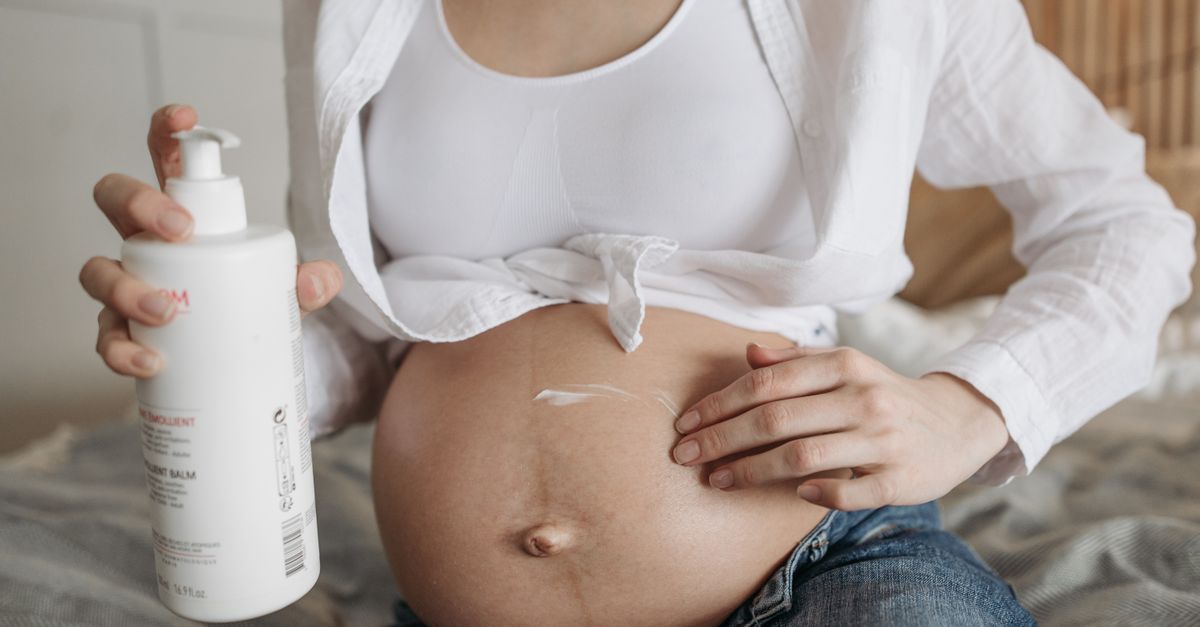
Belly Balm is a highly emollient, topical botanical formulation utilizing Rosa moschata oil (rosehip) and Calendula officinalis to hydrate the skin, improve elasticity, and soothe the pruritus associated with rapid abdominal expansion during pregnancy. The most frequent side effect is localized follicular occlusion, leading to mild exacerbations of miliaria (heat rash) or folliculitis, driven by the heavy, lipid-dense nature of the carrier oils.
1. Introduction & Mechanism of Action of Belly Balm
The therapeutic efficacy of this comprehensive botanical formulation relies on a dual mechanism of lipid barrier restoration and active pharmacological anti-inflammation to support rapidly stretching tissue. Rosa moschata oil is exceptionally rich in essential fatty acids, specifically linoleic and alpha-linolenic acids, alongside naturally occurring retinoic acid derivatives. When massaged into the skin, these lipids incorporate directly into the stratum corneum, restoring structural integrity, drastically reducing transepidermal water loss, and promoting epidermal elasticity to mitigate the structural tearing known as striae gravidarum (stretch marks).
Simultaneously, the lipophilic extracts of Calendula officinalis penetrate the superficial epidermal layers to deliver high concentrations of active triterpenoids and flavonoids. These potent biochemical agents actively inhibit local cyclooxygenase pathways, fundamentally suppressing the local production of pro-inflammatory prostaglandins. This targeted reduction in localized inflammation quickly alleviates the severe pruritus (itching) and erythema inherently associated with the extreme mechanical stretching of the abdominal skin.
2. Warnings & Prerequisites Before Using Belly Balm
While designed for soothing stretched and damaged barriers, the botanical complexity of this formulation necessitates strict immunological precautions. This product is contraindicated for patients with a known history of severe hypersensitivity to plants in the Asteraceae family, which includes ragweed, chrysanthemums, and daisies. Due to the high concentrations of Calendula, cross-reactivity is almost guaranteed and can trigger severe allergic responses on the highly sensitive abdominal skin.
Furthermore, this rich oil is strictly contraindicated for application on surgical incisions, such as a fresh cesarean section wound, prior to full medical clearance. Applying heavy botanical oils into deep fascial defects can trap opportunistic, anaerobic bacteria, vastly increasing the risk of deep-tissue infections and significantly delaying natural surgical epithelialization.
3. Clinical Indications & Belly Balm Dosage Guide
Belly Balm is clinically indicated for the daily management and symptomatic relief of severe abdominal xerosis, localized pruritus associated with skin stretching, and the cosmetic improvement of epidermal elasticity during and immediately following pregnancy.
For optimal therapeutic benefit, the botanical balm should be applied generously to the abdomen, hips, and thighs immediately following bathing, while the skin remains slightly damp. This technique effectively emulsifies the heavy oils with ambient moisture, trapping it against the epidermis. Patients should massage the balm gently in circular motions until fully absorbed, repeating the application one to two times daily throughout the second and third trimesters, and postpartum as the skin retracts.
4. In-Depth Belly Balm Side Effects Analysis
Due to its application on intact, stretching skin, the adverse event profile for this botanical blend is predominantly restricted to localized immunological and mild follicular occlusive reactions.
Common Side Effects
The most universally encountered side effect is transient, mild comedogenesis or folliculitis. The heavy lipid profile of rosehip oil and beeswax frequently causes localized occlusion of the sebaceous glands and sweat ducts on the abdomen. This occasionally results in mild, transient exacerbations of miliaria (heat rash), particularly during the summer months or under heavy maternity clothing. Mild, transient skin tightness immediately upon application can occur before the oils fully absorb.
Serious Side Effects You Should Report
Severe localized hypersensitivity requires immediate cessation of therapy and medical intervention. Patients must seek urgent clinical evaluation if the application site erupts in a rapidly spreading, intensely pruritic rash characterized by weeping, fluid-filled vesicles, which may mimic severe polymorphic eruption of pregnancy (PEP). Additionally, the sudden onset of generalized hives or severe respiratory distress indicates an acute systemic anaphylactic reaction, representing a medical emergency.
Rare Side Effects
In exceedingly rare instances involving highly sensitive individuals, repeated daily exposure to Calendula extracts can induce a delayed-type hypersensitivity reaction. This presents as a chronic, low-grade contact dermatitis resembling persistent dry, flaky, and slightly red patches that fail to improve with continued moisturization and may be severely itchy.
Side Effects That Usually Do Not Require Medical Attention
A lingering, earthy or mildly floral odor is entirely normal and expected due to the unrefined botanical extracts. Minor, temporary pinkness of the skin that fades rapidly after the physical friction of the abdominal massage generally requires no medical attention and simply reflects increased local capillary blood flow.
| Side Effect Category | Specific Symptoms |
|---|---|
| Follicular | Comedogenesis, localized folliculitis, miliaria (heat rash) |
| Allergic | Severe contact dermatitis, blistering, localized hives |
| Dermatological | Temporary pinkness from massage friction |
5. Recognizing a Belly Balm Overdose
A systemic overdose through proper topical application on intact skin is physiologically impossible, as the complex botanical molecules and heavy lipid bases cannot penetrate in volumes required to enter the systemic circulation. Applying excessively large amounts simply wastes the product, permanently stains maternity clothing, and drastically increases the risk of severe pore occlusion and heat rash.
Accidental oral ingestion of the formulation, a scenario most frequently seen if toddlers in the household gain access to the jar, constitutes a minor toxicological event. Ingestion typically results in mild to moderate gastrointestinal distress, presenting as nausea, localized stomach cramping, and diarrhea due to the heavy lipid base and the complex plant resins. Emergency medical services should be contacted for supportive care guidelines.
6. Missed Dose & What to Avoid While Using Belly Balm
Since this emollient balm is utilized strictly on an as-needed basis for barrier repair and aesthetic improvement of stretch marks, there is no formal dosing schedule. If an application is missed and severe itching returns, the patient should simply apply a fresh layer to re-establish the protective, hydrating barrier.
Patients must strictly avoid applying this heavy botanical oil immediately prior to obstetrical ultrasounds. The thick lipid base severely interferes with the water-based conductive gel used by the sonographer, degrading image quality and potentially rendering the ultrasound diagnostically useless. Furthermore, avoid utilizing harsh, abrasive physical scrubs on the belly prior to application, as mechanical friction severely damages the already stressed skin.
7. Belly Balm Drug & Topical Interactions
Systemic pharmaceutical interactions are entirely non-existent. However, topical interactions must be managed with clinical precision. Belly Balm must not be layered concurrently over prescription topical treatments, such as high-potency topical topical steroids prescribed for severe pregnancy rashes (e.g., PUPPP), unless explicitly directed by a dermatologist or obstetrician.
If directed to utilize both, the prescription medication must be applied first and allowed to absorb completely into the epidermis for at least twenty minutes. Applying the dense botanical barrier first will completely block the absorption of the prescription drug, rendering the targeted pharmaceutical therapy entirely ineffective.
8. Precautions, Safety Profile & Duration of Action for Belly Balm
The immediate soothing and physical barrier protection begins instantly upon application. The pharmacological anti-inflammatory properties of the Calendula typically require consistent application over several days to significantly reduce chronic erythema and itching associated with skin stretching.
The safety profile of this blend is generally excellent for pregnant patients without specific botanical allergies. However, care must be taken to maintain the sterility of the container. Patients should always use clean hands to scoop the balm from the jar to prevent introducing environmental bacteria into the lipid base, which could rapidly spoil and oxidize the natural extracts.
9. How to Safely Stop Belly Balm & Storage Guidelines
Use of the botanical balm can be discontinued abruptly at any time without any physiological withdrawal effects. Patients typically phase out the use of the product several months postpartum once the abdominal skin has naturally retracted and stabilized.
Store the product at controlled room temperature, strictly protected from extreme heat and direct sunlight. High temperatures and ultraviolet light will cause the fragile essential fatty acids in the rosehip oil to oxidize and become rancid, severely compromising the therapeutic integrity of the product and generating a foul odor. Ensure the cap is secured tightly to prevent oxidation.
10. When to Seek Medical Attention for Belly Balm Side Effects
Urgent medical assessment is required if the severe abdominal itching shows no clinical improvement, or if the skin develops raised, intensely itchy, red plaques that spread to the thighs and buttocks, which may indicate a severe pregnancy-specific autoimmune rash (like PUPPP or Pemphigoid Gestationis) requiring prescription intervention. Furthermore, if a fresh cesarean incision treated with the balm begins to present with foul-smelling yellow pus or extreme heat, a physician must evaluate the patient immediately for a surgical site infection.
Frequently Asked Questions FAQ
1. How does this botanical blend prevent stretch marks?
Stretch marks are largely determined by genetics and rapid growth. This balm cannot entirely prevent them, but the heavy rosehip oil physically hydrates the skin, improving its maximum elasticity, while Calendula actively reduces the cellular inflammation that causes severe itching as the skin stretches.
2. Why did my belly break out in an itchy, blistering rash after using this balm?
You are likely experiencing allergic contact dermatitis. People who are allergic to ragweed or daisies frequently have severe cross-reactive allergies to the Calendula in this product. You must stop using it immediately and wash your skin.
3. Can I apply this balm directly onto my cesarean section scar?
No. You must never apply complex botanical oils deep into an actively healing surgical incision. It can trap bacteria and cause a deep tissue infection. You may only use it on closed, fully healed scars after receiving clearance from your obstetrician.
4. Is it safe to use this product while pregnant?
Yes, topical rosehip oil and Calendula are generally recognized as safe for external use during pregnancy. However, you should always run all topical treatments past your obstetrician, particularly if you have sensitive skin.
5. Why do I have tiny red bumps all over my belly after using this?
This is likely miliaria (heat rash) or localized folliculitis. The heavy lipid profile of the balm is highly occlusive and may easily clog your sweat glands if applied too thickly under tight maternity clothing. Try applying a much thinner layer.
6. Why did the balm smell sour and look cloudy after a few months?
Rosehip oil is highly susceptible to oxidation. If the jar was exposed to heat, light, or unwashed fingers, the essential fatty acids have gone rancid. The product is ruined and must be discarded.
7. Do I need to wash this off before my ultrasound appointment?
Yes. You should not apply this balm on the day of an ultrasound. The heavy oils repel water and will completely block the water-based conductive gel the technician uses, ruining the imaging process.
Bibliography
Disclaimer: The content is for informational purposes only and does not replace medical advice. Always consult your doctor or pharmacist for personalized treatment.
