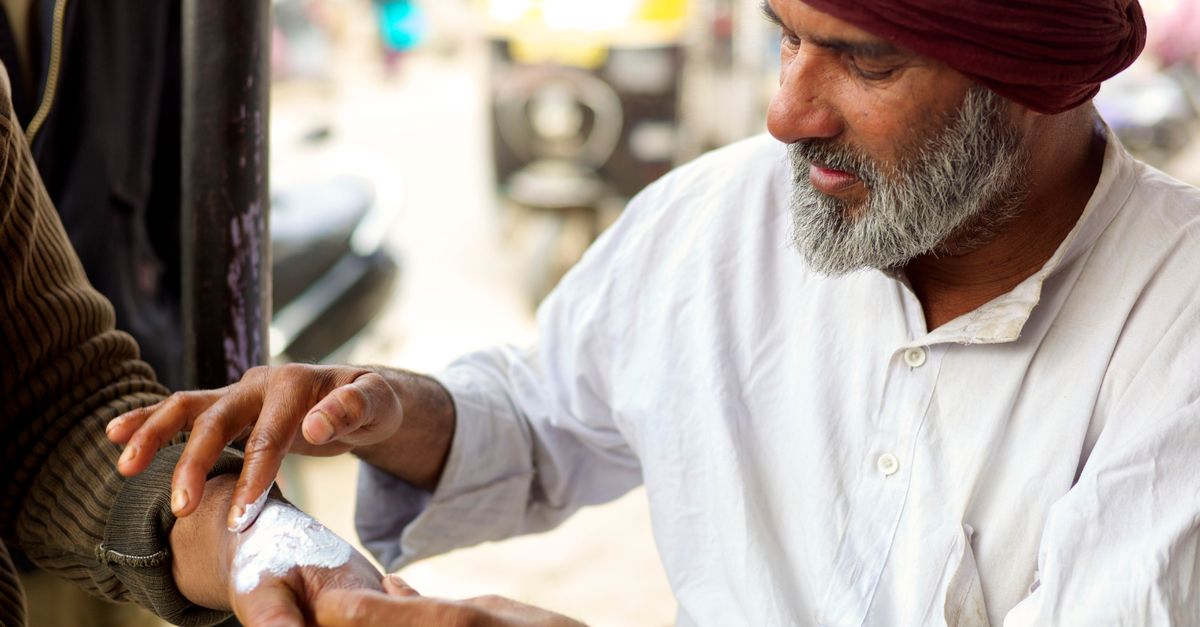
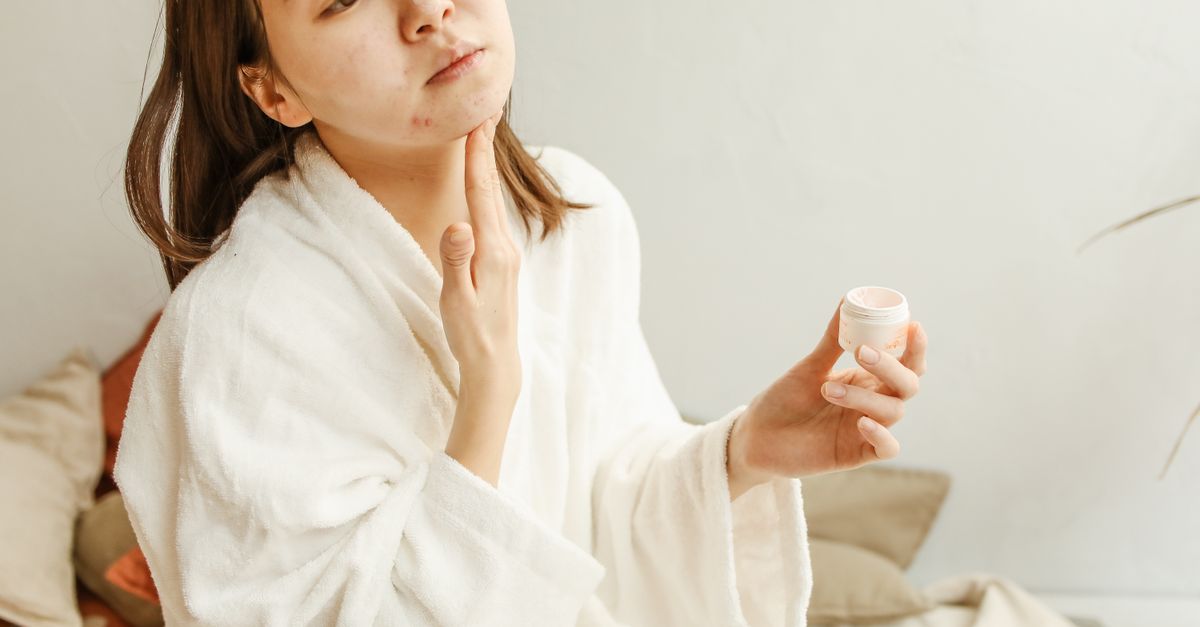
MD-Acne Body Acne Treatment relies on benzoyl peroxide as a potent topical antibacterial and keratolytic agent to eradicate acne-causing bacteria across large dermal surface areas. The most notable side effect is localized irritant contact dermatitis, characterized by prominent skin dryness, peeling, and mild erythema at the site of application.
1. Introduction & Mechanism of Action of MD-Acne Body Treatment
Benzoyl peroxide operates as a highly effective, broad-spectrum antimicrobial agent specifically targeting Cutibacterium acnes, the primary bacterial driver of acne vulgaris. Because it is highly lipophilic, benzoyl peroxide readily penetrates the sebum-rich environment of the pilosebaceous unit. Once inside the follicle, the molecule rapidly decomposes, releasing potent free radical oxygen species.
These free radicals aggressively oxidize bacterial proteins and cell membranes, resulting in the rapid death of the anaerobic bacteria. Crucially, because this mechanism relies on physical oxidation rather than specific enzymatic disruption, bacteria cannot develop a genetic resistance to benzoyl peroxide. In addition to its bactericidal properties, benzoyl peroxide exerts a mild keratolytic effect, breaking down desmosomes to facilitate the shedding of dead skin cells and preventing the occlusion of pores.
2. Warnings & Before Applying MD-Acne Body Treatment
Patients with a known hypersensitivity to benzoyl peroxide must strictly avoid this formulation to prevent severe allergic contact dermatitis. Applying this potent oxidizing agent to actively weeping lesions, sunburned skin, or open lacerations will incite intense localized pain and severely delay the natural wound healing cascade.
Individuals with inherently dry or highly sensitive skin, such as those diagnosed with atopic dermatitis, must approach therapy cautiously. Because body skin is thicker than facial skin, higher concentrations are often used, which drastically increases the risk of severe xerosis and barrier disruption. Patients are strongly advised to perform a small patch test on the inner forearm for forty-eight hours before applying the cream to broad areas of the back or chest.
3. Indications & Dosage Guide for MD-Acne Body Treatment
This topical formulation is clinically indicated for the management of mild to moderate truncal acne vulgaris, commonly presenting on the back, chest, and shoulders. It effectively reduces inflammatory papules and pustules while actively preventing the formation of new microcomedones.
For optimal clinical efficacy, the treatment should be applied in a thin, uniform layer across the entire affected area after thoroughly cleansing and drying the skin. Spot treating individual pimples is less effective than field therapy, as the medication is designed to treat the entire acne-prone zone prophylactically. Dermatological guidelines generally recommend starting with a single daily application, gradually increasing to twice daily only if the patient demonstrates strong clinical tolerance.
4. In-Depth Side Effects Analysis of MD-Acne Body Treatment
Common Side Effects
The expected physiological response to benzoyl peroxide therapy involves localized barrier disruption. Patients universally report a degree of localized xerosis, presenting as tight, dry skin accompanied by superficial desquamation. Mild erythema and a transient stinging sensation immediately following application are standard reactions to the oxidative process.
Serious Side Effects You Should Report
While systemic toxicity is not a concern, severe localized dermatological reactions require immediate product cessation and medical evaluation.
| Side Effect Category | Specific Symptoms |
|---|---|
| Severe Contact Dermatitis | Intense, painful burning, deep skin fissuring, weeping clear fluid |
| Allergic Hypersensitivity | Severe facial swelling, widespread urticaria, difficulty breathing |
| Severe Photosensitivity | Rapid, extreme sunburn following minimal solar exposure |
Rare Side Effects
In rare clinical instances, chronic application in highly susceptible individuals can induce localized post-inflammatory hyperpigmentation. This occurs when the skin overproduces melanin in response to the constant, low-grade chemical irritation induced by the benzoyl peroxide.
Side Effects That Usually Do Not Require Medical Attention
Minor, transient itching that resolves within minutes of the product drying, or slight tightness of the skin, are completely benign. Utilizing a non-comedogenic body moisturizer alongside the treatment easily mitigates these minor inconveniences without compromising the efficacy of the active ingredient.
5. Overdose of MD-Acne Body Treatment
A systemic, physiological overdose via standard topical application is impossible. Benzoyl peroxide is rapidly metabolized into benzoic acid in the skin and promptly cleared by the kidneys if trace amounts enter the bloodstream. Over-application exclusively results in a profound localized chemical burn, characterized by severe redness, extreme peeling, and pain.
If the product is accidentally ingested, the oxidizing agent will cause moderate to severe irritation of the oral and gastric mucosa. The patient will likely experience nausea, abdominal cramping, and vomiting. Rinsing the mouth and drinking water to dilute the chemical load is the immediate first-aid response, followed by contacting a poison control center for further guidance.
6. Missed Dose & What to Avoid While Using MD-Acne Body Treatment
Because acne management relies on consistent bacterial suppression, missing a dose allows Cutibacterium acnes populations to temporarily rebound within the follicles. If a dose is missed, the patient should apply the treatment as soon as remembered, but must never double the application volume to compensate, as this will trigger severe chemical irritation.
Patients must meticulously avoid allowing the treated skin to contact colored fabrics. Benzoyl peroxide is a potent bleaching agent that will permanently remove the dye from towels, clothing, and bed sheets. Furthermore, patients must avoid applying harsh physical exfoliants, alcohol-based toners, or topical retinoids concurrently to the same area without medical guidance, as the compounded irritation will destroy the epidermal barrier.
7. Drug & Alcohol Interactions with MD-Acne Body Treatment
Because benzoyl peroxide functions topically, it does not engage in systemic pharmacological interactions with oral medications. However, coordinating overlapping dermatological therapies requires caution. For patients requiring systemic bacterial control for severe nodulocystic acne, reviewing doxycycline therapy parameters provides insight into how oral antibiotics can complement topical oxidizing agents safely.
Routine alcohol intake does not directly interact with the topical chemistry. However, systemic dehydration caused by heavy alcohol consumption exacerbates the drying effects of benzoyl peroxide, making the skin significantly more prone to painful fissuring and delayed healing.
8. Precautions, Safety & Duration of Action for MD-Acne Body Treatment
The bactericidal action of benzoyl peroxide begins immediately upon application and continues as long as the active molecule remains on the skin. Visible clinical improvement in inflammatory acne lesions generally requires a minimum of four to six weeks of consistent daily therapy. Premature discontinuation often results in a rapid relapse of truncal acne.
Store the medication tightly closed at room temperature. Exposing the product to high heat or direct sunlight will drastically accelerate the decomposition of the benzoyl peroxide molecules within the tube, resulting in a loss of clinical efficacy and a highly degraded, watery texture.
9. How to Stop Using MD-Acne Body Treatment & Storage/Disposal
Therapy can be discontinued abruptly without the need for a medical tapering schedule. However, patients should expect a gradual return of their baseline acne severity over the following weeks if an alternative maintenance routine is not established.
Dispose of expired or empty product containers in standard household waste. Avoid squeezing massive quantities of the active cream down municipal drains, as potent antibacterial agents can disrupt the delicate bacterial balance required in local wastewater treatment facilities.
10. When to See a Doctor Regarding MD-Acne Body Treatment
Immediate dermatological consultation is necessary if the patient develops exquisitely painful, deep cystic nodules that fail to respond to the topical treatment after six weeks. Additionally, if the patient develops severe, blistering erythema that spreads beyond the area of application, a profound allergic contact dermatitis is likely occurring, mandating the use of prescription topical corticosteroids to resolve the inflammation safely.
11. Frequently Asked Questions (FAQ)
1. How exactly does benzoyl peroxide kill acne bacteria?
It works by pushing pure oxygen into the pore. The acne bacteria cannot survive in an oxygen-rich environment, so the oxygen physically destroys their cell walls, killing them rapidly.
2. Why did this cream ruin my favorite shirt?
Benzoyl peroxide is a powerful chemical oxidizing agent, which means it acts similarly to household bleach. It will permanently strip the dye from any fabric it touches.
3. Is it normal for my skin to peel heavily during the first week?
Yes. Mild to moderate peeling and dryness are expected as the skin adjusts to the medication. This peeling also helps unclog blocked pores.
4. Can I use this product on my face?
Body acne treatments often contain higher concentrations of the active ingredient and heavier carrier bases. Using it on the more sensitive skin of the face can cause severe burning and irritation.
5. Should I apply it only to my active pimples?
No. It is far more effective to apply a thin layer over the entire acne-prone area. This kills the bacteria before a pimple even has a chance to form.
6. Will the acne bacteria become resistant to this treatment over time?
No. Unlike topical antibiotics, bacteria cannot mutate to survive oxidation. Benzoyl peroxide will remain effective indefinitely.
7. How long do I need to wait to see clear skin?
Acne treatments take time. You must use the product consistently every day for at least four to six weeks before judging its clinical effectiveness.
8. Can I go out in the sun while using this medication?
Benzoyl peroxide severely increases your skin’s sensitivity to ultraviolet light. You must apply a broad-spectrum sunscreen over the treated areas to prevent rapid and severe sunburns.
9. Can I use a moisturizer over the treatment?
Absolutely. Applying a non-comedogenic, oil-free moisturizer after the treatment dries is highly recommended to combat the severe dryness caused by the medication.
10. Is this product safe to use during pregnancy?
While topical benzoyl peroxide is widely considered safe, you must always have any acne treatment explicitly cleared by your obstetrician during pregnancy.
Bibliography
Disclaimer: The content is for informational purposes only and does not replace medical advice. Always consult your doctor or pharmacist for personalized treatment.