
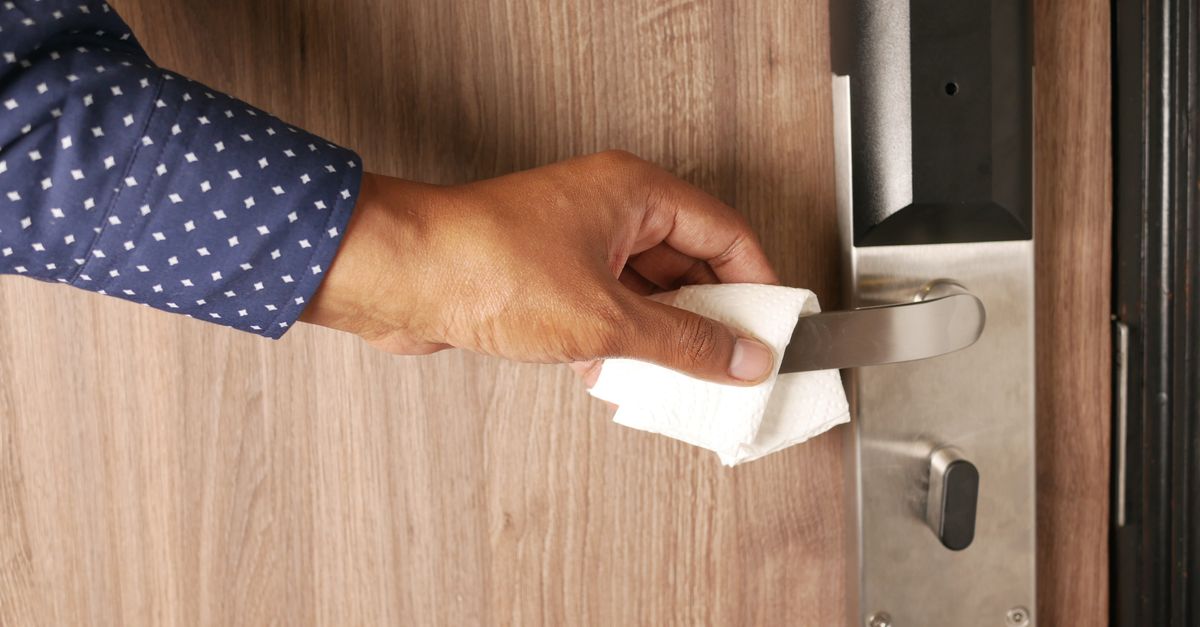
My-Shield Sanitizing Hand Wipes deliver Benzalkonium Chloride via a pre-moistened towelette to mechanically and chemically neutralize bacteria on the hands. The primary side effect is localized skin tightness and scaling caused by the chemical stripping of natural oils combined with the physical friction of the wipe. Utilizing a high-quality hand cream after use helps mitigate cumulative dermal damage and preserves skin integrity.
1. Introduction & Mechanism of Action of My-Shield Sanitizing Hand Wipes
Benzalkonium Chloride is an established quaternary ammonium compound that serves as a highly effective broad-spectrum antimicrobial. By utilizing a pre-moistened wipe delivery system, this product combines mechanical friction with potent chemical action.
When the wipe is rubbed across the skin, the physical friction dislodges dirt, organic matter, and surface pathogens. Simultaneously, the positively charged Benzalkonium Chloride molecules bind to the bacterial cell walls. This binding aggressively disrupts the lipid bilayer of the pathogen, causing vital internal fluids to leak out and resulting in instantaneous bacterial cell death. The wipe physically removes the neutralized debris while leaving a microscopic chemical residue for transient residual protection.
2. Warnings & Before Taking My-Shield Sanitizing Hand Wipes
These antimicrobial wipes are strictly manufactured for external topical application on the hands and intact skin. They must never be chewed, sucked on, or ingested, which makes strict supervision mandatory when utilized around infants and small children. Extreme care must be taken to avoid wiping the eyes or sensitive mucosal membranes, as the active chemical will induce severe irritation and potential corneal damage.
Individuals with a known hypersensitivity to Benzalkonium Chloride or the specific fibrous materials comprising the wipe should avoid this product. Furthermore, patients suffering from severely compromised skin barrier conditions, such as weeping eczema or deep lacerations, must consult a healthcare provider before introducing harsh chemical friction to damaged dermal tissue.
3. Indications & Dosage Guide for My-Shield Sanitizing Hand Wipes
My-Shield Sanitizing Hand Wipes are clinically indicated for rapid hand decontamination and the physical removal of light soil when traditional soap and water facilities are unavailable. They are highly utilized in clinical environments, travel settings, and food preparation areas to maintain rigorous infection control.
Proper usage dictates taking a single fresh wipe and systematically rubbing it across all surfaces of both hands. The user must meticulously wipe the palms, the back of the hands, the interdigital spaces, and around the fingernails. The hands must then be allowed to air dry completely. The wipes are single-use only; reusing a dried or heavily soiled wipe entirely negates its antimicrobial properties.
4. In-Depth Side Effects Analysis of My-Shield Sanitizing Hand Wipes
Systemic side effects from the standard use of these wipes are clinically negligible. However, the combination of aggressive chemical agents and repeated mechanical friction frequently induces localized dermatological irritation.
Common Side Effects
The most universally reported side effect is acute epidermal dryness. The chemical action combined with the physical rubbing strips away the protective lipid layer of the skin, resulting in hands that feel tight, rough, and chapped. Mild, transient erythema is frequently observed immediately after vigorously wiping the hands, especially in cold or excessively dry climates.
Serious Side Effects you should report
Chronic, excessively frequent use can lead to severe allergic contact dermatitis or physical tissue maceration. Patients must immediately report the development of severe vesicular blistering, deep painful cracking that bleeds easily, or intense localized burning. Broken dermal barriers actively invite secondary bacterial infections and require prompt medical intervention.
Rare Side Effects
Extreme systemic allergic reactions, such as anaphylaxis following routine topical use, are exceedingly rare. Occasionally, localized depigmentation or paradoxical hyperpigmentation can occur in patients with highly reactive skin types following prolonged, chronic friction and chemical exposure.
Side effects that usually do not require medical attention
A mild tingling sensation during the active wiping phase is entirely normal and ceases shortly after the hands dry. Minor surface flaking can be easily corrected by applying a standard over-the-counter hand emollient throughout the day.
| Side Effect Category | Specific Symptoms |
|---|---|
| Mechanical/Chemical (Mild) | Dryness, skin tightness, mild transient redness |
| Severe Dermatological | Bleeding fissures, painful blisters, intense burning |
| Ocular Exposure | Severe stinging, immediate redness, excess tearing |
5. Overdose on My-Shield Sanitizing Hand Wipes
A localized dermatological overdose occurs when a user excessively rubs their hands with multiple wipes over a short period, effectively stripping away the entire stratum corneum and causing painful, raw skin abrasions.
Systemic overdose is only possible through accidental ingestion, typically involving a child sucking on the saturated wipe. Ingesting Benzalkonium Chloride induces acute toxic gastroenteritis characterized by severe nausea, vomiting, and potential mucosal necrosis of the throat and stomach. Emergency medical services must be contacted immediately, and vomiting must not be induced.
6. Missed Dose & What to avoid while taking My-Shield Sanitizing Hand Wipes
Because hand sanitization is performed on an as-needed basis, missing an application carries no pharmacological consequence. The user should simply utilize a wipe after their next exposure to a potentially contaminated surface or before their next meal.
Users must strictly avoid wiping their face, mouth, or eyes with these wipes. The skin on the face is significantly thinner and highly susceptible to severe chemical burns from quaternary ammonium compounds. Additionally, users should avoid using these wipes on heavily grease-stained hands, as the chemical cannot penetrate thick grease, rendering the antimicrobial action completely ineffective.
7. Drug & Alcohol Interactions with My-Shield Sanitizing Hand Wipes
Topical antimicrobial wipes do not generate clinically significant interactions with orally ingested medications. However, physically wiping the hands will immediately remove any previously applied prescription topical treatments, completely negating their therapeutic efficacy.
Patients applying medicinal creams for chronic localized inflammation must ensure they reapply their specialized treatments after utilizing the sanitizing wipe. For further insight into managing skin barrier inflammation and topical treatment absorption, refer to our clinical guide on topical steroids.
8. Precautions, Safety & Duration of Action for My-Shield Sanitizing Hand Wipes
The antimicrobial action is highly effective at the moment of application. The wipe physically removes neutralized pathogens, while the residual Benzalkonium Chloride leaves a microscopic protective film that offers very transient bacteriostatic defense. This microscopic barrier is easily compromised by subsequent physical contact, necessitating the use of a fresh wipe following new exposures.
To safeguard long-term epidermal health, users must integrate a rigorous moisturizing routine. Applying a thick, ceramide-rich barrier cream after the hands have completely dried helps rebuild the compromised lipid layer and prevents the severe cracking associated with chronic friction and chemical exposure.
9. How to stop taking My-Shield Sanitizing Hand Wipes & Storage/Disposal
Stopping the use of these wipes requires no medical tapering. If severe skin damage or contact dermatitis occurs, the user must immediately cease usage and switch to washing hands with lukewarm water and a highly gentle, moisturizing soap until the dermal barrier fully heals.
Proper storage is critical to maintain the efficacy of the product. The canister or individual packets must be kept tightly sealed at room temperature to prevent the active chemical solution from evaporating. Used wipes must be disposed of in a proper waste receptacle; they must never be flushed down a toilet, as they will cause severe plumbing blockages and environmental contamination.
10. When to see a doctor regarding My-Shield Sanitizing Hand Wipes
Medical intervention is absolutely necessary if the hands develop deep, bleeding cracks that refuse to heal, or if the skin exhibits signs of an active secondary infection such as severe swelling, localized radiating heat, and yellow purulent discharge.
Any suspicion of accidental liquid ingestion by a child sucking on a wipe mandates immediate emergency transport to the nearest hospital. Furthermore, if a wipe accidentally makes direct contact with the eyes and thorough flushing with water for fifteen minutes fails to resolve severe pain and visual blurring, an emergency ophthalmological evaluation is required.
Frequently Asked Questions FAQ
1. Can I use these wipes on my face to remove makeup?
Absolutely not. The chemical Benzalkonium Chloride is highly irritating to delicate facial skin and poses a severe risk of causing painful chemical burns if it enters your eyes.
2. Are these wipes better than liquid hand sanitizer?
Wipes offer the distinct advantage of mechanical friction, which physically removes dirt and organic debris from the hands, something liquid sanitizers cannot achieve.
3. Why do my hands feel so dry after using these wipes repeatedly?
The combination of the chemical agent stripping your natural oils and the physical friction of the fibrous wipe aggressively dehydrates the outer layer of your skin.
4. Can I flush these wipes down the toilet after using them?
No. Sanitizing wipes are manufactured from resilient synthetic fibers that do not break down in water. Flushing them will cause catastrophic plumbing blockages.
5. Do these wipes kill cold and flu viruses?
Benzalkonium Chloride is highly effective against most bacteria and many enveloped viruses, but traditional handwashing with soap and water remains the superior method for comprehensive viral removal.
6. What happens if a wipe dries out before I use it?
A dried-out wipe has lost its active chemical solution and is completely ineffective at sanitizing your hands. It must be discarded.
7. Can I use a single wipe for my hands and then wipe down a table?
No. Once the wipe has cleaned your hands, it is contaminated. Using it on another surface will simply transfer the bacteria from your hands onto that surface.
8. Should I apply hand cream after using a wipe?
Yes. Applying a high-quality hand cream after the sanitizer has completely air-dried is highly recommended to protect your skin barrier from chronic damage.
Bibliography
Disclaimer: The content is for informational purposes only and does not replace medical advice. Always consult your doctor or pharmacist for personalized treatment.
