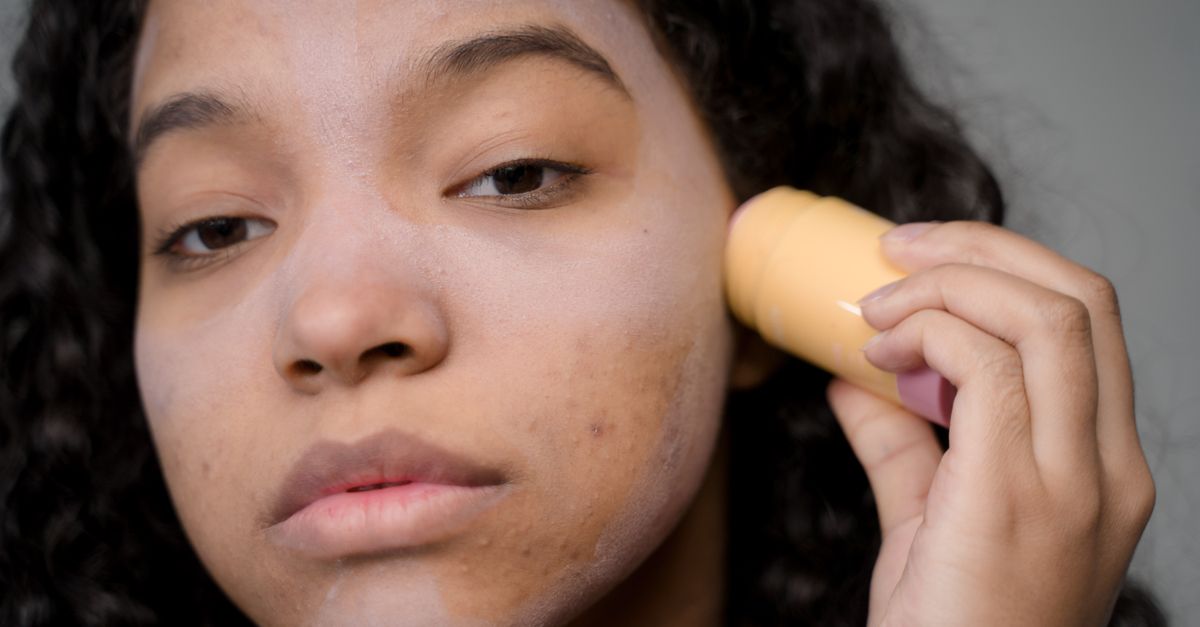
Skin On Skin Bc Foundation Spf 40 – Light Warm is a topical photoprotective cosmetic formulation that employs a synergistic blend of organic and inorganic filters to shield the epidermis from solar radiation. The active pharmacological agents include homosalate, octisalate, and zinc oxide, which work in tandem to absorb and reflect ultraviolet energy. The most notable side effect of this topical application is transient localized cutaneous xerosis or mild irritant contact dermatitis at the application site.
1. Introduction and Mechanism of Action for Skin On Skin Bc Foundation Spf 40 – Light Warm
The prophylactic efficacy of this specific dermatological foundation relies on the integrated mechanisms of chemical absorbers and physical reflectors. Homosalate and octisalate act as organic chemical filters. Upon application to the stratum corneum, these active molecules penetrate the superficial epidermal layers and actively intercept high-energy ultraviolet B photons. The molecules undergo a rapid conformational shift, safely converting the absorbed solar radiation into low-grade thermal energy that dissipates harmlessly into the surrounding environment.
Complementing this chemical absorption, zinc oxide functions as a highly stable inorganic physical blocker. The finely milled zinc oxide particles form an impermeable reflective shield directly upon the epidermal surface. This barrier actively scatters and reflects both ultraviolet A and ultraviolet B radiation away from the biological tissue before it can induce oxidative stress or direct cellular DNA mutation.
This dual-action defensive matrix is suspended in a specialized emulsion tinted for light skin with warm undertones. This cosmetic delivery system ensures an even, contiguous distribution of the active agents across the facial topography, providing continuous broad-spectrum photoprotection while masking the opaque white cast typically associated with raw zinc oxide.
2. Warnings and Before Taking Skin On Skin Bc Foundation Spf 40 – Light Warm
Prior to integrating this photoprotective foundation into a daily skincare regimen, a clinical evaluation of the facial epidermis is required. The active ingredients are exclusively indicated for application on completely intact, structurally sound skin. Applying this complex formulation over deep facial lacerations, actively weeping eczematous plaques, or open thermal burns is fundamentally contraindicated, as it guarantees chemical irritation and unwanted systemic absorption of the cosmetic excipients.
Patients possessing a documented clinical allergy to chemical sunscreen agents, specifically salicylates like homosalate or octisalate, must avoid this formulation. The introduction of these compounds to a hypersensitive patient can trigger an acute allergic contact dermatitis. This reaction presents as pronounced facial edema, deep unremitting pruritus, and marked erythema that complicates the epidermal healing process.
Furthermore, this concentrated emulsion must be kept strictly away from the delicate ocular cavity. The dense zinc oxide particles act as physical abrasives against the cornea, while the chemical solvents act as acute irritants. Inadvertent ocular exposure will provoke agonizing burning, demanding immediate and sustained flushing with sterile saline.
3. Indications and Dosage Guide for Skin On Skin Bc Foundation Spf 40 – Light Warm
This formulation is clinically indicated as a primary robust prophylactic intervention designed to prevent acute solar-induced thermal erythema and the chronic pathogenesis of photoaging. It functions as the aesthetic and defensive cornerstone of a rigorous daily sun safety protocol for individuals requiring both cosmetic coverage and ultraviolet protection.
Administration is confined to topical application on the face, neck, and décolletage. Clinical application mandates the even distribution of a generous, opaque layer across all exposed areas exactly fifteen minutes prior to direct environmental solar exposure. Any reduction in the required application volume compromises the density of the protective shield, significantly lowering the stated sun protection factor.
To ensure continuous photoprotection, diligent reapplication is mandated every two hours during sustained active solar exposure. The structural integrity of the chemical and physical barrier is highly susceptible to rapid mechanical degradation from environmental humidity, profuse facial diaphoresis, and inadvertent towel friction.
4. In-Depth Side Effects Analysis of Skin On Skin Bc Foundation Spf 40 – Light Warm
When topical application is exclusively maintained on the external epidermal surface, the integration of homosalate, octisalate, and zinc oxide exhibits a robust clinical safety profile. Adverse physiological reactions are overwhelmingly restricted to mild, localized cutaneous phenomena.
Common Side Effects
The most universally reported adverse effect is mild localized epidermal desiccation. The inorganic zinc oxide acts as a natural astringent, actively drawing ambient moisture and excess structural sebum directly from the skin surface. This physiological action frequently precipitates minor localized xerosis, superficial cutaneous flaking, and a pronounced sensation of structural cutaneous tightness immediately following application.
Serious Side Effects You Should Report
Urgent specialized dermatological intervention is required if the patient manifests symptoms indicating an acute hypersensitivity reaction. Diagnostic indicators include the sudden eruption of weeping vesicular lesions, entirely unremitting deep facial pruritus, and aggressive expanding erythema that tracks beyond the initial application borders.
Rare Side Effects
Under specific occlusive environmental conditions, particularly in regions of high humidity, chronic continuous daily application can mechanically block the pilosebaceous units. This deep physical occlusion can precipitate localized miliaria rubra or flares of deep inflammatory acne vulgaris. In rare instances, highly sensitive individuals may develop localized paradoxical hyperpigmentation following the resolution of the inflammation.
Side Effects That Usually Do Not Require Medical Attention
A brief localized sensation of mild warmth or active tingling as the complex chemical solvents evaporate and the active filters interact with the uppermost epidermal cells is a standard physiological response requiring no clinical evaluation. Minor physical settling of the specialized cosmetic pigment into dynamic facial wrinkles over the course of the day is a purely superficial aesthetic occurrence.
| Side Effect Category | Specific Symptoms |
|---|---|
| Common | Mild epidermal desiccation, superficial cutaneous tightness, localized flaking |
| Serious | Allergic contact dermatitis, weeping vesicular lesions, expanding erythema |
| Rare | Mechanical cystic acne flares, occlusive miliaria, paradoxical hyperpigmentation |
5. Overdose Symptoms of Skin On Skin Bc Foundation Spf 40 – Light Warm and What to Do
A systemic pharmacological overdose achieved via the routine heavy topical application of this foundation is a physiological impossibility. The deeply intact stratum corneum acts as a highly efficient barrier, heavily restricting the percutaneous absorption of homosalate and octisalate and preventing any dangerous systemic accumulation.
However, acute systemic toxicity resulting from the accidental oral ingestion of the cosmetic formulation constitutes a significant medical event. Ingesting these concentrated chemical filters, the dense zinc oxide physical powder, and the synthetic emulsifiers acts as an irritant to the delicate gastric lining, rapidly precipitating acute nausea, abdominal cramping, and forceful vomiting.
If an accidental ingestion occurs, particularly involving a vulnerable pediatric patient, immediate contact with emergency medical services or a regional poison control center is mandatory. Caregivers must never induce emesis. Clinical intervention strictly focuses on the immediate provision of supportive care and fluid hydration to manage the gastric irritation.
6. Missed Dose and What to Avoid While Using Skin On Skin Bc Foundation Spf 40 – Light Warm
Because this specific photoprotective cosmetic is applied purely on an as-needed prophylactic basis governed by environmental solar exposure, the strict clinical concept of a missed scheduled dose does not exist. If a patient neglects to apply the foundation prior to sun exposure, they must do so immediately upon realization to halt any further rapid ultraviolet cellular degradation.
While utilizing this specialized formulation, patients must meticulously avoid the concurrent application of highly abrasive physical exfoliants or low-pH chemical peels. Stripping the protective stratum corneum completely bare immediately before applying active chemical ultraviolet filters vastly increases the percutaneous penetration rate, elevating the risk of deep chemical burning and profound allergic contact dermatitis.
Furthermore, patients should avoid applying heavy, occlusive skincare ointments directly over the applied cosmetic foundation. Products containing thick petrolatum can chemically disrupt and dissolve the carefully engineered stable emulsion, causing the physical and chemical filters to separate unevenly and completely obliterating the contiguous protective film.
7. Drug and Alcohol Interactions with Skin On Skin Bc Foundation Spf 40 – Light Warm
When rigorously applied strictly as an external continuous topical barrier, the active agents homosalate, octisalate, and zinc oxide present zero pharmacokinetic interactions with systemically administered prescription medications. Patients utilizing chronic systemic therapies can safely apply this foundation without fear of internal systemic drug interference.
Topical localized medicinal interactions on the superficial epidermis form the primary clinical concern. The dense physical barrier engineered by the zinc oxide is highly impermeable. Applying targeted prescription dermatological treatments directly over the foundation will entirely block their necessary absorption. If the patient utilizes topical salicylic acid for acne management, it must be applied to clean skin and allowed to dry completely before the sunscreen is utilized.
Systemic heavy continuous alcohol consumption does not biochemically interfere with the localized physical protective mechanisms of these specific ultraviolet filters. However, heavy systemic alcohol intake acts as a cognitive depressant, significantly increasing the likelihood that the critical two-hour reapplication window will be ignored, resulting in marked radiation burns.
8. Precautions, Safety, and Duration of Action for Skin On Skin Bc Foundation Spf 40 – Light Warm
A paramount clinical precaution involves the strict necessity of a comprehensive double-cleansing protocol precisely at the end of the exposure period. The cosmetic emulsion is explicitly engineered for highly water-resistant cutaneous adherence. Failing to thoroughly actively dissolve the zinc oxide and chemical filters with a potent lipid-soluble cleanser will inevitably lead to chronic pore impaction and mechanical acne.
The pharmacological onset of protective action requires a precise fifteen-minute incubation period. This vital timeframe allows the active chemical filters to cross-link with the superficial epidermal cells and the complex liquid emulsion base to fully evaporate, generating a resilient, completely contiguous defensive shield. The protective effective duration is clinically validated for exactly two continuous hours of direct exposure.
The general safety profile for pregnant and lactating patients is exceedingly favorable regarding superficial topical application. The physical zinc oxide is biologically inert and cannot enter the bloodstream, while the minimal superficial epidermal absorption of the massive chemical filter molecules poses no documented pharmacological risk to fetal development.
9. How to Stop Taking Skin On Skin Bc Foundation Spf 40 – Light Warm and Storage Guidelines
Cessation of this targeted photoprotective cosmetic foundation can be executed immediately without implementing any physiological tapering protocol. The epidermal tissue does not develop cellular dependence on chemical or physical active ultraviolet filters. However, sudden abrupt cessation without actively substituting an equivalent broad-spectrum protectant instantly subjects the vulnerable skin to profound radiation damage.
The product tube must be stored strictly at a stable, controlled room temperature, entirely shielded from direct continuous sunlight and severe thermal heat sources. Exposure to intense heat inside a closed vehicle will chemically degrade the cosmetic emulsion, causing the physical and chemical filters to permanently separate and rendering the formulation ineffective.
The foundation tube must be stored securely out of the physical reach of young pediatric children to strictly prevent unauthorized access and the risk of accidental oral ingestion. Disposal of the entirely depleted container must align rigorously with local municipal recycling guidelines for cosmetic packaging.
10. When to See a Doctor Regarding Skin On Skin Bc Foundation Spf 40 – Light Warm
Immediate medical intervention is strictly required if the patient inadvertently introduces a significant volume of the foundation directly into the ocular cavity and experiences agonizing eye pain that entirely fails to resolve after aggressive sterile flushing. This presentation strongly indicates a physical corneal abrasion requiring an immediate ophthalmological surgical assessment.
Patients must also urgently seek a specialized dermatological evaluation if they develop clinical signs of an acute generalized photoallergic reaction. Diagnostic indicators include rapidly expanding erythema, marked facial edema, or the sudden eruption of weeping lesions entirely confined to the sun-exposed treated areas.
Finally, an immediate medical diagnostic assessment is absolutely required if the patient suddenly develops blistering sunburn completely despite the rigorous, perfectly timed, and accurate application of the product. This unexpected presentation strongly suggests an underlying systemic photosensitizing disorder requiring thorough clinical investigation.
Frequently Asked Questions (FAQ)
1. How exactly do these active ingredients function to protect my facial skin?
Homosalate and octisalate act entirely as chemical filters that absorb harmful ultraviolet B rays, safely converting them into harmless thermal heat. Zinc oxide is a physical dense mineral filter that sits directly on the skin’s surface, acting exactly like a microscopic reflective shield.
2. Why must I wait exactly fifteen minutes after application before going outside?
The fifteen-minute waiting period is highly critical. It provides the necessary time for the active chemical filters to properly bond to the outermost superficial layer of your skin cells and allows the complex liquid cosmetic base to fully dry down into an even, unbroken film.
3. Can I mix this specialized thick foundation with my other daily standard liquid cosmetics?
Absolutely not. Mixing this engineered photoprotective foundation with other liquid cosmetics drastically dilutes the precise concentration of the active ingredients, destroying the protective continuous film and severely lowering your sun protection.
4. Will this specific light warm tinted foundation leave a white chalky residue on my skin?
Because this advanced formulation is cosmetically tinted specifically for light warm skin tones, the specialized cosmetic color pigments effectively neutralize and fully hide the stark white cast that is traditionally associated with raw physical zinc oxide pastes.
5. Does this protective product effectively prevent premature aging and facial wrinkles?
Yes. Zinc oxide provides excellent broad-spectrum protection, meaning it effectively blocks the deeper-penetrating ultraviolet A rays that actively destroy structural collagen and delicate elastin fibers deep within your skin.
6. How should I properly remove this resilient thick foundation securely at night?
Because high-quality active sunscreen foundations are designed to be highly water-resistant and intensely adhesive to the skin, you must use a dedicated lipid-based makeup remover or an active heavy oil cleanser first, before following with a regular water-based wash.
7. Is it perfectly safe to use this heavy foundation if I currently have active cystic acne?
If you currently suffer from deeply open or actively bleeding acne lesions, you should consult your dermatologist before applying chemical filters and heavy cosmetics, as they can fiercely sting and delay active wound healing.
8. Do I have to reapply this active foundation every two hours if I work entirely indoors?
If you are seated directly next to a large clear window, damaging ultraviolet A rays can easily penetrate the standard glass and damage your skin. However, if you are situated in a windowless room, frequent reapplication is totally unnecessary.
9. Can the active chemical filters suspended in this cosmetic product enter my central bloodstream?
When applied strictly to completely healthy, structurally intact skin, the deep systemic percutaneous absorption of homosalate and octisalate is incredibly minimal and clinically insignificant, posing zero systemic health risks.
10. What should I immediately do if my facial skin starts to severely chemically burn and intensely itch immediately after application?
This strongly indicates an acute allergic contact dermatitis to one of the active chemical filters or the inactive complex cosmetic base. You must immediately vigorously wash the foundation off completely with a mild wash and discontinue the product.
Bibliography
Disclaimer: The content is for informational purposes only and does not replace medical advice. Always consult your doctor or pharmacist for personalized treatment.