
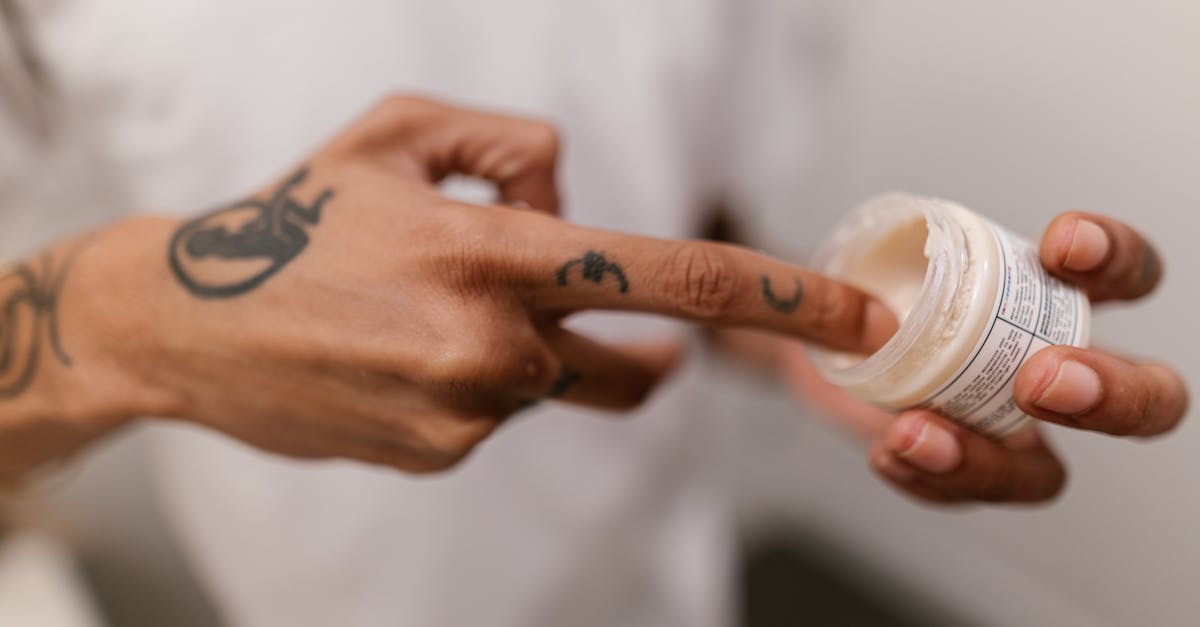
Tattoo Care is a complex botanical ointment designed to support the natural healing of fresh dermal tattoos by providing an occlusive, anti-inflammatory, and astringent barrier. The most notable side effect involves allergic contact dermatitis, primarily due to the diverse array of plant extracts which can trigger hypersensitivity reactions and severely compromise the healing tattoo ink.
1. Introduction & Mechanism of Action of Tattoo Care
This polypharmacy botanical preparation relies on the synergistic actions of multiple plant extracts to promote epidermal repair following the extensive trauma of the tattooing process. Ingredients like Calendula officinalis and Achillea millefolium are rich in anti-inflammatory flavonoids and triterpenoids. These compounds actively inhibit the release of pro-inflammatory cytokines, significantly reducing the localized erythema, swelling, and severe pruritus characteristic of fresh tattoos.
Furthermore, Comfrey leaf extract delivers allantoin, a biochemical compound known to stimulate cell proliferation and accelerate the regeneration of the stratum corneum. Commiphora myrrha acts as a mild astringent and local antimicrobial agent, creating an unfavorable microenvironment for opportunistic bacteria on the surface of the weeping wound. Together, these extracts form a protective, soothing barrier that facilitates optimal wound healing while minimizing heavy scabbing that can pull ink from the dermis.
2. Warnings & Prerequisites Before Using Tattoo Care
The inclusion of Comfrey leaf requires strict clinical precautions. This botanical contains pyrrolizidine alkaloids, which act as hepatotoxins when absorbed systemically. While tattoos represent significant epidermal trauma, application must be restricted strictly to superficial healing and must never be applied to deep tissue infections, massive ulcerations, or skin exhibiting severe purulent discharge.
Patients with a known hypersensitivity to plants in the Asteraceae family, which includes ragweed, daisies, and marigolds, must avoid this product entirely. Applying this botanical blend to a highly reactive individual will predictably trigger severe, cell-mediated allergic contact dermatitis. This allergic response creates intense inflammation and weeping blisters that will destroy the visual integrity of the tattoo and cause massive ink rejection.
3. Clinical Indications & Tattoo Care Dosage Guide
Tattoo Care ointment is indicated for the topical management and soothing of fresh dermal tattoos, minor superficial abrasions, and localized skin inflammation during the critical first two weeks of the healing process.
Before application, the fresh tattoo must be thoroughly cleansed with lukewarm water and a mild, fragrance-free antibacterial soap, then patted entirely dry with a clean paper towel. A very thin, almost translucent layer of the ointment should be applied directly to the affected area three to four times daily. Applying excessively thick layers must be avoided, as over-occlusion suffocates the healing tissue and promotes bacterial proliferation.
4. In-Depth Tattoo Care Side Effects Analysis
Because the product is a complex mixture of diverse plant proteins and heavy lipid bases, the adverse event profile is heavily dominated by local immunological and follicular reactions.
Common Side Effects
The most frequent adverse reaction is transient, localized skin occlusion. The heavy lipid bases frequently cause localized blocking of the eccrine sweat ducts and sebaceous glands. This occlusion routinely results in mild, transient exacerbations of localized acne or superficial folliculitis directly over the tattooed area. Mild stinging immediately upon application to a fresh, weeping tattoo is also common due to the astringent properties of Myrrh.
Serious Side Effects You Should Report
Severe allergic hypersensitivity mandates immediate medical intervention. Patients must seek urgent clinical evaluation if the application site develops a rapidly spreading, intensely itchy rash filled with weeping blisters that obscure the tattoo. Furthermore, signs of a systemic allergic reaction, including sudden swelling of the lips and throat or severe respiratory distress, represent an acute clinical emergency.
Rare Side Effects
The inclusion of St. John’s Wort introduces a rare risk of localized phototoxicity. This phenomenon renders the newly tattooed skin hyper-reactive to ultraviolet light, leading to severe, blistering sunburns strictly at the application site if exposed to sunlight. Systemic toxicity from pyrrolizidine alkaloids is theoretically possible only with massive, chronic application over extremely large, full-body tattoos.
Side Effects That Usually Do Not Require Medical Attention
A lingering, earthy, or medicinal odor is an expected characteristic of the botanical resins and requires no medical attention. Minor, temporary pinkness of the healing tissue under the ointment is a standard part of the natural inflammatory and proliferative phases of the tattoo healing process.
| Side Effect Category | Specific Symptoms |
|---|---|
| Dermatological | Localized folliculitis, acne, mild stinging |
| Allergic | Contact dermatitis, severe blistering, ink rejection |
| Phototoxic (Rare) | Hyper-reactivity to sunlight at the application site |
| Systemic (Theoretical) | Hepatotoxicity from massive transdermal absorption |
5. Recognizing a Tattoo Care Overdose
A systemic overdose through proper topical application on a standard-sized tattoo is highly unlikely. However, toxicity can present rapidly if the concentrated botanical ointment is accidentally ingested in large quantities, a risk primarily concerning pediatric patients sharing the household.
Symptoms of acute botanical ingestion include severe gastrointestinal distress, persistent vomiting, abdominal cramping, and potential central nervous system depression depending on the volume ingested. Emergency management requires immediate contact with a toxicology center. Care is primarily supportive, focusing on managing gastric distress and maintaining adequate hydration.
6. Missed Dose & What to Avoid While Using Tattoo Care
As this ointment is used strictly as a topical aftercare measure to prevent excessive drying and scabbing, missed doses hold no clinical significance. Patients should simply apply a very thin layer when the tattoo begins to feel tight, dry, or excessively itchy.
Patients must strictly avoid exposing the freshly treated tattoo to direct, intense sunlight or tanning beds. The hypericin compounds found in St. John’s Wort trigger a severe phototoxic chemical reaction on the skin surface, resulting in deep, painful burns that will permanently scar the tissue and destroy the tattoo pigments. Additionally, patients must avoid submerging the treated tattoo in standing water, such as bathtubs or swimming pools.
7. Tattoo Care Drug & Topical Interactions
Systemic pharmaceutical interactions are negligible when the product is applied to standard tattoos. However, topical interactions require careful management. Tattoo Care ointment must not be layered concurrently with prescription topical corticosteroids, numbing creams, or synthetic antibiotics.
The heavy botanical waxes and resins form a highly occlusive barrier on the skin. Applying this barrier over a prescription medication can unpredictably increase the absorption of the drug into the bloodstream. Conversely, applying a prescription cream over the botanical barrier will completely block the medication from reaching the damaged dermal tissue.
8. Precautions, Safety Profile & Duration of Action for Tattoo Care
The soothing and barrier-protecting effects of the ointment are immediate upon application. The botanical compounds actively support the proliferative phase of healing, preventing heavy scab formation as long as a thin, breathable layer of the product remains in contact with the damaged tissue.
Safety protocols emphasize that if a tattoo begins to exude foul-smelling yellow or green pus, feels extremely hot to the touch, or presents with red streaks spreading outward across the limb, the botanical treatment has failed to prevent a bacterial infection. In these instances, the ointment must be completely discontinued, and the patient requires immediate evaluation for systemic antibiotics to save the tissue.
9. How to Safely Stop Tattoo Care & Storage Guidelines
Therapy should be discontinued once the tattoo has fully finished the peeling phase and the new epidermis has completely formed over the ink, typically around two to three weeks post-procedure. Continuing heavy ointment application on fully healed skin is unnecessary and drastically increases the risk of developing localized folliculitis. Patients should transition to a standard, non-medicated daily lotion.
The ointment must be stored at controlled room temperature and strictly protected from excessive heat. High temperatures will cause the natural lipid bases to melt and separate from the active botanical extracts, compromising the physical integrity of the protective barrier. Keep the jar tightly sealed and out of the reach of children.
10. When to Seek Medical Attention for Tattoo Care Side Effects
Urgent clinical assessment is required if the patient develops a rapidly spreading, intensely pruritic rash extending far beyond the original tattoo, indicating severe allergic contact dermatitis. Furthermore, any signs of an expanding bacterial infection, escalating throbbing pain, or a systemic fever mandate immediate medical intervention to prevent septic complications and permanent scarring.
Frequently Asked Questions FAQ
1. Can I put a thick layer of this ointment on to heal my tattoo faster?
Absolutely not. You must only apply a paper-thin layer. A thick layer suffocates the wound, traps heat and bacteria, and causes severe acne breakouts that can ruin the tattoo ink.
2. Why did my tattoo break out in an itchy, blistering rash after applying this salve?
You are likely experiencing an allergic reaction to one of the botanical extracts, such as Calendula or Yarrow. Wash the ointment off immediately with mild soap and switch to a plain, hypoallergenic lotion.
3. Will this ointment pull the ink out of my new tattoo?
Proper, thin application will not pull ink out. However, if you are allergic to the botanical ingredients, the resulting severe inflammation and blistering will cause massive ink rejection.
4. Is it safe to go to the beach if I have this ointment on my new tattoo?
No. Fresh tattoos must be kept out of the sun, and the St. John’s Wort in this specific formulation makes your skin highly reactive to sunlight, guaranteeing a severe, damaging chemical sunburn.
5. Why do I have tiny white pimples all over my new tattoo?
This is localized folliculitis. The heavy wax base of the botanical ointment has clogged your sweat glands and hair follicles. You are applying too much product or not washing the tattoo properly between applications.
6. Should I use this product immediately after the artist finishes the tattoo?
Most artists recommend leaving the initial sterile bandage or wrap on for the first few hours or days. You should only begin using this aftercare ointment once the initial wrap is removed and the tattoo is thoroughly washed.
7. What should I do if the tattoo starts oozing yellow fluid and smells bad?
Stop using all ointments immediately. Foul-smelling, yellow fluid indicates a severe bacterial infection, such as staphylococcus. You must seek prompt medical evaluation for prescription antibiotics.
Bibliography
Disclaimer: The content is for informational purposes only and does not replace medical advice. Always consult your doctor or pharmacist for personalized treatment.
