1. Introduction
The profound tenderness and tightness experienced in the calf muscles after walking on sand is a direct biomechanical consequence of traversing a yielding, unstable surface. When walking on solid ground, the human body utilizes the firm resistance of the earth to provide elastic recoil, allowing the tendons to bear much of the mechanical load. Sand, however, entirely dissipates this ground reaction force. Every step sinks into the granular surface, forcing the gastrocnemius and soleus muscles to contract with intense, continuous eccentric effort to stabilize the ankle and pull the foot out of the depression.
This shift in biomechanics transforms a simple walk into a grueling muscular endurance event. The calf muscles are forced to act simultaneously as primary stabilizers, shock absorbers, and the sole engines of forward propulsion. The lack of a solid push-off platform mandates that the muscles exert significantly more power over a greater range of motion, rapidly exhausting cellular energy stores and causing microscopic structural damage to the muscle fibers.
Understanding the physics of locomotion on deformable terrain reveals exactly why a relaxing beach walk results in such severe, lingering muscular tightness. The resulting stiffness is the clinical presentation of Delayed Onset Muscle Soreness, a predictable physiological adaptation to the novel, heavy mechanical stress placed upon the posterior chain of the lower leg.
2. Anatomy of the Calf Complex
The calf is anatomically composed of two primary muscles located on the back of the lower leg: the large, superficial gastrocnemius, and the deeper, flatter soleus. The gastrocnemius originates above the knee joint, making it critical for explosive power and fast movements, while the soleus originates below the knee and is packed with slow-twitch endurance fibers designed to maintain posture.
Both of these powerful muscles taper downward and merge to form the Achilles tendon, the thickest and strongest tendon in the human body. The Achilles attaches directly to the calcaneus, or heel bone. The primary mechanical function of this complex is plantar flexion—pointing the toes downward to push off the ground during the toe-off phase of the walking gait.
Walking on sand completely disrupts the normal operating parameters of this complex. The soft surface prevents the Achilles tendon from functioning efficiently, forcing the muscle bellies of the gastrocnemius and soleus to shoulder the entirety of the biomechanical burden.
3. The Loss of Elastic Recoil
On hard surfaces like asphalt or packed dirt, the human gait is remarkably energy-efficient. As the foot strikes the firm ground, the impact force stretches the Achilles tendon. The tendon stores this kinetic energy briefly, acting exactly like a heavy biological spring. As the body rolls forward, the tendon violently snaps back to its original length, providing a massive, free boost of propulsive power.
Sand completely negates this spring-like mechanism. Because the sand shifts and gives way under the weight of the foot, the impact force is dissipated into the ground rather than absorbed by the tendon.
Without the firm resistance required to stretch the Achilles tendon, the biological spring cannot load. Consequently, the free elastic recoil is lost. To move the body forward, the calf muscles must generate one hundred percent of the required propulsive force purely through active muscular contraction, exponentially increasing the metabolic demand on the tissue.
4. Eccentric Muscle Overload
The specific type of muscle contraction required on sand is inherently damaging. When the heel strikes the soft sand, it immediately sinks deeply into the surface. To prevent the ankle from collapsing backward and the shin from snapping forward, the calf muscles must engage in a powerful eccentric contraction.
An eccentric contraction occurs when a muscle is forced to fire and generate tension while simultaneously being physically lengthened under a heavy load. This acts as the body’s braking system. Lowering the heel deep into the yielding sand requires massive eccentric force from the soleus muscle.
Physiologically, eccentric contractions are uniquely traumatic to muscle tissue. The mechanical pulling rips the microscopic protein cross-bridges apart as the muscle fights the stretch. This high-tension microtrauma is the primary mechanism behind the severe, lingering tenderness felt in the days following the beach walk.
5. Kinematic Alterations of Barefoot Walking
Walking on sand is typically performed barefoot, which drastically alters the kinematics of the human foot. Modern supportive shoes possess an elevated heel and a rigid sole, which artificially limits the range of motion of the ankle joint and does much of the stabilizing work for the foot.
When shoes are removed, the ankle drops to a zero-drop, flat position. This immediate geometric change places the calf muscles and the Achilles tendon on a permanent, prolonged stretch. Every step taken stretches the muscle fibers further than they are accustomed to in daily life.
Furthermore, barefoot walking often induces a shift from a heavy heel-strike to a midfoot or forefoot striking pattern to navigate the uneven terrain. Landing on the ball of the foot acts as a natural shock absorber but transfers the entire weight of the impact directly onto the calf muscles, multiplying the eccentric workload significantly.
6. Substrate Instability and Proprioception
Sand is an erratic, unpredictable substrate. Unlike a flat sidewalk, the angle and density of the sand change with every single footstep. The foot may land on a steep lateral incline, sink deeply into a soft pocket, or strike a densely packed ridge of wet sand.
To navigate this chaos, the nervous system relies heavily on proprioception—the continuous stream of sensory data from the joints regarding balance and position. The brain processes this data and sends rapid, continuous micro-adjustment signals down to the stabilizing muscles of the lower leg.
The calf muscles, specifically the soleus and the smaller muscles wrapping around the ankle, must fire constantly and asynchronously to prevent the ankle from rolling. This continuous, low-level neurological firing severely fatigues the motor units, leaving the muscle feeling exhausted, cramped, and locked in a tight, protective spasm.
7. Table: Hard Surface vs. Sand Biomechanics
The table below contrasts the mechanical differences that lead to muscular exhaustion on sand.
| Biomechanical Factor | Paved Surface Walking | Soft Sand Walking |
|---|---|---|
| Surface Resistance | Firm, highly stable | Yielding, unstable, shifting |
| Propulsive Mechanism | High elastic recoil from Achilles | Pure active muscle contraction required |
| Ankle Range of Motion | Consistent, predictable angles | Extreme angles, deep heel sinking |
| Muscle Contraction Type | Primarily concentric (shortening) | Heavy eccentric (lengthening under load) |
8. Delayed Onset Muscle Soreness (DOMS)
The acute tenderness that typically peaks twenty-four to forty-eight hours after walking on the beach is the textbook clinical presentation of Delayed Onset Muscle Soreness (DOMS). This is not caused by the accumulation of lactic acid, which clears from the tissue within an hour of stopping exercise.
Instead, DOMS is the result of the massive inflammatory cascade triggered by the eccentric microtrauma. The microscopic tears in the muscle fibers prompt the immune system to flood the calf tissue with white blood cells and inflammatory fluids to repair the structural damage.
This localized swelling increases the physical pressure inside the tight fascial compartments of the lower leg. The swelling sensitizes the pain receptors, making the muscle feel incredibly tender to the touch, and causes the fibers to stiffen severely, limiting the ability to fully straighten the knee or flex the ankle upon waking.
9. Plantar Fascia Strain
The calf muscles do not operate in isolation; they are biomechanically linked to the bottom of the foot through a continuous band of fascia. The plantar fascia spans the arch of the foot and works in tandem with the Achilles tendon to manage tension.
Because the sand fails to support the arch of the foot, the arch collapses completely with every step. This collapse violently stretches the plantar fascia. The excessive tension on the bottom of the foot is transmitted directly around the heel bone and upward into the calf musculature.
The deep muscles of the calf, particularly the tibialis posterior, must overwork dramatically to attempt to hold the arch up against the collapsing force of the sand. This shared mechanical strain explains why severe calf tightness is often accompanied by acute, aching heel pain directly under the foot.
10. The Impact of Sand Density
The location of the walk on the beach dictates the severity of the muscular strain. The dry, powdery sand located far from the water line offers absolute zero resistance. The foot sinks deeply, maximizing the required eccentric braking force and the active concentric push-off effort, guaranteeing severe muscle fatigue.
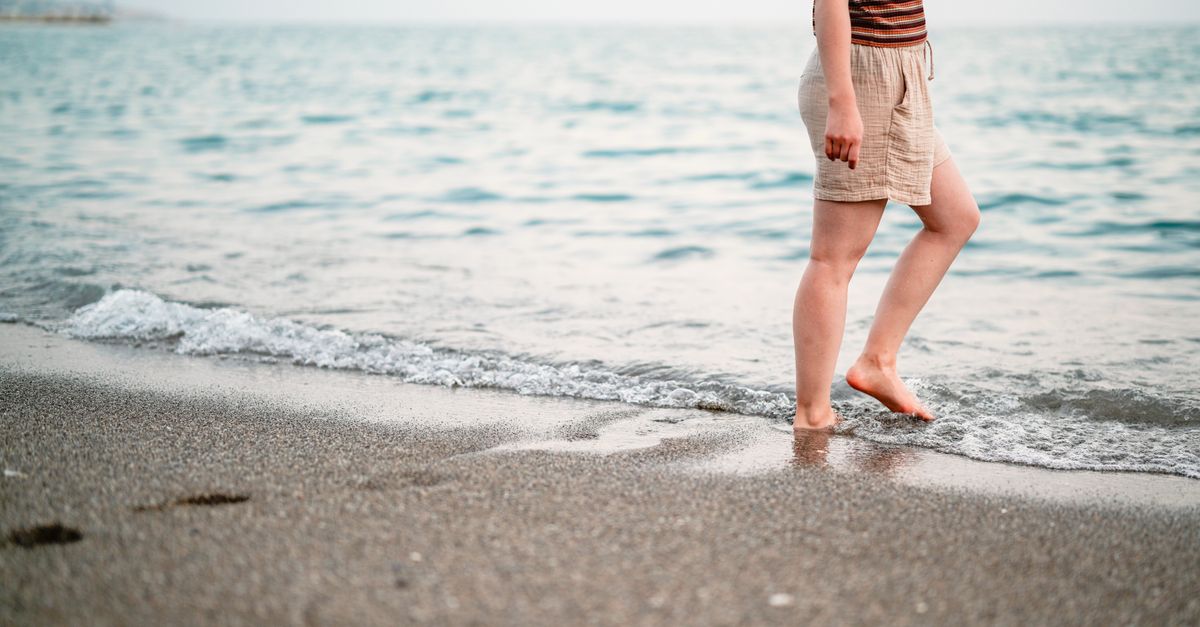
Conversely, the wet, densely packed sand right at the water’s edge behaves much more like a solid surface. The water binds the sand grains together, providing a firm platform that allows the Achilles tendon to utilize some of its elastic recoil and prevents the heel from sinking drastically.
However, walking at the water’s edge introduces a lateral slant to the terrain, as beaches slope down into the ocean. Walking on an angled surface forces one leg to over-pronate and the other to supinate, placing immense asymmetrical stress on the inner and outer calf muscles, leading to uneven soreness.
11. Metabolic Waste Accumulation
The sheer physical effort required to march through soft sand relies heavily on anaerobic metabolism. Because the workload is so intense, the calf muscles burn through their stored adenosine triphosphate and glycogen reserves rapidly, producing metabolic waste products faster than the vascular system can clear them.
This localized accumulation of hydrogen ions and metabolic byproducts creates an acidic microscopic environment within the tissue. While this clears relatively quickly after the walk, the transient acidity acts as a severe chemical irritant to the muscle fibers.
The nervous system responds to this chemical irritation by increasing the resting tone of the muscle to prevent further damage. The calf physically tightens up, attempting to splint the ankle joint and limit motion until the cellular environment returns to a stable, non-acidic baseline.
12. Preventative Strengthening
Individuals planning a beach vacation can implement specific physiological conditioning to prepare the calf complex for the impending mechanical load. Traditional calf raises on a flat floor are insufficient, as they only train the concentric, shortening phase of the muscle.
Effective preparation requires eccentric loading. Performing heel drops—standing on the edge of a step and slowly, under complete control, lowering the heel below the level of the step—specifically trains the muscle fibers to withstand lengthening under heavy loads, precisely mimicking the demands of sinking into the sand.
Additionally, strengthening the intrinsic muscles of the foot by practicing single-leg balances on unstable surfaces, such as a foam pad or a rolled-up towel, trains the proprioceptive nervous system to react efficiently to shifting terrain, delaying the onset of neurological fatigue during the actual beach walk.
13. Post-Walk Recovery Strategies
When the calves are severely locked and tender, active recovery protocols must be utilized to restore tissue length and clear inflammatory fluid. Gentle, non-weight-bearing movement, such as cycling or swimming, acts as a muscular pump to flush the swelling out of the lower leg without subjecting the micro-torn fibers to further impact.
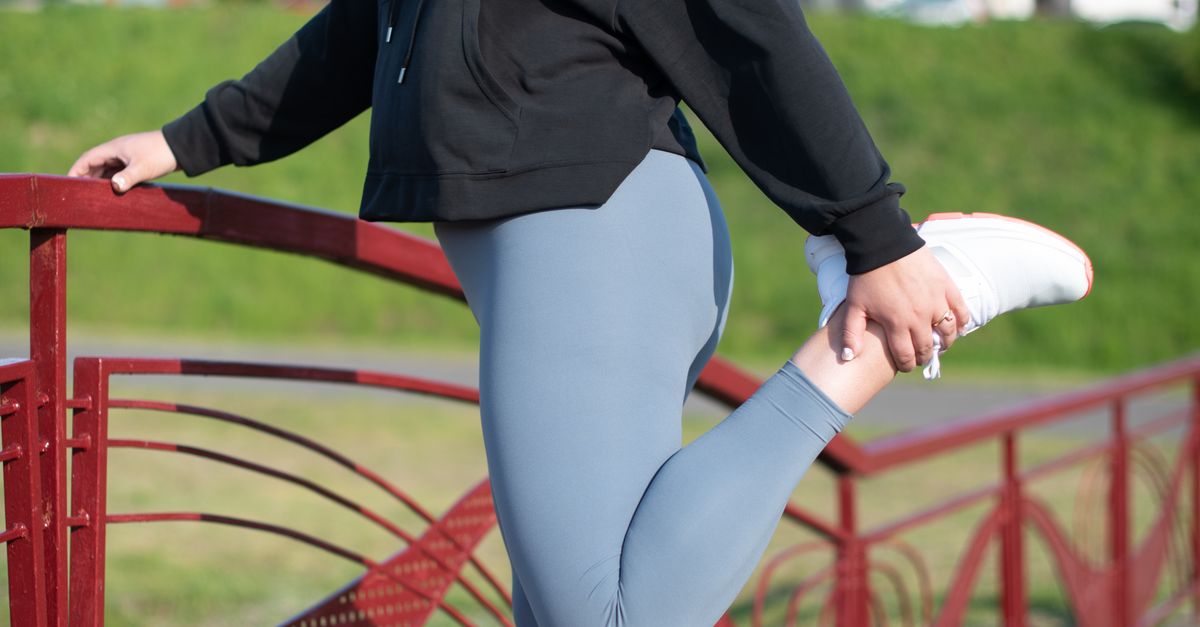
Static stretching is highly beneficial but must be performed carefully on damaged tissue. The classic wall stretch—leaning against a wall with one leg straight back and the heel pressed firmly to the floor—gently elongates the upper gastrocnemius. Slightly bending the back knee shifts the stretch to the deeper soleus muscle.
Applying heat to the calves twenty-four hours after the walk induces vasodilation, increasing the flow of oxygen-rich arterial blood required to heal the micro-tears. Deep tissue massage can also manually break up the stiffened fascial adhesions and reduce the heavy, restricted sensation in the muscle bellies.
14. Frequently Asked Questions (FAQ)
1. Is walking on sand actually better for my joints than walking on concrete?
Sand significantly reduces the blunt impact forces transmitted up the leg, which is easier on the cartilage of the knees and hips. However, this impact absorption transfers massive, continuous stress directly to the muscles and tendons of the ankle and calf.
2. Should I wear running shoes when walking on the beach?
Wearing supportive shoes on sand prevents the extreme overstretching of the Achilles tendon and supports the arch, drastically reducing calf fatigue. However, walking in deep sand with shoes is still significantly harder than on a paved road.
3. Why do my shins hurt along with my calves after walking on the beach?
The muscles on the front of the shin, the tibialis anterior, must work forcefully to lift your toes high enough to clear the mounds of sand during the swing phase of your step, leading to acute fatigue and shin splint pain alongside the calf soreness.
4. Can this tightness lead to an Achilles tendon rupture?
While simple muscle soreness is benign, aggressively running or sprinting in deep, soft sand when your calves are already unaccustomed to barefoot activity can place sudden, catastrophic stretch on the Achilles tendon, increasing the risk of a severe tear.
5. How long will this severe calf tenderness last?
Delayed Onset Muscle Soreness from a novel, heavy eccentric activity like sand walking typically peaks on the second day and requires three to five days for the inflammatory repair process to fully resolve and restore normal tissue elasticity.
15. Bibliography
Disclaimer: The content is for informational purposes only and does not replace medical advice. Always consult your doctor for personalized treatment.