1. Introduction
Uncontrollable eyebrow twitching during periods of deep focus is the result of benign fasciculation syndrome triggered by sustained visual and cognitive fatigue. Concentrating intensely on a single task requires the continuous, minute contraction of the small periorbital muscles to stabilize the gaze and maintain precise visual tracking. This prolonged muscular demand, often combined with sympathetic nervous system arousal and systemic dehydration, causes the local motor neurons to misfire, creating a persistent, localized spasm.
The musculature surrounding the eye and eyebrow is incredibly fine and highly innervated. Unlike the large muscle groups of the limbs, these facial muscles are designed for rapid, brief movements rather than sustained, isometric tension. When an individual stares at a book or a digital screen for hours, these delicate tissues are forced to work beyond their structural endurance.
As the muscle fibers fatigue, the biochemical environment around the nerve endings changes. The accumulation of metabolic waste products and the depletion of essential cellular electrolytes lower the resting threshold of the motor neurons. Consequently, the nerves begin to fire erratic, involuntary impulses, resulting in the visible, rhythmic fluttering under the skin.
While this sensation can be profoundly distracting and mildly alarming, it is almost exclusively a functional and temporary phenomenon. Addressing these stubborn twitches requires identifying the specific environmental stressors, improving visual ergonomics, and correcting underlying nutritional or sleep deficits to calm the hyperactive nervous pathways.
2. Anatomy of the Periorbital Musculature
The movement of the eyebrow is controlled by an interplay of several fine facial muscles. The primary muscle involved in raising the eyebrow is the frontalis, which spans the forehead.
However, the muscles responsible for pulling the eyebrow down and inward, often engaged during intense focus or squinting, are the corrugator supercilii and the procerus. Encircling the entire eye is the orbicularis oculi, a sphincter-like muscle that controls eyelid closure and aids in lowering the brow.
These muscles possess a very high ratio of nerve fibers to muscle fibers, allowing for the precise, expressive movements required for nonverbal communication and ocular protection.
Because they are so richly innervated, they are exceptionally responsive to any fluctuations in the nervous system. Even a minor chemical imbalance or localized structural fatigue will cause these specific muscles to twitch noticeably long before larger muscles in the body exhibit any signs of distress.
3. Benign Fasciculation Syndrome Explained
The medical term for a visible, involuntary muscle twitch is a fasciculation. When these twitches occur without any underlying neurological disease or muscle wasting, the condition is diagnosed as benign fasciculation syndrome.
A fasciculation occurs when a single motor unit—a nerve and the specific bundle of muscle fibers it controls—fires an action potential spontaneously. Instead of a smooth, coordinated contraction commanded by the brain, this spontaneous firing causes a rapid, isolated flutter.
Benign fasciculations in the face, clinically referred to as facial myokymia, are remarkably common. They are almost always unilateral, meaning they affect only one eyebrow or eyelid at a time. The twitching can last for a few seconds, persist for several hours, or intermittently return over the course of a few weeks.
The word “benign” is crucial; it indicates that while the symptom is annoying, it is not causing damage to the nerve or the muscle tissue, and it is not a precursor to degenerative neurological conditions.
4. The Impact of Intense Visual Focus
Deep cognitive focus requires the eyes to remain firmly locked on a specific target. Whether reading fine print, studying a spreadsheet, or performing detailed manual labor, the eyes must constantly converge and accommodate to keep the image sharp.
To assist in this visual stabilization, individuals unconsciously tense the muscles of the forehead and eyebrows. This action, often perceived as a subtle squint or a furrowed brow, reduces the amount of peripheral light entering the eye and physically stabilizes the ocular globe.
Maintaining this furrowed posture for hours subjects the corrugator supercilii and the frontalis muscles to sustained, isometric tension. The blood vessels within the muscle bellies are compressed by this constant tension, restricting the flow of fresh oxygen and nutrients.
This localized ischemia leads to rapid cellular fatigue. As the muscle struggles to maintain the focused posture without adequate energy, the surrounding motor units become irritable and begin to fasciculate, creating the classic eyebrow twitch.
5. Digital Eye Strain and Ciliary Muscle Fatigue
Focusing on a digital screen presents a unique challenge to the visual system. Digital text is composed of pixels with blurred edges, which are inherently more difficult for the human eye to focus on than sharp printed text.
The ciliary muscle, located inside the eye, controls the shape of the lens. When staring at a screen, the ciliary muscle must constantly engage and micro-adjust in a futile attempt to find a perfect, static focal point.
This continuous internal effort leads to profound ciliary muscle fatigue, a primary component of digital eye strain. To compensate for this internal visual fatigue, the body recruits external muscles. The individual squints harder, placing even more burden on the orbicularis oculi and the eyebrow musculature.
The resulting twitch is a clear physiological signal that the entire visual apparatus, both internal and external, is exhausted and requires an immediate break from near-work activities.
6. The Role of the Facial Nerve
All the muscles of facial expression, including those controlling the eyebrows, are innervated by the facial nerve (Cranial Nerve VII). This nerve originates in the brainstem and branches out across the face.
The facial nerve is intimately connected to the body’s emotional centers and autonomic nervous system. Consequently, the resting tone of the facial muscles is directly influenced by an individual’s psychological state.
When you are deeply focused, stressed, or anxious, the sympathetic nervous system increases the baseline electrical activity traveling down the facial nerve. This heightened electrical state keeps the eyebrow muscles in a constant state of “readiness.”
If a muscle is already hyper-stimulated by stress, the addition of physical visual fatigue pushes the motor endplates past their stability threshold. The nerve fibers begin to leak neurotransmitters spontaneously, triggering the rapid, uncontrollable firing of the fasciculation. Readers experiencing broader nerve-related tension may find further context in our guide on neck pain manifestations.
7. Stress and Sympathetic Nervous System Arousal
Psychological stress is a potent, independent trigger for benign fasciculations. During periods of intense focus, academic pressure, or occupational deadlines, the body releases high levels of cortisol and adrenaline.
These stress hormones are designed to prepare the body for immediate physical action. They increase heart rate, elevate blood pressure, and significantly increase the excitability of the peripheral nervous system.
Adrenaline directly sensitizes the muscle spindles and motor nerves. Under the influence of adrenaline, a nerve requires a much smaller stimulus to fire an action potential.
Therefore, the minor fatigue sustained by the eyebrow muscles during a few hours of reading is suddenly perceived by the hypersensitive nervous system as a major event, resulting in a persistent, rhythmic twitch that can last until the systemic stress hormones are finally metabolized and cleared from the bloodstream.
8. Caffeine and Stimulant Intake
To maintain deep focus, individuals frequently consume large quantities of caffeine through coffee, tea, or energy drinks. Caffeine is a central nervous system stimulant that chemically blocks adenosine receptors in the brain, preventing the sensation of sleepiness.
However, caffeine also possesses profound peripheral effects. It directly increases the release of excitatory neurotransmitters at the neuromuscular junction.
High doses of caffeine push the motor neurons into a state of hyper-excitability. When combined with the physical fatigue of staring at a screen, caffeine acts as the chemical catalyst that ignites the fasciculation.
The duration of the eyebrow twitch is often directly correlated with the half-life of the caffeine consumed. The twitching will frequently persist until the stimulant is fully processed by the liver, making caffeine reduction a primary strategy for resolving stubborn spasms.
9. Fatigue and Sleep Deprivation
Sleep is the biological period mandated for neurological repair and the stabilization of ion channels within the nerve cell membranes. Chronic sleep deprivation destabilizes these delicate cellular mechanisms.
Without adequate sleep, the brain and peripheral nerves cannot efficiently clear the metabolic waste products that accumulate during daytime activities. The motor neurons become unstable and prone to spontaneous depolarization.
Furthermore, sleep deprivation severely impairs the coordination of the extraocular muscles. The eyes struggle to align properly, requiring the individual to exert vastly more effort to maintain visual focus during the day.
This combination of systemic neurological instability and increased mechanical effort guarantees that the facial muscles will fatigue rapidly, making uncontrollable twitching an almost inevitable consequence of burning the midnight oil.
10. Differentiating Facial Twitching Causes
To determine the appropriate intervention, it is helpful to categorize the underlying triggers of the fasciculations.
| Twitching Characteristic | Primary Trigger | Associated Factors |
|---|---|---|
| Occurs only during intense computer work | Visual Fatigue / Eye Strain | Squinting, dry eyes, relief upon closing eyes |
| Starts after drinking coffee or energy drinks | Chemical Hyper-excitability | Accompanied by jitteriness or elevated heart rate |
| Persists during stressful life events | Sympathetic Nervous System Arousal | Jaw clenching, shallow breathing, tension headaches |
| Occurs concurrently with widespread muscle cramps | Electrolyte / Mineral Depletion | Heavy sweating, poor dietary intake of magnesium |
11. Magnesium and Cellular Excitability
The mineral magnesium is an essential regulator of neuromuscular function. Inside the muscle cell, calcium is required to initiate a contraction, while magnesium is required to release the contraction and allow the muscle fiber to relax.
If an individual has a systemic magnesium deficiency, the calcium-magnesium balance is disrupted. The muscle fibers are left in a pro-contractile state, becoming stiff, irritable, and highly prone to spasms and fasciculations.
Stress and high caffeine intake actively deplete the body’s magnesium stores, flushing the mineral out through the kidneys. This creates a physiological deficit exactly when the nervous system is most overactive.
Ensuring adequate dietary intake of magnesium-rich foods, such as leafy greens, nuts, and seeds, helps restore the cellular balance, stabilizing the motor endplates and calming the hyperactive facial nerves.
12. Environmental Lighting and Glare
The ambient environment in which an individual focuses heavily dictates the amount of muscular effort required by the face. Working in an environment with harsh overhead fluorescent lighting or facing a bright window forces the eyes to contend with severe glare.
To protect the retina from this glare, the orbicularis oculi and corrugator muscles instinctively contract, lowering the brow ridge to physically shade the pupil.
If this protective, scowling posture is maintained for hours, the muscles become locked in a state of exhaustion. Ensuring that the workspace is evenly illuminated, with light sources positioned to the side rather than directly in front of or behind the screen, eliminates the need for this constant muscular guarding.
13. Immediate Relaxation Techniques
When the eyebrow begins to twitch uncontrollably, attempting to forcibly hold the muscle still will only increase the tension and worsen the spasm. Immediate relief requires active relaxation and breaking the cycle of visual fatigue.
Close the eyes tightly for three seconds, then open them as wide as possible. Repeat this cycle five times. This dynamic movement flushes fresh blood into the ischemic tissues and resets the neurological resting tone of the periorbital muscles.
Apply a warm compress, such as a damp towel, directly over the twitching eyebrow for several minutes. The heat promotes vasodilation, rushing oxygen and nutrients to the exhausted motor units while signaling the local nerve endings to downregulate their firing rate.
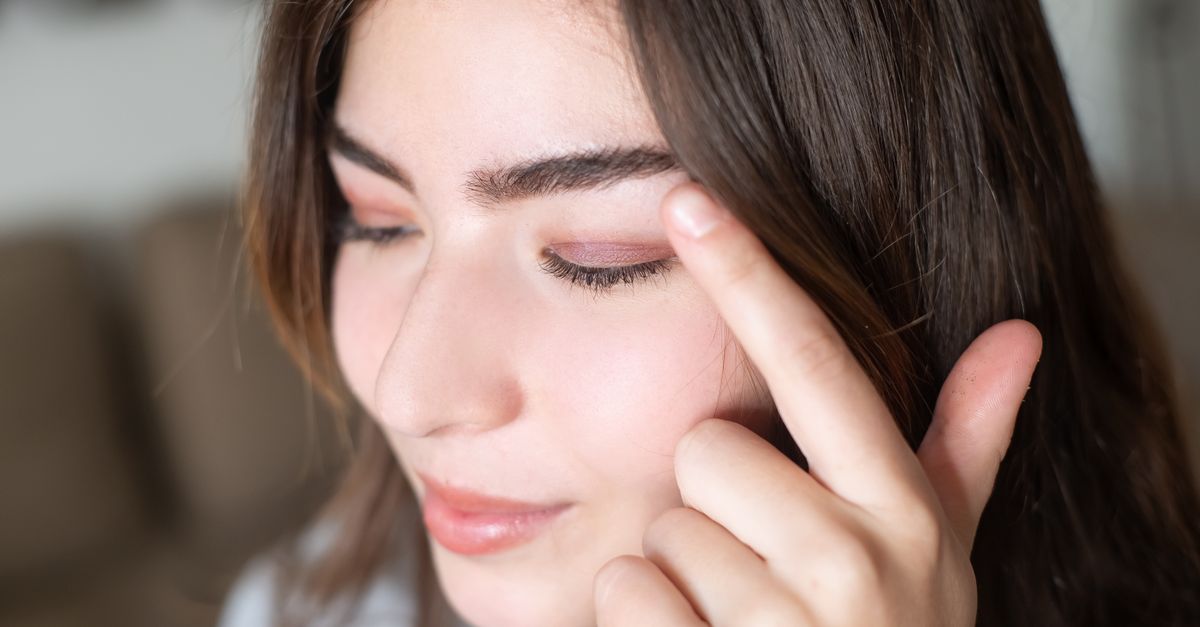
Gently massaging the area above the eyebrow using small, circular motions can manually break up fascial tension and soothe the irritated muscle fibers.
14. Modifying Work and Study Habits
Long-term resolution of stress-induced fasciculations requires implementing strict ergonomic and behavioral boundaries during periods of deep focus.
Adhere to the twenty-twenty-twenty rule: every twenty minutes, stop focusing on the near task and look at an object at least twenty feet away for twenty seconds. This brief pause disengages the internal ciliary muscles and the external facial muscles, preventing the accumulation of the deep fatigue that triggers the twitch.
Ensure that the computer monitor or reading material is positioned slightly below eye level. Looking slightly downward allows the eyelids to cover more of the eye, reducing tear evaporation and the subsequent need to squint or strain the brow.
15. When to Consult a Neurologist
While benign fasciculations are harmless and usually resolve with rest and lifestyle adjustments, specific neurological red flags require a professional medical evaluation.
If the twitching spreads from the eyebrow down into the lower face, causing the entire cheek or the corner of the mouth to spasm simultaneously, this indicates a condition called hemifacial spasm. This is often caused by a blood vessel compressing the facial nerve near the brainstem and requires specialized medical intervention.
Furthermore, if the twitching is accompanied by visible facial drooping, an inability to close the eye completely, a change in pupil size, or profound weakness in any facial muscle, it is critical to seek immediate neurological assessment to rule out severe nerve pathology, Bell’s palsy, or a systemic neurological disorder.
16. Frequently Asked Questions (FAQ)
1. Can needing a new glasses prescription cause my eyebrow to twitch?
Yes. If your vision is slightly blurred due to an outdated prescription, you will subconsciously squint and tense your forehead muscles all day long to try and force the image into focus. This relentless muscular effort rapidly leads to fatigue and fasciculations.
2. Why does the twitching stop when I touch or press on my eyebrow?
Pressing on the muscle provides a strong burst of tactile sensory information to the brain. This new sensory input temporarily overrides and inhibits the erratic motor signals causing the twitch. However, once you remove your finger, the twitch will often return until the underlying fatigue is resolved.
3. Is it possible for the twitching to last for several weeks?
Yes. If the underlying stressors—such as a major project at work, chronic lack of sleep, or continuous heavy caffeine use—remain unchanged, the benign fasciculation can persist intermittently for weeks or even months.
4. Will taking a potassium supplement help stop the twitching?
While potassium is important for muscle function and preventing large leg cramps, magnesium and calcium are generally more directly involved in the fine nerve stabilization necessary to stop small facial fasciculations.
5. Does looking at my phone in the dark make the twitching worse?
Looking at a bright screen in a pitch-black room creates immense contrast glare. Your pupils struggle to adjust, and you inevitably squint to reduce the harsh light. This creates rapid eye strain and severe tension in the brow muscles, practically guaranteeing a twitch.
17. Bibliography
Disclaimer: The content is for informational purposes only and does not replace medical advice. Always consult your doctor for personalized treatment.