
1. Introduction
To stop the groin from cramping during a workout, one must aggressively restore electrolyte balance, apply immediate targeted stretching to the adductor muscles, and decrease the intensity of the exercise. These cramps are a physiological response to cellular dehydration, neuromuscular fatigue, and localized energy depletion within the inner thigh musculature. Correcting the biochemical environment allows the hyperactive nerve signals to cease, restoring normal muscle relaxation.
Experiencing a sudden, seizing cramp in the groin during intense physical activity is both agonizing and functionally paralyzing. The adductor muscle complex is responsible for powerful, dynamic movements, particularly in sports requiring rapid changes of direction, kicking, or lateral agility. When these thick, powerful muscles lock into an involuntary spasm, it demands immediate intervention to prevent structural tearing.
Preventing these workout-ending spasms requires a proactive approach rather than a reactive one. By understanding the biomechanical load placed on the groin and the specific nutritional requirements of contracting muscle fibers, athletes can formulate rigorous warm-up and hydration protocols. This clinical management ensures the adductors remain supple, energized, and highly resilient under significant physical stress.
2. Anatomy of the Adductor Complex
The groin is anatomically defined by a massive group of muscles located on the medial, or inner, aspect of the thigh. This adductor complex includes the adductor longus, adductor brevis, adductor magnus, pectineus, and gracilis. These muscles originate from the pubic bone of the pelvis and insert at various points along the femur and tibia.
The primary biomechanical function of this complex is adduction—pulling the leg forcefully inward toward the midline of the body. Additionally, they serve as critical dynamic stabilizers for the pelvis and the knee during walking, running, and jumping.
Because they anchor directly to the rigid pubic bone and connect to the heavy femur, the adductor muscles must generate and absorb immense mechanical forces. This constant, heavy workload makes them highly susceptible to rapid metabolic exhaustion during strenuous lower-body workouts.
3. The Pathophysiology of Muscle Cramps
A muscle cramp is a sudden, involuntary, and relentlessly sustained contraction of skeletal muscle fibers. On a microscopic level, normal muscle contraction occurs when calcium ions flood the cell, causing protein filaments to lock together and pull. Relaxation requires cellular energy, specifically adenosine triphosphate, to actively pump the calcium out and unlock the filaments.
During an intense workout, the adductor muscles burn through their localized energy stores rapidly. Without sufficient adenosine triphosphate, the calcium pumps fail, and the muscle fibers remain chemically locked in a shortened, contracted state.
Concurrently, the peripheral nerves supplying the groin become hyper-excitable due to fatigue. They begin firing erratic, rapid-fire action potentials, commanding the muscle to contract repeatedly without offering any signal to relax. This combination of energy failure and neurological overdrive creates the agonizing cramp.
4. Neuromuscular Fatigue in the Groin
Neuromuscular fatigue is the leading catalyst for exercise-induced cramping. The adductor muscles are frequently utilized in a stabilizing capacity, meaning they perform long, isometric contractions to maintain pelvic alignment while the other leg moves.
When a workout involves unfamiliar lateral movements, heavy squats with a wide stance, or sudden sprinting, the nervous system demands more from the adductors than they are conditioned to handle. The muscle spindles, which monitor the length and tension of the muscle, become exhausted and miscalibrated.
This fatigue disrupts the delicate balance of reflex signals within the spinal cord. The protective reflex that normally inhibits over-contraction fails, allowing the motor neurons to stimulate the adductors into a rigid, localized spasm.
5. Electrolyte Depletion
The electrical signaling required for smooth muscle function relies entirely on a precise concentration of electrolytes in the blood and the interstitial fluid surrounding the muscle cells. Sodium, potassium, magnesium, and calcium are the essential ions governing this process.
During a rigorous workout, massive amounts of sodium and chloride are lost through sweat. This loss alters the osmotic pressure outside the muscle cell. The altered chemical gradient directly sensitizes the nerve terminals, making them far more likely to trigger a spontaneous action potential.
Furthermore, a deficiency in intracellular magnesium drastically impairs the muscle’s ability to relax. Magnesium acts as a natural calcium blocker; without it, the muscle remains in a heightened state of contractile readiness, easily tipping over into a full-blown cramp upon exertion.
6. Hydration and Blood Volume
Systemic dehydration is a profound physiological stressor that dramatically increases the risk of cramping. Water is the primary component of blood plasma. When an athlete sweats heavily without adequate fluid replacement, their total blood volume decreases.
A lower blood volume means the heart must work harder to deliver oxygen and nutrients to the working muscles. To protect vital organs, the body causes peripheral vasoconstriction, subtly reducing the blood flow to the extremities, including the heavy muscles of the legs.
This reduced perfusion denies the working adductors the oxygen needed for aerobic respiration and slows the removal of metabolic waste products like lactic acid. The rapid buildup of acidic waste severely irritates the localized pain receptors and accelerates the onset of muscular seizing.
7. Insufficient Warm-Up Protocols
Plunging directly into a high-intensity workout without an adequate warm-up guarantees poor mechanical performance and invites cramping. At rest, muscle tissue is relatively cool and inelastic, and the synovial fluid in the hip joint is viscous.
A proper warm-up involves dynamic, active movements that slowly raise the core body temperature and increase localized blood flow. This thermal elevation makes the connective fascial tissues more pliable and optimizes the speed of nerve conduction.
If the adductor complex is forced to perform explosive, maximal contractions while the tissue is still cold and stiff, the muscle fibers cannot slide smoothly. This intense friction and mechanical resistance trigger immediate, protective neurological spasms.
8. Biomechanical Imbalances and Overcompensation
The adductors do not work in isolation. They operate in a complex antagonistic relationship with the abductors on the outside of the hip, and synergistically with the core and gluteal muscles.
If an athlete has profoundly weak gluteal muscles or poor core stability, the body must recruit secondary muscles to maintain balance and generate power during a lift or a sprint. The adductors are frequently forced to overcompensate for this weakness.
Taking on this unnatural, excessive mechanical load exhausts the groin muscles prematurely. They are forced to perform the work of larger muscle groups, leading to rapid metabolic failure and severe cramping mid-workout. Understanding how muscular tension spreads is critical; similar mechanisms drive muscular tension in the upper extremities.
9. Acute Management of a Groin Cramp
When a groin cramp strikes, the immediate clinical objective is to physically override the hyperactive neurological signal and restore the muscle to its resting length. The athlete must instantly cease the aggravating activity.
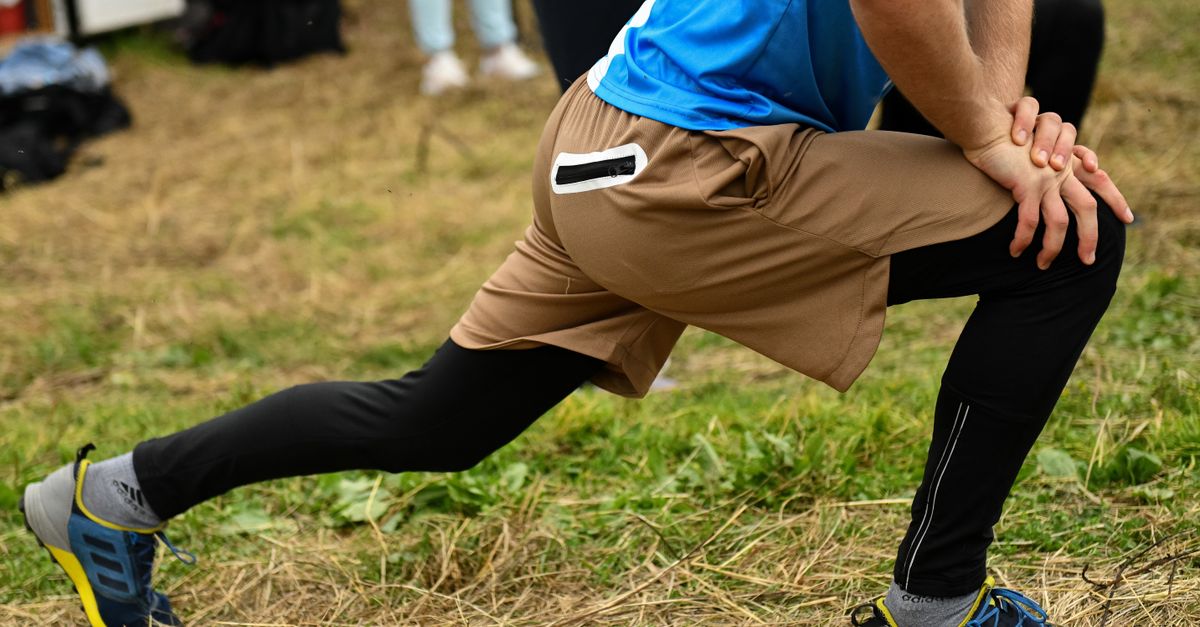
Active, gentle stretching is the most effective intervention. The athlete should carefully move the leg outward, away from the midline of the body, creating a sustained, gentle pull on the inner thigh. This physical lengthening stimulates the Golgi tendon organs, which send a powerful reflex signal to the spinal cord commanding the muscle to relax.
Aggressive, forceful stretching must be avoided, as it can tear the contracted muscle fibers. Firm, deep tissue massage directly over the knotted muscle belly provides ischemic compression, which flushes out acidic waste and encourages the localized fibers to unbind.
10. Preventive Strategies
Preventing recurrent groin cramps relies on implementing rigorous preparation and maintenance protocols before the workout begins.
| Preventive Action | Implementation Protocol | Physiological Rationale |
|---|---|---|
| Electrolyte Loading | Consume a sodium/magnesium rich drink 1 hour pre-workout. | Optimizes the electrical gradient necessary for smooth nerve conduction. |
| Dynamic Warm-up | Perform 10 minutes of side lunges and leg swings. | Increases local blood flow and tissue elasticity before heavy loading. |
| Hydration Maintenance | Drink 200ml of water every 15 minutes during activity. | Maintains blood plasma volume, ensuring constant oxygen delivery to muscles. |
| Intensity Pacing | Gradually increase weights or speed over several weeks. | Prevents acute neuromuscular exhaustion and builds cellular energy capacity. |
11. Targeted Flexibility Routines
Maintaining a high degree of baseline flexibility in the adductor complex ensures the muscles can withstand extreme ranges of motion without seizing. Chronic tightness shortens the functional length of the muscle, lowering the threshold for a protective cramp.
The butterfly stretch is highly effective. Sitting on the floor with the soles of the feet together and gently pressing the knees downward provides a deep, static stretch to the adductor origin at the pubic bone. This should be performed post-workout when the tissues are warm and pliable.
Incorporating foam rolling into the daily routine physically breaks down fascial adhesions. Rolling slowly along the inner thigh hydrates the fascial web, ensuring the distinct adductor muscle bellies can slide past one another smoothly during intense athletic maneuvers.
12. Nutritional Support for Muscular Endurance
A diet deficient in essential macronutrients limits the muscles’ ability to store adequate energy. Glycogen is the primary fuel source for intense, anaerobic muscular contractions.
Athletes must consume sufficient complex carbohydrates in the hours leading up to a strenuous lower-body workout. Filling the intramuscular glycogen stores provides the necessary fuel to maintain the calcium pumps, preventing the energy depletion that causes the muscle fibers to lock.
Consistent dietary intake of calcium and magnesium-rich foods, such as leafy green vegetables, dairy, and nuts, ensures the body maintains optimal intracellular reserves of these critical relaxing ions, providing long-term protection against systemic muscular cramping.
13. Progressive Overload Principles
Cramping is fundamentally a symptom of a muscle being asked to perform beyond its current conditioning level. Implementing the principle of progressive overload is essential for building muscular resilience.
Athletes must gradually increase the volume, intensity, and duration of their workouts over weeks and months. Subjecting the adductors to sudden, massive spikes in workload guarantees acute failure.
By carefully tracking progress and incorporating structured deload weeks where training volume is significantly reduced, the nervous system and the muscular tissue have adequate time to adapt, repair, and build the metabolic endurance necessary to prevent exercise-induced spasms.
14. Distinguishing Cramps from Adductor Strains
It is vital to distinguish between a transient, benign muscle cramp and an acute structural injury, such as an adductor strain or a groin pull.
A cramp presents as a sudden, hard, visible knot in the muscle that is excruciatingly painful but gradually releases with stretching and massage, allowing the athlete to walk relatively normally afterward, albeit with some residual soreness.
An adductor strain involves the actual tearing of the muscle fibers or the tendon. The pain is a sharp, sudden popping sensation. Stretching the muscle severely exacerbates the pain, and the athlete typically exhibits a pronounced limp, localized swelling, and eventual bruising. A strain requires immediate cessation of activity and prolonged clinical rehabilitation.
15. When to See a Doctor
Medical evaluation is necessary if severe muscle cramps occur frequently during minimal exertion, do not resolve with stretching, or happen repeatedly at night while resting, as these may indicate an underlying systemic metabolic disorder or peripheral artery disease.
Athletes must seek prompt clinical attention if a suspected cramp is accompanied by a sudden, sharp pop, severe bruising tracking down the inner thigh, or an absolute inability to bear weight on the leg, indicating a high-grade muscle tear.
If chronic groin tightness and cramping persist despite optimal hydration, nutrition, and physical therapy, a consultation with a sports medicine physician is warranted to rule out underlying structural pathologies like hip impingement or sports hernias.
16. Frequently Asked Questions FAQ
1. Do bananas actually help prevent muscle cramps?
Bananas are a good source of potassium, which is necessary for muscle function, but a lack of potassium is rarely the sole cause of a sudden workout cramp. Acute cramps are usually driven by sodium depletion, dehydration, and sheer muscular exhaustion.
2. Can I continue my workout after a groin cramp passes?
If you suffer a severe cramp, it is a clear warning that the muscle is chemically exhausted. While you might feel better after stretching, continuing the intense workout highly increases the risk of the cramp returning immediately or the fatigued muscle tearing.
3. Why do I only get groin cramps when doing lateral movements?
Lateral, side-to-side movements specifically isolate and heavily load the adductor muscles. If your training primarily involves straightforward running or cycling, your adductors are not conditioned for this lateral load, making them fatigue and cramp very rapidly.
4. Does drinking pickle juice really stop a muscle cramp?
Yes, clinical studies suggest that drinking a small amount of pickle juice can stop a cramp rapidly. It is not due to the immediate absorption of salt, but rather the strong, acidic vinegar triggering a reflex in the back of the throat that sends a neurological signal down the spinal cord, commanding the overactive motor neurons to stop firing.
17. Bibliography
Disclaimer: The content is for informational purposes only and does not replace medical advice. Always consult your doctor for personalized treatment.
