
1. Introduction
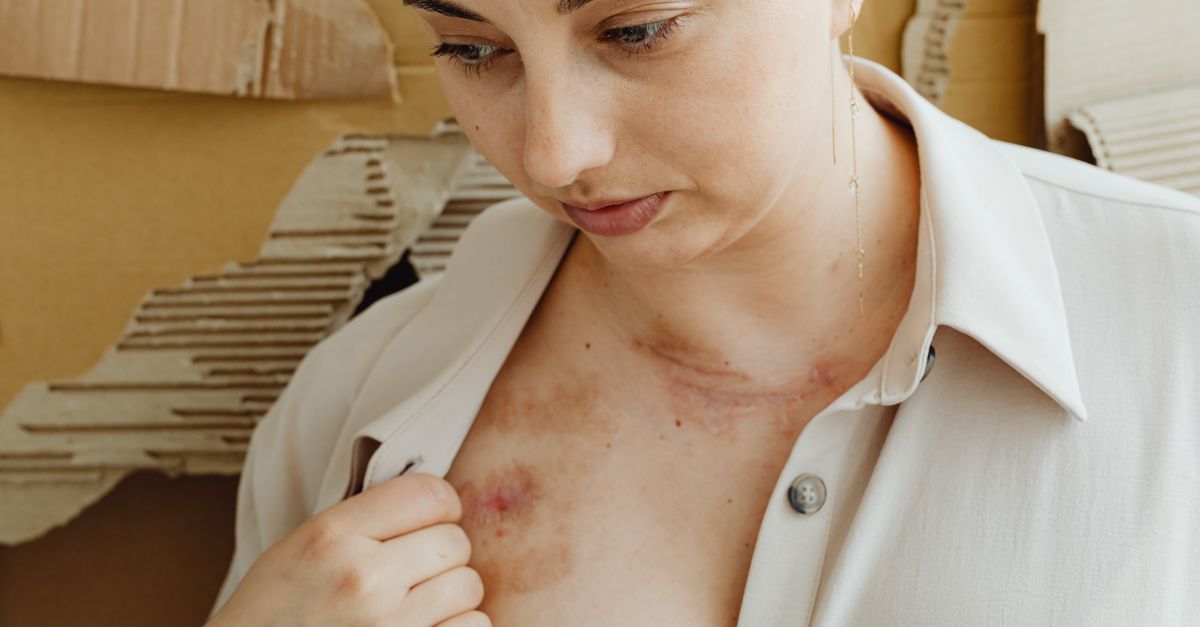
When an old, seemingly healed scar suddenly becomes raised, red, and intensely itchy after months or years of dormancy, it indicates a profound reactivation of the localized immune response or a shift in cellular metabolism. A scar represents a permanent structural alteration in the dermis, composed of dense, disorganized collagen fibers rather than normal skin tissue. Under normal physiological conditions, a mature scar is biologically quiet and static. However, this dense connective tissue remains highly vascularized and populated with specific immune cells that can be rapidly reawakened by internal or external stimuli.
While localized friction, infection, or a delayed transition into a hypertrophic scar are common mechanical culprits, dermatologists view the sudden flare of old scars with a high degree of clinical suspicion. This highly specific presentation is a classic, hallmark sign of systemic sarcoidosis, an inflammatory disease capable of affecting multiple organ systems simultaneously. Understanding the mechanical and immunological factors capable of triggering an old wound is vital. It dictates whether the patient requires a simple topical treatment for localized irritation or an extensive systemic workup to identify creeping, silent organ disease.
2. The Normal Wound Healing Cascade
To understand why a scar changes, one must understand how it forms. Wound healing is an incredibly complex biological cascade divided into overlapping phases: hemostasis, inflammation, proliferation, and remodeling. During the proliferation phase, fibroblasts flood the injury site, rapidly synthesizing large amounts of dense collagen to physically bridge the gap in the tissue.
The final remodeling phase can last for over a year. During this time, the body slowly breaks down the excess, disorganized collagen and replaces it with stronger, highly organized fibers. A normal, mature scar eventually becomes flat, pale, and completely asymptomatic as the vascular supply diminishes and the immune cells depart. A sudden change means this stable state has been violently disrupted.
3. Hypertrophic Scar Transformation
In some individuals, the biological brakes on the wound healing cascade fail. Instead of entering a quiet remodeling phase, the fibroblasts remain highly active, continuously pumping out excess collagen long after the original wound has closed. This results in a hypertrophic scar.
Hypertrophic scars appear as thick, raised, red, and frequently itchy bands of tissue. Crucially, they remain strictly confined within the original physical boundaries of the initial injury. While this transformation usually begins within the first few months of healing, delayed hypertrophic shifts can occur if the scar is subjected to new mechanical tension or severe localized inflammation.
4. Keloid Formation and Genetic Factors
Keloids represent a more aggressive failure of wound healing regulation. Like hypertrophic scars, they involve massive collagen overproduction. However, keloids completely ignore the physical boundaries of the original wound, aggressively expanding outward and invading the surrounding healthy skin like a benign tumor.
Keloids form dense, rubbery, deeply pigmented nodules that are notoriously pruritic and occasionally painful. There is a profound genetic predisposition to keloid formation, particularly in individuals with darker skin tones. An old, stable scar can suddenly transform into an aggressive keloid if the patient undergoes massive hormonal shifts, such as during puberty or pregnancy.
5. Sarcoidosis and Scar Flares
The most medically significant systemic cause of old scars suddenly becoming inflamed is sarcoidosis. Sarcoidosis is a complex, multi-system inflammatory disease characterized by the formation of microscopic, inflammatory nodules known as granulomas in various organs, most dangerously the lungs and lymph nodes.
In a highly classic, frequently tested clinical presentation, the systemic immune dysregulation of sarcoidosis preferentially targets old sites of cutaneous trauma. The immune system suddenly recognizes the old scar tissue as a site for granuloma formation. Decades-old, flat scars will abruptly swell, turn purple or red, and become intensely itchy. This sudden scar flare frequently heralds the onset of active systemic organ involvement.
6. Granulomatous Inflammation Mechanisms
The mechanism behind a sarcoidosis scar flare is fundamentally different from a keloid. A keloid is an overgrowth of structural collagen protein. A sarcoid granuloma is a dense, highly organized cluster of living immune cells, specifically macrophages and T-lymphocytes, which have erroneously banded together.
When these immune cells infiltrate an old scar, their sheer physical volume causes the scar to swell and become raised. Furthermore, these active immune cells continuously secrete powerful inflammatory cytokines into the surrounding tissue. This intense, localized chemical signaling severely irritates the local nerve endings, generating the sudden, severe pruritus reported by the patient.
7. Foreign Body Reactions
When a deep wound heals, microscopic particles are occasionally trapped permanently within the dermal layers. These can include fragments of glass, wood splinters, microscopic dirt particles, or even the remnants of deep surgical sutures that failed to dissolve completely.
For years, the body may isolate these particles in a tiny, quiet capsule. However, a minor trauma or a shift in immune function can suddenly cause the immune system to re-recognize the foreign object. The body launches a delayed foreign body reaction, creating localized inflammation and swelling within the old scar as it attempts to break down or push out the microscopic invader.
8. Hormonal Fluctuations and Pregnancy
The structural connective tissue of the skin, including scar tissue, is highly responsive to the systemic endocrine environment. Massive hormonal shifts, particularly the profound elevation of estrogen and progesterone during pregnancy, dramatically alter fibroblast activity and local blood flow.
It is a common clinical observation for pregnant individuals to experience sudden changes in old surgical scars, particularly prior cesarean section scars or appendectomy scars. The hormonal surge causes the scar to become vascularized, red, and intensely itchy. This hormonally driven flare is generally benign and often regresses significantly in the postpartum period as hormone levels normalize.
9. Infection and Biofilm Development
Although rare in old, fully closed scars, a delayed, subclinical infection can cause sudden inflammation. If microscopic bacteria were walled off deep within the tissue during the initial healing phase, they might survive in a dormant state by creating a protective biofilm.
If the patient’s immune system becomes temporarily suppressed due to stress, illness, or medications, these dormant bacteria can reactivate and multiply. The resulting localized infection causes the old scar to rapidly become red, swollen, warm to the touch, and exquisitely painful, necessitating prompt antibiotic intervention to prevent abscess formation.
10. Histamine Release and Pruritus
The defining symptom of sudden scar changes is intense itching. Scar tissue inherently lacks normal sweat glands, hair follicles, and the organized neural network of healthy skin. The nerve endings that do grow back into the dense collagen are often tangled and hyper-reactive.
When any inflammatory process begins within the scar—whether from sarcoidosis, keloid growth, or mechanical friction—mast cells in the tissue degranulate, releasing large volumes of histamine. Because the nerve endings in the scar are structurally compromised, they misinterpret this inflammatory chemical soup, transmitting an overwhelmingly intense, unyielding itch signal to the brain.
11. Mechanical Friction and Tension
The physical location of an old scar dictates its susceptibility to mechanical trauma. Scars located over joints, on the waistline, or across the upper chest are subjected to constant, repetitive stretching and friction from clothing and daily movement.
Scar tissue is inherently less elastic than normal skin. Continuous mechanical tension creates microscopic tears within the dense collagen bundles. The body responds to these micro-tears by initiating a localized inflammatory healing response. Repeated cycles of this mechanical trauma cause the scar to progressively thicken, rise, and itch purely due to physical stress.
12. Differentiating Scar Types
Accurate dermatological assessment requires distinguishing between the various causes of a scar flare, as the treatments differ drastically. A hypertrophic scar is firm, red, and stays within the wound borders. A keloid is rubbery, highly raised, and invades healthy skin.
A sarcoidosis scar flare typically affects multiple old scars on the body simultaneously, often presenting with a distinct purplish hue and a doughy texture upon palpation. If multiple scars suddenly swell concurrently alongside a new, persistent dry cough or profound fatigue, the clinical index of suspicion for systemic sarcoidosis becomes extremely high.
| Cause of Flare | Visual and Tactile Characteristics | Clinical Context |
|---|---|---|
| Hypertrophic Shift | Raised, red, confined to wound borders. | High mechanical tension areas. |
| Keloid Transformation | Massive, invading normal skin, rubbery. | Genetic predisposition, hormonal shifts. |
| Sarcoidosis (Granuloma) | Purple/red swelling of multiple old scars. | Accompanied by chronic cough or fatigue. |
| Foreign Body Reaction | Localized, highly tender, single nodule. | History of trauma or retained sutures. |
13. Diagnostic Biopsy Importance
When systemic disease is suspected, or when a scar flare behaves atypically, a diagnostic skin biopsy is absolutely mandatory. A dermatologist will surgically remove a small punch of the inflamed scar tissue for pathological examination under a microscope.
The presence of non-caseating granulomas in the biopsy definitively confirms sarcoidosis, instantly shifting the patient’s care from simple dermatology to comprehensive rheumatological and pulmonological management. Furthermore, a biopsy firmly rules out the rare possibility that a severe, deeply invasive skin cancer, such as squamous cell carcinoma, is developing within the old, damaged burn scar (known as a Marjolin ulcer).
14. Intralesional Corticosteroid Injections
For scars flaring due to keloid formation, hypertrophic shifts, or localized inflammation, the clinical gold standard of treatment is the intralesional corticosteroid injection. A dermatologist utilizes a very fine needle to inject a highly concentrated steroid directly into the dense core of the raised scar.
This potent medication instantly suppresses the localized immune response, halting the release of histamine and stopping the itching. More importantly, the steroid aggressively inhibits fibroblast activity, preventing further collagen production and actively breaking down the existing dense tissue, causing the raised scar to rapidly flatten and soften over a series of treatments.
15. Laser and Surgical Revisions
When injections fail, advanced laser therapies are employed. Pulsed dye lasers target the dense, hyperactive microvasculature feeding the inflamed scar. By destroying these blood vessels, the laser starves the scar of the nutrients required for growth, significantly reducing redness and halting the intense pruritus.
Surgical excision of a flaring keloid is approached with extreme caution. Cutting a keloid out creates a brand new wound, and without immediate post-operative radiation or steroid injections, the body will frequently respond by growing a vastly larger and more aggressive keloid in its place.
16. When to Seek Medical Evaluation
Any individual experiencing sudden swelling, redness, and itching in a scar that has been flat and dormant for years should schedule a consultation with a dermatologist. Because this specific symptom is a highly reliable early indicator of systemic sarcoidosis, obtaining a rapid evaluation ensures early detection of potential pulmonary or cardiac inflammation.
Immediate medical assessment is required if the flaring scar becomes intensely painful, rapidly expands in size over a few days, oozes pus or blood, or if the localized skin changes are accompanied by sudden shortness of breath, chest pain, or vision changes, demanding immediate systemic medical intervention.
17. Frequently Asked Questions (FAQ)
1. Is it normal for an old scar to hurt years later?
No, a fully mature, healed scar should be completely painless and flat; sudden pain, swelling, or severe itching indicates a new inflammatory process, an infection, or a systemic disease triggering the old tissue.
2. Can weather changes make my old scars itch?
Yes, drastic drops in barometric pressure and severe cold can cause the surrounding healthy tissue to contract at a different rate than the rigid scar tissue, creating physical mechanical tension that triggers a temporary, mild itch.
3. Will applying silicone gel flatten my raised, itchy scar?
Medical-grade silicone sheets or gels are highly effective at hydrating the stratum corneum and downregulating fibroblast activity, significantly reducing the height, redness, and itching of active hypertrophic scars and early keloids.
4. Does a raised scar mean it is turning into cancer?
The vast majority of raised scars are simply keloids or hypertrophic shifts, but in very rare cases, chronic, non-healing burn scars can develop a specific type of skin cancer, requiring a biopsy if the scar ulcerates and bleeds.
5. Why did all my old scars swell up at the exact same time?
The simultaneous swelling and itching of multiple old scars across the body is the classic, textbook presentation of systemic sarcoidosis, requiring comprehensive medical bloodwork and a chest X-ray to evaluate internal organ involvement.
18. Bibliography
Disclaimer: The content is for informational purposes only and does not replace medical advice. Always consult your doctor for personalized treatment.
