1. Introduction
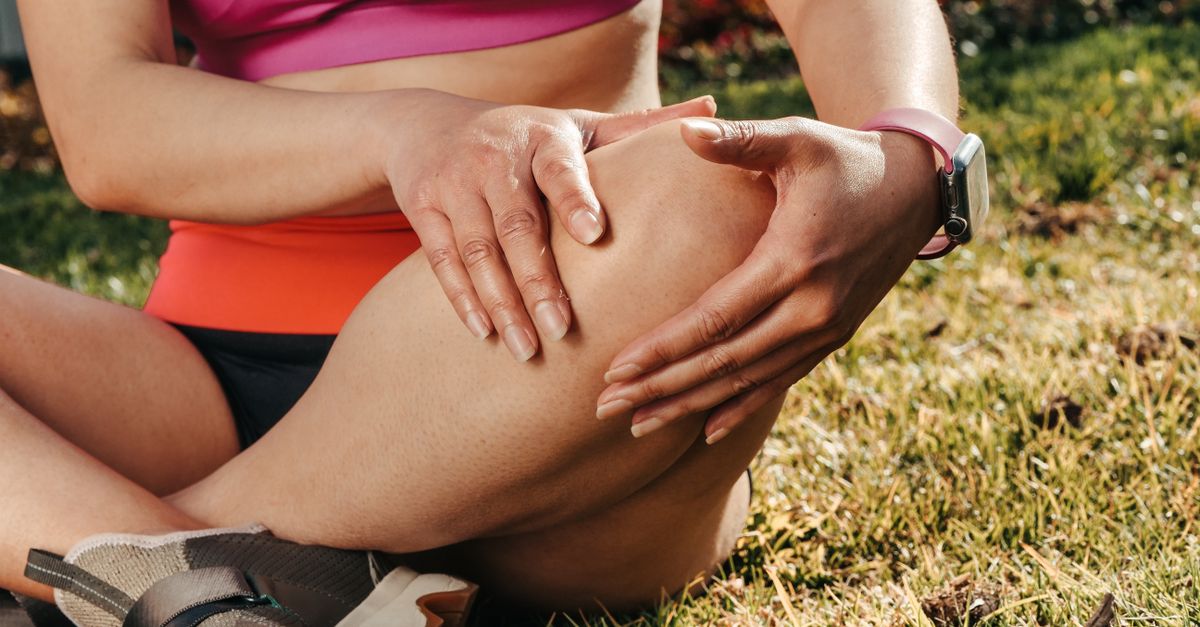
Knee popping and cracking when standing up from a low chair is typically caused by harmless physiological cavitation or the snapping of ligaments over bony prominences. The human knee is a complex hinge joint subjected to immense mechanical forces. When you sit in a low chair, the knee is forced into deep flexion, stretching the joint capsule tightly and altering the internal pressure of the synovial fluid. As you stand, the rapid change in joint geometry causes dissolved gases within the fluid to rapidly form and collapse, creating an audible popping sound.
Furthermore, the mechanical alignment of the knee comes into play. The kneecap, or patella, must glide smoothly through a groove on the femur. During the transition from deep flexion to full extension, the immense force generated by the quadriceps muscles pulls heavily on the patella. If the patella tracks slightly off-center, or if a surrounding ligament rubs against a bony ridge, a distinct mechanical click or snap will occur.
This acoustic phenomenon is clinically referred to as crepitus. While the sound can be alarming, especially if it reverberates loudly, it is a normal biomechanical event for the vast majority of people. Unless the popping is accompanied by sharp pain, sudden swelling, or a feeling of mechanical locking, it simply reflects the dynamic fluid and structural interactions within a healthy, moving joint.
Understanding the specific mechanics behind these noises helps differentiate between benign physiological occurrences and potential early signs of cartilage degradation, ensuring appropriate joint care and peace of mind.
2. The Anatomy of the Knee Joint
To understand why the knee generates noise, it is essential to review its structural components. The knee is composed of the distal femur, the proximal tibia, and the patella. These bones are connected by a robust network of ligaments, including the anterior and posterior cruciate ligaments, which provide internal stability, and the collateral ligaments, which prevent side-to-side abnormal movement.
The articulating surfaces of these bones are covered by a layer of smooth, white articular cartilage. This specialized tissue is incredibly slick, possessing a friction coefficient lower than ice on ice. It allows the heavy bones to glide past one another without wearing down. Between the femur and tibia lie two crescent-shaped pads of fibrocartilage called the menisci, which act as critical shock absorbers.
The entire joint is encased within a fibrous joint capsule lined with a synovial membrane. This membrane secretes synovial fluid, a viscous, egg-white-like substance that nourishes the avascular cartilage and provides essential lubrication.
When you sit in a low chair, the angle between the femur and tibia decreases significantly. This deep flexion compresses the posterior structures, stretches the anterior joint capsule, and alters the hydrostatic pressure within the synovial fluid compartment, setting the stage for acoustic phenomena upon standing.
3. The Phenomenon of Joint Cavitation
The most common cause of a single, loud pop when standing is a process known as tribonucleation or joint cavitation. Synovial fluid contains dissolved gases, primarily nitrogen, oxygen, and carbon dioxide. These gases remain in a liquid state under normal resting joint pressure.
When you begin to stand up from a deeply flexed position, the joint capsule stretches and the volume of the intra-articular space rapidly expands. According to the principles of fluid dynamics, an increase in volume in a sealed space results in a rapid decrease in pressure. This sudden pressure drop causes the dissolved gases to instantly vaporize out of the fluid, forming a microscopic bubble.
As the joint continues to move, the fluid rushes back in to equalize the pressure, causing the gas bubble to collapse with a distinct acoustic crack. This is the exact same physiological mechanism that occurs when you crack your knuckles.
Cavitation is entirely benign. Once the bubble bursts, the gases take roughly twenty minutes to dissolve back into the synovial fluid. This refractory period explains why you cannot immediately reproduce the loud pop if you sit back down and stand up again right away.
4. Patellofemoral Tracking and Mechanics
The patella functions as a mechanical pulley, increasing the leverage of the quadriceps muscles to straighten the leg. The patella rests in the trochlear groove at the front of the femur. For silent, efficient movement, the patella must track perfectly down the center of this groove during flexion and extension.
However, perfect tracking is rare. Many individuals have subtle muscle imbalances, such as tight lateral quadriceps and weaker medial quadriceps. When standing up from a low chair, the quadriceps contract forcefully. If an imbalance exists, the patella may be pulled slightly toward the outer edge of the trochlear groove.
As the knee straightens under load, the patella shifts back into its proper alignment. This sudden shift over the ridge of the trochlear groove creates a distinct, often repeatable clicking or snapping sound.
This type of mechanical tracking sound is usually harmless. However, if the snapping is accompanied by a grinding sensation or pain underneath the kneecap, it may indicate a condition known as patellofemoral pain syndrome, where the cartilage behind the kneecap is becoming irritated by the abnormal friction.
5. Ligament and Tendon Snapping
The knee is surrounded by numerous thick tendons and ligaments. As the joint moves through a wide range of motion, these taut, cord-like structures must slide over various bony prominences on the femur and tibia.
When you sit in a low chair, the tissues adapt to the flexed posture. Upon suddenly standing, a tendon may become temporarily caught on a bony ridge. As the muscle continues to pull, tension builds until the tendon suddenly snaps over the ridge like a plucked guitar string. This generates a sharp, vibrating pop.
The iliotibial band, a thick strip of fascia running down the outside of the thigh, is a frequent culprit. It can snap over the lateral femoral condyle as the knee extends. Similarly, the biceps femoris tendon at the back of the knee can snap over the fibular head.
Tendon snapping is generally painless and benign. It is often more pronounced if the muscles are tight from lack of stretching or after a period of prolonged inactivity, as the tissues lose their optimal elasticity.
6. Cartilage Irregularities and Crepitus
If the sound resembles a crunching, grinding, or a sound like walking on dry snow, rather than a single distinct pop, it suggests changes to the articular cartilage. Healthy cartilage is perfectly smooth. Over time, due to age, previous injuries, or genetics, the cartilage can begin to fray and develop microscopic rough patches.
This condition, known as chondromalacia patellae or early-stage osteoarthritis, alters the friction dynamics of the joint. When the rough surface of the patella grinds against the rough surface of the femur under the heavy load of standing up, the friction generates continuous, low-pitched acoustic vibrations.
Unlike cavitation, which occurs once and requires a refractory period, cartilage crepitus can be reproduced with every single movement of the knee. The sound is directly correlated to the physical grinding of the degraded surfaces.
While mild cartilage crepitus is a normal part of aging, a sudden onset of grinding accompanied by swelling, warmth, or stiffness warrants a medical evaluation to assess the health of the joint surfaces and implement preservation strategies.
7. The Impact of a Low Chair
The height of the chair plays a significant role in the forces placed upon the knee. Standing up from a standard dining chair requires a moderate amount of quadriceps force. However, standing from a low couch or a deep lounge chair forces the knee into acute flexion, often exceeding ninety degrees.
In this deep flexed position, the mechanical disadvantage is immense. The patella is pressed fiercely into the femur. To lift the body’s center of mass, the quadriceps must generate a force equivalent to several times the person’s body weight.
This extreme compressive force amplifies any minor tracking issues or cartilage irregularities. A slight misalignment that might be silent during normal walking becomes acoustic under the immense strain of a deep squat transition.
Modifying the environment by choosing chairs with a higher seat or using armrests to assist the upward transition can significantly reduce the mechanical load on the patellofemoral joint, thereby decreasing the frequency of the popping sounds.
8. Synovial Fluid Viscosity and Temperature
The physical properties of synovial fluid change based on temperature and activity levels. Synovial fluid is thixotropic, meaning its viscosity decreases and it becomes thinner when subjected to mechanical shear stress.
After sitting still for a prolonged period, the synovial fluid thickens and becomes more gel-like. This thicker fluid provides less optimal lubrication and can momentarily cause the joint surfaces to stick together slightly. When you stand up, overcoming this static friction can result in a soft popping or cracking sound as the fluid is forced to redistribute.
Once you begin walking and the joint is actively moving, the fluid warms up and thins out, providing a slicker, more efficient barrier between the tissues. This is why the knee often pops on the first step out of a chair, but remains silent during continuous walking.
Staying adequately hydrated and engaging in brief, gentle movements before fully standing can help prime the synovial fluid, ensuring smoother, quieter joint articulation.
9. Differentiating Benign Sounds from Pathology
Understanding the nature of the sound is crucial for determining if medical attention is required.
- Benign popping is usually high-pitched, isolated, painless, and cannot be immediately repeated.
- Benign snapping feels like a cord plucking over a bone and is generally painless.
- Pathological crepitus is a continuous, low-pitched grinding or crunching sound present with every movement.
- Pathological popping is accompanied by sharp pain, a feeling of the knee giving way, or the joint locking in place.
- Sounds that develop immediately following an acute trauma, such as a twist or fall, require urgent evaluation.
If the cracking is purely acoustic and causes no functional impairment, it is considered a physiological variant and requires no medical intervention.
10. The Role of the Menisci
The menisci are critical load-bearing structures within the knee. As you stand up and the femur rotates on the tibia, the menisci must shift slightly to accommodate the changing geometry of the bones.
If a meniscus has suffered a minor tear or fraying, often due to degenerative changes over time, a loose flap of the fibrocartilage can become momentarily caught between the articulating surfaces. As the leg straightens, the femur rolls over this flap, causing a distinct, mechanical click.
Unlike benign cavitation, a meniscal click is often reproducible and may be accompanied by a subtle catching sensation deep within the joint. If the flap is large enough, it can physically block the knee from fully straightening, a condition known as a locked knee.
Persistent clicking that feels internal and mechanical, especially if accompanied by localized pain along the joint line, should be evaluated with advanced imaging, such as magnetic resonance imaging, to assess meniscal integrity.
11. Muscular Strengthening for Joint Stability
The most effective preventative strategy for mechanical clicking and snapping is targeted muscular strengthening. The muscles surrounding the knee act as dynamic shock absorbers. A strong, balanced muscular system holds the joint in optimal alignment, preventing aberrant tracking.
Strengthening the vastus medialis oblique, the inner part of the quadriceps muscle, is particularly important. This muscle helps pull the patella inward, counteracting the strong lateral pull of the outer thigh muscles and the iliotibial band. Exercises such as straight leg raises and controlled, shallow wall sits can isolate and strengthen this tissue.
Equally important are the gluteal muscles and hip external rotators. Weakness in the hips allows the femur to rotate inward when standing up, which drastically alters the angle of the patellofemoral joint and increases the likelihood of maltracking and popping.
A comprehensive lower-body strengthening program ensures that the mechanical forces of standing up are distributed evenly across the kinetic chain, sparing the delicate structures of the knee from excessive, localized strain.
12. Flexibility and Mobility Optimization
While strength provides stability, flexibility ensures that the joints can move through their full range without undue restriction. Tight muscles and fascial bands increase the resting tension on the tendons, making them more likely to snap loudly over bony prominences.
Consistent stretching of the hamstrings, quadriceps, and calf muscles maintains optimal tissue length. The iliotibial band, while inherently tough and difficult to stretch, can benefit from foam rolling to break up localized fascial adhesions and improve the gliding action of the tissues over the lateral knee.
Dynamic mobility exercises, such as gentle leg swings and knee circles performed before prolonged sitting, keep the soft tissues pliable and encourage continuous circulation of the synovial fluid.
Maintaining a full, unhindered range of motion in the ankles and hips also prevents the knee from having to compensate mechanically during the standing motion, further reducing the incidence of abnormal tracking and noise.
13. The Influence of Body Mechanics and Posture
How you stand up from a chair dictates the amount of stress placed on the knees. A poor movement pattern significantly increases the likelihood of crepitus. Leaning too far forward and allowing the knees to cave inward toward each other places immense valgus stress on the joint, exacerbating tracking issues.
Proper biomechanics require initiating the movement from the hips. You should hinge forward slightly at the waist, keep the chest up, and drive the heels firmly into the floor. The knees should track directly over the second toe, never collapsing inward.
Utilizing the powerful gluteal and hamstring muscles to drive the hips upward takes the primary load off the anterior knee structures. If the chair is excessively low, placing hands on the thighs or using armrests to assist the initial phase of the movement can protect the joint from peak mechanical stress.
Consciously correcting these movement patterns transforms a potentially damaging mechanical action into a safe, functional movement.
14. When to Consult an Orthopedic Specialist
While most knee noises are benign, specific red flags warrant professional evaluation. Any popping sound that is immediately followed by swelling or a noticeable effusion within the joint indicates a structural injury that has caused localized bleeding or inflammation.
If the knee frequently gives way, buckling under your weight when you attempt to stand, it suggests a ligamentous insufficiency or a severe muscular inhibition caused by pain. A joint that physically locks and prevents you from straightening the leg entirely points strongly toward a meniscal tear or a loose body floating within the joint capsule.
An orthopedic specialist can perform specific clinical tests, such as the McMurray test for meniscal pathology or the apprehension test for patellar instability, to pinpoint the exact structural cause of the symptoms.
Early intervention for symptomatic crepitus can prevent accelerated cartilage wear and ensure the long-term longevity and function of the knee joint.
15. Frequently Asked Questions
1. Is it bad to intentionally pop my knees?
Intentional popping, if it is just joint cavitation, is not inherently harmful and does not cause arthritis. However, forcefully twisting the knee to elicit a pop can strain the surrounding ligaments and is not recommended.
2. Why do my knees crunch when going up stairs but pop when standing up?
Going up stairs involves repetitive, heavy loading on a moving patella, which highlights grinding from rough cartilage. Standing up from a chair is a single, deep extension motion that triggers the one-time release of gas bubbles.
3. Do joint supplements like glucosamine stop the cracking?
There is limited clinical evidence that supplements eliminate benign joint cracking. They may provide mild symptomatic relief for underlying osteoarthritis pain, but they cannot alter the physiological fluid dynamics that cause cavitation.
4. Will losing weight reduce the noise in my knees?
Yes. Every pound of body weight equates to approximately four pounds of compressive force across the knee joint. Reducing systemic weight significantly decreases the mechanical pressure on the cartilage and improves patellar tracking.
5. Why are my knees louder in the morning?
Overnight, the body is immobile, allowing the synovial fluid to thicken and the muscles to stiffen. The initial movements of the day force the thickened fluid to redistribute and stiff tendons to stretch, resulting in louder and more frequent acoustic sounds.
16. Bibliography
Disclaimer: The content is for informational purposes only and does not replace medical advice. Always consult your doctor for personalized treatment.