
1. Introduction
Normal childhood development encompasses the predictable sequence of physical, cognitive, linguistic, and social-emotional milestones a child reaches from infancy through adolescence. While every child matures at a unique physiological pace, establishing baseline developmental trajectories helps pediatricians identify early signs of neurological or physical delays. Development is not merely linear growth; it is the progressive mastery of complex skills required for independent functioning.
The rapid acquisition of these skills relies on the phenomenon of neuroplasticity. During the early years of life, the brain forms millions of synaptic connections in response to environmental stimuli, nutrition, and genetic programming. A nurturing environment provides the scaffolding necessary for these biological processes to unfold successfully.
Understanding the typical timeline of developmental milestones allows parents and clinicians to monitor a child effectively. Recognizing what constitutes a normal variation versus a concerning developmental delay is critical for initiating early intervention strategies, which drastically improve long-term outcomes for pediatric patients.
2. Defining the Developmental Domains
Clinical assessment of childhood development is categorized into distinct, yet highly interconnected, domains. The primary areas include gross motor skills, fine motor skills, speech and language acquisition, cognitive abilities, and social-emotional development.
A child rarely advances in all domains simultaneously at the exact same rate. For instance, a toddler might exhibit advanced gross motor skills by walking early but show a slight, normal variation by acquiring expressive vocabulary somewhat later.
However, severe isolation in one domain or a pervasive delay across multiple domains requires medical investigation. The pediatric objective is to ensure that the foundational architecture of the brain is developing robustly across all specialized regions.
3. Gross Motor Milestones
Gross motor development involves the coordination of large muscle groups required for posture, balance, and locomotion. This progression follows a cephalocaudal direction, meaning control develops from the head downward to the toes.
In the first few months, an infant learns to gain head control while placed on their stomach. By six months, normal development involves rolling over and beginning to sit independently. Crawling typically emerges around eight to ten months, followed by pulling up to a standing position.
Independent walking is a major gross motor milestone generally achieved between twelve and fifteen months. As the child enters the preschool years, gross motor skills become more refined, expanding into running smoothly, jumping with both feet, and eventually riding a tricycle, demonstrating mature balance and core stability.
4. Fine Motor Skills and Coordination
Fine motor skills dictate the precise, coordinated movements of the small muscles in the hands, fingers, and wrists, largely controlled by visual feedback. This domain is essential for daily living skills, writing, and self-feeding.
Newborns possess a primitive grasp reflex, but true voluntary fine motor control begins around four months when infants reach for and swipe at objects. A critical milestone occurs around nine months with the development of the pincer grasp—the ability to pick up a small object using only the thumb and index finger.
By two years of age, normal fine motor development includes stacking multiple blocks and feeding oneself with a spoon. During the preschool period, children learn to manipulate clothing fasteners, draw basic geometric shapes, and correctly hold a pencil, indicating the neurological maturity of hand-eye coordination.
5. Speech and Language Acquisition
Language development is heavily reliant on auditory processing and the cognitive ability to interpret symbols. It is divided into receptive language, which is the ability to understand words, and expressive language, which is the ability to produce speech.
Normal acquisition begins with cooing and babbling in the first six months. By their first birthday, most children can follow simple, one-step commands and utter their first intentional words, such as “mama” or “dada.” The vocabulary expands rapidly during the second year.
By age two, children typically combine two words to form basic functional phrases. By age three, a child possesses a vocabulary of hundreds of words and can communicate in short sentences that are mostly understandable to strangers. Delays in this domain are common but require careful audiological and neurological screening.
6. Cognitive Development and Problem Solving
Cognitive development refers to the maturation of thought processes, memory, problem-solving, and reasoning. It dictates how a child explores and understands the physical world. Jean Piaget’s foundational theories describe how children move from purely sensory exploration to complex abstract thought.
In infancy, cognition is tied directly to physical actions; infants learn cause and effect by dropping toys or shaking rattles. A major cognitive milestone achieved around nine months is object permanence, the understanding that an object continues to exist even when hidden from view.
As toddlers, children engage in symbolic or pretend play, using a block as a phone. By school age, logical thinking matures, and the child can categorize objects, understand basic concepts of time and quantity, and follow complex, multi-step instructions without visual cues.
7. Social and Emotional Growth
Social-emotional development encompasses a child’s ability to form secure relationships, regulate their own emotions, and understand social cues. This domain is fundamentally shaped by the early attachment formed with primary caregivers.
At two months, the emergence of a spontaneous social smile marks a key emotional milestone. By nine months, children often exhibit stranger anxiety and separation anxiety, which are perfectly normal biological responses indicating a secure attachment to the parent.
During the toddler years, the drive for independence results in temper tantrums, a normal manifestation of frustration as cognitive desires outpace communication skills. By age four, children begin engaging in cooperative play with peers, demonstrating empathy, and adhering to simple social rules.
8. Summary of Key Milestones by Age
The following table outlines major milestones indicative of normal developmental progression across various ages:
| Age Group | Key Developmental Milestones |
|---|---|
| 6 Months | Rolls over, sits with support, babbles, reaches for objects. |
| 12 Months | Pulls to stand, uses pincer grasp, says first word, waves bye-bye. |
| 2 Years | Runs, kicks a ball, uses 2-word phrases, engages in parallel play. |
| 3 Years | Climbs well, speaks in short sentences, shows affection for friends. |
| 5 Years | Hops on one foot, draws a person with body parts, follows rules. |
9. The Role of Nutrition in Development
Physical and neurological development requires immense metabolic energy and specific nutritional building blocks. The brain, which doubles in size during the first year of life, relies heavily on adequate dietary fat, particularly long-chain polyunsaturated fatty acids.
Iron is another critical nutrient for normal cognitive development. Iron deficiency in toddlers can lead to long-term cognitive deficits and behavioral issues, as iron is necessary for the synthesis of neurotransmitters and the myelination of nerve fibers.
A diverse, nutrient-dense diet ensures the physical growth parameters—height, weight, and head circumference—track appropriately along standardized growth charts. Chronic malnutrition severely suppresses linear growth and fundamentally alters the brain architecture.
10. Environmental and Genetic Influences
Normal development is the product of an intricate interaction between genetic potential and environmental exposure. Genetics dictate the architectural blueprint of the brain and the baseline pace of physical maturation. Some children are genetically predisposed to walk earlier or speak later.
However, the environment determines how effectively that genetic potential is expressed. A home filled with verbal interaction, reading, and safe spaces for physical exploration heavily stimulates neurological pathways.
Conversely, adverse childhood experiences, chronic stress, or lack of sensory stimulation can produce elevated cortisol levels that disrupt normal synaptic pruning, leading to delays in behavioral regulation and cognitive processing.
11. Standardized Pediatric Screening
Because early identification of developmental delays dramatically alters clinical outcomes, pediatricians utilize standardized screening tools during routine well-child visits. These validated questionnaires are administered at specific intervals, typically at nine, eighteen, and twenty-four or thirty months.
The screening covers all major domains and helps objectify the assessment, moving beyond simple clinical observation. If a child scores below the expected threshold in a specific area, the pediatrician will initiate a more targeted, comprehensive neurodevelopmental evaluation.
These screenings are specifically designed to detect early indicators of autism spectrum disorder, cerebral palsy, or global developmental delays, ensuring that therapeutic interventions like speech or physical therapy are initiated while neuroplasticity is at its peak.
12. Recognizing Developmental Red Flags
While normal development embraces a wide range of timelines, certain specific behaviors or missing milestones serve as clinical red flags requiring immediate investigation. The most profound red flag is the loss of a previously acquired skill, known as developmental regression.
If a child who formerly used words stops speaking, or a child who could walk independently begins stumbling and losing balance, urgent neurological evaluation is mandatory to rule out degenerative conditions.
Other red flags include the absence of a social smile by three months, an inability to sit independently by nine months, no single words by sixteen months, or a persistent lack of eye contact and response to their name by eighteen months.
13. Physical Growth and Bone Maturation
Parallel to skill acquisition is the continuous, rapid physical growth of the skeleton and organ systems. Pediatricians plot a child’s length, weight, and head circumference on standardized growth curves. Normal development dictates that a child follows their established percentile curve consistently.
A sudden drop across two major percentile lines indicates a failure to thrive, which requires medical investigation to rule out malabsorption issues, hormonal imbalance, or inadequate caloric intake.
As children approach late childhood, the endocrine system begins preparing for puberty. The growth plates in the bones prepare for the final rapid lengthening phase, dictated by rising levels of growth hormone and sex steroids, transitioning the child out of the pediatric growth phase into adolescent maturation.
14. The Concept of Neuroplasticity
Neuroplasticity is the biological foundation of all childhood development. It is the ability of the brain to structurally reorganize itself by forming new neural connections throughout life, but it is exceptionally vigorous during the first five years.
Every time a toddler repeats a word, stacks a block, or experiences an emotional interaction, the corresponding neural pathways become myelinated and strengthened. Pathways that are rarely used are eliminated through a process called synaptic pruning, optimizing the efficiency of the brain.
This extreme plasticity is why early intervention for developmental delays is so successful. The pediatric brain is highly receptive to therapeutic rewiring, allowing children to overcome physiological deficits by building alternative neural circuits.
15. When to See a Pediatrician
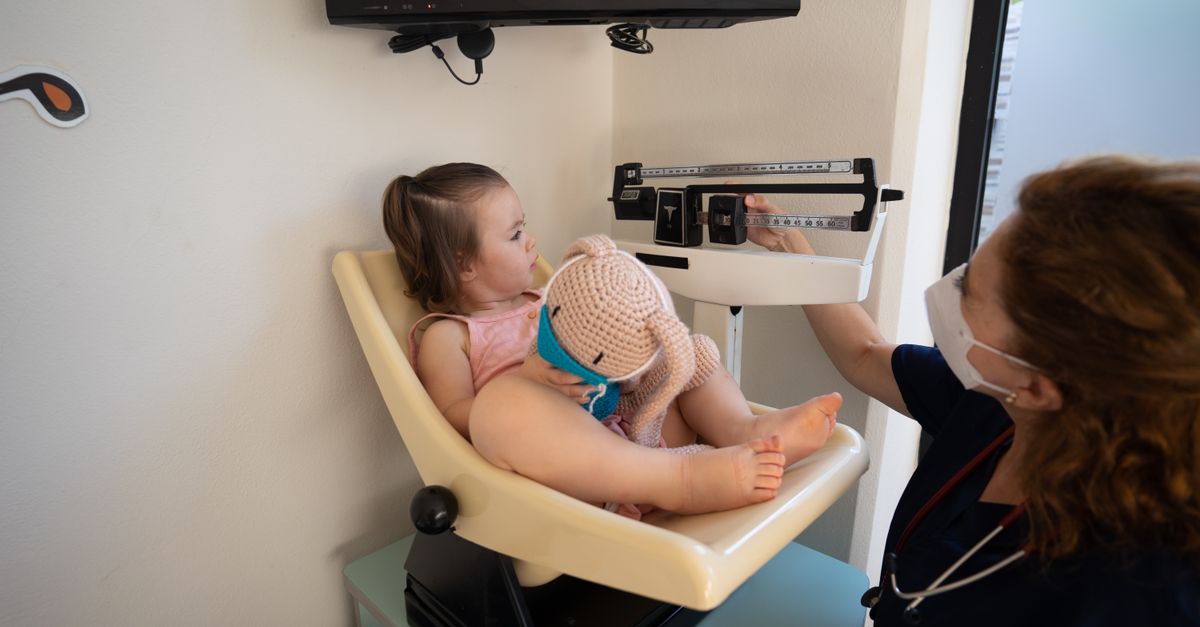
Parents should maintain regular attendance at all scheduled well-child visits. These preventative appointments are designed specifically for the pediatrician to track physical growth and assess developmental milestones systematically.
You should contact your pediatrician immediately if you observe a distinct regression, meaning your child loses a physical or linguistic skill they had previously mastered. You should also seek evaluation if your child demonstrates significant muscular stiffness, persistent floppiness, or a strong preference for using only one side of their body before the age of one.
Furthermore, trust your parental intuition. If you feel your child is consistently struggling to make eye contact, respond to interactions, or reach physical milestones compared to their peers, requesting a formal developmental screening can provide either reassurance or necessary early support.
16. Frequently Asked Questions (FAQ)
1. Is it normal for siblings to reach milestones at different times?
Yes, it is entirely normal. Genetics play a role, and every child has a unique biological timeline. One child may excel in physical milestones early on, while a sibling might be more advanced verbally.
2. Should I be worried if my baby skips crawling and goes straight to walking?
Some children do bypass traditional crawling, opting to scoot or pull up early instead. As long as the child is using both sides of their body symmetrically and progressing toward independent walking, skipping crawling is generally considered a normal variant.
3. How many words should a two-year-old say?
By age two, children typically have a vocabulary of at least fifty words and are beginning to link two words together to form simple phrases. If a child has fewer than twenty words or relies solely on pointing, a speech evaluation is recommended.
4. Can excessive screen time affect normal childhood development?
Yes. Extensive research shows that excessive screen time in early childhood limits vital face-to-face social interaction and physical exploration, frequently leading to delays in expressive language and social-emotional regulation.
5. What is the difference between a developmental delay and autism?
A developmental delay means a child is taking longer to reach certain milestones but is following the typical path. Autism spectrum disorder is a specific neurological condition characterized by distinct differences in social communication, sensory processing, and repetitive behaviors.
17. Bibliography
Disclaimer: The content is for informational purposes only and does not replace medical advice. Always consult your doctor for personalized treatment.



