
1. Introduction
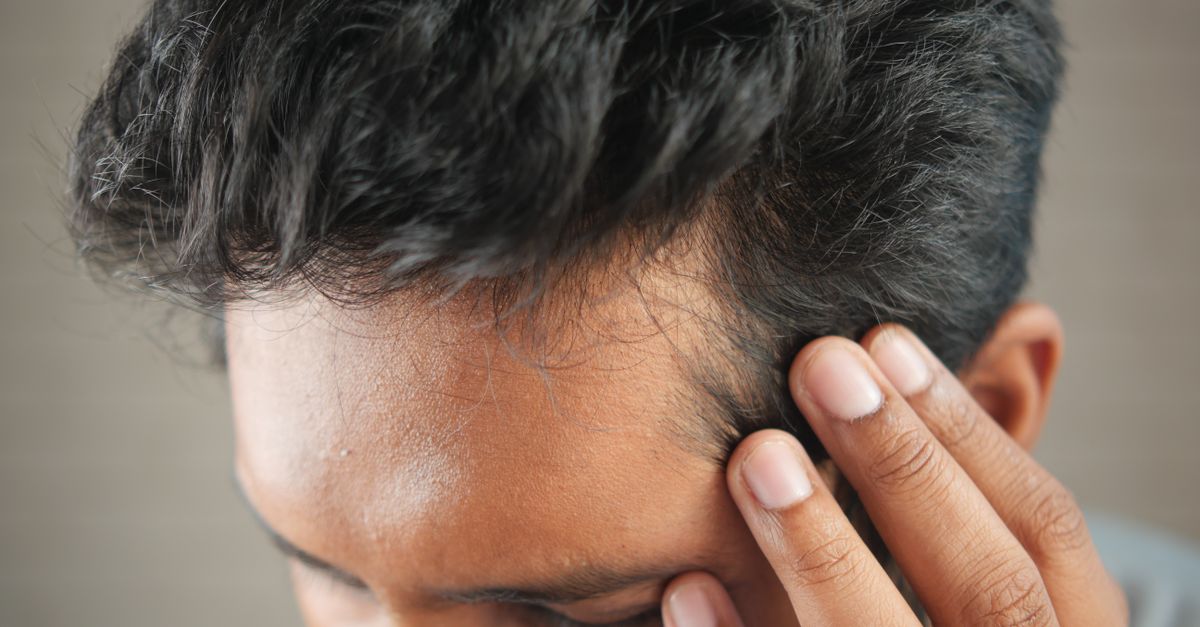
Severe pressure in the temples and forehead typically indicates a tension-type headache originating from pericranial muscle spasms or acute sinusitis causing mucosal inflammation within the frontal and sphenoid sinus cavities. In individuals over the age of fifty, it can also be a critical warning sign of temporal arteritis, an inflammatory condition affecting the blood vessels of the scalp that requires immediate medical evaluation to prevent vision loss. This sensation is often described as a tight, squeezing band wrapped tightly around the circumference of the skull.
While the sensation of pressure feels like it is emanating from deep within the brain, it is almost exclusively generated by the structures surrounding the skull, including muscles, fascia, blood vessels, and sinus mucosa. The brain tissue itself contains no pain receptors.
Proper clinical differentiation requires evaluating the exact nature of the pressure, its duration, and any accompanying symptoms. Identifying whether the pressure worsens with postural changes, visual tasks, or jaw movement allows clinicians to pinpoint the anatomical source and prescribe targeted, effective relief strategies.
2. Understanding Frontotemporal Anatomy
The forehead and temples constitute the frontotemporal region of the skull. This area is draped in a complex network of thin, powerful muscles, primarily the frontalis muscle over the forehead and the temporalis muscles covering the temples. These muscles are responsible for facial expressions and assist in chewing.
Beneath the frontal bone lies the frontal sinus cavity, while deeper behind the nose sits the sphenoid sinus. Both are lined with sensitive mucous membranes.
The entire region is highly innervated by the trigeminal nerve, the primary sensory nerve of the face and head. The superficial temporal artery, a major blood vessel supplying the scalp, pulses prominently just beneath the skin at the temples. Any inflammation, spasm, or structural pressure acting upon these components is transmitted via the trigeminal nerve directly to the brain as severe pressure or pain.
3. Tension-Type Headaches and Muscular Spasms
The most prevalent cause of a squeezing pressure across the forehead and temples is a tension-type headache. This condition is fundamentally a disorder of the pericranial muscles and fascia.
When an individual experiences psychological stress, profound fatigue, or maintains poor posture, the frontalis and temporalis muscles contract defensively. Sustained contraction leads to muscular exhaustion and the buildup of lactic acid. This metabolic stress tightens the fascial band that connects the forehead muscles to the back of the head.
Patients describe this as a dull, non-pulsating pressure, feeling exactly as though a vice is being steadily tightened around their head. The pressure is usually bilateral, affecting both temples equally, and typically does not worsen with routine physical activity.
4. Sinusitis and Paranasal Cavity Pressure
Inflammation of the paranasal sinuses is a frequent source of severe frontal pressure. The frontal sinuses are situated directly behind the brow bone. When a viral infection, bacterial pathogen, or severe allergic reaction occurs, the mucosal lining of these cavities swells significantly.
This swelling blocks the narrow ostia, the drainage pathways leading into the nasal cavity. As mucus continues to be produced but cannot escape, fluid accumulates within the rigid bony walls of the sinus.
This creates immense hydrostatic pressure that pushes against the sensitive mucosal lining. Sinus pressure is distinct because it drastically worsens when the patient leans forward, bends over, or lies flat. It is typically accompanied by nasal congestion, thick post-nasal drip, and a dull ache behind the cheekbones.
5. Migraine Headaches and Trigeminal Activation
While classic migraines are famous for severe, unilateral throbbing pain, they frequently present with intense pressure in the temples and forehead, especially in the early stages of the attack.
A migraine is a complex neurological event involving the activation of the trigeminovascular system. The trigeminal nerve releases inflammatory neuropeptides that cause the blood vessels in the meninges, the coverings of the brain, to dilate and become highly inflamed.
This neurogenic inflammation radiates pain directly into the frontotemporal region. Unlike tension headaches, the pressure of a migraine is often accompanied by profound sensitivity to light and sound, severe nausea, and a distinct worsening of the pain with any physical exertion, such as climbing stairs.
6. Temporomandibular Joint Disorders
The temporalis muscle, which fans out across the entire temple region, is a primary muscle of mastication. It connects the lower jaw to the skull and operates continuously during talking, chewing, and swallowing.
Individuals who suffer from temporomandibular joint disorders frequently clench or grind their teeth, a condition known as bruxism, particularly during sleep. This relentless nocturnal grinding severely overworks the temporalis muscle.
The resulting muscle fatigue generates a constant, dull, aching pressure in the temples that is usually most severe immediately upon waking in the morning. This temporal pressure is often accompanied by jaw clicking, difficulty opening the mouth fully, and localized pain directly in front of the ear.
7. Giant Cell Arteritis (Temporal Arteritis)
In adults over the age of fifty, severe new-onset pressure or throbbing pain located specifically at the temples is a major clinical red flag for giant cell arteritis. Also known as temporal arteritis, this is a serious systemic autoimmune disease.
The immune system aggressively attacks the lining of medium and large arteries, particularly the superficial temporal arteries. The inflammation causes the artery walls to swell, restricting blood flow. The affected temporal artery may feel hard, nodular, and exquisitely tender to the touch.
This condition requires absolute immediate medical intervention. If the inflammation spreads to the ophthalmic artery, it can cause sudden, irreversible blindness. Associated symptoms include jaw claudication (pain when chewing), systemic fatigue, and a low-grade fever.
8. Eye Strain and Uncorrected Refractive Errors
The visual system is intimately connected to the musculature of the forehead. When an individual struggles to focus due to an uncorrected refractive error, such as astigmatism or presbyopia, the brain commands the ciliary muscles inside the eye to work harder.
Simultaneously, the individual involuntarily squints, constantly recruiting the frontalis and corrugator muscles of the forehead to alter the shape of the eye and reduce incoming glare.
Hours of sustained squinting and visual concentration, particularly when staring at digital screens or reading in poor lighting, lead to profound muscle fatigue. This results in a heavy, aching pressure centered directly above the eyebrows and across the lower forehead, often referred to as an asthenopic headache.
9. Dehydration and Altered Intracranial Pressure
Systemic dehydration is a remarkably common, yet frequently overlooked, trigger for frontotemporal pressure. The brain is suspended within the skull by a cushion of cerebrospinal fluid.
When the body becomes significantly dehydrated, the volume of this protective fluid decreases slightly. This minor loss of volume allows the brain tissue to sag minimally, pulling on the pain-sensitive meninges and blood vessels anchored to the inner surface of the skull.
This traction generates a distinct, heavy pressure across the forehead and temples that often worsens sharply with sudden head movements. Rapidly restoring systemic fluid balance with water and electrolytes generally resolves this type of pressure within an hour.
10. Differentiating the Characteristics of the Pressure
Careful evaluation of the symptom profile allows clinicians to distinguish between the various causes of frontotemporal pressure without immediate imaging.
| Potential Diagnosis | Characteristics of Pressure | Key Accompanying Symptoms |
|---|---|---|
| Tension Headache | Band-like, tight, non-pulsating | Neck stiffness, stress, fatigue |
| Acute Sinusitis | Heavy, worsens bending forward | Nasal congestion, facial tenderness, thick mucus |
| Migraine | Intense, often unilateral, throbbing | Nausea, light/sound sensitivity, visual aura |
| Temporal Arteritis | Severe, localized to temple, tender to touch | Age over 50, jaw pain when chewing, vision changes |
11. Clinical Diagnosis and Diagnostic Imaging
A physician relies heavily on the patient’s clinical history to diagnose the source of the pressure. The physical examination includes palpating the temporal arteries for tenderness, pressing on the frontal and maxillary sinuses to check for fluid accumulation, and examining the jaw muscles for trigger points.
If giant cell arteritis is suspected, the physician will immediately order blood tests to measure the erythrocyte sedimentation rate and C-reactive protein levels, which indicate systemic inflammation. A temporal artery biopsy is the definitive diagnostic procedure.
For chronic, unremitting pressure that fails to respond to conservative treatment, a computed tomography scan or magnetic resonance imaging of the brain and paranasal sinuses is utilized to rule out severe sinus disease, intracranial masses, or structural anomalies.
12. Pharmacological Treatment Approaches
Treatment must be tailored to the specific etiology of the pressure. For tension headaches, over-the-counter nonsteroidal anti-inflammatory drugs, such as ibuprofen, combined with targeted muscle relaxants provide the most effective relief.
If acute bacterial sinus infection is confirmed, a course of targeted oral antibiotics is prescribed alongside topical nasal corticosteroid sprays to rapidly reduce the mucosal edema and allow the trapped sinus fluid to drain.
In the case of giant cell arteritis, high-dose systemic corticosteroids, such as prednisone, must be initiated immediately, often before the biopsy results are finalized, to aggressively suppress the vascular inflammation and protect the optic nerve from ischemic damage.
13. Non-Pharmacological Relief Strategies
For muscular tension and mild sinus congestion, conservative mechanical therapies offer significant relief. Applying a warm, moist compress across the forehead and temples dilates local blood vessels, relaxing the tight frontalis muscle and encouraging sinus drainage.
Gentle circular massage applied directly to the temples and the base of the skull manually deactivates myofascial trigger points within the temporalis muscle.
For digital eye strain, strict adherence to the twenty-twenty-twenty rule is required; looking twenty feet away for twenty seconds every twenty minutes forces the ciliary muscles to relax, halting the progression of the frontal pressure.
14. Preventive Lifestyle Modifications
Preventing chronic frontotemporal pressure involves managing the environmental and psychological triggers that cause muscle tension and vascular changes. Consistent, high-quality sleep is foundational, as sleep deprivation drastically lowers the threshold for pericranial muscle spasms.
Proper hydration must be maintained throughout the day, particularly in dry environments or during physical exertion, to support cerebrospinal fluid volume and fascial tissue elasticity.
Stress management techniques, including cognitive behavioral therapy, mindfulness meditation, and regular cardiovascular exercise, effectively downregulate the sympathetic nervous system, preventing the chronic, subconscious muscle clenching that drives tension headaches.
15. When to Seek Emergency Medical Care
Certain presentations of head pressure require absolute immediate emergency medical evaluation to prevent life-threatening or sight-threatening complications.
If the severe pressure is sudden and explosive, reaching maximum intensity within seconds, it may indicate a ruptured cerebral aneurysm, requiring urgent neurosurgical intervention.
Seek emergency care if the pressure is accompanied by systemic signs of severe infection, such as a high fever and a stiff neck that resists bending forward, which suggests meningitis. Furthermore, any sudden changes in vision, difficulty speaking, confusion, or weakness on one side of the body accompanying the pressure dictate an immediate stroke protocol evaluation.
16. Frequently Asked Questions (FAQ)
1. Can wearing glasses with the wrong prescription cause temple pressure?
Yes, incorrect corrective lenses force the eyes to constantly strain to achieve focus. This sustained accommodative effort causes severe fatigue in the ocular and forehead muscles, resulting in a persistent, dull ache across the temples.
2. Does caffeine help relieve pressure in the forehead?
It depends on the cause. Caffeine constricts dilated blood vessels, which often helps relieve migraine and tension headache pressure. However, excessive caffeine can cause systemic dehydration, which might trigger a headache later.
3. Why do my temples hurt when I chew tough food?
Chewing tough food heavily engages the temporalis muscle located at the temples. If you have an underlying temporomandibular joint disorder or chronic muscle tension, the exertion of chewing rapidly fatigues the muscle, causing severe localized pressure.
4. Will a cold pack or a warm compress work better for forehead pressure?
If the pressure is caused by a tension headache or sinus congestion, a warm compress is superior as it relaxes muscles and promotes fluid drainage. If the pressure is a throbbing migraine, a cold pack is better for numbing the nerve pain and constricting blood vessels.
5. Can allergies cause pressure in the temples without a runny nose?
Yes, severe allergic rhinitis can cause inflammation deep within the sinus cavities, leading to blocked sinus ostia and profound frontal pressure, even if the primary symptom of a runny nose is absent or mild.
17. Bibliography
Disclaimer: The content is for informational purposes only and does not replace medical advice. Always consult your doctor for personalized treatment.

