1. Introduction
Loud clicking in the wrists during card shuffling is typically a benign physiological phenomenon known as articular crepitus, caused by tendons snapping over bony prominences or the rapid release of nitrogen gas within the synovial fluid. The complex, multidirectional twisting required to bridge and cascade a deck of cards forces the carpal bones and surrounding tendons to shift rapidly, producing auditory feedback. As the wrist joint transitions from flexion to severe extension under tension, these structural elements occasionally catch and release, creating a distinct physical pop.
The human wrist is an incredibly intricate piece of biological engineering, consisting of numerous small bones held together by a tight web of ligaments. Shuffling cards—especially executing a riffle shuffle and bridge—requires the wrist to perform rapid, high-torque rotational maneuvers that challenge the stability of these soft tissues. The acoustic noise generated is usually a testament to the sheer mechanical complexity of the movement rather than a sign of joint destruction.
Understanding the anatomical origins of this clicking provides necessary reassurance. While the sound can be alarming, painless crepitus is a standard feature of a highly mobile joint. Differentiating between harmless tendon snapping and pathological clicking allows individuals to continue enjoying their hobbies safely while recognizing the subtle signs that may indicate a need for biomechanical modification.
2. Anatomy of the Carpal Bones
The wrist is not a single hinge joint; it is a complex transition zone comprising eight distinct carpal bones arranged in two rows. These bones connect the broad span of the hand’s metacarpals to the radius and ulna bones of the forearm.
Because of this multi-bone structure, the wrist possesses an extraordinary range of motion, capable of flexing, extending, and deviating side to side. However, this flexibility requires the carpal bones to shift, glide, and slightly separate from one another continuously during movement.
The entire skeletal matrix is bound tightly by intrinsic and extrinsic ligaments. When the wrist is twisted vigorously during a card trick, these small bones must articulate perfectly. Any minor delay in their synchronized gliding can cause a sudden, audible snap as the bones reposition themselves under load.
3. The Biomechanics of Card Shuffling
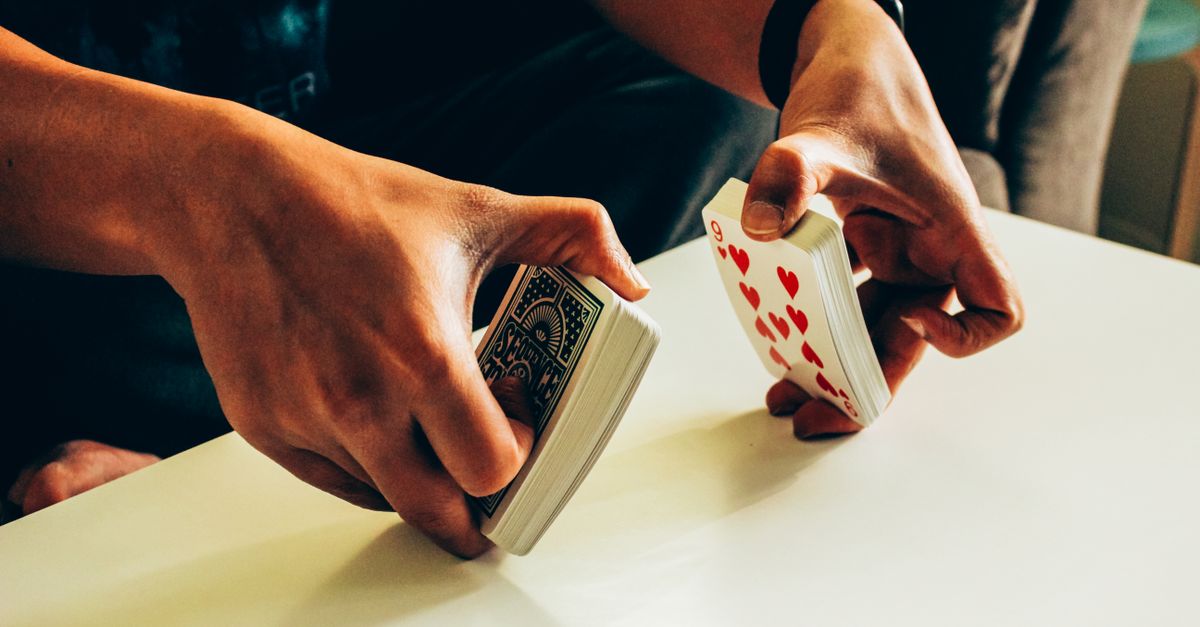
A standard riffle shuffle combined with a bridging cascade is a highly complex motor sequence. It begins with the thumbs pulling the halves of the deck backward, forcing the wrists into extreme extension and ulnar deviation.
As the cards are released and the halves are bent upward to form the bridge, the wrists transition rapidly into flexion. The fingers and palms exert isometric tension to control the falling cards. This maneuver places multidirectional sheer stress on the entire carpal structure.
The sudden shift from extreme extension under resistance to rapid flexion forces the tendons and ligaments to cross over the underlying bones at sharp angles. This rapid, angled movement is the primary biomechanical catalyst for the resulting auditory clicking.
4. Tendon Subluxation and Snapping
The most common cause of a loud, reproducible click in the wrist is a snapping tendon. The extensor tendons, which lift the fingers and hand, travel along the back of the wrist through specific anatomical grooves called the extensor retinaculum compartments.
During the forceful twisting required to bridge the cards, one of these tendons may briefly slip out of its designated groove—a temporary subluxation. When the wrist straightens, the tense tendon snaps violently back into its proper anatomical channel.
This rapid snapping of a thick, fibrous band against a solid bone produces a loud, dull click. Because the card shuffling motion is highly repetitive and specific, the exact same tendon is provoked into snapping during every single shuffle.
5. Cavitation and Synovial Fluid Dynamics
Another common source of joint noise is a process called cavitation. The wrist joint capsule is filled with a viscous, lubricating substance called synovial fluid. This fluid contains dissolved gases, primarily nitrogen, oxygen, and carbon dioxide.
When the wrist is bent sharply backward to load the deck of cards, the volume within the joint capsule temporarily expands. This rapid expansion creates a localized drop in internal hydrostatic pressure.
The pressure drop causes the dissolved gases to instantly come out of the solution, forming a microscopic bubble that rapidly collapses. The bursting of this gas bubble produces the classic, sharp popping sound, identical to the mechanism of cracking one’s knuckles.
6. The Role of the Triangular Fibrocartilage Complex
The triangular fibrocartilage complex, located on the ulnar side of the wrist near the pinky finger, serves as the primary shock absorber and stabilizer for the carpal bones. It cushions the impact between the hand and the forearm bones.
When the wrist rotates while bearing the resistance of a stiff deck of cards, significant torque is applied directly to this fibrocartilage. Over time, or through minor trauma, this cartilage can develop tiny frays or unstable edges.
During a shuffling maneuver, the shifting carpal bones may briefly catch on a frayed edge of the triangular fibrocartilage complex. The sudden release of this catch produces a distinct click, which is sometimes accompanied by a very mild, fleeting twinge on the outer edge of the wrist.
7. Ligament Laxity and Hypermobility
Some individuals naturally possess looser connective tissues, a condition known as benign joint hypermobility. Their ligaments stretch slightly further than average, allowing the joints a greater range of motion.
In hypermobile wrists, the carpal bones have more space to shift laterally during complex movements. While shuffling cards, these bones may slide slightly out of perfect alignment before the ligaments snap taut to stop the excess motion.
This sudden tightening of a lax ligament, or the clunking of a carpal bone slipping and seating back into place, generates a deep, hollow clicking sound. While entirely harmless, hypermobile joints are inherently noisier during intricate manual tasks.
8. Synovial Plica and Tissue Friction
A synovial plica is a fold or a redundant band of the synovial membrane lining the joint capsule. These folds are remnants of fetal development and are present in many individuals without causing any symptoms.
During the repetitive, rapid wrist flexion involved in cascaded card shuffling, a thick plica band can become momentarily pinched between the moving carpal bones or glide abruptly over a bony ridge.
The friction of this tissue flipping over the bone creates a soft, muffled snapping noise. Because the plica is a soft tissue structure, the sound it produces is generally less sharp than a snapping tendon and entirely painless.
9. Age-Related Cartilage Wear
As individuals age, the smooth articular cartilage covering the carpal bones naturally begins to thin and lose its robust water content, leading to a subtle roughening of the joint surfaces.
When an older adult shuffles playing cards, the rapid, forceful gliding of the carpal bones involves slightly irregular surfaces moving against one another. This mild osteoarthritis creates a sensation of grinding or multiple, fine clicking sounds, known as crepitus.
Unlike the singular, loud pop of a gas bubble, arthritic crepitus often feels gritty and may produce a continuous, low-level clicking throughout the entire range of the shuffling motion.
10. Repetitive Strain from Card Manipulation
Dealers or avid card players who shuffle decks for hours a day expose their wrists to profound repetitive strain. The continuous mechanical friction causes the tendon sheaths to become slightly inflamed and thickened.
Thickened tendon sheaths reduce the available space within the wrist compartments. As the tendons swell, they are more likely to catch and snap over adjacent structures during rapid movements.
This repetitive strain transforms a previously quiet wrist into a noisy one. The clicking serves as a subtle indicator that the local tissues are experiencing microscopic inflammation and mild localized swelling due to mechanical overuse.
11. Differentiating Benign Crepitus from Structural Damage
Clinically evaluating wrist clicks relies entirely on the presence or absence of pain. Painless clicking, popping, or snapping, regardless of how loud it is, is almost universally benign and requires no medical intervention.
However, if the click is accompanied by a sharp, stabbing pain, a sudden loss of grip strength, or a feeling that the wrist is locking or giving way, the mechanical noise indicates structural pathology, such as a severe ligament tear or an unstable carpal bone.
If the wrist swells visibly after a session of shuffling, or if the clicking only began after a specific traumatic fall onto an outstretched hand, the symptom requires a professional orthopedic assessment to rule out hidden fractures or severe cartilage damage.
12. Biomechanical Adjustments for Shuffling
Individuals bothered by the loud clicking can often eliminate the sound by modifying their biomechanical approach to shuffling. The noise is usually triggered by extreme ranges of motion combined with high tension.
Learning to shuffle the cards gently on the surface of a table, rather than bridging them entirely in the air, significantly reduces the required wrist extension. The table absorbs the tension of the bending cards, sparing the wrist joints.
Furthermore, consciously relaxing the grip and executing the bridge with a slower, more fluid motion prevents the abrupt, high-velocity tendon snaps that produce the loudest auditory clicks.
13. Warming Up the Carpal Joints
Subjecting a cold, stiff wrist immediately to the rapid, jerky motions of card shuffling increases the likelihood of tendon snapping. The synovial fluid is highly viscous when cold, and the connective tissues are less pliable.
Performing a brief warm-up routine before a long card game increases local blood flow and warms the synovial fluid, reducing its viscosity and allowing the carpal bones to glide smoothly.
Simple, slow wrist circles and gentle stretching of the fingers and palms for two minutes prior to shuffling ensure that the tendons and ligaments are elastic and prepared for the complex biomechanical demands, resulting in quieter joint function.
14. Strengthening the Forearm Stabilizers
A noisy wrist often indicates a mild lack of dynamic stability. Strengthening the muscles of the forearm provides better muscular support for the delicate carpal bones, preventing them from shifting excessively during movement.
Exercises utilizing light resistance bands to perform wrist flexion, extension, and controlled rotation strengthen the muscular bracing around the joint. When the muscles hold the bones in perfect alignment, the tendons track smoothly in their grooves.
Improved muscular stability significantly reduces both benign tendon subluxations and hypermobile bone clunking, offering a proactive method to silence the joints without giving up the hobby.
15. When to Consult a Hand Specialist
While most wrist clicks are harmless, specific presentations warrant a consultation with a certified hand therapist or an orthopedic hand specialist. A new, painful click that developed suddenly during forceful movement requires investigation.
If the clicking is accompanied by localized tenderness over the pinky side of the wrist, the specialist may order a magnetic resonance imaging scan to evaluate the integrity of the triangular fibrocartilage complex.
Specialists can provide targeted physical therapy, custom splinting to rest an inflamed tendon, or in rare cases of severe structural instability, discuss surgical options to anchor a persistently snapping tendon or repair a torn stabilizing ligament.
| Origin of Sound | Mechanism and Characteristics |
|---|---|
| Tendon Subluxation | Tendon slips out of its groove; loud, dull, reproducible snap. |
| Synovial Cavitation | Gas bubble bursts due to pressure change; sharp pop, requires a refractory period to happen again. |
| Ligament Laxity | Carpal bones shift excessively; deep, hollow clunking sound. |
| Cartilage Wear | Rough bone surfaces rub together; continuous, gritty clicking (crepitus). |
16. Frequently Asked Questions (FAQ)
1. Does the clicking mean I am developing arthritis in my wrists?
No, painless clicking is generally related to tendons or gas bubbles, not joint destruction. Unless the clicking is accompanied by a deep ache, stiffness, and swelling, it is not an indicator of impending osteoarthritis.
2. Why does my wrist only click when I bridge the cards, but not when I deal them?
Bridging the cards requires moving the wrist from severe extension into rapid flexion against the resistance of the card tension. Dealing is a low-resistance, smaller movement. The high-tension, sweeping motion of the bridge is what pulls the tendons out of their grooves.
3. Can wearing a wrist brace while playing cards stop the clicking?
A brace will stop the clicking by physically preventing the wrist from bending, but it will also make it nearly impossible to shuffle cards effectively. Braces should only be used to rest a painful wrist, not to silence a painless one.
4. Is it safe to intentionally pop my wrists before shuffling?
Intentionally popping the wrists releases gas bubbles and can relieve a sensation of tightness. It is generally safe if done gently. However, forcefully twisting the wrist using the other hand to induce a pop can stretch ligaments and cause damage.
5. Will taking glucosamine supplements stop my tendons from clicking?
Glucosamine and chondroitin supplements are thought to support cartilage health, but they have no effect on tight tendons snapping over bones or the release of nitrogen gas bubbles. They will not silence a mechanically noisy wrist.
17. Bibliography
- Read relevant clinical studies on PubMed
- Search for academic articles on Google Scholar
- Read relevant clinical studies on PubMed
- Search for academic articles on Google Scholar
Disclaimer: The content is for informational purposes only and does not replace medical advice. Always consult your doctor for personalized treatment.