1. Introduction
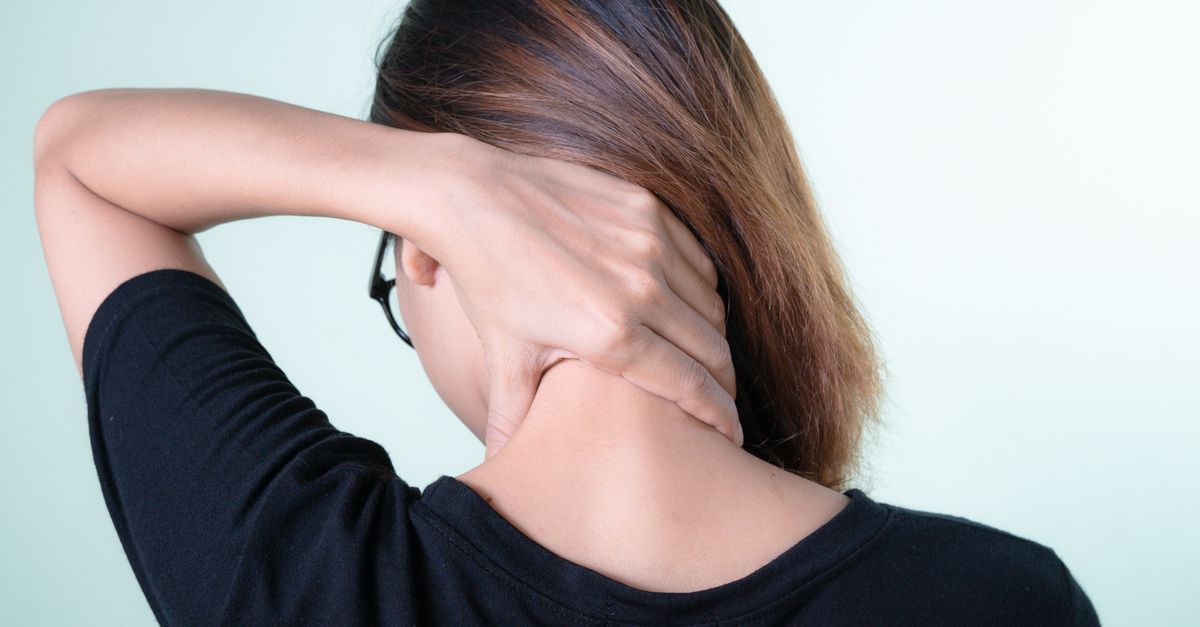
A constant dull headache paired with neck pain is most frequently caused by tension-type headaches, cervicogenic dysfunction, or prolonged poor posture leading to severe muscle spasms. The sustained contraction of the trapezius and suboccipital muscles refers pain directly into the cranium via the trigeminocervical complex. Correcting ergonomic strains and implementing targeted physical therapy are essential for resolving the muscular tension and alleviating the chronic pain.
The cervical spine supports the entire weight of the human head, relying on a complex network of ligaments, facet joints, and deeply layered muscles for stability. When these structures are subjected to sustained, abnormal mechanical loads, localized inflammation and muscle ischemia develop. The body perceives this physical strain as a constant, tight, and aching pain at the base of the skull, which slowly creeps upward over the scalp.
Accurate clinical assessment requires distinguishing between primary headache disorders and secondary mechanical pain originating in the neck. Identifying the exact musculoskeletal or neurological trigger directs the therapeutic approach, preventing the episodic discomfort from evolving into a debilitating chronic pain syndrome.
2. Musculoskeletal Anatomy of the Cervical Spine
The cervical spine is composed of seven vertebrae, separated by shock-absorbing intervertebral discs. The uppermost vertebrae, the atlas and axis, form a unique joint complex that allows for the extensive rotational mobility of the head.
Surrounding this bony column is a dense array of musculature. The suboccipital muscles connect the top of the cervical spine directly to the base of the skull. The larger trapezius and sternocleidomastoid muscles provide broader structural support and control head flexion and extension.
These muscles are heavily innervated. When they are forced to contract continuously without periods of relaxation, the blood vessels within the muscle tissue are physically compressed. This restriction of blood flow, or ischemia, leads to an accumulation of metabolic waste products like lactic acid, which continuously stimulates local pain receptors and creates a deep, aching sensation.
3. Tension-Type Headaches
Tension-type headaches are the most prevalent primary headache disorder worldwide. They are classically described as a bilateral, constant, dull, band-like pressure squeezing the head, frequently accompanied by significant tenderness in the neck and shoulder muscles.
The exact pathophysiology involves both peripheral pain mechanisms and central nervous system sensitization. Chronic stress, anxiety, and fatigue lead to involuntary, sustained tightening of the pericranial and cervical muscles. This muscular tension irritates the peripheral nociceptors.
Over time, this constant barrage of peripheral pain signals alters how the brain processes sensory information. The central pain pathways become hypersensitive, meaning even normal muscle tension is interpreted as a painful, throbbing ache. Managing stress and utilizing muscle relaxants are key components of breaking this pain cycle.
4. The Trigeminocervical Complex and Referred Pain
To understand how neck pathology causes pain in the forehead or temples, one must look at the trigeminocervical complex. This is a region in the upper spinal cord where sensory nerve fibers from the upper neck converge with the trigeminal nerve fibers, which provide sensation to the face and head.
The first three cervical spinal nerves provide sensory input from the joints, ligaments, and muscles of the upper neck. Because these nerves share a relay station with the trigeminal nerve, the brain frequently misinterprets the origin of the pain signals.
When a facet joint in the neck is inflamed, or a suboccipital muscle is in spasm, the nociceptive signal travels to the trigeminocervical complex. The brain reads this signal as originating from the ophthalmic branch of the trigeminal nerve, projecting a constant dull ache directly behind the eyes or across the forehead.
5. Cervicogenic Headaches
A cervicogenic headache is a specific secondary headache disorder where the pain strictly originates from a structural source in the cervical spine. It is frequently caused by osteoarthritis, disc degeneration, or trauma affecting the upper cervical facet joints.
Unlike tension headaches, cervicogenic headaches are typically unilateral, meaning the pain remains strictly on one side of the head and neck. The dull ache starts at the base of the skull and radiates forward to the frontal or orbital region.
A hallmark clinical sign is that the headache is mechanically provoked. Specific movements of the neck, or sustained awkward head postures, immediately worsen the head pain. Furthermore, the range of motion in the cervical spine is significantly restricted on the affected side.
6. Postural Strain and Ergonomics
The modern shift toward sedentary, screen-based occupations has drastically increased the incidence of chronic neck pain. Forward head posture, often referred to as tech neck, is the primary ergonomic culprit.
For every inch the head is positioned forward of the shoulders, the mechanical load placed on the cervical muscles effectively doubles. This constant gravitational disadvantage forces the extensor muscles at the back of the neck to remain in a state of continuous, isometric contraction just to hold the head upright.
This unrelenting mechanical strain leads to severe muscle fatigue, the development of painful myofascial trigger points, and a subsequent chronic tension headache. Ergonomic interventions, such as adjusting monitor height and practicing postural resets, are mandatory for long-term resolution.
7. Whiplash and Cervical Trauma
Whiplash associated disorders occur following a sudden acceleration-deceleration force, most notably during rear-end motor vehicle collisions. The rapid, violent whipping motion of the head tears ligaments, strains muscles, and bruises the facet joints.
In the acute phase, the neck muscles undergo severe protective spasms to splint the injured joints, causing profound stiffness and a dull, throbbing headache. If the structural damage heals poorly, altered joint mechanics lead to chronic inflammation.
This chronic joint irritation feeds continuous pain signals into the trigeminocervical complex, resulting in a persistent cervicogenic headache lasting months or years after the initial traumatic event. Comprehensive physical rehabilitation is required to restore normal tissue mobility.
8. Temporomandibular Joint Dysfunction
Dysfunction of the jaw joint, or temporomandibular joint, is a highly overlooked source of head and neck pain. The muscles of mastication are anatomically and functionally linked to the cervical musculature.
Bruxism, the chronic, unconscious clenching or grinding of the teeth during sleep, overworks the jaw muscles. Because the neck muscles must also contract to stabilize the head during jaw clenching, the entire craniocervical muscular network becomes exhausted and painful.
Patients frequently wake up with a dull headache localized to the temples, a sore jaw, and significant stiffness in the upper neck. Dental interventions, such as custom occlusal splints worn at night, protect the joint and allow the surrounding muscles to relax.
9. Osteoarthritis of the Cervical Spine
Cervical spondylosis refers to the age-related degenerative changes in the spinal discs and facet joints of the neck. Over decades of use, the cartilage cushioning the joints wears down, and the discs lose their hydration and height.
To stabilize the degenerating spine, the body forms bone spurs, or osteophytes. These structural changes cause chronic, low-grade inflammation within the facet joints and can narrow the neural foramina, irritating the exiting spinal nerves.
This degenerative process leads to a constant, deep, dull ache in the neck that is often worse upon waking in the morning. The localized joint inflammation causes reflex muscle guarding, contributing to the development of secondary tension headaches.
10. Sleep Posture and Mattress Support
A significant portion of one’s life is spent sleeping, and the posture assumed during these hours profoundly affects cervical health. Sleeping on a mattress that lacks proper support, or using a pillow that is too high or too flat, forces the cervical spine out of its neutral alignment.
If the neck is bent sideways or twisted awkwardly for eight hours, the ligaments are stretched beyond their physiological limits, and the muscles on the opposing side are held in sustained contraction.
Patients awake with an acute stiff neck, severe muscle spasms, and a dull headache that slowly dissipates throughout the day as the muscles warm up and move. Utilizing orthopedic cervical pillows that maintain the natural lordotic curve of the neck is a simple, highly effective intervention.
11. Visual Strain and Ocular Fatigue
Undiagnosed or uncorrected vision problems force the eyes and the surrounding musculature to work harder to maintain focus, leading to visual fatigue. To compensate for poor vision, individuals unconsciously lean forward and jut their chin out to get closer to screens or reading material.
This compensatory forward head posture rapidly induces cervical muscle strain. Concurrently, the fatigue of the tiny ciliary muscles inside the eye refers a dull, aching pain directly to the forehead and temples.
Ensuring an up-to-date optical prescription and taking frequent visual breaks reduces the physical strain on both the ocular and cervical muscular systems, rapidly resolving the dual symptoms.
12. Diagnostic Imaging and Physical Assessment
A comprehensive clinical evaluation is essential to identify the structural origin of the pain and rule out dangerous secondary causes. The physical exam focuses on palpating for muscle spasms, assessing cervical range of motion, and performing neurological reflex tests.
| Diagnostic Evaluation | Clinical Rationale |
|---|---|
| Cervical X-Rays | Identifies bone spurs, disc height loss, and osteoarthritis. |
| Magnetic Resonance Imaging | Visualizes herniated discs, nerve root compression, or tumors. |
| Diagnostic Nerve Blocks | Confirms cervicogenic headaches by numbing specific facet joints. |
| Dental Examination | Assesses for bruxism and temporomandibular joint dysfunction. |
These diagnostic steps ensure that treatments are precisely targeted to the failing joint, strained muscle, or compressed nerve, rather than simply masking the symptoms.
13. Pharmacological Pain Management
Medical management aims to break the pain-spasm cycle. Over-the-counter nonsteroidal anti-inflammatory drugs, such as ibuprofen or naproxen, reduce both the muscular pain and the localized joint inflammation driving the headache.
For severe, acute muscle spasms, short courses of prescription skeletal muscle relaxants, like cyclobenzaprine, are highly effective in allowing the cervical musculature to release its tension, bringing rapid relief to the tension headache.
In cases of chronic, refractory tension headaches, tricyclic antidepressants, such as amitriptyline, are frequently prescribed off-label. They act on the central nervous system to increase the pain threshold and reduce central sensitization, effectively preventing the daily dull ache.
14. Physical Therapy and Rehabilitation
Physical therapy is the most effective long-term treatment for mechanical neck pain and related headaches. Manual therapy techniques, including joint mobilization and myofascial release, restore normal arthrokinematics to the cervical facet joints and break up painful muscle knots.
Therapeutic exercise programs focus on strengthening the deep neck flexors and the scapular stabilizers. Strengthening these specific muscle groups corrects forward head posture and provides robust structural support to the cervical spine, taking the load off the overworked trapezius muscles.
Physical therapists also provide crucial education on workplace ergonomics, teaching patients how to arrange their desks, monitors, and chairs to maintain a neutral spinal alignment throughout the workday.
15. Red Flags for Urgent Neurological Evaluation
While the majority of constant dull headaches and neck pain are musculoskeletal in origin, certain clinical features warrant immediate emergency evaluation. A headache that is accompanied by a stiff neck so severe that the chin cannot touch the chest, along with a high fever, strongly suggests bacterial meningitis.
If the neck pain follows recent trauma and is accompanied by tingling, numbness, or profound weakness in the arms or hands, a cervical fracture or acute spinal cord compression must be ruled out immediately with advanced imaging.
A new-onset, constant headache in a patient over the age of fifty, particularly if accompanied by jaw pain when chewing or scalp tenderness, requires urgent evaluation for temporal arteritis, an inflammatory vascular condition that can lead to permanent blindness.
16. Frequently Asked Questions (FAQ)
1. Can dehydration cause a dull headache and neck pain?
Yes, severe dehydration reduces the fluid volume of the intervertebral discs and the blood volume supporting the muscles. This lack of hydration makes the neck muscles prone to cramping and spasms, while the reduced fluid in the brain can cause a traction headache, presenting as a dull, constant ache.
2. Is it safe to go to a chiropractor for neck pain and headaches?
Spinal manipulation can be very effective for treating cervicogenic headaches and mechanical neck stiffness. However, it is vital to have a medical evaluation first to rule out osteoporosis, herniated discs, or vascular issues, where aggressive manipulation is strictly contraindicated.
3. Why do I wake up every morning with a headache and a stiff neck?
Waking up with these symptoms indicates an issue during sleep. It is most commonly caused by a poor pillow failing to support the neck, unconscious teeth grinding (bruxism) overworking the jaw and neck muscles, or sleep apnea causing nocturnal oxygen deprivation and morning headaches.
4. How does stress cause a constant tension headache?
Psychological stress activates the sympathetic nervous system, entering a fight-or-flight state. This state unconsciously causes you to shrug your shoulders and tighten your jaw and neck muscles. Hours of this sustained muscle tension directly causes the squeezing pain of a tension headache.
5. Should I use ice or heat for a stiff neck and headache?
For acute, sudden spasms or a fresh injury, ice reduces inflammation and numbs the sharp pain. For chronic, constant dull aches and tight, stiff muscles, applying moist heat is superior as it increases blood flow, relaxes the muscle fibers, and clears out metabolic waste.
17. Bibliography
Disclaimer: The content is for informational purposes only and does not replace medical advice. Always consult your doctor for personalized treatment.