
1. Introduction
The thumb joint locks in a bent position primarily due to stenosing tenosynovitis, clinically known as trigger thumb. This condition occurs when the flexor tendon sheath becomes inflamed and thickens, preventing the tendon from gliding smoothly through the A1 pulley at the base of the thumb. As the tendon attempts to slide through this narrowed tunnel, it becomes physically trapped, causing the thumb to catch or lock firmly in flexion. Forcing the thumb straight often results in a painful, mechanical pop as the swollen tendon is forcibly pulled through the stricture.
The thumb is powered by a robust tendon known as the flexor pollicis longus, which originates in the forearm and runs all the way to the tip of the thumb. To keep this tendon tethered tightly to the bone during bending, it passes through a series of fibrous bands called pulleys. The first of these bands, the A1 pulley, is located precisely at the metacarpophalangeal joint where the thumb meets the palm.
When mechanical friction or systemic inflammation causes the tendon to swell or develop a nodule, the precise tolerance of the pulley system is destroyed. The resulting locking is not a problem with the hinge of the joint itself, but rather a mechanical failure of the cable and pulley system that operates it. Understanding this distinction is crucial for directing treatment toward the tendon sheath rather than the articular cartilage.
2. Anatomy of the Thumb Flexor Tendons and Pulleys
To comprehend why the thumb locks, one must visualize the microscopic mechanics of the hand. The flexor pollicis longus tendon acts like a thick, smooth cable. It is enveloped by a thin layer of tissue called the tenosynovium, which produces a lubricating fluid to ensure the tendon glides with zero friction during repetitive hand movements.
As this tendon crosses the palmar surface of the thumb, it must be prevented from bowing away from the bone when tension is applied. The body achieves this using an intricate pulley system. The A1 pulley is a rigid, fibrous tunnel located at the very base of the thumb. It is the thickest and most critical pulley for maintaining the mechanical advantage of the flexor tendon.
In a healthy state, the tendon slides back and forth through the A1 pulley flawlessly thousands of times a day. However, because the A1 pulley sits at the anatomical pivot point of the thumb, it is subjected to immense compressive and shearing forces, especially during gripping or pinching activities, making it highly susceptible to inflammatory wear and tear.
3. The Pathophysiology of Stenosing Tenosynovitis
Stenosing tenosynovitis is the precise medical mechanism behind trigger thumb. The term “stenosing” refers to the narrowing of a passageway, and “tenosynovitis” indicates inflammation of the tendon and its lubricating sheath.
The process typically begins with repetitive mechanical friction. If the thumb is overworked, the tenosynovium becomes irritated and swollen. This swelling increases the overall diameter of the tendon. Consequently, the tendon no longer fits perfectly within the rigid confines of the A1 pulley.
As the swollen tendon is repeatedly forced through the narrow pulley during daily activities, the friction causes microscopic fraying. The body attempts to heal this fraying by laying down fibrotic scar tissue. This scar tissue causes the tendon to become chronically thickened and the A1 pulley itself to become stiff and unyielding, effectively creating a permanent mechanical stricture.
4. Inflammatory Causes and Repetitive Strain
Repetitive strain is the leading environmental trigger for this condition. Occupations or hobbies that require forceful, repetitive gripping, grasping, or pinching place direct, continuous mechanical stress on the A1 pulley. Construction workers using heavy hand tools, musicians, and avid gardeners frequently develop this pathology.
The modern prevalence of smartphone use has also contributed to a surge in trigger thumb. The repetitive scrolling, swiping, and typing performed solely by the thumb place unnatural, continuous strain on the flexor pollicis longus tendon, leading directly to tenosynovial inflammation.
Aside from mechanical strain, systemic inflammatory conditions can predispose individuals to tendon sheath thickening. Patients with rheumatoid arthritis possess an immune system that actively attacks the tenosynovium, causing rapid, severe swelling that can simultaneously affect multiple fingers and the thumb, leading to widespread triggering.
5. Nodule Formation and Mechanical Catching
As the localized inflammation at the A1 pulley persists, the tendon fibers often bundle together to form a distinct, firm nodule just proximal to the pulley. This nodule is essentially a small, localized traffic jam of swollen tendon tissue.
When the patient actively bends their thumb, the flexor muscle pulls the tendon, and the nodule slides downward, exiting the A1 pulley toward the palm. However, when the patient attempts to straighten the thumb, the extensor muscles on the back of the hand must pull the nodule back upward through the narrow pulley opening.
Because the nodule is wider than the pulley, it becomes physically stuck at the entrance. The thumb is now locked in flexion. The patient must exert significant force, often using their other hand, to push the thumb straight. When enough force is applied, the nodule violently pops through the tight pulley, generating the characteristic painful snapping sensation.
6. Differentiating Trigger Thumb from Thumb Arthritis
A locked thumb must be carefully differentiated from osteoarthritis of the basal joint, known as carpometacarpal arthritis. Both conditions cause severe pain at the base of the thumb, but their underlying pathologies and mechanical presentations are entirely different.
Osteoarthritis involves the degradation of the cartilage at the saddle joint where the thumb meets the wrist. The pain is typically a deep, constant ache that worsens with pinching or twisting motions, such as opening a jar. While the joint may feel stiff, it rarely exhibits a sudden, mechanical locking and popping sensation.
Trigger thumb, conversely, involves the tendon. The pain is often sharp and localized exactly over the A1 pulley on the palm side of the metacarpophalangeal joint. The defining characteristic is the palpable clicking or the physical inability to actively extend the interphalangeal joint of the thumb without mechanical assistance. If you want to understand more about inflammatory joint stiffness, reading about morning finger stiffness provides a contrast to mechanical tendon locking.
7. Dupuytren Contracture as a Secondary Cause
In some cases, a thumb that is permanently bent and cannot be straightened is not caused by the flexor tendon at all, but rather by Dupuytren contracture. This is a progressive, genetic condition characterized by the abnormal thickening and tightening of the palmar fascia, the layer of connective tissue lying just beneath the skin of the palm.
As the disease progresses, firm fibrous cords develop within the palm and extend outward into the fingers and thumb. These cords slowly contract over months or years, acting like tough ropes that physically pull the digits down into a bent position.
Unlike trigger thumb, there is no sudden catching or popping with Dupuytren contracture. The thumb simply cannot be physically straightened, even with passive force from the other hand. Upon examination, the thick, rigid cords are easily palpable just beneath the skin surface, distinguishing it clearly from tenosynovitis.
8. Metabolic and Systemic Risk Factors
The development of stenosing tenosynovitis is strongly correlated with specific metabolic conditions, most notably diabetes mellitus. Patients with diabetes are up to four times more likely to develop trigger digits than the general population.
The precise mechanism involves the accumulation of advanced glycation end products within the collagen of the tendons and pulleys. Chronically elevated blood sugar levels cause sugar molecules to bind inappropriately to the collagen proteins. This biochemical alteration makes the tendons stiff, inelastic, and highly prone to microtears and subsequent nodule formation.
Hypothyroidism and gout are also recognized risk factors. These metabolic derangements alter the fluid balance and promote crystal deposition within the tendon sheaths, increasing localized friction and predisposing the patient to mechanical locking of the thumb.
9. Structured Data: Causes of Thumb Locking
The following table outlines the distinct clinical conditions that can cause a thumb to lock or remain in a bent position, aiding in differential diagnosis.
| Clinical Condition | Primary Anatomical Defect | Distinguishing Mechanical Feature |
|---|---|---|
| Trigger Thumb | Inflamed flexor tendon and A1 pulley | Painful popping, locks in flexion, unlocks with a snap |
| Thumb Osteoarthritis | Degraded cartilage at the basal joint | Deep grinding pain, stiffness, no sudden popping |
| Dupuytren Contracture | Thickened palmar fascia cords | Gradual, permanent bending, rigid visible cords, no pain |
| Tendon Rupture | Severed extensor tendon | Absolute inability to lift thumb straight, no resistance |
10. Clinical Examination and Diagnostic Palpation
An orthopedic specialist or hand surgeon relies heavily on a targeted physical examination to diagnose a trigger thumb. The hallmark finding is exquisite tenderness directly over the A1 pulley, located on the palmar crease at the base of the thumb.
During palpation, the physician will ask the patient to actively bend and straighten the thumb. In a positive examination, the physician will clearly feel a firm, sliding nodule moving beneath their finger. As the thumb extends, the physician can feel the mechanical click as the nodule forces its way through the stricture.
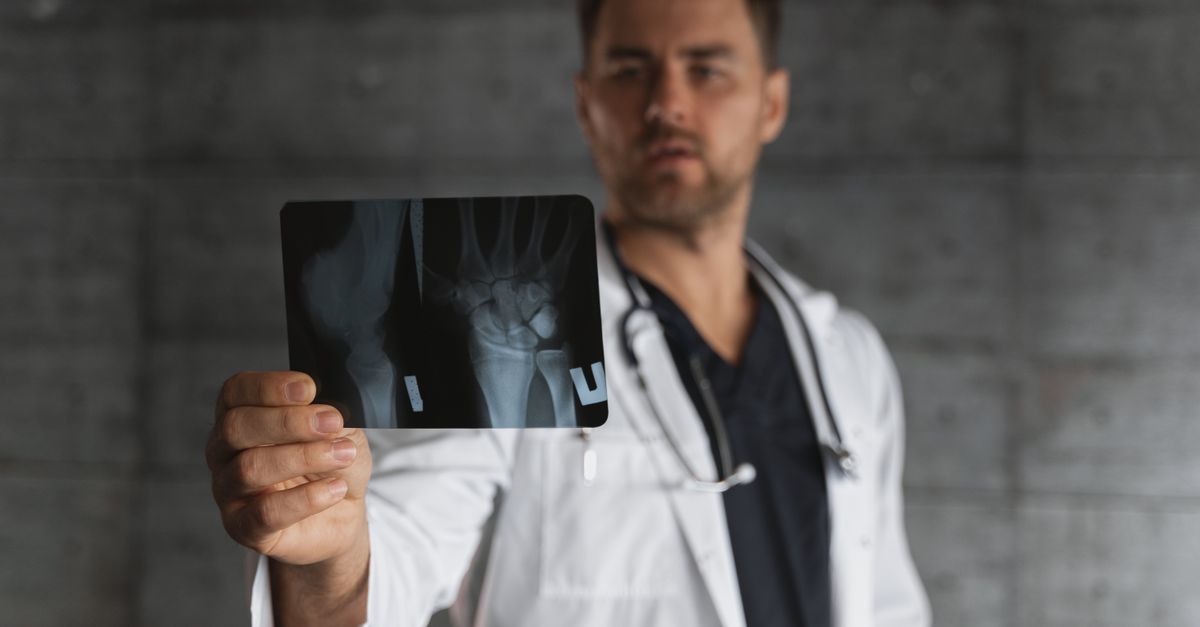
In severe, chronic cases, the thumb may be completely locked in flexion upon presentation. Advanced imaging like X rays or magnetic resonance imaging is rarely necessary to confirm the diagnosis of trigger thumb, but X rays may be ordered to rule out concurrent severe osteoarthritis or a bony fracture if trauma is suspected.
11. Conservative Management and Splinting
The initial treatment for a locking thumb focuses on reducing the mechanical friction and calming the tenosynovial inflammation. The cornerstone of conservative therapy is rigid splinting. A specialized thermoplastic splint is molded to keep the metacarpophalangeal joint of the thumb completely immobilized.
By preventing the joint from bending, the splint stops the swollen tendon nodule from constantly sliding through the A1 pulley. This enforced mechanical rest breaks the cycle of friction and inflammation. Patients are typically instructed to wear the splint continuously for up to six weeks, especially at night when unconscious gripping occurs.
During this period, the use of oral nonsteroidal anti inflammatory medications, such as ibuprofen, assists in reducing the localized tissue swelling, allowing the tendon to glide more freely once the splint is eventually removed.
12. Corticosteroid Injections for Tendon Inflammation
If splinting and oral medications fail to resolve the locking, a localized corticosteroid injection is the most effective non surgical intervention. A physician injects a potent anti inflammatory steroid mixed with a local anesthetic directly into the tendon sheath, just outside the A1 pulley.
The steroid rapidly shuts down the inflammatory cascade, shrinking the swollen tenosynovium and dissolving the fibrotic nodule. This physically reduces the diameter of the tendon, allowing it to slide effortlessly through the pulley once again.
Corticosteroid injections are highly successful, providing complete relief in up to seventy percent of patients. However, the success rate is notably lower in patients with diabetes. If the first injection fails or the locking recurs after several months, a second injection may be attempted, but repeated injections increase the risk of tendon weakening or rupture.
13. Percutaneous Trigger Finger Release
For patients who do not achieve lasting relief from steroid injections, a percutaneous release offers a minimally invasive surgical option. This procedure is performed in the clinic under local anesthesia.
Instead of making a traditional incision, the physician uses the sharp tip of a sturdy hypodermic needle to physically cut the tight A1 pulley through the skin. By sweeping the needle back and forth along the axis of the tendon, the fibrous band is severed, instantly releasing the stricture and freeing the trapped tendon.
While percutaneous release boasts a quick recovery time and avoids a surgical scar, it requires immense precision. Because the physician cannot directly see the structures they are cutting, there is a slight risk of incomplete release or inadvertent injury to the digital nerves running adjacent to the thumb.
14. Open Surgical Release of the A1 Pulley
The definitive cure for a chronically locking thumb is an open surgical release of the A1 pulley. This is a minor outpatient procedure typically performed under local anesthesia. The surgeon makes a small, transverse incision at the base of the thumb, directly exposing the A1 pulley and the underlying flexor tendon.
Using direct visualization, the surgeon carefully cuts the entire A1 pulley longitudinally, dividing it in half. The surgeon then asks the awake patient to bend and straighten their thumb to visually confirm that the tendon now glides perfectly without any catching or popping.
Because the pulley is a thick band of scar tissue, cutting it does not impair the functional strength of the hand. The body eventually forms a thin layer of scar tissue over the gap, creating a permanently wider tunnel for the tendon. Open surgery provides an almost one hundred percent success rate with an exceptionally low rate of recurrence.
15. Postoperative Rehabilitation and Care
Following an open release, the primary goal is to prevent the cut pulley from scarring back together tightly. Patients are actively encouraged to begin moving their thumb through its full range of motion on the very first day after surgery.
While the incision site will be tender and slightly swollen, active movement ensures the flexor tendon continues to glide, preventing debilitating scar tissue adhesions from forming between the tendon and the skin.
Formal occupational hand therapy is rarely required after a simple trigger thumb release. Most patients achieve full, pain free motion within a few weeks by independently performing simple stretching and tendon gliding exercises, allowing a rapid return to normal gripping and pinching activities.
16. When to Seek Professional Intervention
A thumb that catches occasionally but resolves without pain may be monitored. However, immediate professional orthopedic evaluation is necessary if the thumb becomes permanently locked in a bent position and cannot be forcefully straightened. Leaving a joint locked for weeks leads to severe joint contractures, meaning the supporting ligaments shrink and freeze, making future surgical correction much more difficult.
Patients should also seek prompt medical care if the locking is accompanied by intense, throbbing pain, significant redness, and heat spreading across the palm. These are absolute red flag symptoms of an acute infectious tenosynovitis, a dangerous bacterial infection within the tendon sheath that can rapidly destroy the tendon and requires emergency surgical washout and intravenous antibiotics.
Early intervention for standard mechanical trigger thumb prevents the chronic fibrotic changes that eventually make conservative treatments like splinting and injections entirely ineffective.
17. Frequently Asked Questions (FAQ)
1. Can trigger thumb heal on its own without going to a doctor?
Mild cases brought on by an acute bout of repetitive activity can occasionally resolve on their own if the offending activity is completely stopped. However, if a nodule has formed and the thumb is physically locking, it rarely resolves permanently without medical intervention like a splint or steroid injection.
2. Is the surgery for trigger thumb dangerous?
Open trigger thumb release is considered a very safe, minor outpatient procedure. The primary risks are minor infection or stiffness, which are mitigated by proper wound care and immediate postoperative finger movement. The risk of nerve damage is extremely low when performed by an experienced hand surgeon.
3. Will my thumb be weak after they cut the pulley?
No. The A1 pulley is only one of several pulleys holding the tendon in place. Cutting it relieves the restriction without compromising the biomechanical leverage required for a strong pinch or grip.
4. How many cortisone shots can I have in my thumb?
Hand surgeons generally limit corticosteroid injections to a maximum of two or three per digit. Repeated injections carry a significant risk of degrading the collagen fibers, leading to a catastrophic rupture of the flexor tendon.
5. Does cracking my knuckles cause trigger thumb?
No. Cracking your knuckles involves releasing gas from the joint capsule and has no mechanical effect on the flexor tendons or the pulleys. Trigger thumb is strictly caused by repetitive gripping strain or systemic inflammation, not knuckle cracking.
Bibliography
Disclaimer: The content is for informational purposes only and does not replace medical advice. Always consult your doctor for personalized treatment.
