1. Introduction
Normal growth and development for age encompasses the predictable sequence of physical, cognitive, linguistic, and emotional milestones a child achieves from infancy through adolescence. This progression is not merely a steady accumulation of skills but a complex biological transformation regulated by genetics, nutritional status, and neuroplasticity. Tracking these changes provides clinicians with a profound diagnostic tool, as the failure to achieve age-appropriate milestones often serves as the earliest indicator of underlying medical or neurological conditions.
The terms growth and development are distinct yet entirely interdependent in pediatric medicine. Growth refers strictly to the measurable physical expansion of the body, including increases in height, weight, and head circumference. Development refers to the qualitative maturation of organ systems, particularly the central nervous system, which allows the child to master complex motor skills, process abstract thoughts, and communicate effectively.
Establishing a baseline of normal maturation allows healthcare providers and parents to monitor a child systematically. While biological variance dictates that every child matures at a unique pace, adherence to standardized developmental trajectories ensures that children requiring early clinical intervention are identified promptly.
2. Physical Growth Trajectories
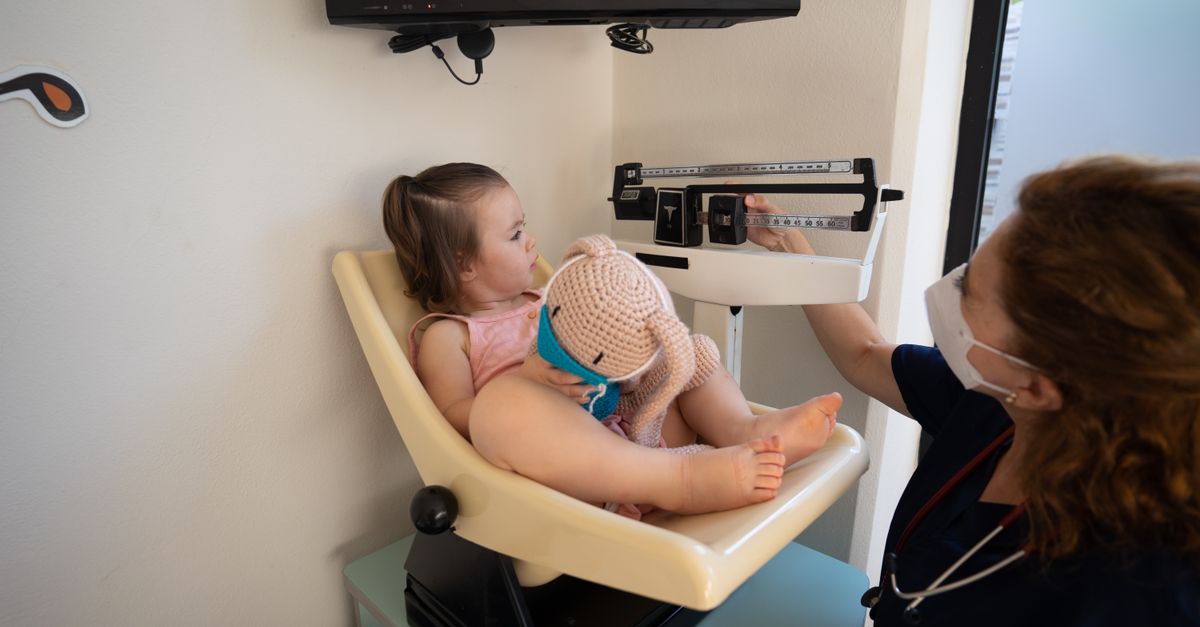
The most rapid phase of physical expansion occurs during the first twelve months of life. A healthy newborn typically loses a small percentage of birth weight in the first few days but regains it quickly. By four to six months of age, birth weight generally doubles, and by the first birthday, it triples. Linear growth is equally rapid, with infants increasing their length by approximately fifty percent during the first year.
As a child enters toddlerhood, the growth velocity slows into a steady, incremental rhythm. Between the ages of two and ten years, a child generally gains about two to three kilograms in weight and five to six centimeters in height annually. This steady state continues until the onset of the pubertal growth spurt, which is driven by a surge in sex steroids and growth hormone.
Pediatricians utilize standardized growth charts to monitor these trajectories. Tracking a child along a specific percentile curve is far more clinically relevant than a single measurement. A sudden drop across multiple percentile lines over a short period indicates a failure to thrive, necessitating an evaluation for nutritional deficits, gastrointestinal disorders, or endocrine dysfunction.
3. Gross Motor Skill Maturation
Gross motor development involves the coordination of large muscle groups required for posture, balance, and locomotion. This maturation follows a cephalocaudal progression, meaning control develops from the head downward toward the feet.
In the first few months, infants develop the cervical strength to hold their heads upright. By six months, most infants can sit without physical support. Crawling or creeping typically emerges around nine months, reflecting an important advancement in bilateral coordination and pelvic strength.
Independent walking is a hallmark gross motor milestone, generally achieved between twelve and fifteen months of age. As the child transitions into the preschool years, the central nervous system refines its control, allowing for running, jumping with both feet, and eventually navigating stairs with alternating feet. A significant delay in these skills may prompt an evaluation for conditions such as muscular dystrophy or cerebral palsy.
4. Fine Motor and Visual-Motor Coordination
Fine motor skills dictate the precise movements of the small muscles in the hands, fingers, and wrists. These skills require continuous visual feedback and are essential for independent daily living tasks, self-feeding, and eventually writing.
Newborns possess a primitive palmar grasp reflex, which fades as voluntary control develops. By four to five months, infants reach for objects with a crude raking motion. A critical neurological milestone is the development of the pincer grasp, utilizing only the thumb and index finger, which typically appears around nine months of age.
By age two, children can stack small blocks and manipulate a spoon. During the preschool years, fine motor refinement allows a child to draw simple geometric shapes, use scissors, and manage clothing fasteners. The ability to copy a circle or a cross is a reliable clinical indicator of intact visual-motor integration and neurological maturity.
5. Cognitive Advancements and Problem Solving
Cognitive development encompasses the maturation of memory, problem-solving, and abstract reasoning. In infancy, cognition is entirely sensorimotor. Infants learn about the physical world through touch, taste, and observing cause and effect, such as shaking a rattle to produce a sound.
A pivotal cognitive leap occurs around nine months with the acquisition of object permanence, which is the understanding that objects continue to exist even when hidden from view. As children enter the toddler years, symbolic thought emerges. This is demonstrated through pretend play, where a child might use a block to represent a telephone.
By school age, the prefrontal cortex undergoes significant maturation. Children develop concrete operational thought, allowing them to classify objects, understand basic concepts of time, and follow multi-step instructions without requiring visual cues. Normal cognitive development requires robust neuroplasticity and a stimulating environment.
6. Language and Speech Acquisition
Language development is divided into receptive skills, the ability to understand communication, and expressive skills, the ability to produce speech. Receptive language always precedes expressive language. Infants begin recognizing their names and turning toward sounds by six months of age.
Expressive development begins with cooing and transitions into babbling consonant-vowel combinations by nine months. Most children utter their first intentional word around their first birthday. By the age of two, the vocabulary expands rapidly, and normal development includes combining two words into functional phrases.
By age three, children typically communicate in short sentences that are generally understandable to strangers. Delays in speech acquisition are common but warrant careful audiological screening to rule out hearing impairments, as well as neurodevelopmental assessments to evaluate for autism spectrum disorder or specific language processing deficits.
7. Social and Emotional Milestones
Social and emotional growth dictates a child’s capacity to form secure attachments, regulate emotions, and interpret the feelings of others. The earliest social milestone is the spontaneous social smile, which emerges around two months of age in response to a caregiver’s face.
By nine to twelve months, normal development includes the onset of stranger anxiety and separation anxiety. These behaviors, while distressing to parents, indicate that the infant has formed a secure, preferential attachment to their primary caregivers and can distinguish them from unfamiliar individuals.
During the toddler years, the drive for autonomy frequently results in temper tantrums, a normal manifestation of a child whose desires outpace their emotional regulation and communication skills. By the preschool years, emotional maturity advances, allowing children to engage in cooperative play with peers and demonstrate basic empathy.
8. The Role of Nutrition in Maturation
Physical and neurological maturation requires immense metabolic resources. The pediatric diet must supply sufficient calories, proteins, and specialized lipids to support the rapid expansion of tissue and brain volume. Long-chain polyunsaturated fatty acids are strictly required for the myelination of nerve fibers in the developing brain.
Iron is another critical nutrient for normal cognitive and physical development. Iron deficiency in toddlers can result in long-term cognitive deficits and behavioral challenges, as iron is a necessary cofactor in the synthesis of neurotransmitters.
Calcium and vitamin D are non-negotiable for skeletal calcification. A nutrient-dense diet ensures that the child tracks appropriately along their predetermined growth curve. Chronic malnutrition systematically suppresses linear growth and fundamentally alters brain architecture, making nutritional assessment a priority in pediatric care.
9. Sleep Requirements for Growing Bodies
Sleep is an active, vital physiological state required for normal growth and development. The anterior pituitary gland secretes the majority of the body’s daily growth hormone in distinct pulses during the deep, slow-wave stages of nighttime sleep.
Infants require significant amounts of sleep, often totaling fourteen to seventeen hours per day, divided between nighttime sleep and naps. As the central nervous system matures, the total sleep requirement gradually decreases, but school-aged children still require nine to eleven hours of uninterrupted rest for optimal function.
Chronic sleep deprivation, whether due to poor sleep hygiene or conditions like pediatric sleep apnea, can severely blunt the release of growth hormone. Over time, this suppression can impair linear growth, decrease daytime attention spans, and impair the consolidation of newly learned cognitive and motor skills.
10. Endocrine Regulation of Growth
The biological engine driving physical expansion is the endocrine system. The hypothalamus secretes growth hormone-releasing hormone, which instructs the pituitary gland to release growth hormone. This hormone travels to the liver, prompting the synthesis of insulin-like growth factor 1, which directly stimulates the cartilage cells in the bone growth plates to multiply.
Thyroid hormones are equally vital. Normal thyroid function dictates the basal metabolic rate and is required for the proper maturation of the central nervous system in infants. Untreated congenital hypothyroidism leads to severe physical stunting and irreversible cognitive deficits.
During late childhood, the endocrine system prepares for puberty. The hypothalamus initiates a cascade that results in the secretion of sex steroids, specifically estrogen and testosterone. These hormones synergize with growth hormone to produce the pubertal growth spurt and the development of secondary sexual characteristics.
11. Genetic and Environmental Interplay
A child’s ultimate developmental potential is established by their genetic blueprint. Genetics dictate the absolute maximum adult height, the inherent pace of biological maturation, and familial patterns of development. Some perfectly healthy children are genetically predisposed to walk slightly later or speak earlier than average.
However, the environment determines how effectively this genetic potential is realized. An environment rich in verbal interaction, reading, and safe spaces for physical exploration vigorously stimulates the formation of new neural pathways.
Conversely, adverse childhood experiences, chronic systemic stress, or exposure to environmental toxins can produce elevated cortisol levels. This chronic stress response disrupts normal synaptic pruning in the brain, frequently leading to delays in behavioral regulation, cognitive processing, and physical growth.
12. Pediatric Standardized Screening
Because early identification of developmental delays dramatically improves clinical outcomes, pediatricians utilize validated, standardized screening tools during routine well-child visits. These questionnaires are typically administered at specific intervals, such as nine, eighteen, and twenty-four months of age.
The screening covers all major domains, shifting the evaluation from subjective clinical observation to objective data collection. If a child scores below the expected threshold in a particular area, the pediatrician will recommend a more comprehensive neurodevelopmental assessment.
These screenings are specifically designed to detect early indicators of cerebral palsy, autism spectrum disorder, or global developmental delays. Early detection ensures that therapeutic interventions, such as speech pathology or physical therapy, are initiated while the child’s neuroplasticity is at its absolute peak.
13. Recognizing Red Flags
While normal development embraces a broad range of timelines, specific behaviors or missing milestones serve as clinical red flags requiring prompt investigation. The most concerning red flag is developmental regression, defined as the loss of a previously acquired skill.
If a child who formerly used purposeful words stops speaking, or a child who could walk independently begins to stumble consistently, urgent neurological evaluation is necessary to rule out degenerative conditions or metabolic disorders.
Other important red flags include the absence of a social smile by three months, an inability to sit independently by nine months, the lack of single words by sixteen months, or a persistent failure to make eye contact and respond to their name by eighteen months of age.
14. When to See a Pediatrician
Consistent attendance at scheduled well-child visits is the most effective way to monitor normal growth and development. These preventative appointments allow the physician to plot physical measurements, administer routine vaccinations, and formally assess developmental milestones.
You should contact a pediatrician immediately if you observe any form of developmental regression in your child. You should also seek evaluation if your infant demonstrates significant muscular stiffness, persistent floppiness, or a strong preference for using only one side of their body before the first birthday.
Furthermore, if you notice your child consistently struggling to make eye contact, failing to respond to loud noises, or tracking far below their established growth percentiles, requesting a formal medical evaluation can provide either profound reassurance or access to necessary early intervention services.
15. Frequently Asked Questions (FAQ)
1. Is it normal for siblings to reach milestones at different ages?
Yes, it is entirely normal. Genetics play a significant role, and every child follows a unique biological timeline. One child may excel in physical milestones early on, while a sibling might demonstrate advanced verbal skills sooner.
2. Should I be worried if my baby skips crawling and goes straight to walking?
Some children bypass traditional crawling on their hands and knees, opting to scoot or pull up to stand instead. Provided the child uses both sides of their body symmetrically and is progressing toward independent walking, skipping crawling is generally a normal variant.
3. How many words should a two-year-old be able to say?
By age two, normal development includes a vocabulary of at least fifty words and the ability to link two words together to form simple phrases. If a child relies solely on pointing or has fewer than twenty words, a speech evaluation is recommended.
4. Can excessive screen time affect normal development?
Yes. Extensive pediatric research indicates that excessive screen time limits vital face-to-face social interaction and physical exploration. This lack of engagement frequently leads to measurable delays in expressive language and social-emotional regulation.
5. What is the difference between a developmental delay and autism?
A developmental delay indicates that a child requires more time to reach certain milestones but generally follows the typical path of maturation. Autism spectrum disorder is a distinct neurological condition characterized by specific differences in social communication, sensory processing, and restrictive or repetitive behaviors.
16. Bibliography
Disclaimer: The content is for informational purposes only and does not replace medical advice. Always consult your doctor for personalized treatment.