1. Introduction
Having a sharp stabbing pain directly in the center of the spine is a symptom that warrants careful clinical attention. While the majority of back pain originates from benign muscular strains located on either side of the spinal column, a piercing pain located directly on the bony midline can indicate a structural or neurological issue within the vertebrae themselves. Most cases are ultimately diagnosed as benign mechanical dysfunctions such as facet joint irritation or localized ligament sprains, but this specific presentation can occasionally serve as a warning sign for more critical conditions like compression fractures, spinal infections, or disc herniations.
The human spine is a complex, weight-bearing column designed to protect the delicate spinal cord while allowing for flexibility and movement. The structures located precisely in the center of the back include the spinous processes, the interspinous ligaments, the intervertebral discs, and the spinal canal. When pain is described as sharp, stabbing, and strictly localized to this central axis, it suggests that one of these deep structural components is undergoing acute mechanical stress, inflammation, or compression.
Evaluating midline spinal pain requires differentiating between transient mechanical irritation and progressive pathological damage. Clinicians focus on the onset of the pain, its behavior during physical movement, and the presence of any accompanying neurological symptoms. By understanding the anatomical layers of the central spine, individuals can better recognize when a stabbing ache is a harmless nuisance and when it necessitates immediate medical investigation.
2. Anatomy of the Spinal Midline
The center of the back is structurally dominated by the vertebral column. Each vertebra possesses a bony protrusion pointing directly backward called the spinous process. These are the hard bumps you can feel running down the center of your back. Connecting these bony points are the interspinous and supraspinous ligaments, tough bands of tissue that restrict excessive forward bending.
Directly anterior to these spinous processes lies the spinal canal, which houses the spinal cord and descending nerve roots. Between the solid vertebral bodies in the front are the intervertebral discs, which act as cartilaginous shock absorbers.
When a patient points to a sharp pain directly in the center of the spine, the distress is usually originating from the spinous processes, the connecting ligaments, the facet joints that link the vertebrae, or the intervertebral discs. Because these structures are densely innervated with pain receptors, any structural damage or acute inflammation generates a very distinct, piercing sensation.
3. Interspinous Ligament Sprains
One of the most frequent causes of a sharp pain located exactly on the spinal midline is a sprain of the interspinous ligaments. These ligaments are placed under significant tension when an individual bends forward. A sudden, forceful lifting motion with poor posture, or an unexpected traumatic jolt, can stretch these ligaments beyond their physiological limits.
When these ligaments suffer microscopic tears, the resulting inflammation is strictly localized to the space between two specific spinous processes. The patient experiences a sharp, catching pain directly in the center of the back.
This type of pain typically worsens significantly when bending forward or attempting to stretch the back, as the injured tissue is pulled taut. Pressing directly on the space between the affected vertebral bumps will usually reproduce the exact stabbing sensation, confirming the superficial mechanical nature of the injury.
4. Herniated Discs and Annular Tears
While disc issues often cause pain that radiates into the legs or arms, a central disc herniation or an annular tear can present as sharp, localized midline pain. The outer ring of the intervertebral disc is called the annulus fibrosus. It is richly supplied with pain-sensing nerve fibers.
If the annulus fibrosus develops a sudden tear due to lifting or twisting, the patient will feel a profound, sharp stab directly in the center of the spine. If the inner gel of the disc pushes backward precisely in the center, it can press against the posterior longitudinal ligament, generating intense, non-radiating midline pain.
Central discogenic pain is classically exacerbated by prolonged sitting, coughing, or sneezing, as these actions increase the internal pressure within the disc space, pushing the inflammatory material further against the sensitive posterior nerve fibers.
5. Facet Joint Dysfunction
The vertebrae are connected to each other by small, paired joints located just adjacent to the midline called facet joints. These joints guide the movement of the spine and prevent excessive rotation. Facet joints are lined with cartilage and surrounded by a fluid-filled capsule.
Acute awkward movements or chronic postural strain can cause the capsule of a facet joint to become inflamed or mechanically jammed. Although the joints are slightly off-center, the pain from an inflamed thoracic or lumbar facet joint is frequently perceived as a sharp, piercing sensation directly in the middle of the back.
Pain originating from facet joint dysfunction typically worsens when the patient leans backward or twists the torso, as these movements compress the inflamed joint surfaces together. The pain is often described as a mechanical block, where the spine feels physically locked in a specific position.
6. Compression Fractures
A very serious cause of acute, stabbing midline pain is a vertebral compression fracture. This occurs when the bony block of the vertebral body collapses under pressure. Compression fractures are exceptionally common in older adults with reduced bone density due to osteoporosis.
In a patient with severe osteoporosis, a compression fracture can occur during trivial activities, such as sneezing, coughing, or stepping off a curb. The presentation is characterized by sudden, severe, incapacitating pain localized exactly to the affected vertebra.
The pain is sharpest when standing or walking, as gravity compresses the broken bone. It usually improves significantly when lying flat on the back. A compression fracture requires prompt orthopedic evaluation to prevent progressive spinal deformity and chronic neurological issues.
7. Spinal Infections
Though less common, infections of the spine are critical conditions that present with severe midline pain. Discitis is an infection of the intervertebral disc, while osteomyelitis is an infection of the vertebral bone itself. Bacteria typically reach the spine through the bloodstream from an infection originating elsewhere in the body.
Spinal infections cause unrelenting, throbbing, and stabbing pain directly over the affected spinal segment. Unlike mechanical pain, the distress from an infection does not subside with rest or a change in position.
The midline pain is frequently accompanied by systemic signs of illness, including fever, chills, and unexplained weight loss. The area over the spine may also feel uniquely tender and warm to the touch. This condition is a medical emergency requiring prolonged intravenous antibiotic therapy.
8. Spinal Tumors and Malignancies
Persistent, sharp pain exactly on the spine that progressively worsens over time must be evaluated for spinal tumors. These can be primary tumors originating in the bone or nerve tissue, or, more frequently, metastatic lesions that have spread to the spine from cancers of the breast, lung, or prostate.
A growing tumor expands within the confined space of the spinal column, placing physical pressure on the bone, the spinal cord, and the nerve roots. This structural expansion generates a deep, severe, boring pain.
A hallmark red flag for spinal malignancy is pain that is worst at night, frequently waking the patient from sleep. Nighttime pain that does not improve with standard rest or over-the-counter pain medication is a mandatory indication for advanced diagnostic imaging.
9. Degenerative Spondylolisthesis
Spondylolisthesis is a condition where one vertebra slips forward over the vertebra immediately below it. This structural instability is often the result of chronic degeneration of the facet joints and the intervertebral discs, most commonly occurring in the lower lumbar spine.
When the vertebra translates forward, it misaligns the entire spinal column, placing immense shear force on the central ligaments and the intervertebral disc. The patient experiences a sharp, catching pain in the center of the lower back, particularly when standing for long periods or walking.
The structural slippage can also narrow the spinal canal, leading to the compression of descending nerve roots. The midline pain in spondylolisthesis is often accompanied by a sense of weakness or a heavy, tired sensation in both legs after standing.
10. Muscle Spasms and Myofascial Pain
While true midline pain originates from deep structures, severe spasms of the paraspinal muscles can create a sensation that feels central. The erector spinae muscles run vertically along both sides of the spinous processes.
If these muscles undergo a severe, acute spasm due to a sudden twisting injury or heavy lifting, they contract rigidly against the spine. The intense pulling force exerted by these spastic muscles on their bony attachments can be interpreted by the brain as a sharp, central stabbing pain.
Muscle spasms are typically broad, restricting overall movement, and the muscle bellies themselves will feel rock-hard and intensely tender to palpation. Unlike a bony issue, muscle pain usually resolves gradually with rest, heat application, and gentle stretching.
11. Differentiating the Origins of Spinal Pain
Clinicians utilize specific patient histories and physical responses to differentiate benign mechanical issues from dangerous spinal pathologies.
| Condition | Characteristics of the Midline Pain | Accompanying Red Flag Symptoms |
|---|---|---|
| Ligament Sprain / Facet Joint | Sharp catch during specific movements | None; pain is strictly localized and mechanical |
| Compression Fracture | Sudden, severe, incapacitating stab | Older age, osteoporosis history, relief when lying flat |
| Spinal Infection | Unrelenting, severe ache and sharp jabs | Fever, chills, pain worsens at night and at rest |
| Central Disc Herniation | Sharp stab worsening with sitting or coughing | Numbness, tingling, or weakness in legs or arms |
12. Clinical Physical and Neurological Examination
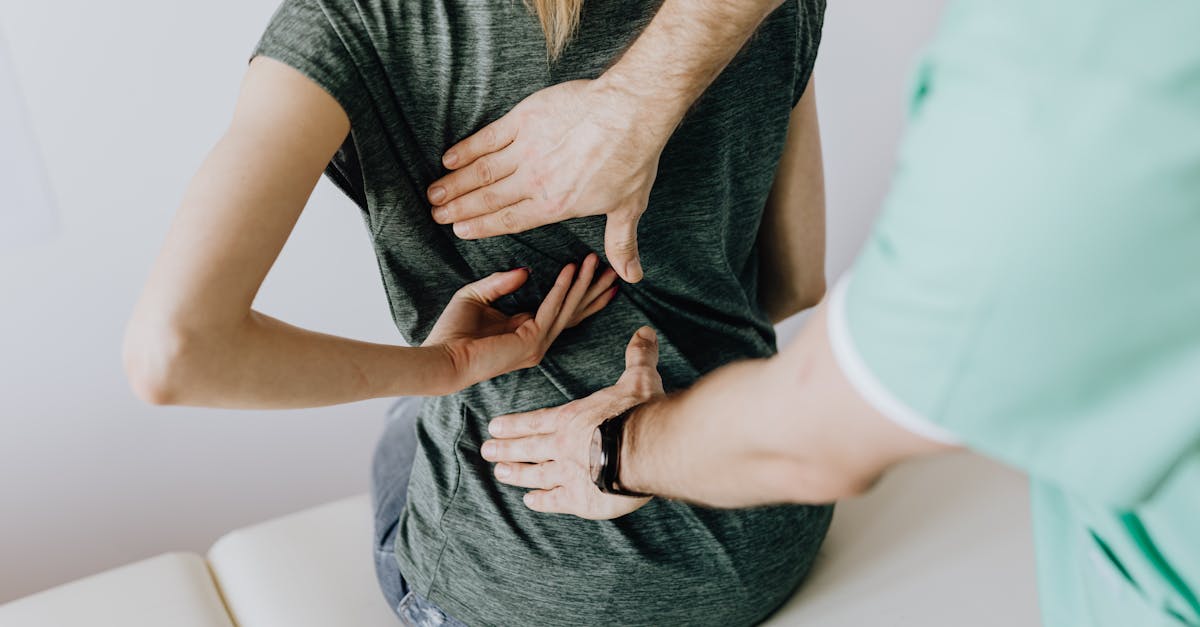
During a medical evaluation for sharp midline back pain, the physician will perform a comprehensive physical and neurological exam. The physician will press firmly on each individual spinous process moving down the back. If pressing a specific bone produces an agonizing, sharp pain, it strongly suggests a structural bony issue like a fracture or infection.
The clinician will test the patient’s range of motion, noting whether forward flexion or backward extension triggers the sharp pain. Neurological testing is critical. The physician will assess the reflexes, muscle strength, and sensation in the arms or legs to ensure the spinal cord and nerve roots remain uncompromised.
Any evidence of progressive muscle weakness, altered sensation, or changes in bowel and bladder function requires immediate emergency intervention.
13. Diagnostic Imaging Strategies
When midline pain is severe, follows trauma, or presents with red flag symptoms, diagnostic imaging is necessary. Standard X-rays are the first line of investigation. They provide clear images of the bony architecture, easily identifying compression fractures, severe arthritic changes, or structural misalignments like spondylolisthesis.
If the X-ray is inconclusive or if soft tissue damage is suspected, Magnetic Resonance Imaging is the gold standard. A magnetic resonance imaging scan delivers detailed cross-sectional views of the intervertebral discs, the spinal cord, and the nerve roots.
It can definitively diagnose a central disc herniation, identify the fluid accumulation associated with a spinal infection, and detect the presence of tumors within the spinal canal or the vertebral bone marrow.
14. Conservative and Medical Management
For pain diagnosed as a mechanical ligament sprain or facet joint dysfunction, conservative management is appropriate. The protocol involves a brief period of modified activity, avoiding movements that trigger the sharp stabbing sensation.
Over-the-counter non-steroidal anti-inflammatory drugs reduce the local chemical inflammation around the irritated joint or ligament. Physical therapy is the cornerstone of long-term recovery, focusing on strengthening the core musculature to provide dynamic stability to the spinal column, reducing the mechanical load on the central bony structures.
If the pain stems from a severe, acute muscle spasm, a short course of prescription muscle relaxants may be utilized to break the cycle of tension and allow the patient to participate in physical rehabilitation.
15. When to Seek Emergency Medical Attention
While many instances of back pain are self-limiting, sharp stabbing pain directly on the spine must be treated with caution, as the spinal cord is exceptionally vulnerable.
Seek immediate emergency care if the stabbing midline pain is accompanied by sudden numbness or tingling radiating into the legs or groin, severe progressive weakness in the lower extremities, or a sudden loss of bowel or bladder control. These symptoms indicate cauda equina syndrome or severe spinal cord compression, requiring urgent surgical decompression to prevent permanent paralysis.
Additionally, if the pain is associated with an unexplained fever, profound weight loss, or an inability to find a comfortable resting position, immediate medical evaluation is required to rule out critical infections or malignancies.
16. Frequently Asked Questions (FAQ)
1. Is it normal to have a sharp pain directly on my spine bone?
A sharp pain located exactly on the bone of the spine usually indicates a structural issue rather than a simple muscle ache. It can be caused by a sprained ligament between the bones, an inflamed joint, or more serious issues like a disc problem or a small fracture. It should always be evaluated if it persists.
2. Can poor posture cause a stabbing pain in the middle of the back?
Yes. Chronic slouching places immense tensile strain on the ligaments that connect the spinous processes in the center of your back. Over time, this constant mechanical stretching can cause microtears and severe inflammation, leading to a sharp, stabbing pain when you move or bend.
3. How do I know if my back pain is a compressed nerve or a muscle?
Muscle pain is typically broad, feels like a deep ache or a tight band, and usually improves with heat and rest. A compressed nerve often causes a sharp, electrical, or burning pain that radiates away from the spine and travels down an arm or leg, frequently accompanied by tingling or numbness.
4. Will an X-ray show why I have a sharp pain in my spine?
An X-ray is excellent for viewing bones. It will clearly show if you have a compression fracture, severe arthritis, or a slipped vertebra. However, an X-ray cannot see soft tissues like herniated discs, pinched nerves, or torn ligaments. For those issues, a magnetic resonance imaging scan is required.
5. When should I go to the emergency room for spine pain?
You must go to the emergency room immediately if the sharp back pain occurs alongside any loss of bowel or bladder control, severe numbness in your groin area, sudden weakness making it hard to walk, or if the pain is paired with a high fever.
17. Bibliography
Disclaimer: The content is for informational purposes only and does not replace medical advice. Always consult your doctor for personalized treatment.