1. Introduction
Yes, wearing headphones all day can significantly increase the risk of developing an outer ear infection, medically known as otitis externa. Prolonged use creates a dark, warm, and moist environment within the ear canal, which serves as the ideal breeding ground for bacterial and fungal overgrowth. The constant physical presence of the device also causes micro-abrasions to the delicate skin lining the canal, providing a direct entry point for opportunistic pathogens.
Otitis externa, often referred to colloquially as “swimmer’s ear,” is not strictly limited to aquatic activities. Modern lifestyle habits, particularly the continuous use of in-ear monitors or heavy over-ear headphones, artificially recreate the humid conditions necessary for infection. The ear canal is a highly specialized anatomical structure designed to self-clean and aerate, and obstructing it for extended periods profoundly disrupts these natural defenses.
Recognizing the correlation between audio device habits and aural health is essential for prevention. By understanding the mechanical and biological changes induced by constant headphone usage, individuals can implement simple hygiene and environmental modifications to prevent painful acute infections and preserve long-term hearing clarity.
2. Understanding Otitis Externa
Otitis externa is an acute or chronic inflammation of the external auditory canal, the tube that connects the outer ear (the pinna) to the eardrum (the tympanic membrane). This condition primarily involves the skin and underlying soft tissues of the ear canal. Under normal physiological conditions, the canal is protected by a thin layer of specialized skin and a highly acidic environment that inhibits microbial colonization.
When this protective barrier is compromised, either chemically through excessive moisture or physically through trauma, inflammation rapidly ensues. The body responds to the breach by rushing immune cells to the area, resulting in vasodilation, localized swelling, and an intense sensation of pain.
Because the skin of the inner portion of the ear canal is tightly adhered directly to the underlying cartilage and bone, even a minute amount of swelling causes severe discomfort. Unlike skin on the arm, which can stretch to accommodate inflammation, the ear canal skin has no room to expand, leading to a sensation of intense pressure and a throbbing ache.
3. The Anatomy of the Outer Ear Canal
The human external auditory canal is roughly 2.5 centimeters long and possesses a unique, slightly curved shape. The outer third of the canal is cartilaginous and contains hair follicles, as well as the specialized sebaceous and ceruminous glands that produce earwax. The inner two-thirds of the canal consist of bone covered by a very fragile, millimeter-thin layer of squamous epithelium.
This anatomical design serves a dual purpose: amplifying sound waves and protecting the vulnerable eardrum. The canal relies heavily on air circulation to remain dry. It also utilizes a fascinating “conveyor belt” mechanism for self-cleaning. The skin cells in the ear canal grow outward from the eardrum toward the exterior, carrying debris and old earwax out of the ear automatically.
Inserting any object, such as a silicone headphone tip, deep into this canal forcefully disrupts the outward migration of skin cells and wax. It traps the debris against the eardrum and creates a mechanical barricade that halts the essential flow of air.
4. How Headphones Alter the Ear Environment
Headphones, particularly earbuds that insert directly into the canal, drastically alter the microclimate of the ear. The human body continuously radiates heat and moisture. When the ear canal is plugged, the temperature inside the canal rises, and the relative humidity spikes significantly.
Bacteria and fungi, particularly species like Pseudomonas aeruginosa and Staphylococcus aureus, thrive in conditions of elevated warmth and humidity. In a well-aerated ear, these microbes exist in small, harmless numbers. However, the artificial “greenhouse” effect created by hours of headphone use allows these populations to multiply exponentially.
Over-ear headphones, while not inserted into the canal, also contribute to this effect if worn for long durations. The heavy, non-breathable materials used in many ear cushions trap heat and sweat against the side of the head, effectively creating a similar, albeit slightly less intense, humid environment within the ear structure.
5. The Role of Cerumen (Earwax) Impaction
Cerumen, commonly known as earwax, is not dirt; it is a vital biological defense mechanism. It provides a waterproof coating to the ear canal, maintains an acidic pH to repel bacteria, and traps dust and foreign particles. However, the constant insertion and removal of earbuds act like a plunger, repeatedly pushing the cerumen deeper into the canal instead of allowing it to naturally migrate outward.
Over time, this mechanical plunging creates a dense, hardened wall of impacted cerumen near the eardrum. This impaction serves as a massive reservoir for trapped moisture and bacteria. Furthermore, the impacted wax absorbs water (such as sweat generated while wearing headphones during a workout), swelling and completely blocking the canal.
The blockage not only causes temporary conductive hearing loss but also creates an oxygen-deprived space behind the wax plug. Anaerobic bacteria, which thrive in environments without oxygen, can rapidly colonize this space, leading to a deep-seated and difficult-to-treat external infection.
6. Microbial Pathogens: Bacteria and Fungi
The most common causative agent of otitis externa is bacterial, with Pseudomonas aeruginosa accounting for the vast majority of cases. This bacterium is ubiquitous in the environment and flourishes in warm, moist settings. Staphylococcus aureus is another frequent culprit, often introduced into the ear canal via contaminated fingers or dirty headphone tips.
Fungal infections, known clinically as otomycosis, are also heavily associated with chronic headphone use. Fungi, particularly Aspergillus and Candida species, thrive in dark, humid environments. Fungal otitis externa is notably pruritic, meaning it causes intense, maddening itching rather than the sharp pain typical of bacterial infections.
Differentiating between a bacterial and fungal etiology is a critical clinical step, as the pharmacological treatments are entirely different. Using an antibacterial drop on a fungal infection will not only fail to resolve the issue but may actually exacerbate the fungal overgrowth by eliminating competing bacterial flora.
7. Recognizing the Early Symptoms
The onset of otitis externa is generally progressive. The earliest symptom is often a mild, localized itching deep within the ear canal, accompanied by a feeling of fullness or a sensation that the ear is “plugged.” Patients frequently attempt to relieve this by inserting cotton swabs, which only inflicts further micro-trauma and pushes the infection deeper.
As the inflammatory cascade accelerates, the itching transitions into a distinct, sharp pain. This pain is characteristically worsened by any manipulation of the outer ear, specifically pulling backward on the pinna or pushing on the tragus (the small cartilaginous bump in front of the ear canal).
In advanced acute stages, the canal may swell completely shut, resulting in muffled hearing. A clear, yellowish, or purulent (pus-filled) discharge may begin to drain from the ear. The skin surrounding the entrance to the canal may appear intensely red, flaky, and swollen, indicating a severe localized immune response.
8. The Pathophysiology of Ear Canal Inflammation
When the physical barrier of the ear canal is breached by a dirty earbud or softened by excess moisture, bacteria adhere to the epithelial cells. The bacteria release toxins that damage the host cells, prompting the local mast cells to release histamine and other inflammatory cytokines.
These chemical messengers cause the local capillary networks to dilate and become highly permeable. Plasma leaks into the surrounding interstitial spaces, resulting in profound edema (swelling). Because the skin is tethered tightly to the underlying bone, the swelling creates immense hydrostatic pressure, compressing the delicate sensory nerve endings and generating disproportionate pain.
The localized inflammation also heavily alters the pH of the ear canal, shifting it from a protective acidic state to a more alkaline environment. This alkaline shift disables the natural antimicrobial properties of the remaining cerumen, leaving the tissue entirely defenseless against further bacterial replication.
9. Data Structure: Types of Headphones and Infection Risk
| Headphone Style | Anatomical Impact | Risk of Otitis Externa |
|---|---|---|
| In-Ear Monitors (Earbuds) | Directly plugs canal, blocks airflow, causes micro-abrasions, pushes wax deep. | Highest Risk. Traps moisture directly against the fragile canal lining. |
| Over-Ear (Closed-Back) | Encloses the entire pinna, creating a sealed, humid environment around the ear. | Moderate to High Risk. Causes sweating and localized heat buildup. |
| On-Ear (Supra-aural) | Rests on the cartilage of the outer ear, allowing some air circulation. | Moderate Risk. Less internal humidity, but can cause cartilage pressure. |
| Bone Conduction | Bypasses the ear canal entirely, resting on the cheekbones. | Lowest Risk. Does not alter the ear canal microclimate or block airflow. |
10. Differential Diagnosis of Ear Pain
Not all ear pain in headphone users is caused by otitis externa. A precise differential diagnosis is imperative. Otitis media, or a middle ear infection, occurs behind the eardrum and is frequently associated with upper respiratory infections. Unlike otitis externa, pulling on the outer ear usually does not worsen the pain of a middle ear infection.
Temporomandibular joint (TMJ) dysfunction is a frequent mimic of ear pain. The jaw joint sits mere millimeters away from the anterior wall of the ear canal. Clenching the jaw, a common stress response, can cause severe referred pain that feels exactly like an earache, though otoscopic examination will reveal a perfectly healthy ear canal.
Contact dermatitis from the materials used in headphones, such as nickel meshes or specific silicones, can cause severe itching, redness, and weeping of the ear skin, masquerading as an infection. However, this is an allergic reaction and requires topical steroids rather than antimicrobials.
11. Potential Complications of Untreated Otitis Externa
While usually easily managed, an ignored outer ear infection can lead to severe structural and systemic complications. If the bacterial load becomes immense, the infection can breach the eardrum, spreading into the middle ear and causing concurrent otitis media.
A far more dangerous complication is malignant otitis externa, also known as necrotizing otitis externa. Despite the name, it is not a cancer, but an aggressive, rapidly spreading osteomyelitis (bone infection) of the skull base. This predominantly occurs in elderly patients or those with uncontrolled diabetes mellitus whose immune systems cannot contain the Pseudomonas bacteria.
Malignant otitis externa requires immediate hospitalization, advanced imaging, and weeks of intravenous antibiotics. If left unchecked, the infection travels along the base of the skull, damaging the cranial nerves responsible for facial movement and swallowing, and can ultimately prove fatal.
12. Clinical Evaluation and Otoscopic Examination
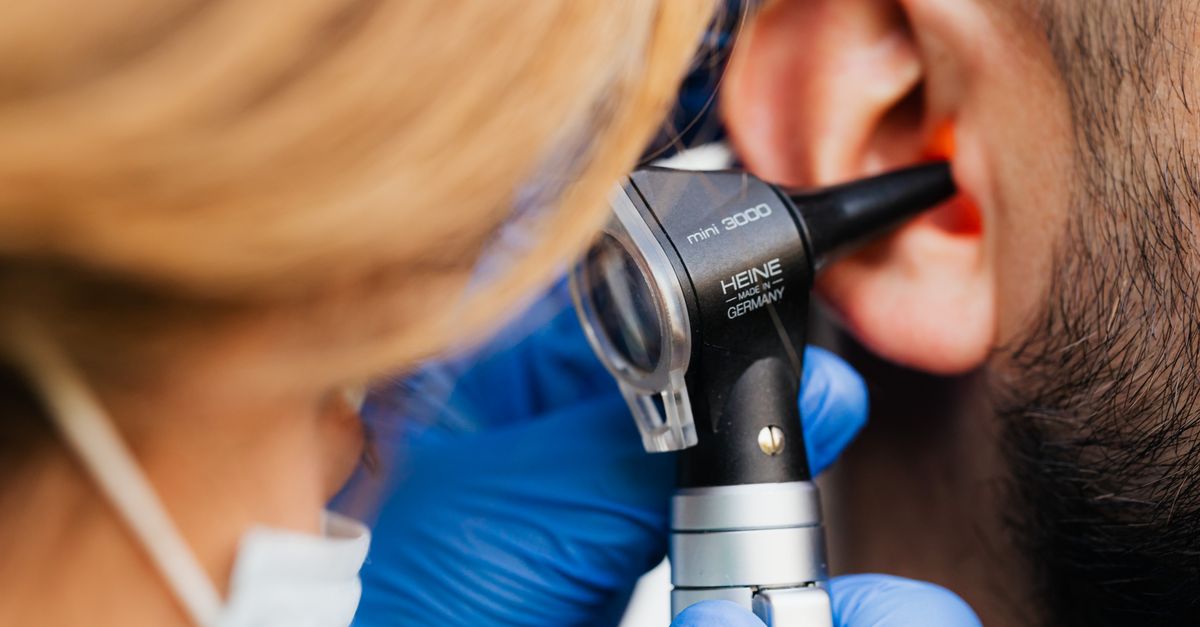
When a patient presents with suspected otitis externa, the clinical gold standard for diagnosis is an otoscopic examination. The clinician uses an otoscope, a specialized magnifying light, to peer directly into the ear canal.
In a classic presentation, the clinician will observe an erythematous (red), highly edematous (swollen) canal. The eardrum may be difficult to visualize due to the swelling and the accumulation of cellular debris and purulent exudate. The clinician must meticulously suction this debris out to accurately assess the integrity of the eardrum and ensure there is no perforation.
If the infection is recurrent or non-responsive to standard therapies, a clinician may use a small swab to take a culture of the ear discharge. This culture is sent to a laboratory to identify the specific strain of bacteria or fungus and to determine precisely which antimicrobial medications will be most effective.
13. Medical Management and Topical Treatments
The cornerstone of treating otitis externa is the application of topical, targeted ear drops. Because the infection is localized to the skin of the canal, topical drops deliver a massively high concentration of antibiotics directly to the site of the infection without causing systemic side effects.
Standard prescription drops usually contain a combination of an antibiotic (such as ciprofloxacin or neomycin) to eradicate the bacteria, and a corticosteroid (such as dexamethasone or hydrocortisone) to rapidly reduce the severe inflammation and pain. Patients are instructed to instill these drops several times a day for a week to ten days.
If the canal is so severely swollen that the drops cannot penetrate to the eardrum, the clinician will insert a small, sponge-like wick into the ear. The wick absorbs the medication and physically draws it deep into the canal past the swollen tissues, ensuring the entire length of the infection is treated. Systemic oral antibiotics are rarely necessary unless the infection has spread beyond the ear to the face or neck.
14. Safe Headphone Hygiene Practices
Preventing headphone-induced ear infections relies entirely on altering physical habits. The most critical intervention is the “60/60 rule”—listening at no more than 60 percent volume for no longer than 60 minutes at a time. Taking a 10 to 15-minute break allows the ear canal to naturally aerate and cool down, breaking the cycle of heat and moisture accumulation.
Routine sanitation of the audio equipment is mandatory. Silicone or foam earbuds should be wiped down daily with an isopropyl alcohol wipe to destroy surface bacteria and fungi before they are inserted into the ear. Foam tips should be replaced regularly, as their porous nature allows them to trap microbes deeply.
Never share earbuds with another person, as this directly transfers their unique microbial flora into your ear canal, frequently introducing strains of bacteria your local immune system is unprepared to fight. If you sweat heavily during workouts, opt for over-ear headphones that rest loosely on the cartilage rather than plugging the canal, and wipe the sweat away immediately afterward.
15. When to Seek Medical Attention
You must seek immediate clinical evaluation if you experience severe, worsening ear pain that radiates into your jaw, face, or neck. Over-the-counter pain relievers often fail to manage the intense pain of a fully developed outer ear infection, requiring prescription intervention.
Prompt medical care is necessary if you notice any fluid draining from the ear, particularly if it is thick, yellow, green, or foul-smelling. Do not attempt to clean this out with cotton swabs, as you will likely rupture the inflamed tissues or the eardrum itself.
Seek emergency evaluation if the ear pain is accompanied by a high fever, sudden dizziness, a complete loss of hearing in the affected ear, or visible redness and swelling spreading to the skin of your face or the area directly behind your ear (the mastoid bone). These are signs that the infection is disseminating and requires aggressive medical management.
16. Frequently Asked Questions (FAQ)
1. Can I use rubbing alcohol drops to prevent headphone ear infections?
While a few drops of a mixture of equal parts white vinegar and rubbing alcohol can help dry out an ear canal after swimming, you should never use this if you have an active infection, a punctured eardrum, or severe pain. It is safer to simply take regular breaks from wearing headphones to let the ear dry naturally.
2. Does noise-canceling technology increase the risk of infection?
The electronic noise-canceling technology itself does not cause infections. However, active noise-canceling earbuds require a very tight, deep physical seal in the ear canal to work effectively. This tight seal is what blocks the airflow and traps the moisture, thereby increasing the infection risk.
3. Why is my ear itchy after wearing headphones all day?
Itching is the first sign of a compromised epithelial barrier. The heat and moisture have altered your ear’s pH, and early microscopic bacterial or fungal growth is irritating the sensory nerves. Taking the headphones out and letting the ear breathe usually reverses this early stage.
4. Can I get an ear infection from sleeping with earbuds in?
Yes, sleeping with earbuds is highly risky. It plugs the ear canal for six to eight uninterrupted hours, creating a massive buildup of heat and humidity. Furthermore, rolling onto your side while wearing an earbud forces the hard plastic painfully against the cartilage, causing severe mechanical trauma.
5. Should I clean my ears with a Q-tip after wearing headphones?
Absolutely not. Using a cotton swab is the worst action you can take. It strips away the protective earwax, creates microscopic scratches in the skin that invite bacteria, and packs any debris tightly against the eardrum, virtually guaranteeing an infection.
17. Bibliography
Disclaimer: The content is for informational purposes only and does not replace medical advice. Always consult your doctor for personalized treatment.