1. Introduction
Throbbing calf pain after wearing unsupportive flip flops is caused by the continuous unnatural gripping of the toes to keep the shoe attached, combined with a lack of heel elevation and arch support. This altered biomechanical gait forces the calf muscles and the Achilles tendon to overwork with every step. The constant isometric tension and structural strain lead to rapid muscular fatigue, microtrauma, and subsequent inflammatory throbbing.
Flip flops are designed for brief periods of walking, yet they are frequently worn for extended daily activities. The human foot requires a stable platform to execute the intricate mechanics of the walking stride smoothly. When a shoe lacks a heel counter to secure it to the foot, the wearer must subconsciously alter their entire lower limb function to prevent the footwear from slipping off.
Understanding the specific muscular adaptations required to walk in these loose sandals clarifies why the lower leg muscles suffer profound exhaustion. The throbbing sensation is a definitive biological signal that the calf tissues are experiencing vascular congestion and repairing micro-tears resulting from mechanical overload. Addressing this discomfort involves recognizing the limitations of casual footwear and implementing recovery strategies for the posterior leg muscles.
2. Anatomy of the Lower Leg
The calf region consists of two primary muscles located on the posterior aspect of the lower leg. The gastrocnemius is the larger, more superficial muscle that originates above the knee and provides explosive power for pushing off the ground. Beneath it lies the soleus, a broad, flat muscle responsible for postural endurance and steady, sustained walking mechanics.
Both muscles taper downward and fuse to form the Achilles tendon, the thickest fibrous band in the human body. The Achilles tendon inserts into the calcaneus, or heel bone. The primary function of this entire muscle-tendon complex is plantar flexion, the motion of pointing the toes downward to propel the body forward.
For this complex to function optimally, the foot must roll from the heel to the toe with appropriate structural support. The plantar fascia, a thick band of connective tissue under the arch of the foot, works in direct synergy with the calf muscles to distribute weight and absorb shock during locomotion.
3. The Biomechanics of Flip Flops
Walking in flip flops fundamentally disrupts the natural gait cycle. In barefoot walking or when wearing supportive athletic shoes, the stride begins with a solid heel strike, transitions smoothly through the midfoot, and ends with a powerful push-off from the big toe.
Flip flops alter this sequence entirely. Because the shoe is only secured by a small Y-shaped strap between the first and second toes, the wearer must shorten their stride to maintain control of the sandal. A shorter stride changes the angle at which the heel strikes the ground, increasing the blunt force transmitted up through the ankle and into the lower leg.
Additionally, the ankle joint must remain more rigid to keep the shoe positioned correctly beneath the foot. This rigidity prevents the normal, fluid swinging motion of the lower leg, forcing the calf muscles to absorb shock and generate movement from a mechanically disadvantaged position.
4. Toe Gripping and Muscular Tension
The most significant adaptation required to walk in loose sandals is continuous toe gripping. With every step, as the foot lifts off the ground, the toes must actively curl downward to clench the thin sole of the flip flop and carry it forward.
This relentless curling action demands sustained tension from the long flexor muscles of the toes, which originate deep within the calf. While the toes are gripping, the larger gastrocnemius and soleus muscles are simultaneously trying to execute the normal push-off phase of the stride.
This creates conflicting demands on the posterior leg muscles. The muscles are forced to perform dual tasks: securing the footwear and propelling the body weight. This continuous, unyielding tension rapidly exhausts the cellular energy stores within the muscle fibers, leading to a deep, fatigue-induced ache.
5. The Role of the Achilles Tendon
Supportive shoes typically feature a slight heel elevation, which reduces the resting stretch on the Achilles tendon. Flip flops are entirely flat, dropping the heel to a zero-degree angle. For individuals accustomed to walking in shoes with a moderate heel drop, this sudden shift places the Achilles tendon under continuous, pronounced tension.
With every step, the flattened position forces the calf muscles to stretch further than their accustomed range of motion before they can initiate a contraction. The tendon is repetitively pulled tight against the heel bone.
Over several hours of walking, this repetitive tensile stress creates microscopic damage within the collagen fibers of the tendon. The body responds with localized inflammation. The throbbing pain felt in the lower calf is often the sensation of increased blood flow attempting to heal this irritated, overstretched tendon structure.
6. Lack of Arch Support and Fascial Strain
The vast majority of flip flops feature a completely flat, unyielding foam or rubber sole. The human foot possesses a natural longitudinal arch designed to act as a dynamic shock absorber. When bearing weight on a flat surface without support, the arch collapses downward, a motion known as pronation.
Severe overpronation places immense strain on the plantar fascia. Because the plantar fascia and the Achilles tendon are biomechanically linked through the fascial network of the heel, tension on the bottom of the foot translates directly into tension up the back of the leg.
As the arch flattens repeatedly, the soleus muscle must work exponentially harder to stabilize the inner ankle and prevent the foot from rolling entirely inward. This structural instability accelerates soleus fatigue, contributing heavily to the deep, localized throbbing in the lower half of the calf.
7. Altered Gait and Stride Length
To prevent the sandal from flying off the foot, the wearer instinctively alters their stride mechanics. The step becomes shorter, and the hip flexion is reduced. The foot is lifted with a shuffling motion rather than a clean, articulate swing.
This shuffling gait prevents the calf muscles from experiencing their normal cycle of contraction and complete relaxation. Instead, they remain in a state of partial, continuous engagement.
Muscles rely on the full range of motion to act as a biological pump, pushing venous blood back toward the heart. The shortened, rigid stride of a flip flop wearer impairs this muscular pump, leading to poor circulation and the accumulation of metabolic waste products in the lower leg.
8. Eccentric Overload on the Calf
An eccentric contraction occurs when a muscle generates force while simultaneously being lengthened. During a normal walking stride, the calf muscles perform a controlled eccentric contraction to smoothly lower the foot to the ground after the heel strike.
In flip flops, the lack of structural cushioning means the heel strikes the ground with greater abruptness. The calf muscles must abruptly brake this downward force to protect the bones of the leg. This results in an eccentric overload.
Eccentric contractions are uniquely taxing on muscle tissue, causing precise microscopic tearing at the structural junctions of the muscle fibers. This distinct type of tissue trauma is the primary catalyst for delayed onset muscle soreness, presenting as a stiff, throbbing ache later in the day.
9. Venous Pooling and Throbbing Sensations
The specific sensation of throbbing is a vascular phenomenon. The arteries continuously deliver oxygenated blood down to the muscles. Returning that deoxygenated blood back up against gravity requires the efficient pumping action of the calf muscles.
Because the flip flop gait reduces the full contraction of the calf, the venous pump becomes sluggish. Deoxygenated blood and inflammatory fluid begin to pool in the lower extremities. The hydrostatic pressure inside the veins increases significantly.
The throbbing pulse felt in the calves corresponds precisely to the heartbeat. Fresh arterial blood pushes into a vascular network that is already congested with stagnant fluid. The physical stretching of these engorged blood vessels against the surrounding sensitive tissues generates the rhythmic, pulsing pain.
10. Table: Proper Footwear vs. Flip Flops
Understanding the structural differences highlights why simple sandals cause profound muscular fatigue.
| Biomechanical Feature | Supportive Athletic Shoe | Standard Flip Flop |
|---|---|---|
| Heel Securance | Firm heel counter, secures foot | None, requires constant toe gripping |
| Arch Support | Contoured midsole prevents collapse | Flat surface, promotes overpronation |
| Shock Absorption | Cushioned heel dissipates impact | Thin foam transfers force to the calf |
| Stride Mechanics | Fluid heel-to-toe roll | Shortened, rigid shuffling gait |
11. Microtrauma and Inflammatory Healing
The pain experienced after removing the sandals is a clear indication of active tissue repair. The continuous toe gripping, arch collapse, and eccentric braking force create a landscape of microtrauma throughout the posterior compartment of the leg.
The immune system recognizes this structural damage and initiates a localized inflammatory response. Blood vessels dilate to deliver white blood cells and healing nutrients to the torn muscle fibers. This targeted swelling increases pressure within the tight fascial compartments of the calf.
The increased tissue pressure sensitizes the local pain receptors. Therefore, the calves feel tender to the touch, and any subsequent stretching or movement produces a tight, burning ache until the cellular repair process is complete.
12. Plantar Fasciitis Overlap
Calf pain related to poor footwear rarely occurs in isolation. It is intricately linked to the health of the foot. The profound lack of support provided by flip flops frequently triggers the early stages of plantar fasciitis, an inflammation of the connective tissue under the heel.
When the plantar fascia becomes inflamed and tight, the body attempts to compensate by shifting the biomechanical load upward into the Achilles tendon and the soleus muscle.
A patient may first notice throbbing in the calf, completely unaware that the root mechanical failure is occurring beneath the arch of the foot. Addressing calf soreness often requires concurrent treatment of the foot to ensure the entire posterior kinetic chain is relieved of abnormal stress. Those seeking deeper insights into foot mechanics often consult information regarding arch pain to understand this structural connection.
13. Neuromuscular Fatigue
The central nervous system must work substantially harder to coordinate movement when walking on an unstable platform like a loose sandal. Proprioception, the body’s ability to sense its position in space, is constantly challenged as the shoe shifts unpredictably beneath the sole.
The brain sends rapid, continuous micro-adjustment signals to the stabilizing muscles of the ankle and lower leg. This relentless neurological firing depletes the neurotransmitters at the neuromuscular junctions.
This state of neuromuscular fatigue leaves the calf muscles feeling heavy, unresponsive, and prone to sudden spasms or cramps once the individual finally sits down to rest. The throbbing is exacerbated by the nervous system struggling to recalibrate the resting tone of the exhausted muscles.
14. Recovery and Stretching Protocols
Alleviating the throbbing pain requires targeted interventions to clear venous congestion and restore muscle length. The most immediate relief comes from elevating the legs above the level of the heart. This utilizes gravity to drain the pooled blood and lymphatic fluid, rapidly decreasing the tissue pressure in the calves.
Applying a warm compress to the lower legs induces mild vasodilation, which assists in flushing acidic metabolic waste products out of the fatigued muscle bellies.
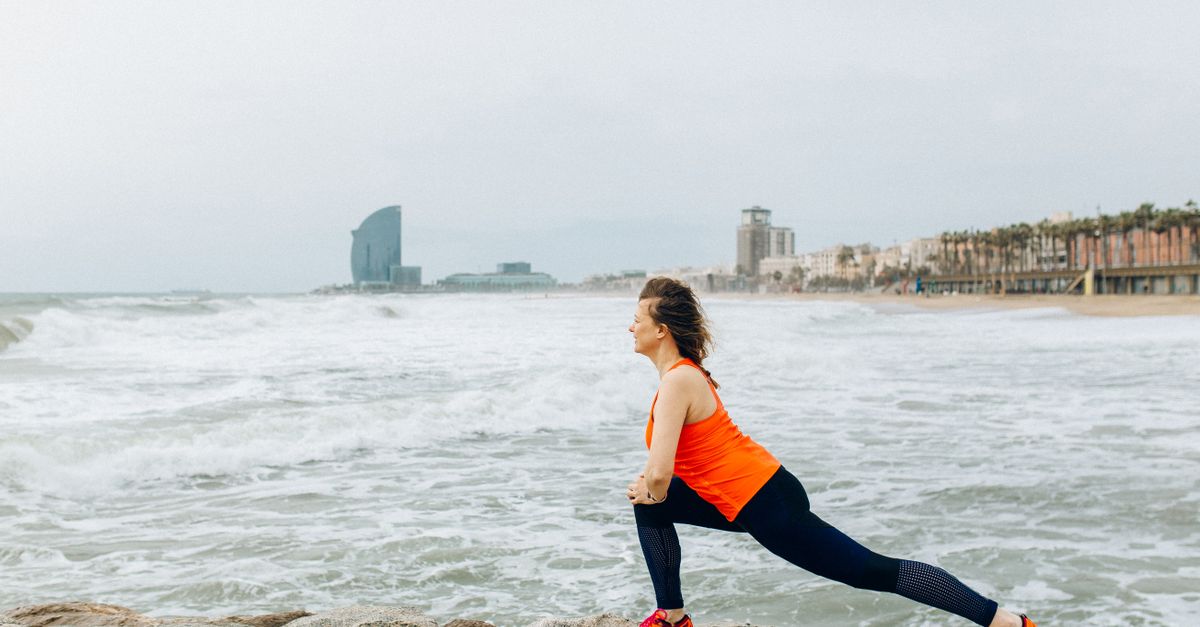
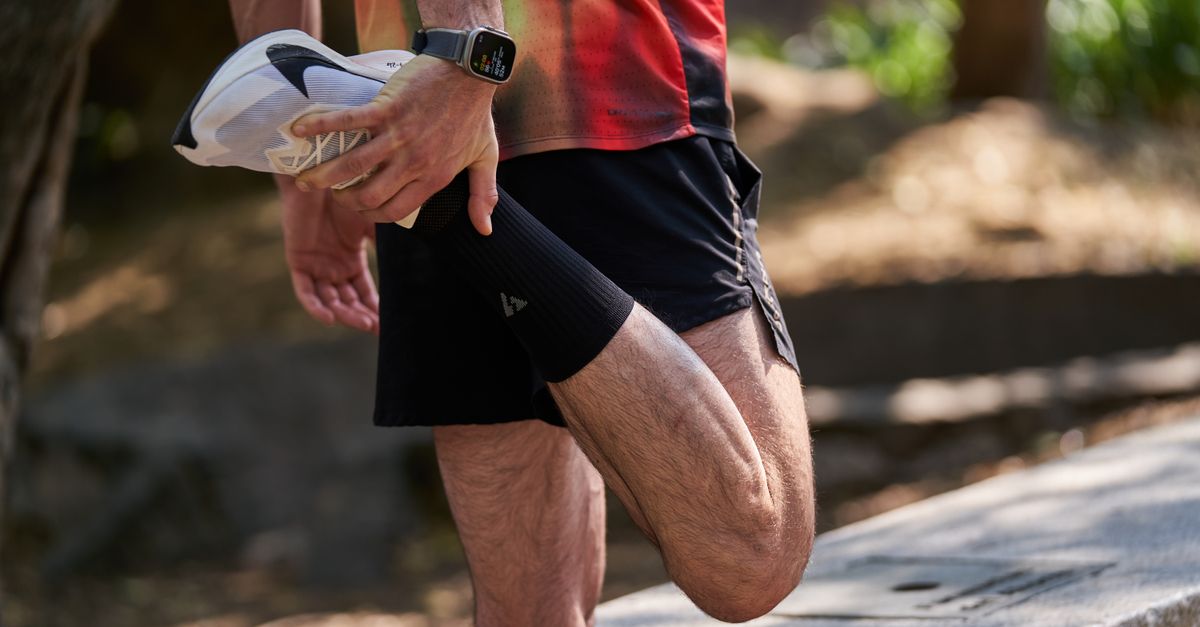
Gentle, static stretching is mandatory to reset the shortened Achilles tendon and calf muscles. The classic wall stretch, performed by leaning forward against a wall with one leg extended straight backward and the heel pressed firmly into the floor, elongates the gastrocnemius. Bending the back knee slightly shifts the stretch to the deeper soleus muscle, providing comprehensive relief.
15. Footwear Modifications
Preventing recurrent calf pain mandates a reassessment of summer footwear choices. While flip flops are convenient for poolside or beach use, they are clinically inappropriate for prolonged walking, standing, or navigating hard surfaces like concrete.
Transitioning to sandals that feature an adjustable heel strap provides immediate biomechanical relief. A secure heel strap eliminates the need for constant toe gripping, allowing the foot to execute a normal, fluid stride.
Furthermore, selecting sandals constructed with a contoured, anatomically supportive footbed and a slight heel wedge provides the necessary arch support and reduces the tensile stretch on the Achilles tendon, sparing the calf muscles from profound daily exhaustion.
16. Frequently Asked Questions (FAQ)
1. Can wearing flip flops cause permanent damage to my legs?
While occasional use is harmless, wearing unsupportive flip flops daily for long distances can lead to chronic conditions such as Achilles tendinopathy, plantar fasciitis, and permanent alterations in your walking gait.
2. Why do my calves cramp at night after wearing sandals all day?
The muscles have been overworked and held in continuous isometric tension from gripping the shoe. This severe fatigue and depletion of cellular energy make the muscle highly irritable and prone to painful spasms while you sleep.
3. Will a foot massage help relieve the pain in my calves?
Yes. Massaging the arch of the foot and the calf muscles helps break up fascial adhesions, promotes arterial blood flow, and mechanically pushes stagnant venous fluid back toward the heart, significantly reducing the throbbing.
4. Is it better to walk barefoot than in flip flops?
Walking barefoot on natural, forgiving surfaces like grass or sand allows the foot to function naturally. However, walking barefoot on hard concrete can cause blunt force trauma to the heel. Flip flops on concrete combine the lack of support with abnormal gait mechanics, which is uniquely stressful.
5. How long does this type of muscle soreness usually last?
If the biomechanical stress is removed by switching to supportive shoes, the inflammatory throbbing and muscle soreness typically resolve within twenty-four to forty-eight hours through rest and gentle stretching.
17. Bibliography
Disclaimer: The content is for informational purposes only and does not replace medical advice. Always consult your doctor for personalized treatment.