1. Introduction
Painful toe cramps while walking in completely flat flip flops occur because the toes must constantly contract and grip the footbed to keep the loose shoe attached to the foot. This continuous isometric contraction overworks the flexor muscles of the lower leg and foot, leading to rapid metabolic fatigue and localized cramping. Because flip flops lack a securing heel strap, the biomechanics of the human gait are drastically altered, placing unnatural demands on the smallest muscles of the foot.
The human foot is engineered to roll smoothly from heel to toe, using the intrinsic foot muscles to stabilize the arch and the toes to provide a final push-off. When footwear is not secured to the foot, this natural fluid motion is impossible. The toes are reassigned from their role in propulsion to a structural role, acting as biological clamps.
This relentless clamping prevents the flexor tendons from experiencing their normal cycle of tension and release. The resulting localized muscle exhaustion causes the actin and myosin filaments within the muscle fibers to lock up, producing an acute, painful spasm.
While flip flops are a staple of summer attire, they represent a biomechanical worst-case scenario for foot health. Addressing these cramps requires modifying footwear choices, stretching the overworked posterior chain, and understanding the physiological limits of the foot’s intrinsic musculature.
2. Anatomy of the Flexor Digitorum
The toes are controlled by a complex interplay of tendons extending from muscles originating in the lower leg and the foot itself. The primary muscles responsible for curling the toes downward are the flexor digitorum longus and the flexor digitorum brevis.
The flexor digitorum longus originates deep in the back of the calf. Its long tendon travels down behind the inner ankle bone, crosses the sole of the foot, and divides into four slips that attach to the tips of the four smaller toes.
The flexor digitorum brevis is an intrinsic muscle, meaning it lies entirely within the sole of the foot. It sits directly above the plantar fascia and attaches to the middle bones of the toes.
Both of these muscle groups are designed for dynamic, momentary contraction during the push-off phase of walking. They are not anatomically suited for sustained, static gripping. When forced into a continuous holding pattern, they rapidly exhaust their localized energy stores.
3. The Biomechanics of the Flip Flop Gait
Walking in traditional footwear allows the foot to act as a unified lever. A flip flop fundamentally changes how the lower limb interacts with the ground. Because there is no back or heel strap, the shoe is entirely unsecured at the rear.
During the swing phase of walking, when the foot is lifted off the ground, gravity pulls the back of the flip flop downward. If the toes do not actively engage, the shoe will simply fly off the foot.
To prevent this, the walker instinctively shortens their stride and clenches their toes downward, gripping the central thong post and the flat footbed. This gripping action occurs with every single step.
This altered gait is clinically observable. Individuals wearing flip flops tend to shuffle, striking the ground with a flat foot rather than a defined heel strike, and keeping the ankle rigid to prevent the shoe from slapping excessively.
4. The “Toe Gripping” Mechanism
The toe gripping required by flip flops is an isometric muscle contraction. Isometric means the muscle is generating force without significantly changing length.
Isometric contractions are exceptionally taxing on muscle tissue because they compress the surrounding blood vessels. When the toes clench down on the sandal, the internal pressure within the flexor muscle bellies rises, squeezing the capillary beds shut.
This constant squeezing creates localized ischemia, a restriction in blood flow. Without adequate blood flow, the muscle cannot receive fresh oxygen or clear away metabolic waste products like lactic acid.
The rapid accumulation of these acidic waste products irritates the local nerve endings and creates the perfect physiological environment for a sudden, violent muscle spasm, perceived as a sharp toe cramp.
5. Muscle Fatigue and Spasms
A muscle cramp is an involuntary, sustained tetanic contraction. It occurs when the neurological signaling between the brain, the spinal cord, and the muscle fibers breaks down due to profound fatigue.
Within the muscle cells, the contraction is maintained by cross-bridges forming between actin and myosin protein filaments. To release this bond and allow the muscle to relax, the cell requires a molecule of adenosine triphosphate (ATP).
When the flexor muscles are exhausted from miles of toe gripping, their ATP reserves are completely depleted. Without ATP to detach the cross-bridges, the muscle filaments remain structurally locked together.
The flexor digitorum muscles lock into their shortened position, forcibly curling the toes under. The cramping is acutely painful and will not resolve until the muscle is manually stretched and the local blood flow is restored.
6. The Lack of Arch Support
Standard flip flops consist of a completely flat, thin layer of rubber or foam. They offer zero structural support for the medial longitudinal arch of the foot.
When walking barefoot on natural, yielding surfaces, the ground contours to the arch. A flat piece of rigid foam does not. Therefore, the entire burden of supporting the arch falls upon the intrinsic muscles of the foot and the plantar fascia.
Because these intrinsic muscles are already overworked from gripping the shoe, they cannot effectively stabilize the arch. The arch begins to collapse, pulling the foot into an overpronated position.
This collapse places excessive stretch on the plantar fascia and further alters the pulling angle of the flexor tendons, increasing mechanical friction and contributing to the rapid onset of muscular failure and cramping. For details on how flattened arches impact the entire foot, consider reviewing our piece on arch burning standing desk problems.
7. Altered Stride Length and Cadence
The insecurity of a backless sandal forces the wearer to subconsciously modify their entire walking cadence. To maintain control of the flip flop, individuals take significantly shorter, choppier steps.
This shortened stride limits the natural extension of the hip and restricts the full range of motion of the ankle joint. The calf muscles and the Achilles tendon are held in a continuously shortened state, failing to achieve the necessary stretch during the gait cycle.
This overall tension in the posterior chain translates down into the foot. A tight calf muscle pulls upward on the heel bone, which mechanically increases the tension on the plantar fascia and the toe flexors, priming them for a cramp.
Over a long walk, this inefficient, rigid movement pattern consumes significantly more muscular energy than a normal, fluid walking stride.
8. Metatarsalgia and Forefoot Pressure
Because flip flops dictate a shorter stride and a flatter foot strike, the impact forces of walking are absorbed differently. Instead of rolling smoothly from heel to toe, the forefoot slaps down heavily against the thin foam sole.
This heavy, repetitive impact focuses immense pressure on the metatarsal heads, the bones at the ball of the foot just behind the toes. This localized pressure can lead to metatarsalgia, a painful inflammation of the forefoot tissues.
The intrinsic muscles, located directly above these metatarsal heads, are traumatized by this blunt force impact. The combination of blunt trauma from below and isometric gripping fatigue from above severely compromises the functional integrity of the toe flexors.
9. Evaluating Footwear Induced Pain
Different types of footwear cause distinct patterns of foot distress. The table below outlines how various shoes impact the toes.
| Shoe Type | Primary Biomechanical Flaw | Typical Symptom |
|---|---|---|
| Standard Flip Flops | Lack of heel attachment, zero arch support | Toe flexor cramps, arch fatigue |
| Pointed Dress Shoes | Narrow toe box squeezing metatarsals | Lateral numbness, bunion pain |
| High Heels | Elevated heel shifting weight forward | Forefoot burning, shortened calf muscles |
| Overly Stiff Boots | Immobilized ankle joint | Anterior shin pain, restricted toe-off |
10. Chronic Tendon Strain
Frequent and prolonged use of flip flops does not merely cause acute cramping; it can lead to chronic tendinopathy. Tendinopathy is the degeneration of the tendon’s collagen matrix due to continuous mechanical overloading.
The constant tension of toe gripping places profound strain on the flexor tendons where they insert into the toes and where they cross the ankle joint.
Over the course of a summer, this repetitive strain causes microscopic tearing and structural weakening of the tendons. The toes may feel stiff and ache deep within the joints even when resting barefoot.
Reversing chronic tendinopathy is significantly more difficult than resolving an acute muscle cramp, requiring weeks of rest and specific eccentric strengthening protocols to rebuild the tendon tissue.
11. The Impact of Hard Flat Soles
The materials used to manufacture inexpensive flip flops contribute directly to foot fatigue. Thin, dense rubber or cheap foam provides negligible shock absorption against concrete or asphalt surfaces.
The ground reaction forces travel completely unimpeded through the thin sole and directly into the skeletal and muscular structures of the foot. The intrinsic muscles must constantly brace against this harsh impact.
This bracing accelerates the depletion of cellular energy reserves. A shoe with a highly structured, shock-absorbing midsole dampens these forces, allowing the foot musculature to operate efficiently without premature exhaustion.
12. Choosing Better Summer Footwear
The simplest clinical solution to toe cramping is abandoning unsupportive footwear. However, summer climates often necessitate open-toed shoes. The key is selecting sandals that mimic the biomechanical support of a closed shoe.
The most critical feature of a proper sandal is a secure heel strap or an ankle enclosure. When the sandal is firmly attached to the rear of the foot, the shoe moves synchronously with the foot during the swing phase. The toes are completely relieved of their gripping duty and can relax.
Additionally, seek out sandals with a contoured footbed made from cork or dense, molded foam. A built-in arch support prevents the foot from flattening, while a deep heel cup stabilizes the ankle, drastically reducing the muscular effort required to walk.
13. Recovery Strategies and Massage
When a severe toe cramp strikes, you must actively break the mechanical lock of the muscle fibers. Immediately take off the flip flop. Use your hands to forcefully pull the toes upward, pointing them toward your shin. This stretching forcibly pulls the locked actin and myosin filaments apart.
Once the acute spasm is broken, manual massage is highly effective. Use your thumbs to apply deep pressure along the medial arch and the ball of the foot, kneading the cramped flexor digitorum brevis.
Rolling the sole of the foot over a lacrosse ball or a frozen water bottle breaks down fascial adhesions and stimulates reactive hyperemia. The rush of fresh blood clears the acidic metabolic waste and provides the necessary oxygen to relax the exhausted tissues.
14. Stretching the Toe Flexors
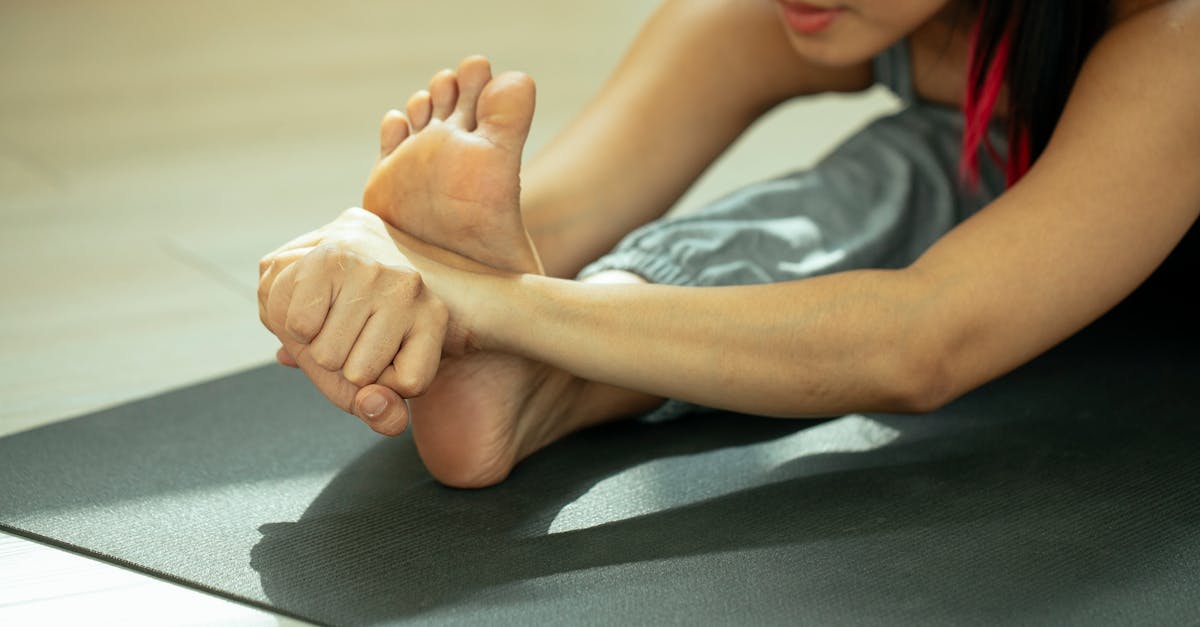
To prevent the rapid onset of cramping, the flexor muscles must be stretched regularly to maintain their optimal resting length. Tight flexor muscles are highly irritable and more prone to spasming.
A highly effective stretch involves kneeling on the floor with the toes tucked under the feet (the “toe squat” position). Slowly sit your body weight back onto your heels. You will feel a profound stretch along the entire bottom of the foot and the toes.
Hold this position for thirty seconds to allow the connective tissues to yield. Performing this stretch daily combats the chronic shortening caused by the flip flop gripping reflex.
15. When to Consult a Specialist
While toe cramping from flip flops is a predictable biomechanical response, certain presentations require professional medical evaluation. If the cramps occur forcefully while you are resting or sleeping, it suggests a systemic issue, such as an electrolyte imbalance or a neurological condition, rather than simple footwear fatigue.
If the cramping is accompanied by severe swelling on the top of the foot, or a sharp, localized pain that prevents weight-bearing, you must rule out a stress fracture of a metatarsal bone, which can occur from the heavy, un-cushioned impact of flat sandals.
A podiatrist should also evaluate toes that remain permanently curled or stiff even after the cramps subside, as this indicates the potential development of rigid hammertoes that may require orthotic or surgical intervention.
16. Frequently Asked Questions (FAQ)
1. Is it bad to wear flip flops for a short walk to the beach?
No, wearing flip flops for short durations, like walking from the car to the beach or around a swimming pool, is generally harmless. The cramps and structural issues arise when they are used for prolonged walking, standing, or daily commuting on hard surfaces.
2. Why do my calves also hurt when I wear flip flops?
Because flip flops have no heel elevation and force you to take shorter, choppier steps, the calf muscles (gastrocnemius and soleus) are constantly held in tension. They never get a chance to fully extend or rest, leading to fatigue and aching in the lower leg.
3. Will drinking more water stop my toes from cramping in sandals?
Hydration is important for overall muscle function, but dehydration is rarely the primary cause of these specific toe cramps. The root cause is the mechanical exhaustion of the muscles from constantly gripping the shoe. Water cannot fix bad biomechanics.
4. Can I train my feet to wear flip flops without cramping?
You can strengthen your intrinsic foot muscles, which may slightly delay the onset of fatigue. However, you cannot override the fundamental physics of an unsecured shoe. The toes will always have to grip to hold the shoe on, eventually leading to exhaustion.
5. Are “recovery sandals” better than normal flip flops?
Yes. High-quality recovery sandals, though often still lacking a heel strap, are designed with massive arch support, a deep heel cup, and a highly shock-absorbing thick sole. This contouring significantly reduces the need for the toes to grip violently.
17. Bibliography
Disclaimer: The content is for informational purposes only and does not replace medical advice. Always consult your doctor for personalized treatment.