1. Introduction
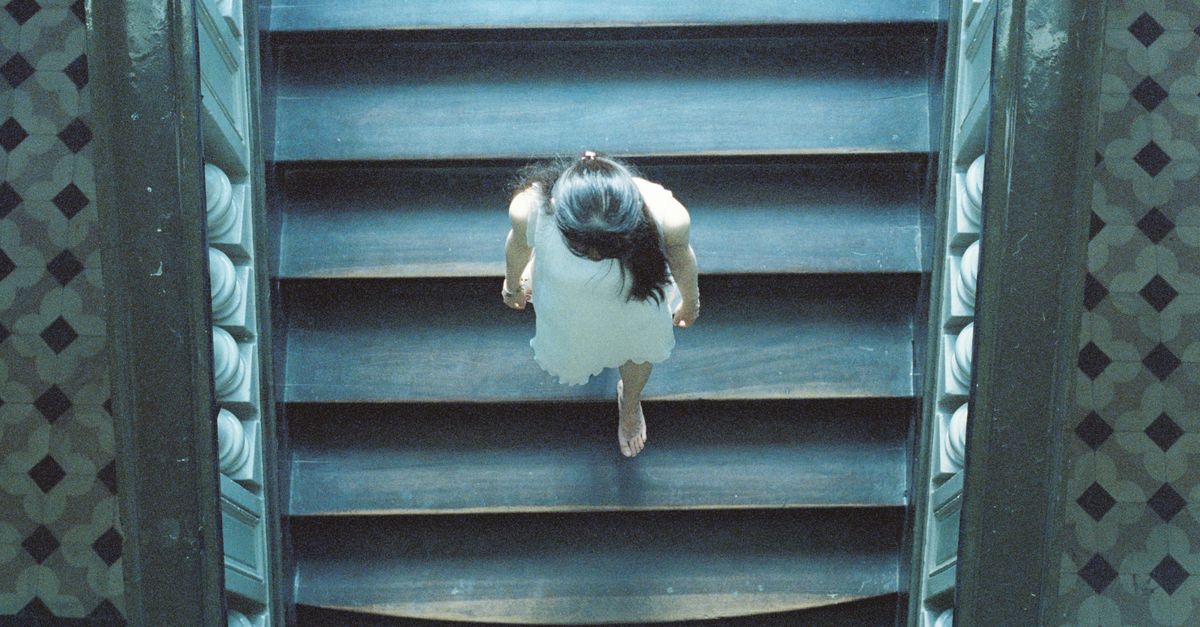
Knees feeling unstable and shaky when walking down steep stairs are primarily caused by the substantial eccentric contraction required from the quadriceps muscles to control the descent of the body against gravity. This specialized muscle action places considerable mechanical tension on the muscle fibers and the patellar tendon, which can quickly lead to localized fatigue. When the quadriceps become fatigued, they lose their ability to provide smooth, coordinated stabilization to the knee joint, resulting in a physical tremor or giving-way sensation.
Walking down stairs is a biomechanically demanding task. Unlike walking on flat ground, descending stairs forces the knee to absorb forces equivalent to several times a person’s body weight with every step. The quadriceps muscles on the front of the thigh must act as a biological braking system. They lengthen while under tension to lower the body slowly and safely to the next step.
This eccentric lengthening process requires precise neurological control and abundant cellular energy. If the muscles are unaccustomed to this specific load, or if underlying joint issues alter the mechanical leverage, the motor units within the muscle begin to fire asynchronously. The central nervous system struggles to maintain a steady output, causing the muscles to shudder and the joint to feel structurally insecure.
Understanding the anatomical structures involved in this process helps differentiate between benign muscular fatigue and potential ligamentous or cartilaginous deficits. Implementing targeted strengthening and addressing any underlying joint mechanical flaws can restore confidence and stability during stair descent.
2. Anatomy of the Knee and Quadriceps
The knee is a complex hinge joint connecting the femur, tibia, and patella. It relies on a robust network of ligaments, tendons, and muscles for both mobility and stability. The anterior aspect of the thigh houses the quadriceps femoris, a group of four distinct muscle bellies converging into a single tendon that encapsulates the patella and inserts onto the tibia.
These four muscles work in unison to extend the knee and stabilize the patella. The vastus medialis oblique, the inner teardrop-shaped muscle, plays a particularly crucial role in ensuring the patella tracks centrally within the femoral groove.
During stair descent, the knee flexes while bearing weight. The quadriceps must counteract the force of gravity to prevent the knee from buckling instantly. This requires the muscles to maintain tension while elongating, a biomechanical action that places immense stress on the tendinous attachments and the contractile proteins within the muscle cells.
The structural integrity of the knee joint itself, including the meniscus and the cruciate ligaments, provides passive stability. However, the dynamic stability required to prevent shakiness relies entirely on the strength and endurance of the surrounding musculature.
3. The Biomechanics of Eccentric Contractions
Muscle function is generally categorized into three types of contractions. Concentric contractions involve the muscle shortening while generating force, such as standing up from a chair. Isometric contractions involve generating force without changing length. Eccentric contractions occur when the muscle lengthens while under tension, acting as a brake.
Eccentric contractions generate greater force per muscle fiber than concentric contractions. This increased force production causes microscopic tearing of the muscle fiber structures, known as the sarcomeres. The mechanical stress placed on the cellular framework during eccentric loading is profound.
When walking down steep stairs, the entire body weight plus the acceleration of gravity must be decelerated by the quadriceps of the leading leg. This prolonged time under eccentric tension rapidly depletes local energy stores and disrupts the smooth sliding of the muscle filaments.
As the muscle fibers struggle to maintain this braking action, the neurological signals commanding the contraction become erratic. This biochemical and neurological fatigue manifests visibly as a tremor or a feeling of profound instability within the joint.
4. Motor Unit Fatigue and Asynchronous Firing
A motor unit consists of a single motor nerve and all the individual muscle fibers it innervates. During smooth, controlled movements, the central nervous system recruits motor units asynchronously, meaning some units rest while others work.
As the eccentric demand of walking down stairs continues, the initial motor units fatigue and drop out. The nervous system must recruit secondary, less efficient motor units to sustain the load. When these secondary units also fatigue, the smooth cycle of recruitment breaks down completely.
The remaining active motor units begin to fire in simultaneous bursts followed by brief pauses. This synchronized, jerky firing pattern translates into the physical shaking experienced in the legs. The muscle is essentially stuttering as it attempts to lower the body weight.
This neurological phenomenon is a protective mechanism. The brain detects the escalating mechanical stress on the muscle tissue and alters the firing pattern to prevent a complete structural tear of the quadriceps tendon.
5. Patellofemoral Joint Tracking Issues
The patella acts as a mechanical pulley, increasing the leverage of the quadriceps. For the knee to function silently and stably, the patella must glide smoothly within the trochlear groove of the femur.
Subtle muscular imbalances often disrupt this smooth tracking. If the outer thigh muscles are stronger or tighter than the inner thigh muscles, the patella is pulled laterally during knee flexion.
When the quadriceps are fatigued from stepping down stairs, they lose their ability to micro-manage this alignment. The patella may shift and grind against the underlying bone, a condition related to knee pain and clinically termed patellofemoral pain syndrome.
This abnormal tracking triggers pain receptors and causes reflex inhibition of the quadriceps. The nervous system momentarily shuts down the muscle to protect the irritated joint surface, leading to a sudden, terrifying sensation that the knee is giving way or completely collapsing.
6. Proprioception and Joint Position Sense
Proprioception is the body’s subconscious ability to sense its position in space. The ligaments, joint capsules, and tendons of the knee are embedded with specialized mechanoreceptors that constantly feed positional data back to the brain.
Fatigue directly impairs proprioceptive acuity. When the quadriceps and surrounding tissues are exhausted from eccentric loading, the mechanoreceptors send delayed or inaccurate signals to the central nervous system.
Without accurate real-time data regarding the exact angle and tension of the knee joint, the brain struggles to send appropriate motor commands back to the stabilizing muscles. The resulting muscular response is delayed and uncoordinated.
This loss of proprioceptive feedback creates a subjective feeling of joint looseness and instability, making the individual feel disconnected from their lower extremities and hesitant to place full weight on the descending leg.
7. The Role of the Gluteal Muscles
While the quadriceps control the knee directly, the gluteal muscles of the hip dictate the alignment of the entire lower limb. The gluteus medius is responsible for stabilizing the pelvis and preventing the femur from rotating inward.
If the gluteal muscles are weak, the thigh bone collapses inward during a step down, creating a valgus angle at the knee. This inward collapse places excessive mechanical strain on the medial ligaments and completely alters the tracking of the patella.
A weak hip forces the quadriceps to work from a mechanical disadvantage. The energy required to stabilize the misaligned joint accelerates fatigue, compounding the shaking sensation.
Strengthening the hips is therefore a mandatory component of addressing knee instability, ensuring the joint remains stacked properly over the foot during dynamic weight-bearing tasks.
8. Meniscal Tears and Structural Deficits
It is vital to distinguish between muscular fatigue and an underlying structural injury. The meniscus is a wedge-shaped piece of fibrocartilage that acts as a shock absorber between the femur and the tibia.
A torn meniscus can create a physical obstruction within the joint space. During the deep flexion required to step down a steep stair, the torn cartilage flap can become caught between the moving bones.
This mechanical catching causes an immediate, sharp pain and a definitive locking or buckling sensation, completely distinct from a muscular tremor. The leg may physically give way as a reflex response to the sudden internal joint pressure.
Similarly, an old injury to the anterior cruciate ligament leaves the knee with passive laxity. The shin bone slides too far forward during descent, forcing the muscles to work overtime to provide dynamic stability, leading to rapid fatigue and shaking.
9. Differentiating Fatigue from Pathology
Understanding the exact presentation of the symptoms helps determine whether the instability is physiological or pathological.
| Characteristic | Muscular Fatigue / Eccentric Overload | Structural Pathology (e.g., Meniscus Tear) |
|---|---|---|
| Onset of Instability | Gradual, worsening as more stairs are descended. | Sudden, acute catching or sharp giving-way. |
| Nature of the Feeling | Shaking, vibrating, trembling weakness. | Mechanical block, locking, or sharp stabbing pain. |
| Resolution | Improves rapidly with rest on a flat surface. | May persist, causing ongoing pain and swelling. |
| Swelling | Usually absent. | Joint effusion often present after the event. |
If the knee frequently buckles unexpectedly on flat ground or swells significantly after walking down stairs, an orthopedic evaluation is necessary to assess the structural integrity of the joint.
10. The Impact of Stair Geometry
The physical dimensions of the staircase significantly influence the biomechanical demand placed on the knee. Steep stairs with narrow treads force the foot into an awkward landing position, often requiring the individual to step down on the ball of the foot rather than a flat heel.
This forefoot landing keeps the ankle in plantarflexion, reducing the calf’s ability to assist in shock absorption. The knee is forced to bend deeper, and the quadriceps must absorb the entirety of the braking force.
Furthermore, a steeper drop increases the vertical distance the center of mass must travel. The eccentric contraction must be sustained for a longer duration with each step, increasing the time under tension and accelerating localized muscle failure.
Utilizing handrails to bear some of the body weight through the upper extremities immediately reduces the compressive load on the knees, mitigating the eccentric demand on the quadriceps.
11. Acute Relief Strategies After Descent
When reaching the bottom of the stairs with shaking legs, immediate strategies should focus on restoring blood flow and clearing metabolic waste. Standing still on flat ground allows the motor units to rest and the neurological firing patterns to reset.
Performing a brief, active walk on a level surface engages the skeletal muscle pump. The rhythmic, concentric contractions of the leg muscles flush out the acidic byproducts generated during the eccentric stair descent.
Gentle stretching of the quadriceps and hamstrings restores normal resting length to the muscle fibers. A basic standing quadriceps stretch, pulling the heel toward the gluteus, alleviates the stiffness that follows heavy eccentric loading.
If the knees feel achy or warm, applying a cold compress for ten to fifteen minutes can reduce mild capsular inflammation and soothe the irritated patellar tendon, promoting faster recovery.
12. Eccentric Strengthening Protocols
To prevent future shaking, the muscles must be specifically conditioned to handle eccentric loads. Standard concentric exercises, like upward squats or leg extensions, do not adequately prepare the tissue for the braking forces of stair descent.
Eccentric focused training is required. Step-downs are the most direct functional exercise. Standing on a low step, the individual slowly lowers one foot toward the floor over a count of three to five seconds, gently tapping the heel before pushing back up.
This slow, controlled lowering isolates the eccentric phase, forcing the muscle fibers to adapt and strengthen their structural proteins. Over time, this training increases the muscle’s capacity to absorb force without entering a state of chaotic neurological firing.
Wall sits are also beneficial for building isometric endurance in the quadriceps, improving the muscle’s ability to hold a sustained position without trembling.
13. Neuromuscular Control and Balance Training
Improving proprioception ensures the central nervous system receives accurate data to stabilize the knee. Balance training challenges the mechanoreceptors and refines motor control.
Single-leg balancing on an unstable surface, such as a foam pad or a balance disc, forces the small stabilizing muscles of the ankle, knee, and hip to make continuous micro-adjustments. This neurological training improves the speed and efficiency of the stabilizing reflexes.
As balance improves, adding dynamic movements, like tossing a ball while standing on one leg, distracts the conscious mind and forces the stabilizing reflexes to become automatic.
Enhanced neuromuscular control ensures that when the foot strikes a steep stair, the quadriceps and gluteals engage instantly and appropriately, providing a solid, unwavering foundation for the descent.
14. Footwear and Biomechanical Support
The interface between the foot and the stair tread dictates the distribution of force up the kinetic chain. Worn-out shoes lacking adequate cushioning fail to absorb the initial impact of the step, transferring the shock directly into the knee joint.
Footwear with a firm, supportive heel counter and robust arch support stabilizes the foot and prevents excessive pronation. Overpronation forces the tibia to rotate inward, which misaligns the patella and increases the mechanical drag on the quadriceps.
In some cases, custom orthotic inserts may be beneficial to correct structural foot deformities that contribute to poor knee alignment. Providing a stable base of support reduces the compensatory muscular effort required to keep the knee joint stacked properly.
By addressing the biomechanical foundation, the quadriceps are spared unnecessary fatigue, allowing them to focus entirely on controlling the safe descent of the body.
15. Frequently Asked Questions
1. Is it normal for my knees to shake if I haven’t exercised in a while?
Yes. Muscles lose their eccentric strength and neurological efficiency quickly when deconditioned. A sudden demand like steep stairs rapidly overwhelms unconditioned quadriceps, leading to harmless but alarming shaking.
2. Why do my knees hurt going down stairs but feel fine going up?
Going up stairs utilizes concentric muscle contractions, which are easier on the joints and generate less force per fiber. Going down uses eccentric contractions, which place significantly more mechanical tension and sheer force on the kneecap and tendons.
3. Will wearing a knee brace stop the shaking?
A simple compression sleeve can improve proprioceptive feedback and make the knee feel warmer, but it will not prevent muscle fatigue. Only targeted eccentric strength training will actually stop the muscles from shaking under load.
4. Can dehydration make the shaking worse?
Absolutely. Dehydrated muscles lack the optimal fluid balance required for smooth cellular function and efficient removal of metabolic waste. This makes the muscle fibers fatigue faster and increases the likelihood of uncoordinated spasms.
5. How long will the weakness last after I finish walking down the stairs?
The acute, visible shaking should stop within a few minutes of resting on flat ground. A general feeling of heaviness or weakness may persist for a few hours as the muscle tissue recovers its energy stores.
16. Bibliography
Disclaimer: The content is for informational purposes only and does not replace medical advice. Always consult your doctor for personalized treatment.