1. Introduction
Knees feeling unstable and shaky when walking down stairs is primarily caused by quadriceps muscle weakness, patellofemoral tracking issues, or underlying structural damage to the ligaments or meniscus. Descending stairs requires the thigh muscles to lengthen while simultaneously bearing the entire weight of the body, creating an immense eccentric mechanical load on the joint. When the neuromuscular system or joint structures fail to control this force, the knee gives way or trembles involuntarily.
The knee joint relies on a delicate balance of muscular strength, ligamentous tension, and neurological feedback to maintain its position in space. Walking on level ground places a standard compressive force on the joint. However, stepping downward multiplies this force significantly, challenging the shock-absorbing capacity of the entire lower limb.
When a person steps down, the lead leg must accept the load, but the trailing leg must control the descent. This complex biomechanical action highlights any hidden weakness or structural instability within the knee complex. Understanding the specific anatomical failure allows for targeted rehabilitation and the restoration of confident, pain-free mobility.
2. Anatomy of the Knee Joint
The knee is a large hinge joint formed by the intersection of three bones. The femur meets the tibia to form the main weight-bearing articulation, while the patella glides over the front of the femur within the trochlear groove.
This bony architecture is inherently unstable. It relies heavily on soft tissues for structural integrity. The anterior and posterior cruciate ligaments cross within the center of the joint, preventing the tibia from sliding too far forward or backward. The medial and lateral collateral ligaments provide side-to-side stability.
Between the femur and the tibia lie two C-shaped pieces of tough cartilage known as the menisci. These act as essential shock absorbers and distribute weight evenly across the joint surface. The coordinated function of all these components is required for a smooth, stable descent on stairs.
3. Biomechanics of Descending Stairs
Walking down a flight of stairs is biomechanically far more demanding than walking up. As you lower your body weight to the next step, the trailing leg remains bent and must control the downward acceleration driven by gravity.
This motion requires the quadriceps muscles on the front of the thigh to perform an eccentric contraction. In an eccentric contraction, the muscle generates tension while actively lengthening. This specific type of muscle action generates the highest degree of mechanical force within the tissue.
The patellofemoral joint experiences compressive forces up to five times your body weight during this maneuver. If the quadriceps lack the necessary strength or endurance to act as a braking system, the force is transferred directly into the passive ligaments and joint capsule, leading to the sensation of buckling or trembling.
4. Quadriceps Weakness and Eccentric Control
The most common cause of a shaky knee on stairs is isolated weakness or fatigue in the quadriceps musculature. The vastus medialis obliquus is the inner teardrop-shaped muscle of the quadriceps group and plays a critical role in stabilizing the kneecap.
If the quadriceps are deconditioned due to a sedentary lifestyle, previous injury, or recent surgery, they cannot sustain the eccentric load required for a controlled step down. As the muscle fibers fail to hold the tension, they begin to quiver.
This shaking is a sign of acute motor unit fatigue. The central nervous system struggles to recruit enough muscle fibers to manage the weight, resulting in a jerky, uncoordinated descent. Building eccentric quadriceps strength is the fundamental cure for this specific type of instability.
5. Patellofemoral Pain Syndrome
Patellofemoral pain syndrome is a common overuse condition characterized by pain behind or around the kneecap. It frequently manifests as a feeling of weakness or giving way precisely when descending stairs or squatting.
This syndrome occurs when the patella fails to track smoothly within the trochlear groove of the femur. Imbalances in muscle flexibility, such as tight hamstrings or a tight iliotibial band, can pull the kneecap laterally out of its optimal alignment.
As the knee bends to step down, the misaligned kneecap grinds against the underlying bone. This painful friction triggers a protective neurological reflex known as arthrogenic muscle inhibition, where the brain temporarily shuts down the quadriceps to prevent further pain, causing the knee to suddenly buckle.
6. Meniscal Tears and Mechanical Catching
The menisci are highly susceptible to tearing from twisting motions or gradual degenerative wear and tear. A torn meniscus compromises the smooth gliding surface of the knee joint.
When a person descends stairs, the joint space narrows under the compressive load. If a torn flap of meniscal cartilage gets caught between the moving surfaces of the femur and tibia, it creates a mechanical block.
The joint briefly locks or catches. As the person continues to force weight through the joint, the knee may suddenly give way to bypass the blockage. This mechanical instability is usually accompanied by a sharp, localized pain on the joint line and occasional joint swelling.
7. Ligamentous Laxity and ACL Deficiencies
The anterior cruciate ligament provides the primary restraint against the forward translation of the tibia. A previous injury, a partial tear, or natural hypermobility can result in a lax anterior cruciate ligament.
During the downward phase of stepping, the tibia naturally wants to slide forward beneath the femur. A competent anterior cruciate ligament halts this slide. A deficient ligament allows excessive forward movement, creating a profound sensation of the joint slipping out of place.
Patients with significant ligamentous laxity often describe their knee as feeling loose or untrustworthy. They frequently compensate by keeping the knee unnaturally stiff and relying heavily on the handrail to avoid placing full rotational stress on the joint.
8. Proprioception and Neuromuscular Control
Proprioception is the body’s subconscious ability to perceive the position of its joints in space. Sensory receptors located within the ligaments, joint capsule, and muscles constantly send positional feedback to the brain.
Following an injury or due to prolonged osteoarthritis, these sensory receptors become damaged or sluggish. The brain receives delayed or inaccurate information regarding the exact angle and tension of the knee joint.
Without precise proprioceptive feedback, the muscles cannot fire at the correct millisecond to stabilize the joint upon foot strike. This neurological delay manifests as a shaky, uncoordinated movement pattern, making stairs feel particularly hazardous.
9. The Influence of Gluteal and Hip Strength
Knee stability is heavily dictated by the structures above and below it. The gluteus medius muscle, located on the lateral aspect of the hip, is responsible for keeping the pelvis level and preventing the femur from rotating inward.
When the gluteal muscles are weak, the thigh bone collapses into internal rotation during a step down. This inward collapse, known as dynamic knee valgus, places severe angular stress on the medial ligaments and forces the kneecap out of alignment.
Addressing knee instability often requires shifting focus away from the knee itself and implementing targeted hip strengthening. A stable pelvis provides a solid foundation, allowing the knee joint to operate strictly as a forward-and-back hinge without dangerous side-to-side wobbling.
10. Knee Osteoarthritis and Cartilage Wear
Osteoarthritis is the progressive degeneration of the protective articular cartilage covering the bone ends. As the cartilage wears away, the joint loses its frictionless quality, and the underlying bone becomes exposed and reactive.
The inflammatory environment inside an arthritic knee creates chronic effusions, or fluid buildup. This excess fluid stretches the joint capsule and further degrades proprioceptive signaling. Furthermore, the pain of bone-on-bone friction causes severe arthrogenic muscle inhibition.
Older adults with knee osteoarthritis frequently experience giving way on stairs because the joint simply cannot tolerate the mechanical stress without triggering a pain-inhibition reflex. In severe cases, the joint may exhibit physical deformities that permanently alter the walking biomechanics.
11. Differentiating Pain Inhibition from Structural Instability
It is clinically crucial to determine if the knee is giving way because a ligament is physically broken or because pain is causing the muscles to shut off. True structural instability, such as a torn anterior cruciate ligament, allows the bones to physically shift out of normal alignment.
Reflexive instability, or pain inhibition, occurs when the joint structures are intact, but a sudden sharp pain from a structure like the meniscus or the patella causes the nervous system to momentarily drop the muscle tension to protect the area.
A careful clinical history mapping exactly when the shaking occurs and whether it is accompanied by acute pain helps the clinician differentiate between a mechanical hardware failure and a neurological software response.
12. Clinical Diagnosis and Imaging
A comprehensive physical examination is the first step in diagnosing shaky knees. A physician or physical therapist will assess the joint for swelling, test the integrity of the collateral and cruciate ligaments, and evaluate the tracking pattern of the patella.
Functional tests, such as a single-leg squat or a step-down test, visually reveal hip weakness and dynamic valgus collapse. If structural damage is suspected, radiographic imaging is ordered.
X-rays are excellent for assessing joint space narrowing and the presence of osteoarthritis. For evaluating soft tissues, a magnetic resonance imaging scan provides detailed visualization of meniscal tears, ligament ruptures, and early cartilage defects that contribute to joint failure.
13. Rehabilitation and Strengthening Strategies
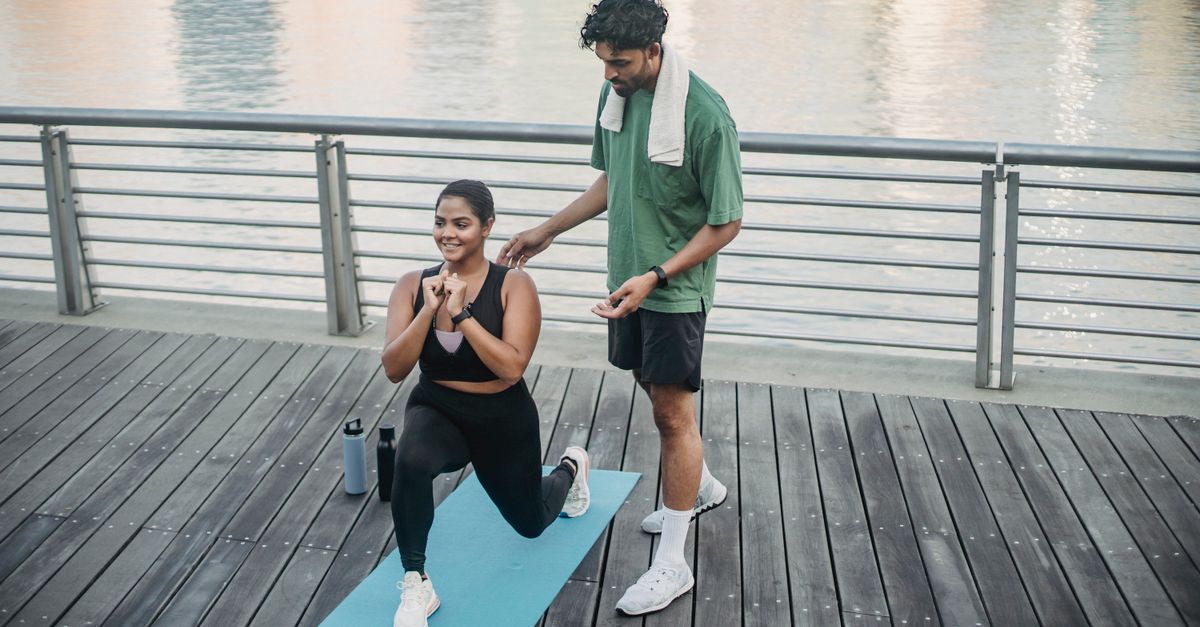
Conservative management relies heavily on targeted physical therapy. The primary objective is to restore eccentric quadriceps control. Exercises like slow, controlled step-downs using a low box train the nervous system and the muscle fibers to handle the specific loads of descending stairs.
Strengthening the posterior chain, including the glutes and hamstrings, corrects dynamic alignment issues. Resistance band exercises targeting hip abduction prevent the knee from collapsing inward under weight.
Proprioceptive training utilizing balance boards or unstable surfaces forces the nervous system to adapt and improves the rapid firing of the stabilizing muscles. Consistent rehabilitation can often completely resolve feelings of instability without the need for surgical intervention.
14. Knee Instability Causes
| Underlying Cause | Primary Mechanism | Accompanying Symptoms |
|---|---|---|
| Quadriceps Weakness | Failure to control eccentric lengthening. | Muscle trembling, deep fatigue. |
| Patellofemoral Pain | Misaligned kneecap causing friction and reflex inhibition. | Aching behind the kneecap, cracking sounds. |
| Meniscus Tear | Cartilage fragment catching in the joint hinge. | Sharp catching pain, localized swelling. |
| Ligament Laxity | Inadequate passive restraint allowing bone shifting. | Feeling of looseness, shifting sensation. |
15. Frequently Asked Questions FAQ
1. Why do my knees only shake when going down stairs, not up?
Going up stairs requires a concentric muscle contraction, which is a shortening action that produces power. Going down requires an eccentric contraction, where the muscle lengthens under tension to act as a brake. Eccentric control is much more demanding and rapidly exposes underlying weakness.
2. Will wearing a knee brace help me walk down stairs?
A soft compression sleeve can improve proprioception by providing sensory feedback to the skin, making the knee feel slightly more secure. However, a brace will not cure the underlying muscle weakness or structural tear causing the instability.
3. Can tight calves contribute to my knee giving way?
Yes, extremely tight calf muscles limit the amount of forward bend available at the ankle. If the ankle cannot bend sufficiently during a step down, the knee is forced to compensate by taking on abnormal rotational forces, leading to poor tracking and instability.
4. Is it safe to continue using stairs if my knee buckles?
If your knee actively buckles and causes you to lose balance, using stairs without a handrail is a significant fall risk. You should seek a physical therapy evaluation to address the weakness before undertaking activities that require high eccentric joint control.
5. How long does it take to rebuild quadriceps strength for stairs?
With a dedicated, progressive resistance training program focusing on eccentric muscle control, most individuals notice a significant improvement in stair-descending stability within six to eight weeks.
16. Bibliography
Disclaimer: The content is for informational purposes only and does not replace medical advice. Always consult your doctor for personalized treatment.