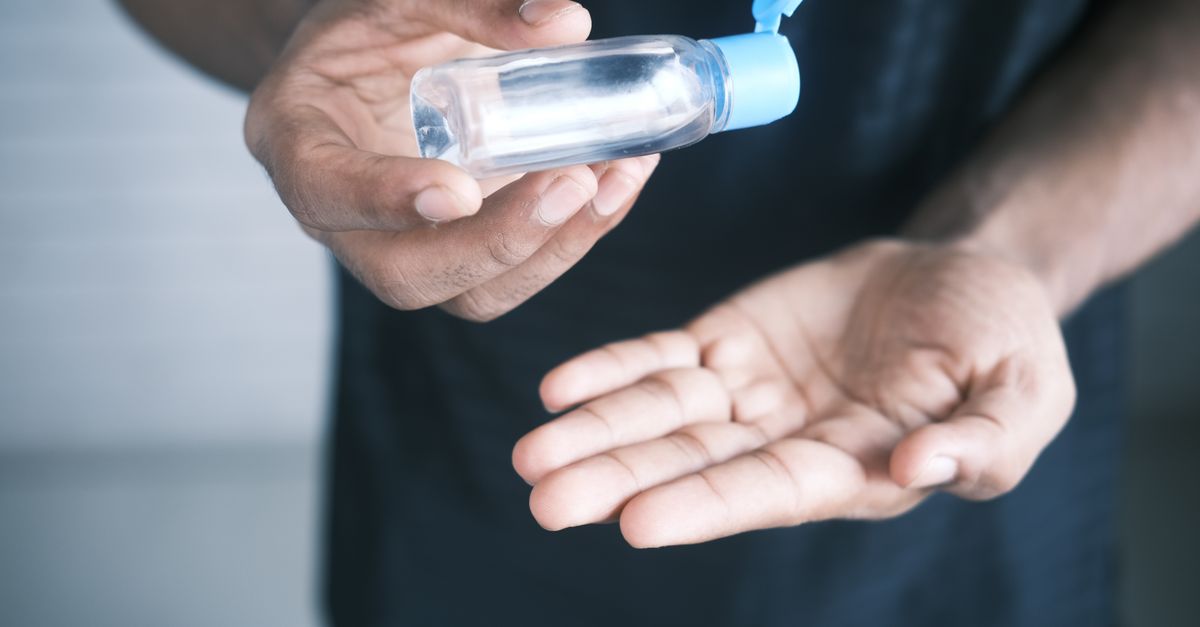
Elimishield Home And Outdoor Moisturizing Hand Sanitizer utilizes benzalkonium chloride as a broad-spectrum quaternary ammonium antimicrobial agent to reduce pathogenic microbes on the hands. The most frequently observed side effect is irritant contact dermatitis, manifesting as pronounced skin dryness, scaling, and localized erythema following repeated daily application.
1. Introduction & Mechanism of Action of Elimishield Hand Sanitizer
Benzalkonium chloride is a potent cationic surfactant and a well-established non-alcohol-based antiseptic. Its pharmacological mechanism relies on electrostatic interactions with the cellular envelopes of microorganisms. The positively charged benzalkonium molecules are strongly attracted to the negatively charged surfaces of bacterial cell walls and the lipid envelopes of certain viruses.
Upon contact, the compound inserts its long alkyl chain into the lipid bilayer of the pathogen. This action physically disrupts the structural integrity of the cell membrane, leading to the rapid leakage of vital intracellular components, such as potassium and phosphorus. Ultimately, this structural degradation causes the lysis and complete destruction of the microbial cell. Unlike alcohol-based sanitizers that evaporate instantly, benzalkonium chloride can leave a persistent antimicrobial film on the skin, providing an extended duration of pathogen reduction.
2. Warnings & Before Applying Elimishield Hand Sanitizer
Patients with a known, severe hypersensitivity to quaternary ammonium compounds must completely avoid this formulation to prevent aggressive allergic contact dermatitis. Applying this potent surfactant directly to deep puncture wounds, severe thermal burns, or actively bleeding lacerations is strictly contraindicated, as it will provoke intense tissue irritation and significantly delay the physiological wound healing process.
Care must be taken to prevent the solution from entering the ocular mucosa. Benzalkonium chloride is a profound eye irritant that can cause immediate, intense stinging, excessive tearing, and prolonged conjunctival damage. Individuals managing severe, generalized dermatological conditions such as severe atopic dermatitis should consult a physician before using sanitizers frequently, as the continuous stripping of the lipid barrier will severely exacerbate their underlying eczema.
3. Indications & Dosage Guide for Elimishield Hand Sanitizer
This topical antiseptic is clinically indicated for the rapid reduction of transient microbial flora on intact skin when soap and water are not readily available. It is highly effective for maintaining hand hygiene in outdoor environments, clinical settings, or during travel to mitigate the transmission of infectious pathogens.
For optimal clinical efficacy, an adequate volume of the sanitizer must be dispensed into the palm of one hand. The patient must rigorously rub the hands together, ensuring that all surfaces, including the webbing between the fingers and the subungual spaces beneath the nails, are completely coated. The hands must be rubbed continuously until the product is entirely dry. Rinsing the hands with water immediately after application destroys the residual antimicrobial barrier.
4. In-Depth Side Effects Analysis of Elimishield Hand Sanitizer
Common Side Effects
The expected physiological response to frequent surfactant use involves localized barrier disruption. Patients routinely report a sensation of skin tightness, mild superficial xerosis, and a transient tingling sensation immediately following application. Repeated daily use frequently results in mild erythema and superficial scaling as the natural dermal lipids are continuously stripped away.
Serious Side Effects You Should Report
While systemic toxicity is virtually impossible via standard dermal application, severe localized dermatological reactions require immediate product cessation.
| Side Effect Category | Specific Symptoms |
|---|---|
| Severe Contact Dermatitis | Intense weeping erythema, deep fissuring, severe burning pain |
| Ocular Toxicity | Severe unremitting eye burning, prolonged blurred vision, conjunctival swelling |
| Allergic Hypersensitivity | Widespread edema, severe urticaria extending beyond the application site |
Rare Side Effects
In exceedingly rare instances, chronic heavy application on highly sensitive skin can trigger an aggressive irritant response leading to vesicular eruptions or blistering on the palms. Very rare cases of localized hyperpigmentation secondary to severe contact irritation have been documented in highly melanated individuals.
Side Effects That Usually Do Not Require Medical Attention
Mild itching that resolves shortly after the product dries, or minor textural changes resulting in slight bodily dryness, are entirely benign. Employing a robust, ceramide-rich hand cream immediately following periods of frequent sanitation easily resolves these superficial symptoms.
5. Overdose of Elimishield Hand Sanitizer
A systemic physiological overdose through standard topical application is biologically impossible on an intact epidermal barrier. The large molecular structure of the compound prevents it from penetrating deep enough to enter the systemic vascular circulation. Overuse strictly results in profound localized chemical irritation, characterized by severe redness, extreme peeling, and pain caused by completely destroying the stratum corneum.
If the solution is accidentally ingested, the active compounds and surfactants will cause moderate to severe irritation of the oral and gastric mucosa. The patient will likely experience immediate nausea, severe abdominal cramping, and vomiting. Rinsing the mouth thoroughly and drinking copious amounts of water or milk to dilute the chemical load is the immediate first-aid response, followed by immediately contacting a regional poison control center.
6. Missed Dose & What to Avoid While Using Elimishield Hand Sanitizer
Because this product is utilized strictly on an as-needed basis for pathogen reduction, missing an application poses no physiological risk to the patient, though it leaves the hands vulnerable as a vector for disease transmission. Users should simply sanitize their hands whenever they encounter high-touch surfaces or prior to eating.
Patients must meticulously avoid allowing the concentrated solution to enter the eyes. Furthermore, patients must avoid applying this treatment immediately after using harsh industrial degreasers or physical hand scrubs. The compounded barrier destruction from a harsh soap and the surfactant in the sanitizer will completely destroy the lipid barrier and trigger severe, weeping inflammation.
7. Drug & Alcohol Interactions with Elimishield Hand Sanitizer
Because the pharmacological action is strictly localized to the superficial epidermis, topical benzalkonium chloride does not interact with systemic oral medications. However, coordinating overlapping topical dermatological treatments requires basic planning. For patients managing severe hand dermatitis, reviewing chlorhexidine protocols provides insight into managing skin integrity while utilizing potent medical-grade antiseptics.
Systemic alcohol consumption does not chemically interact with the topical sanitizer. However, frequent alcohol intake dehydrates the body systemically and can trigger inflammatory flares, profoundly exacerbating the xerosis and skin tightness caused by the regular use of chemical surfactants on the hands.
8. Precautions, Safety & Duration of Action for Elimishield Hand Sanitizer
The biocidal action initiates immediately upon application and persists as a microscopic residual film on the skin until it is mechanically washed away with soap and water or worn off through heavy physical friction. Visible reduction in skin moisture demands absolute patient compliance with a secondary moisturizing routine to maintain epidermal health.
The liquid formulation must be stored in a cool, dry environment. Extreme heat can degrade the chemical stability of the specific quaternary ammonium complex, leading to a watery, ineffective product that fails to provide the stated level of antimicrobial protection.
9. How to Stop Using Elimishield Hand Sanitizer & Storage/Disposal
Patients can discontinue the use of the sanitizer abruptly without suffering any physiological withdrawal. Ceasing use simply removes the prophylactic antimicrobial barrier, requiring the patient to rely strictly on traditional handwashing with soap and water for pathogen control.
Dispose of the empty or expired product packaging in standard municipal waste. Avoid pouring massive, unused quantities of the concentrated formulation down the sink, as potent biocidal agents can heavily interfere with the bacterial breakdown processes required in municipal wastewater treatment facilities.
10. When to See a Doctor Regarding Elimishield Hand Sanitizer
Immediate dermatological intervention is strictly required if the patient develops severe, painful blistering on the hands, or if deep fissures begin to bleed and show signs of secondary bacterial infection. If the product enters the eyes and severe pain or blurred vision persists beyond thirty minutes of continuous flushing with sterile water, emergency ophthalmological evaluation is strictly required to prevent permanent corneal damage.
11. Frequently Asked Questions (FAQ)
1. How is this sanitizer different from alcohol-based gels?
Alcohol sanitizers kill germs by drying them out instantly but evaporate immediately. Benzalkonium chloride disrupts the germ’s cell wall and leaves a microscopic, long-lasting protective film on the skin.
2. Is it safe to use this product before eating?
Yes, once the product has completely dried on your hands, it is safe to handle food. Do not handle food while your hands are still wet with the solution.
3. Can I use this product to clean a wound?
No. This formulation is designed strictly for intact skin. Applying it to open wounds will cause severe tissue irritation and delay proper healing.
4. Will this completely cure an active skin infection?
No. Hand sanitizers are prophylactic agents designed to prevent the spread of germs. They are not intended to treat established bacterial or fungal skin infections.
5. Is it safe to use this product every single day?
Yes, it is designed for frequent daily use. However, you must actively apply a moisturizing hand cream at the end of the day to prevent severe skin drying and cracking.
6. Why do my hands feel slightly sticky after using this?
Unlike alcohol which evaporates completely, benzalkonium chloride formulations leave a residual protective film. This can occasionally feel slightly tacky until it fully sets on the skin.
7. How do I manage the intense stinging sensation when using this?
If the stinging is severe, your skin barrier is likely compromised from over-washing or cold weather. Stop using the sanitizer for a few days and focus purely on applying a barrier-repairing ointment.
8. Can I use this product to clean medical instruments?
No. While it is an effective topical antiseptic, it is not approved or concentrated enough for the high-level sterilization required for medical or surgical instruments.
9. Can I use this sanitizer on my face to stop acne?
It is highly discouraged. The facial skin is too delicate, and the surfactant will cause severe dryness and irritation. Furthermore, the risk of accidental eye exposure is too high.
10. Is it safe to use this specific wash during pregnancy?
Topical application of benzalkonium chloride on intact skin has exceptionally low systemic absorption and is generally recognized as safe, but always verify new products with your obstetrician.
12. Bibliography
Disclaimer: The content is for informational purposes only and does not replace medical advice. Always consult your doctor or pharmacist for personalized treatment.