1. Introduction and Mechanism of Action for Pharmacys Prescription Petroleum Jelly
Pharmacys Prescription Petroleum Jelly is a highly refined topical protectant utilized for the prevention and treatment of severe skin desiccation and epidermal barrier breakdown. The most notable side effect experienced by users is acne mechanica, which occurs when the highly occlusive ointment traps sebum and keratin within the hair follicles, leading to localized breakouts. By forming a dense, hydrophobic layer over the stratum corneum, this medication actively prevents transepidermal water loss and creates an optimal moist environment for epidermal tissue repair.
The active ingredient operates strictly through a physical mechanism of action rather than a chemical one. Petrolatum is a complex combination of long-chain aliphatic hydrocarbons. When applied to the epidermis, these hydrocarbons do not penetrate deeply into the systemic circulation. Instead, they remain on the surface, entirely replacing the depleted natural lipid barrier. This artificial barrier blocks the evaporation of underlying cellular moisture.
Unlike active chemical moisturizers that draw water into the skin, such as those containing hyaluronic acid or urea, this formulation acts as a pure occlusive agent. It is frequently prescribed as a highly inert base to maximize the absorption of other medicated ointments, such as hydrocortisone, by heavily hydrating the outermost skin layers and physically forcing the active chemicals downward.
2. Warnings and Before Applying Pharmacys Prescription Petroleum Jelly
Before utilizing this topical protectant, clinicians must verify that the intended application site is completely free of active, uncontrolled bacterial or fungal infections. Because the ointment creates a completely airtight and watertight seal over the skin, applying it over an infected wound traps the pathogen in a warm, moist, and oxygen-deprived environment. This dramatically accelerates bacterial proliferation and worsens the underlying infection.
The product carries a severe clinical warning regarding internal application, specifically inside the nasal passages. Patients frequently attempt to use the ointment to soothe dry, irritated nasal mucosa. However, the lipid-based jelly can migrate down the respiratory tract and be accidentally aspirated into the lungs. Human lungs lack the enzymes required to break down long-chain hydrocarbons, which leads to exogenous lipoid pneumonia, a severe and potentially fatal inflammatory lung condition.
Furthermore, individuals with highly acne-prone skin or a history of severe hidradenitis suppurativa should avoid applying the ointment to large areas of the face, chest, or back. The heavy, greasy nature of the hydrocarbon matrix is intensely comedogenic, meaning it will aggressively clog pores and exacerbate inflammatory cystic acne if not washed away appropriately.
3. Indications and Dosage Guide for Pharmacys Prescription Petroleum Jelly
The ointment is FDA-approved exclusively as a skin protectant. It is indicated for the temporary protection of minor cuts, scrapes, and burns, and to help prevent and temporarily protect chafed, chapped, or cracked skin and lips. It is heavily utilized in dermatological clinics following minor surgical procedures to promote rapid, scar-free healing.
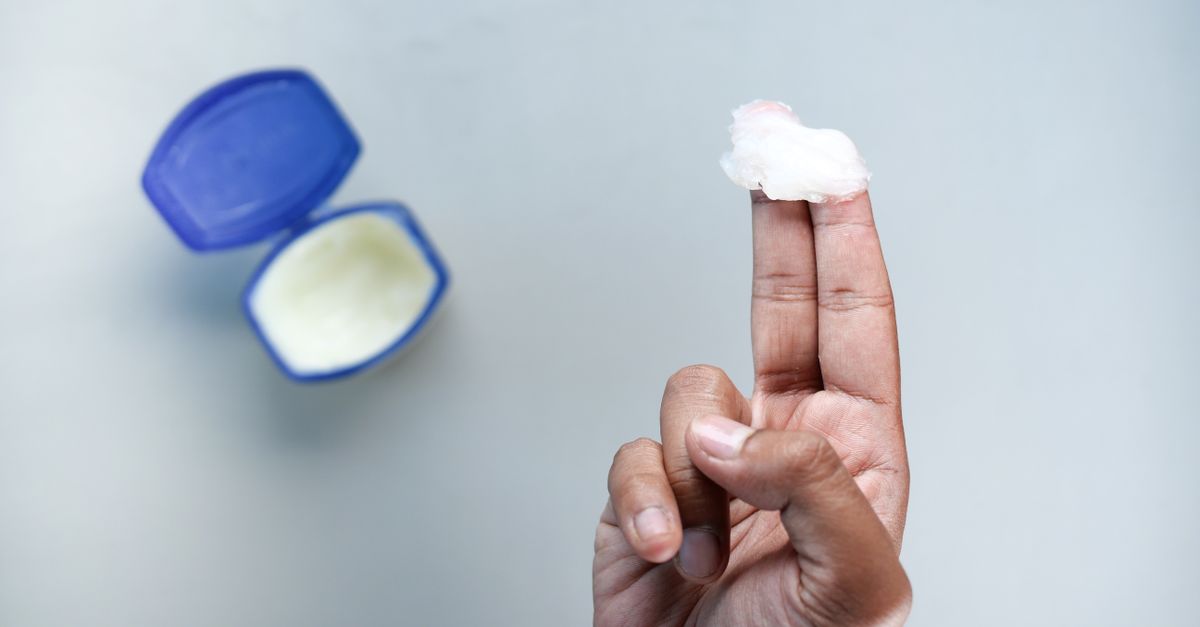
Application protocols dictate that the skin must be thoroughly cleaned with mild soap and water and gently patted dry before application. A thin layer of the jelly should be applied to the affected area. For maximum hydration therapy, the ointment is most effective when applied immediately after bathing, while the skin is still slightly damp, to actively trap the bathwater within the epidermal layers.
The medication can be applied as frequently as needed to maintain a continuous protective barrier. There is no maximum daily dosage for topical application on intact skin, provided the area is periodically cleansed to prevent the buildup of dead skin cells and environmental debris beneath the occlusive layer.
4. In-Depth Side Effects Analysis of Pharmacys Prescription Petroleum Jelly
Because the formulation is highly chemically inert and fundamentally blocked from systemic absorption, the side effect profile is almost entirely physical and localized directly to the application site.
Common Side Effects
The most universally reported adverse reactions are purely cosmetic and dermatological. Users frequently experience a heavy, greasy, and tacky sensation on the skin that easily transfers to clothing and bedding. The profound occlusive nature of the ointment frequently leads to miliaria rubra, commonly known as heat rash, if applied thickly during hot, humid weather, as the sweat ducts become physically blocked.
Serious Side Effects you should report
Systemic absorption is virtually impossible, but serious localized complications mandate medical attention. Users must immediately report any sudden, severe redness, spreading warmth, or foul-smelling purulent discharge from a treated wound, which strongly indicates a trapped, rapidly worsening bacterial infection. If a patient experiences severe coughing, shortness of breath, or chest pain after applying the ointment inside their nose, they require an urgent pulmonary evaluation for lipoid pneumonia.
Rare Side Effects
In exceedingly rare clinical circumstances, highly sensitive individuals have developed allergic contact dermatitis to trace impurities remaining from the hydrocarbon refinement process. This presents as severe, localized itching, blistering, and weeping skin lesions exactly where the jelly was applied. True immunological allergies to highly refined white petrolatum are considered exceptionally rare in modern dermatology.
Side effects that usually do not require medical attention
Transient mild skin softening, a temporary shiny appearance of the epidermis, or slight difficulty washing the greasy residue off the hands are completely benign. These minor effects reflect the physical nature of the heavy hydrocarbon matrix and resolve completely once the product is removed with warm water and soap.
| Side Effect Category | Specific Symptoms |
|---|---|
| Dermatological | Acne mechanica, heat rash, greasy residue |
| Respiratory | Lipoid pneumonia if applied inside the nose |
| Infectious | Worsening of trapped bacterial infections |
| Immunological | Rare allergic contact dermatitis |
5. Overdose Symptoms and Management for Pharmacys Prescription Petroleum Jelly
An overdose via the topical route is entirely impossible, as the heavy hydrocarbon molecules physically cannot pass through the dermis into the bloodstream. However, a clinical situation arises if the ointment is accidentally ingested orally in large quantities, particularly by young children who may mistake the jar for food.
If accidental oral ingestion occurs, the primary systemic effect is a profound, rapid laxative action. The human gastrointestinal tract cannot digest or absorb the petroleum hydrocarbons. The jelly acts as a massive internal lubricant, coating the intestinal walls and causing severe, uncontrollable, and oily diarrhea. Nausea and mild abdominal cramping are also highly common as the heavy lipid passes through the stomach.
Emergency medical intervention is rarely required for isolated oral ingestion unless the patient is a very small infant at risk for severe dehydration from the resulting diarrhea. Inducing vomiting is absolutely contraindicated. Emesis drastically increases the risk of aspirating the thick, lipid-based jelly directly into the lungs, which frequently precipitates fatal chemical pneumonitis. Clinical management requires supportive hydration while waiting for the substance to pass naturally.
6. Missed Dose and What to avoid while taking Pharmacys Prescription Petroleum Jelly
Because this skin protectant is utilized strictly on an as-needed basis for symptomatic relief and barrier repair, a missed application is clinically irrelevant. Patients should simply apply the ointment when their skin feels excessively dry or exposed to harsh environmental conditions.
It is strictly forbidden to apply this highly occlusive ointment over fresh, severe thermal burns or actively weeping lacerations before they have been properly assessed and cleaned by a medical professional. Trapping the severe heat of a fresh burn beneath a heavy petroleum barrier drastically deepens the tissue damage and intensifies the pain. The burn must be cooled entirely with water first.
Furthermore, patients must meticulously avoid utilizing this product in conjunction with latex condoms or latex-based medical devices. Petroleum jelly rapidly dissolves latex upon contact, causing the condom to chemically degrade, weaken, and tear within seconds, entirely destroying its protective efficacy against pregnancy and sexually transmitted infections.
7. Drug and Alcohol Interactions with Pharmacys Prescription Petroleum Jelly
Systemic drug interactions are biologically impossible due to the strictly localized, purely external mechanism of the ointment. The active hydrocarbons do not reach the bloodstream to interact with hepatic enzymes or oral prescription medications. Therefore, it is entirely safe for patients currently taking any form of systemic therapy.
However, concomitant use with other topical medications requires significant clinical manipulation. Applying this thick, impermeable jelly directly over a prescription topical cream, such as a localized steroid or a topical antibiotic, acts as a profound penetration enhancer. By entirely sealing the skin and hydrating the stratum corneum, the petroleum barrier physically forces the underlying prescription drug deeper into the tissue, massively increasing its potency and absorption. This technique must only be utilized when explicitly directed by a dermatologist.
Alcohol consumption does not chemically interact with the localized dermal delivery mechanism. The efficacy and safety profile of the occlusive barrier remain entirely unchanged regardless of the patient’s systemic alcohol intoxication level.
8. Precautions, Safety, and Duration of Action of Pharmacys Prescription Petroleum Jelly
The protective pharmacological action is highly immediate, providing a robust physical barrier the exact second it is spread across the epidermis. The duration of protection lasts continuously until the heavy ointment is physically wiped off, washed away with heavy soap, or entirely absorbed into highly desiccated tissue over many hours.
Precautions must be taken regarding patient mobility and environmental hazards. Applying a thick layer of the ointment to the soles of the feet creates a highly dangerous, intensely slippery surface. Patients must wear tightly fitted cotton socks immediately after treating their feet to prevent catastrophic, bone-breaking falls on hard flooring surfaces.
Safety protocols dictate that the ointment jar must remain hygienically clean. Users must avoid scooping the jelly out of the jar with unwashed fingers, particularly if they are simultaneously treating an infected wound. Repeatedly dipping contaminated fingers into the product completely inoculates the entire jar with aggressive bacteria, destroying its clinical utility.
9. How to stop taking Pharmacys Prescription Petroleum Jelly and Storage Guidelines
Usage of the topical protectant can be discontinued instantly without any physiological withdrawal consequences whatsoever. Upon ceasing the use of the product and washing the skin thoroughly, the epidermal barrier must simply rely on its own natural lipid production to maintain hydration. If the underlying skin condition has not healed, severe dryness will rapidly return.
Proper storage is critical for maintaining product integrity. The ointment container must remain tightly closed and stored at controlled room temperature. It must be strictly protected from extreme, direct heat. While petroleum jelly does not easily degrade, exposing the jar to high temperatures in a hot vehicle or direct sunlight will cause the solid matrix to melt into a hot, messy liquid.
Disposal of unused or expired ointment requires adherence to standard environmental protocols. The heavy, greasy product should never be washed down the sink or flushed down the toilet, as it will rapidly solidify in the pipes, causing severe, permanent plumbing blockages. The entire container should be discarded in standard household waste.
10. When to see a doctor
Medical attention should be sought if a minor, superficial wound treated with the ointment begins to show signs of serious clinical infection. If the treated wound develops severe, spreading redness, significant swelling, intense warmth to the touch, or begins secreting foul-smelling purulent discharge, the occlusive treatment has trapped a pathogen. This presentation requires advanced diagnostic evaluation and oral antibiotics.
Patients must consult a physician immediately if they develop serious dermatological complications such as deep, painful cystic acne outbreaks precisely where the ointment was applied continuously, or a highly itchy, weeping rash indicating rare allergic contact dermatitis.
Finally, seeking urgent medical care is critical if a patient develops a chronic, severe cough, unexplained weight loss, and shortness of breath after a long history of applying the ointment inside their nasal passages. This insidious clinical presentation requires an urgent pulmonary evaluation and chest radiograph to rule out severe, irreversible lipoid pneumonia.
Frequently Asked Questions (FAQ)
1. Can I use this ointment as a daily facial moisturizer?
If you have heavily acne-prone skin, you should strictly avoid applying it to your face, as it will aggressively clog your pores. It is generally safe for patients with severely dry, non-acne-prone skin.
2. Is it safe to apply this to a fresh, severe sunburn?
No. You must allow the sunburn to cool completely for at least twenty-four hours. Applying heavy petroleum jelly immediately traps the intense heat in your skin and makes the burn much worse.
3. Will this product help heal a deep, open puncture wound?
No. This product is strictly for minor, superficial scrapes. Deep puncture wounds require immediate professional medical evaluation to prevent tetanus and serious deep tissue infections.
4. Can I use this product as a personal lubricant with condoms?
Absolutely not. Petroleum jelly aggressively destroys latex condoms within seconds, completely ruining their ability to protect you from pregnancy or infections.
5. What should I do if a toddler eats a large spoonful of the jelly?
You should monitor the child closely. It is not chemically toxic, but the heavy grease will act as a strong laxative, likely causing severe, oily diarrhea and mild stomach cramps.
6. Can I put this inside my nose to stop nosebleeds or dryness?
Medical professionals strongly advise against putting petroleum jelly inside the nasal passages. The grease can be inhaled into your lungs over time, causing a highly dangerous lung condition called lipoid pneumonia.
7. How do I completely wash the greasy residue off my hands?
You must use comfortably hot water and a heavy amount of strong soap or dish detergent to properly break down the highly water-resistant hydrocarbon barrier on your skin.
8. Does this product contain any active healing medicines or antibiotics?
No. It is a completely pure, chemically inert barrier. It heals the skin simply by locking in your body’s own natural moisture and keeping external dirt out.
9. Is it safe to use this ointment on my dog’s dry paws?
Yes, it is highly safe and effective for animals. However, you should prevent the dog from licking it excessively, as ingesting large amounts will cause severe diarrhea.
Bibliography
Disclaimer: The content is for informational purposes only and does not replace medical advice. Always consult your doctor or pharmacist for personalized treatment.