1. Introduction
Arch cramps experienced when wearing flat, unsupportive shoes result directly from the rapid metabolic exhaustion of the intrinsic foot muscles. When footwear lacks structural contouring, specifically medial arch support, the small muscles residing entirely within the foot are forced to contract continuously to stabilize the skeletal architecture against the unyielding ground. This relentless isometric and eccentric demand quickly depletes local cellular energy reserves, triggering a severe, involuntary muscle spasm that feels like a sharp, twisting knot in the midfoot.
The human foot operates as a dynamic spring, but modern environmental surfaces like concrete and hardwood floors demand extreme structural resilience. Flat shoes, such as minimalist sneakers, ballet flats, or flip-flops, offer zero external assistance to this biological spring. Consequently, the entire biomechanical burden of shock absorption and arch maintenance is shifted onto tissues that are often severely deconditioned.
Addressing these acute, painful spasms requires an understanding of foot biomechanics and the specific anatomical structures involved in arch support. By evaluating how different shoe geometries alter the mechanical leverage of the foot, individuals can select appropriate footwear and implement strengthening protocols to prevent the muscular exhaustion that drives the cramping.
2. Anatomy of the Medial Longitudinal Arch
The medial longitudinal arch is the prominent arch running along the inner border of the foot, from the heel to the ball of the foot. It is structurally composed of the calcaneus, talus, navicular, cuneiforms, and the first three metatarsal bones. The precise alignment of these bones creates a keystone structure, allowing the foot to bear immense weight.
Passive support for this bony architecture is provided by dense connective tissues, primarily the plantar fascia and the spring ligament. These tissues act as rigid tie-rods, preventing the bones from separating and collapsing downward when load is applied. They possess tremendous tensile strength but lack the ability to actively contract.
Active support is the responsibility of the muscular system. The extrinsic muscles, which originate in the calf, send long tendons down to pull on the foot bones. The intrinsic muscles, housed entirely within the foot itself, act as dynamic stabilizers. The continuous interplay between passive ligaments and active muscles maintains the arch’s integrity during movement.
3. Intrinsic Muscles of the Foot
The intrinsic muscles are arranged in four distinct layers across the plantar aspect (the sole) of the foot. Key muscles include the abductor hallucis, the flexor digitorum brevis, and the quadratus plantae. Their primary biological function is to provide fine motor control to the toes and to dynamically stiffen the medial arch during the push-off phase of walking.
In populations that wear supportive footwear consistently, these muscles frequently become neurologically dormant and physically atrophied. The shoe performs the work of stabilizing the foot, allowing the intrinsic muscles to rely on the external structure rather than their own contractile strength.
When an individual suddenly transitions to a completely flat, unsupportive shoe, these weakened, deconditioned intrinsic muscles are abruptly forced to manage the entire stabilization workload. They lack the muscular endurance and cellular conditioning required for this sudden, massive increase in mechanical demand.
4. The Function of Footwear Support
A properly designed shoe serves as an external exoskeleton for the foot. A contoured footbed and a rigid shank in the mid-sole provide a physical shelf for the medial arch to rest upon. This external contouring bears a significant portion of the body’s gravitational load, essentially acting as an artificial ligament.
Supportive footwear also features a slight heel-to-toe drop, which elevates the heel relative to the forefoot. This elevation slightly plantar flexes the ankle, reducing the tension on the Achilles tendon and shifting the body’s center of gravity forward. This postural adjustment fundamentally decreases the stretching force applied to the plantar fascia.
Completely flat shoes offer none of these mechanical advantages. The foot is forced to interact directly with the flat, rigid interior of the shoe. Without a supportive shelf, gravity pulls the arch downward with every step, and the only defense against total structural collapse is the active contraction of the intrinsic foot muscles.
5. Biomechanical Failure in Flat Shoes
Walking in flat shoes requires the foot to perform excess biomechanical work. As the heel strikes the ground, the lack of cushioning forces a rapid, jarring deceleration. The foot then must flatten out to absorb the impact, a process known as pronation.
In an unsupportive shoe, there is nothing to control the rate or extent of this pronation. The arch collapses deeply toward the floor. To prevent the ligaments from tearing, the intrinsic muscles, specifically the abductor hallucis along the inner arch, contract furiously.
Because the flat shoe requires the muscle to lengthen while contracting to control the falling arch, the muscle undergoes extreme eccentric loading. This continuous, aggressive eccentric work is highly fatiguing. The muscle fibers are pushed beyond their functional limits within a very short timeframe.
6. Muscle Fatigue and Cramping Mechanics
A muscle cramp is the profound, involuntary manifestation of acute cellular exhaustion. As the intrinsic foot muscles overwork to stabilize the arch in a flat shoe, they rapidly consume their stored adenosine triphosphate, the cellular energy currency required for both muscle contraction and relaxation.
Once the energy reserves are depleted, the calcium pumps within the muscle cells fail. Calcium ions remain trapped inside the cell, physically locking the muscle fibers in a state of continuous, rigid contraction. This is why the arch feels like a solid, painful knot during a cramp.
Furthermore, the fatigue alters the delicate sensory feedback loop between the muscle and the spinal cord. The muscle spindles, which monitor stretch, become hypersensitive, while the Golgi tendon organs, which inhibit over-contraction, become blunted. This neurological short-circuit guarantees a severe, unyielding spasm.
7. Overpronation and Connective Tissue Strain
The exhaustion of the intrinsic muscles has immediate secondary consequences for the passive connective tissues. Once the muscles fatigue and cramp, they stop providing dynamic support to the arch. The entirety of the mechanical load is violently transferred to the plantar fascia.
For individuals with flexible flat feet or those prone to overpronation, the arch completely bottoms out against the flat sole of the shoe. This stretches the plantar fascia to its maximum tensile limit, creating severe mechanical strain near its attachment at the heel bone.
This explains why an acute arch cramp is often followed by lingering, deep aching across the sole of the foot or sharp pain at the heel. The cramp indicates the failure of the active muscular support system, which subsequently initiates the structural irritation of the plantar fascia.
8. The Windlass Mechanism Disruption
The windlass mechanism is a crucial biomechanical action that occurs during walking. As a person prepares to push off the ground, the big toe bends upward (dorsiflexes). This action pulls the plantar fascia tightly around the head of the metatarsal bone, acting like a winch to physically shorten the fascia and elevate the arch.
This mechanism locks the bones of the midfoot together, transforming the foot from a flexible shock absorber into a rigid lever for propulsion. In a completely flat shoe, especially one with a highly flexible or overly stiff toe box, this mechanism is frequently disrupted.
If the shoe prevents the big toe from dorsiflexing fully, or if the foot is too fatigued to execute the movement correctly, the windlass mechanism fails. The foot remains loose and floppy during push-off, forcing the already exhausted intrinsic muscles to work even harder to generate forward momentum, rapidly accelerating the onset of cramping.
9. Metabolic Exhaustion in the Foot
The localized metabolic environment within the foot deteriorates rapidly in unsupportive footwear. Continuous isometric and eccentric contractions clamp down on the microscopic blood vessels supplying the intrinsic muscles. This creates a state of temporary tissue ischemia.
Without adequate blood flow, the muscles are starved of oxygen and cannot clear metabolic waste products efficiently. Lactic acid and hydrogen ions accumulate in the tissues, creating an acidic cellular environment. This acidity directly irritates local nerve endings, contributing to the painful sensation of the cramp.
The combination of energetic depletion, localized ischemia, and acidic waste accumulation creates a highly hostile environment for the motor nerves, lowering their threshold for spontaneous electrical discharge and ensuring that the spasm is both severe and difficult to break.
10. Acute Spasm Characteristics
An arch cramp typically strikes suddenly and with profound intensity. The sensation is often described as the muscle rolling up into a tight ball. The toes may involuntarily curl downward or splay awkwardly as the intrinsic muscles lock into a rigid spasm.
The pain is sharp, arresting, and demands immediate attention. Continuing to walk on a cramping arch is nearly impossible and risks structural tissue damage. The pain is highly localized to the midfoot, usually along the medial border where the abductor hallucis muscle belly is most prominent.
Unlike a dull, structural ache that builds over hours of standing, a cramp is a distinct neurological and metabolic event. It is a biological emergency brake applied by the nervous system, signaling that the local muscular endurance has been catastrophically exceeded.
11. Long-Term Consequences of Poor Support
Consistently wearing completely flat, unsupportive shoes despite recurrent arch cramping leads to chronic biomechanical dysfunction. The constant cycle of muscle fatigue and fascial overload initiates progressive tissue degeneration. What begins as an acute muscular cramp often transitions into chronic plantar fasciitis.
Furthermore, the lack of support alters the alignment of the entire lower kinetic chain. As the arch collapses unabated, the tibia rotates internally, placing abnormal stress on the medial aspect of the knee and the lateral aspect of the hip. Chronic foot instability inevitably creates compensatory joint pain higher up the body.
The intrinsic muscles, rather than getting stronger from the excess work, often remain in a state of chronic fatigue and inflammation, rendering them increasingly weak and susceptible to severe cramping even during minimal activity.
12. Clinical Evaluation of Foot Strength
If arch cramping is frequent and debilitating, a structured clinical assessment evaluates the functional capacity of the foot. The clinician will observe the patient’s barefoot gait to assess the degree of pronation and the natural height of the medial arch.
Manual muscle testing of the intrinsic foot muscles is essential. The patient may be asked to perform toe yoga, attempting to lift the big toe independently while keeping the smaller toes pressed into the floor. An inability to perform this isolated movement highlights profound neurological weakness in the intrinsic muscle core.
The clinician will also assess ankle dorsiflexion flexibility. A tight Achilles tendon acts as a mechanical antagonist, forcing the foot to work significantly harder to advance the body over the ankle, multiplying the mechanical demand on the arch muscles.
13. Interventions and Footwear Modification
The most immediate and effective intervention for recurrent arch cramping is fundamentally altering the footwear interface. Transitioning away from minimalist flats to shoes engineered with specific structural support neutralizes the biomechanical deficit.
- Select shoes with a rigid shank that cannot be easily bent in half, providing a stable foundation for the midfoot.
- Ensure the footwear includes a contoured medial arch support to passively bear the gravitational load and relieve the intrinsic muscles.
- Incorporate a slight heel elevation to reduce tensile strain on the Achilles tendon and the plantar fascia.
- Utilize over-the-counter or custom orthotic inserts in existing flat shoes to artificially provide the missing anatomical contouring.
Long-term resolution requires actively rebuilding the muscular endurance of the foot. Implementing a daily routine of intrinsic foot strengthening, such as towel scrunches and short-foot exercises, gradually builds the metabolic capacity required to support the arch independently without triggering severe cellular fatigue.
14. Frequently Asked Questions FAQ
1. How do I immediately stop a severe arch cramp when it happens?
To break the neurological spasm, you must stretch the cramped muscle. Sit down, grasp your toes, and pull them forcefully upward toward your shin while massaging the tight knot in your arch. This stretch sends an inhibitory signal to the nervous system, forcing the muscle to relax.
2. Can being dehydrated make my foot cramp worse in flat shoes?
Yes. Dehydration and electrolyte imbalances make your motor nerves highly irritable and unstable. While the flat shoes provide the mechanical trigger by exhausting the muscle, a lack of hydration ensures the nervous system overreacts violently, causing a massive spasm.
3. Should I walk barefoot at home to make my arches stronger?
Walking barefoot can strengthen the intrinsic muscles, but it must be done in gradual, highly controlled doses. If you currently experience cramping in flat shoes, your muscles are too weak for extensive barefoot walking. You must build strength slowly through specific exercises first.
4. Are ballet flats the worst type of shoe for my feet?
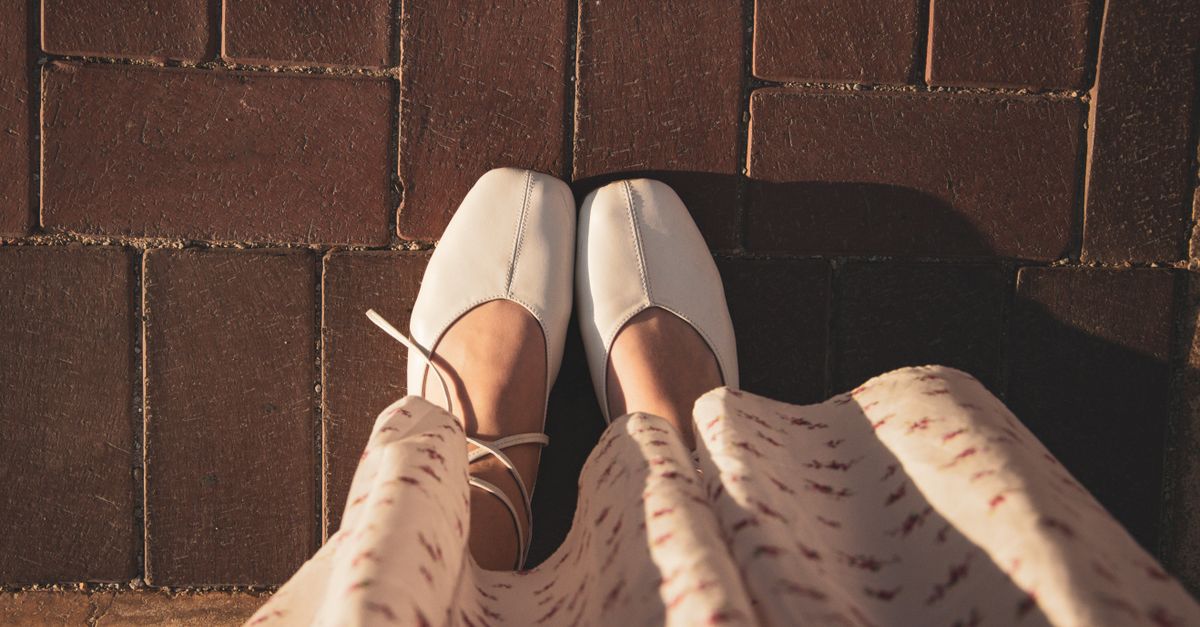
From a biomechanical perspective, completely flexible, thin-soled ballet flats offer zero shock absorption, zero arch support, and zero heel elevation. They force your foot to absorb maximum impact while maintaining maximum muscular tension, making them a primary catalyst for severe foot fatigue and cramping.
15. Bibliography
Disclaimer: The content is for informational purposes only and does not replace medical advice. Always consult your doctor for personalized treatment.