1. Introduction
Wearing flat shoes can directly cause severe inflammation in the Achilles tendon by abruptly increasing the mechanical and eccentric load placed on the tissue. A lack of heel elevation forces the ankle into a deeper state of dorsiflexion during every step, which requires the Achilles tendon to stretch significantly further than it would in a traditional, elevated shoe. When the tendon is unaccustomed to this extended range of motion, the repetitive strain rapidly induces micro-tearing and inflammation.
The transition from supportive footwear with a raised heel to completely flat or zero-drop shoes is a leading biomechanical trigger for tendinopathy. The body adapts structurally to the shoes it wears most frequently. If an individual spends years wearing shoes with a standard heel drop, their calf muscles and Achilles tendon physically shorten.
Clinicians frequently see an influx of Achilles injuries during the summer months when patients suddenly switch to flat sandals, or when athletes abruptly transition to minimalist running shoes. Understanding the precise biomechanical shift that occurs at the ankle joint provides the rationale for the pain and dictates the strict, graduated rehabilitation necessary to heal the inflamed tendon.
2. Anatomy of the Achilles Tendon
The Achilles tendon is the largest, thickest, and strongest tendon in the human body. It serves as the vital connective cord between the powerful calf muscles, specifically the gastrocnemius and soleus, and the calcaneus, which is the heel bone.
Its primary function is to transmit the immense force generated by the calf muscles to the foot, enabling the push-off phase of the gait cycle required for walking, running, and jumping. The tendon is designed to absorb and release energy like a massive biological spring.
Despite its incredible tensile strength, the Achilles tendon has a notoriously poor blood supply, particularly in the mid-substance region located roughly two to six centimeters above the heel bone. Because blood flow is necessary for tissue repair, this relatively avascular zone is highly susceptible to chronic inflammation and degenerative breakdown when subjected to unaccustomed mechanical stress.
3. Biomechanics of Heel Elevation
Traditional modern footwear, including most running shoes, dress shoes, and boots, is constructed with a heel-to-toe drop. This means the heel is elevated anywhere from ten to twenty millimeters higher than the forefoot.
This artificial elevation places the ankle in a constant state of slight plantar flexion. In this position, the calf muscles and the Achilles tendon are held in a relaxed, shortened state. The shoe effectively does a portion of the mechanical work, acting as a wedge that reduces the total amount of stretch the tendon must undergo during the gait cycle.
When an individual wears elevated shoes consistently for years, the neuro-musculoskeletal system adapts. The calf muscles lose their natural resting length, and the Achilles tendon stiffens, optimizing itself to function efficiently only within this restricted, elevated range of motion.
4. The Shift to Zero-Drop Footwear
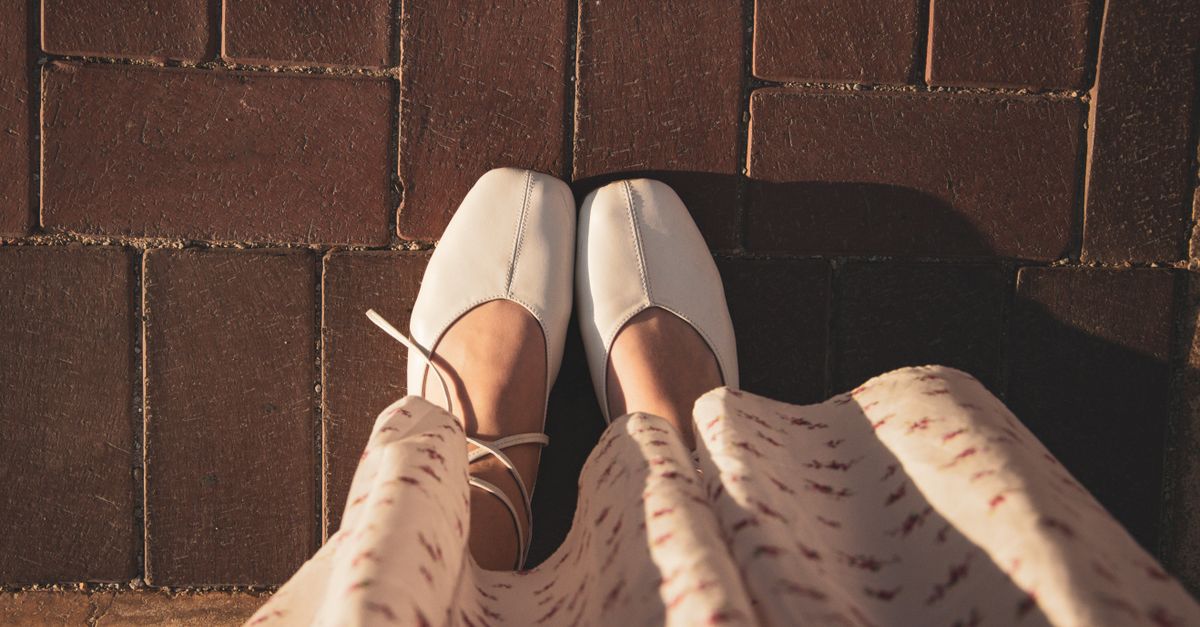
Flat shoes, such as ballet flats, flip-flops, minimalist sneakers, or walking barefoot, have a zero-drop geometry. The heel and the forefoot rest at the exact same level. When a person steps down in a flat shoe, the heel must travel much closer to the ground before making contact.
This simple geometric change places a profound demand on the posterior chain of the leg. As the heel drops to the floor, the ankle undergoes forced dorsiflexion. The shortened, stiff Achilles tendon is suddenly forced to stretch past its adapted limit to accommodate this new, lower heel position.
With every single step taken in a flat shoe, the tendon is yanked and subjected to massive eccentric tension. The tissue is forced to lengthen while simultaneously absorbing the full weight of the body, a mechanical feat it has not been conditioned to perform.
5. Tendon Remodeling and Microtrauma
When the Achilles tendon is stretched beyond its accustomed capacity, the dense bundles of collagen fibers that make up the tendon begin to sustain microscopic tears. The body registers this microtrauma and immediately initiates an inflammatory response to heal the damage, resulting in acute Achilles tendinitis.
The patient experiences localized swelling, noticeable warmth over the back of the heel, and a sharp, burning pain during the first few steps in the morning or when pushing off the foot. If the individual ignores the pain and continues to wear the flat shoes, the acute inflammation transitions into a chronic, degenerative state.
This chronic phase is clinically termed Achilles tendinosis. The continuous mechanical overload prevents the collagen fibers from healing correctly. The tissue becomes disorganized, thickened, and fibrotic, losing its crucial elasticity and severely increasing the risk of a catastrophic, complete tendon rupture.
6. Acute vs. Chronic Tendinopathy
Differentiating between the acute inflammatory phase and the chronic degenerative phase dictates the clinical intervention.
Acute tendinitis occurs within the first few weeks of changing footwear. The tendon is swollen with fluid and highly reactive to touch. The primary goal is immediate offloading and controlling the aggressive inflammatory cascade.
Chronic tendinosis develops after months of enduring the pain. The tendon is no longer actively inflamed; instead, it exhibits a hard, nodular swelling, often described as feeling like a thick knot in the cord. The cellular matrix has degraded. Anti-inflammatory medications are useless at this stage, as the treatment requires forcefully remodeling the dead, fibrotic tissue back into healthy, parallel collagen fibers.
7. The Role of Calf Muscle Flexibility
The Achilles tendon does not operate in isolation; it is entirely dependent on the pliability of the calf muscles. The gastrocnemius muscle originates above the knee joint, while the soleus originates below it. Both merge to form the Achilles tendon.
If these muscles are exceptionally tight, they exert a constant, unyielding upward pull on the tendon. When an individual with tight calves wears a flat shoe, the tendon is caught in a brutal mechanical tug-of-war. The flat shoe forces the heel downward, while the tight calf pulls aggressively upward.
This massive opposing tension focuses directly on the insertion point at the heel bone or the vulnerable mid-portion of the tendon. Therefore, addressing the inflammation requires aggressive elongation of the calf musculature to remove the upward tension, allowing the tendon to adapt safely to the zero-drop environment.
8. Comparing Footwear Impacts
Understanding how different shoe structures load the tendon highlights the danger of an abrupt transition.
| Footwear Type | Ankle Position | Mechanical Stress on Achilles |
|---|---|---|
| Standard Running Shoe (12mm drop) | Slight plantar flexion | Low to moderate stretch, highly protected. |
| High Heels or Boots | Severe plantar flexion | No stretch, causes severe adaptive shortening over time. |
| Ballet Flats / Flip-Flops | Neutral or dorsiflexion | High eccentric stretch, maximum tension at push-off. |
| Minimalist / Zero-Drop Athletic Shoe | Neutral with impact | Maximum eccentric load, requires high tendon elasticity. |
9. Clinical Assessment of the Achilles
A physician diagnosing Achilles tendon inflammation will perform a thorough physical and biomechanical examination. The clinician palpates the entire length of the tendon to identify the exact point of maximum tenderness, distinguishing between insertional tendinopathy near the bone and mid-portion tendinopathy higher up the cord.
The Thompson test is utilized to ensure the tendon has not completely ruptured. The patient lies face down with their feet hanging off the edge of the examination table, and the physician forcefully squeezes the calf muscle. If the tendon is intact, the foot will automatically point downward; if it does not move, a complete rupture is confirmed.
Ultrasound imaging is the most efficient radiological tool for this condition. It clearly visualizes the disorganized collagen fibers, fluid accumulation, and any areas of calcification within the tendon substance, confirming the severity of the tendinopathy.
10. Immediate Interventions for Inflammation
When flat shoes have caused an acute flare-up of Achilles pain, the first clinical mandate is to artificially re-elevate the heel. The patient must immediately cease wearing flat shoes, barefoot walking, or sandals.
A firm, medical-grade heel lift is placed inside a supportive shoe. This small wedge raises the heel by just a few millimeters, but that is enough to drastically reduce the mechanical stretch and offload the distressed tendon, providing near-instant pain relief during walking.
Localized cold therapy is applied to constrict the blood vessels and reduce the acute, painful swelling. Nonsteroidal anti-inflammatory drugs are utilized for a short period to quiet the inflammatory response, allowing the patient to walk without an altered, limping gait that could cause secondary hip or knee pain.
11. Eccentric Loading Rehabilitation
Rest alone will not cure Achilles tendinopathy. While rest reduces the acute pain, it leaves the tendon weak and vulnerable. The gold standard for permanently healing the tendon is a structured physical therapy program based on eccentric loading.
An eccentric contraction occurs when a muscle lengthens while under tension. The classic exercise is the heel drop. The patient stands on the edge of a stair, rises up on both toes, shifts their weight entirely to the injured leg, and then slowly and deliberately lowers the heel down below the level of the stair.
This slow, controlled stretching under heavy load forces the body to lay down brand new, healthy collagen fibers in perfect parallel alignment. Eccentric training literally remodels the thick, damaged tendon back into a strong, elastic cord capable of handling the demands of flat footwear.
12. Transitioning Footwear Safely
If an individual wishes to wear flat shoes, zero-drop running shoes, or transition to a barefoot lifestyle, they must do so with extreme caution to prevent tendon injury. The musculoskeletal system requires a prolonged, graduated transition period.
A patient should never switch from a traditional shoe directly to a flat shoe for all-day use. The transition must involve stepping down the heel drop gradually over several months. First moving to a shoe with an eight-millimeter drop, then a four-millimeter drop, allowing the calf and tendon to slowly lengthen and adapt structurally.
During this transition, the individual must engage in aggressive daily calf stretching and eccentric strengthening. Treating the transition as a structured athletic training program ensures the Achilles tendon develops the requisite elasticity and tensile strength to survive the zero-drop environment without initiating a catastrophic inflammatory cycle.
13. When to Consult a Specialist
While mild tendon aches can often be managed with rest and heel lifts, severe or unrelenting pain warrants specialized medical intervention. If the Achilles tendon develops a visible, hard bump, or if the pain prevents the patient from raising up on their toes, an orthopedic or podiatric consultation is necessary.
Advanced therapies may be required for chronic cases that fail physical therapy. Extracorporeal shockwave therapy utilizes sound waves to break up chronic scar tissue and stimulate fresh blood flow to the avascular region of the tendon.
In extreme, refractory cases where the tendon is severely degenerated and at high risk of snapping, surgical debridement is performed. The surgeon opens the tendon sheath, physically cuts away the necrotic, diseased tissue, and repairs the healthy fibers, requiring months of strict immobilization and rehabilitation.
14. Frequently Asked Questions FAQ
1. Can wearing flip-flops for one day really cause Achilles pain?
Yes, if you normally wear shoes with an elevated heel, spending a single long day walking in completely flat flip-flops forces your unconditioned Achilles tendon to overstretch thousands of times, easily triggering acute inflammation.
2. Will using a heel lift weaken my Achilles tendon over time?
Using a heel lift temporarily during an acute flare-up is necessary to offload the injured tissue and allow healing, but relying on it permanently without doing physical therapy will cause the tendon to shorten and weaken further.
3. Why is the pain worst when I first get out of bed?
While you sleep, your foot naturally rests in a pointed position, allowing the Achilles tendon to relax and shorten; when you step out of bed, the sudden, forceful stretch tears the delicate tissue attempting to heal overnight.
4. Is it safe to stretch my calf if my Achilles tendon is actively burning?
Gentle, static stretching is safe, but you should avoid aggressive, bouncing stretches when the tendon is acutely inflamed; focus first on resting the tendon with elevated heels before starting a robust stretching routine.
5. How long does it take for a damaged Achilles tendon to fully heal?
Because the Achilles tendon has poor blood flow, it heals remarkably slowly; even with strict compliance to eccentric physical therapy and proper footwear, complete structural healing often takes three to six months.
15. Bibliography
Disclaimer: The content is for informational purposes only and does not replace medical advice. Always consult your doctor for personalized treatment.