1. Introduction
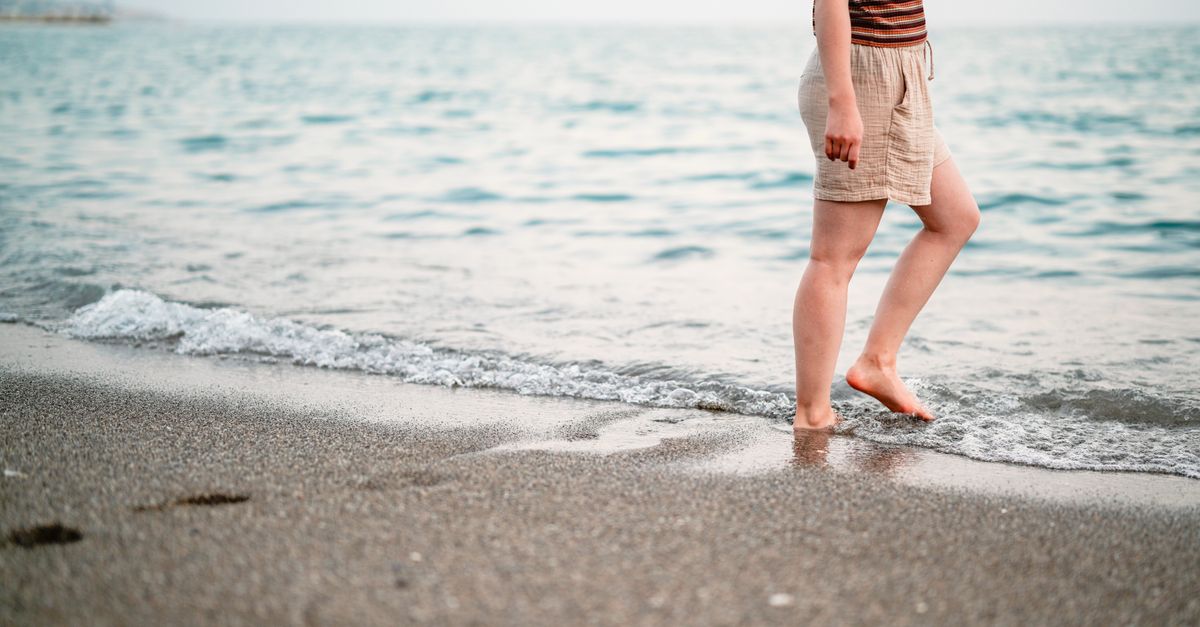
The physical ache in your foot arches after walking barefoot on soft sand occurs because the yielding nature of the surface forces the intrinsic muscles of your feet to work at maximum capacity to find stability. On a firm surface, the skeletal structure of the foot efficiently transfers weight. However, soft sand shifts beneath your weight, providing zero passive support. This unstable environment requires the plantar fascia and the small, deep muscles of the arch to continuously contract, grip, and adjust with every single step. This intense, unaccustomed workload leads to rapid muscle exhaustion, mechanical strain on the connective tissues, and a deep, aching fatigue in the bottom of the foot.
The human foot is an engineering marvel, designed to adapt to various terrains. When wearing shoes, particularly those with supportive insoles, the foot relies heavily on the shoe to maintain the structural integrity of the arch. The muscles become accustomed to this passive assistance.
Removing the shoes and stepping onto a highly compliant surface like dry sand removes all external structural bracing. The foot must instantly revert to acting as a dynamic shock absorber and a rigid lever for propulsion, all while navigating a surface that collapses under pressure.
Understanding the specific biomechanical demands placed on the foot’s internal structures during this activity explains why an activity often associated with relaxation can cause such acute physical discomfort in the arches.
2. Anatomy of the Foot Arch
The longitudinal arch of the foot is not a solid, fixed structure; it is a dynamic, elastic vault. It is formed by the precise articulation of the tarsal and metatarsal bones. These bones are shaped to interlock like the stones of an architectural bridge, providing inherent skeletal stability.
However, bone structure alone is insufficient to support the dynamic loads of walking. The arch is sustained by multiple layers of soft tissue. The most superficial and robust of these is the plantar fascia, a thick band of connective tissue that runs from the heel bone to the base of the toes. The plantar fascia acts like the string of a bow, pulling the ends of the arch together to maintain its curve under pressure.
Deep beneath the plantar fascia lie the intrinsic foot muscles. These are small, specialized muscles that originate and insert entirely within the foot itself. They include muscles responsible for moving the toes, but their primary, collective function is to actively fine-tune the shape and stability of the arch.
This combination of bony architecture, passive ligamentous support from the fascia, and active muscular control creates a complex system that is severely challenged when the ground beneath it refuses to provide a firm counter-force.
3. The Function of Intrinsic Foot Muscles
The intrinsic foot muscles are the unsung heroes of lower extremity mechanics. They consist of four distinct layers located deep in the sole of the foot. While they are relatively small, their endurance and rapid reaction times are vital for bipedal locomotion.
When you take a step on a predictable, firm surface, these muscles fire in a coordinated sequence to stiffen the midfoot just before push-off. They act as dynamic sensors and stabilizers. However, in modern society, constant footwear use means these small muscles are rarely stressed to their full potential. They often become underutilized and relatively weak.
Walking barefoot on soft sand acts as an extreme, unaccustomed workout for these intrinsic muscles. Because the sand gives way, the foot must constantly re-grip the ground to find a stable platform. The toes claw into the sand, and the deep arch muscles contract fiercely to prevent the foot from collapsing inward.
This continuous, high-intensity contraction without adequate conditioning leads to rapid lactic acid buildup and profound muscular fatigue. The deep ache experienced in the arch is the direct physiological result of these tiny muscles being pushed far beyond their normal endurance threshold.
4. Biomechanics of Walking on Soft Surfaces
The physics of walking changes dramatically when moving from a hard surface to a soft, yielding one. On pavement, the ground provides an equal and opposite reaction force, according to Newtonian physics. This firm resistance allows the foot to push off efficiently, propelling the body forward with minimal energy loss.
Dry sand, conversely, dissipates the energy of your footstrike. As the foot lands, the sand displaces. To maintain balance and generate forward momentum, the lower body must generate significantly more force. The foot stays in contact with the ground longer during each step, a phase known as the stance phase.
During this prolonged stance phase, the foot struggles to transition from a flexible shock absorber to a rigid lever. The lack of a firm foundation forces the joints of the foot to over-articulate. The midfoot sags deeper than usual, placing abnormal torsional stress on the skeletal architecture.
This inefficient transfer of energy means that every step requires a magnified muscular effort. The body has to work substantially harder just to achieve basic forward locomotion, placing a continuous, heavy burden directly on the structures supporting the arch.
5. The Increased Workload on the Plantar Fascia
The plantar fascia relies on a biomechanical principle known as the windlass mechanism. When the toes bend upward during the push-off phase of walking, the plantar fascia tightens around the heads of the metatarsal bones, effectively raising the arch and stiffening the foot for propulsion.
In soft sand, the heel sinks deep, and the toes have to dig downward to find purchase. This altered geometry disrupts the normal efficiency of the windlass mechanism. The toes cannot dorsiflex appropriately, and the fascia is subjected to chaotic, multidirectional stretching forces.
Furthermore, because the sand fails to support the midfoot, the arch tends to flatten out more severely with each weight-bearing phase. This excessive flattening violently stretches the plantar fascia. The thick band of tissue is pulled taut, straining its attachment point at the heel bone.
The combination of disrupted mechanics and excessive stretching places immense tensile strain on the fascia. If the walk is long, this repeated strain can cause microtears in the tissue, leading to an inflammatory ache that persists long after leaving the beach.
6. Loss of Passive Support from Footwear
Modern footwear is designed to provide substantial passive support to the foot. Most shoes feature a contoured footbed that mirrors the natural shape of the arch, rigid heel counters to prevent rolling, and stiff shanks in the sole to prevent the midfoot from bending excessively.
When wearing shoes, the foot’s intrinsic structures are essentially placed in a supportive cradle. The shoe handles a large portion of the mechanical stress of walking. The muscles and fascia do not have to work as hard to maintain the structural integrity of the foot.
Walking barefoot immediately removes this external bracing system. The foot is suddenly completely self-reliant. The arch must support the full weight of the body dynamically, without any help from synthetic foams or stiff leathers.
For feet that spend 95 percent of their time enclosed in supportive shoes, this abrupt removal of passive support is a profound shock to the system. The sudden demand for self-stabilization is a primary catalyst for the aching sensation that follows.
7. Overpronation in Sand
Pronation is a natural and necessary movement of the foot during walking. As the foot strikes the ground, it rolls slightly inward, and the arch lowers to absorb the shock of impact. However, overpronation occurs when the foot rolls too far inward, and the arch collapses excessively.
Soft sand severely exacerbates the tendency to overpronate. Because the medial side of the foot, where the arch is located, lacks skeletal support reaching the ground, it tends to collapse into the yielding sand under the weight of the body.
This exaggerated inward rolling creates a severe biomechanical disadvantage. It places excessive tension on the posterior tibial tendon, which runs down the inside of the ankle and attaches under the arch. This tendon works tirelessly to hold the arch up; in sand, it is engaged in a losing battle.
The severe overpronation caused by the uneven surface stretches all the medial ligaments and tendons to their limits. The resulting ache is often a combination of muscle fatigue and acute tendon strain caused by this biomechanical misalignment.
8. Tendon Strain and Fatigue
Several major tendons pass from the lower leg, around the ankle, and under the arch of the foot. These include the tibialis posterior, the flexor digitorum longus, and the flexor hallucis longus. These tendons act as the heavy-duty cables that control the movement and stability of the foot.
In the unstable environment of a sandy beach, these tendons are subjected to continuous, rapid-fire eccentric loading. They are constantly being stretched while simultaneously trying to contract and pull the foot back into a neutral alignment.
This relentless demand causes the tendons to fatigue quickly. When a tendon is fatigued, it becomes less capable of absorbing force, transferring that stress directly to the muscular bellies in the calf and the attachment points under the arch.
The aching sensation is frequently a manifestation of this acute tendon fatigue and mild irritation. The tendons are essentially signaling that they have been subjected to an unaccustomed, high-volume workload in a highly unstable environment.
9. The Transition from Rigid Surfaces to Yielding Terrain
The human neuromuscular system is highly adaptable, but it requires time to adjust to new demands. When an individual transitions from walking exclusively on flat, rigid surfaces like hardwood floors and concrete sidewalks directly to walking long distances on soft sand, the body is caught unprepared.
The neural pathways that control the firing patterns of the foot muscles are calibrated for firm ground. When presented with sand, the brain must frantically rewrite the motor control software in real-time. This results in clumsy, inefficient muscle contractions during the initial stages of the walk.
This lack of efficiency means the muscles burn through their energy reserves much faster. The transition is simply too abrupt for the soft tissues to adapt safely.
Gradual exposure is required to build the specific type of endurance necessary for yielding terrain. Without this gradual build-up, acute muscular exhaustion and a deep, throbbing ache are the unavoidable physiological consequences of the sudden transition.
10. Common Symptoms of Arch Overuse
The symptoms resulting from a long barefoot walk on the beach are highly specific to the structures that have been overtaxed.
| Symptom | Anatomical Source |
|---|---|
| Deep, cramping ache in the midfoot | Fatigue of the intrinsic foot muscles |
| Tightness along the bottom of the foot | Strain and micro-tearing of the plantar fascia |
| Pain extending up the inner ankle | Overuse of the posterior tibial tendon |
| Soreness at the base of the toes | Exhaustion from toes constantly gripping the sand |
The ache often feels like a deep muscle cramp that cannot quite be massaged away. It is typically a diffuse, dull pain that encompasses the entire medial arch, rather than a sharp, localized pinpoint of pain.
Individuals may also notice that their arches feel physically tender to the touch, and there may be a sensation of generalized foot fatigue that travels up into the calf muscles, as the entire posterior chain has been forced to overcompensate.
11. Distinguishing Muscle Aches from Structural Damage
It is important to differentiate the benign, temporary muscle ache associated with barefoot beach walking from an acute injury that requires medical attention. The typical ache is symmetrical, affecting both feet relatively equally, and begins to subside with rest over a period of 24 to 48 hours.
However, if a sudden, sharp tearing sensation was felt during the walk, followed by immediate bruising or severe localized swelling in the arch, this could indicate a partial rupture of the plantar fascia, which is a significant structural injury.
Pain that is localized strictly to a bony prominence, rather than the soft belly of the arch, might indicate a stress reaction or a small fracture, particularly if the walk was exceptionally long or strenuous.
If the ache does not improve after several days of rest and wearing supportive shoes, or if the foot becomes red and hot to the touch, an evaluation by a medical professional is necessary to rule out more severe pathology.
12. Immediate Relief and Recovery Methods
Alleviating the arch ache requires focusing on resting the overtaxed tissues and reducing any localized inflammation. Immediately ceasing barefoot walking and returning to highly supportive, cushioned footwear is the first critical step.
Applying ice to the arch can help numb the deep ache and reduce superficial inflammation. A highly effective method is to freeze a small plastic water bottle and slowly roll it back and forth under the arch of the foot for ten to fifteen minutes. This provides both cold therapy and a gentle massage to the tight fascia.
Gentle stretching of the calf muscles and the plantar fascia can relieve the tension pulling on the arch. Sitting with the legs extended and using a towel to pull the toes back toward the shin gently stretches the entire posterior complex.
Elevation and rest are vital. The intrinsic muscles need time to clear the metabolic waste products and repair the microscopic tissue damage sustained during the unaccustomed exertion.
13. Strategies for Strengthening Foot Arches
To prevent future arch pain when walking on sand, it is highly beneficial to actively condition the intrinsic muscles of the foot. These muscles respond to strength training just like any other muscle in the body.
One effective exercise is “towel scrunches.” While seated barefoot, place a small towel flat on the floor in front of you. Use only your toes to grip the towel and pull it toward you, scrunching it up under your arch. This directly targets the deep flexor muscles.
“Short foot” exercises are another excellent technique. While standing flat, attempt to pull the ball of your foot toward your heel without curling your toes, effectively raising the arch off the ground. This requires intense concentration and specifically activates the stabilizing muscles of the midfoot.
Performing balance exercises on a single leg, particularly on a slightly unstable surface like a foam pad in the living room, can help simulate the dynamic demands of sand, preparing the neuromuscular system for future beach walks.
14. Gradual Acclimatization to Barefoot Activities
The human body is remarkably capable of adapting to new physical stressors, provided the exposure is gradual. To enjoy barefoot walks on the beach without debilitating pain, acclimatization is key.
Begin by walking on the harder, wet sand near the water’s edge. Wet sand provides a much firmer, more predictable surface that does not yield as drastically underbody weight. This allows the foot to function more naturally while still experiencing a degree of barefoot freedom.
Limit the initial duration of barefoot walking to fifteen or twenty minutes. As the intrinsic muscles gain strength and endurance over several days or weeks, the time spent barefoot can be incrementally increased.
Eventually, short walks on the soft, dry sand can be introduced. By treating barefoot beach walking as a physical activity that requires specific training rather than a completely passive leisure activity, the structures of the arch can adapt and handle the biomechanical load safely.
15. Frequently Asked Questions (FAQ)
1. Is walking barefoot on the beach inherently bad for my feet?
No. It is an excellent way to strengthen the intrinsic foot muscles. However, if your feet are unconditioned and used to supportive shoes, suddenly walking long distances on soft sand constitutes an acute overload, resulting in severe muscle fatigue and pain.
2. Should I wear my orthotics to the beach?
If you have severe flat feet or a history of plantar fasciitis, it is wise to wear supportive sandals or athletic shoes with your orthotics while walking long distances on the sand to prevent acute strain on the arch.
3. Why do my calves also hurt after walking on the beach?
Because the sand absorbs your forward momentum, the calf muscles must work significantly harder to push your body weight forward with every step. The lack of a solid push-off platform causes rapid exhaustion in the entire lower leg.
4. How long will the arch ache last?
Ache caused by muscle fatigue and mild strain usually resolves within 48 to 72 hours of rest and returning to supportive footwear. If the pain persists beyond a week, it may indicate a more severe strain.
5. Does having high arches make walking in sand more painful?
Individuals with very high, rigid arches often have less surface area to distribute their weight, making the unstable sand challenging. However, those with very flat feet also struggle because the yielding surface encourages severe overpronation. Both extremes require gradual adaptation.
16. Bibliography
Disclaimer: The content is for informational purposes only and does not replace medical advice. Always consult your doctor for personalized treatment.