1. Introduction
The deep burning sensation in the arches of the feet when using a standing desk is primarily a symptom of mechanical fatigue and tissue irritation within the plantar fascia and the intrinsic foot muscles. Standing stationary for hours forces the feet to bear the continuous vertical load of the entire body. Without the dynamic movement of walking to distribute this weight, the connective tissues supporting the arch are subjected to relentless, static tension, leading to localized microtrauma and ischemia.
The human foot is an intricate architectural marvel designed for locomotion. Its network of bones, ligaments, and muscles acts as a dynamic shock absorber. However, the biomechanics of prolonged static standing are vastly different from walking. Standing locks the foot into a rigid posture, preventing the natural pumping action of the muscles that normally circulates fresh blood and flushes out metabolic waste.
This prolonged static stress overstretches the plantar fascia, the thick band of tissue running along the bottom of the foot. As the tissue reaches its mechanical limit, sensory nerves relay distress signals to the brain, manifesting as a deep, radiating burn.
Transitioning to a standing desk requires structural adaptation. Understanding the anatomy of the arch and implementing ergonomic strategies, targeted stretching, and proper footwear are essential steps to building endurance and utilizing a standing desk without inducing chronic pain.
2. Anatomy of the Foot Arch
The longitudinal arch of the foot is formed by the precise articulation of the tarsal and metatarsal bones. This skeletal vault is held together by a complex array of ligaments, the most prominent being the plantar fascia. The plantar fascia originates at the heel bone and fans out to attach to the base of the toes.
This thick, fibrous aponeurosis acts as a biological bowstring. It maintains the shape of the arch and prevents the foot from completely flattening under the weight of the body.
Supporting the plantar fascia are the intrinsic muscles of the foot. These small, deep muscles provide dynamic stability, constantly making micro-adjustments to maintain balance and distribute pressure across the sole.
When an individual stands still, both the passive bowstring of the fascia and the active intrinsic muscles must work in continuous tandem to hold the structural integrity of the arch against gravity.
3. The Biomechanics of Static Standing
Walking is a dynamic activity that cyclically loads and unloads the tissues of the foot. This cycle provides periods of brief rest and facilitates venous blood return. Static standing, conversely, is an isometric activity.
During static standing, the downward force of gravity constantly pushes the arch toward the floor. The plantar fascia must maintain constant tension to resist this flattening. Because the tissue is held at length without a release phase, the collagen fibers undergo mechanical creep, slowly stretching beyond their optimal elastic zone.
Simultaneously, the intrinsic foot muscles undergo isometric contraction. They fire continuously without changing length. This unrelenting effort rapidly depletes their localized energy stores, leading to profound muscular fatigue.
When the intrinsic muscles fail due to exhaustion, the entire mechanical burden shifts onto the passive plantar fascia, accelerating the onset of pain and tissue irritation.
4. Ischemia and the Burning Sensation
The distinct burning quality of the arch pain is largely driven by localized ischemia. Ischemia is the restriction of blood supply to tissues, causing a shortage of oxygen and glucose needed for cellular metabolism.
The continuous pressure of body weight pressing the sole of the foot against a hard floor physically compresses the superficial blood vessels. Furthermore, the constant isometric tension of the plantar fascia and foot muscles squeezes the internal capillary beds shut.
Without adequate blood flow, the metabolic waste products of muscular exertion, specifically lactic acid and hydrogen ions, begin to accumulate rapidly in the tissues. This acidic environment directly irritates the localized sensory nerves.
The nervous system interprets this chemical irritation as a deep, aching burn. This physiological mechanism explains why taking a few steps or sitting down provides almost immediate, albeit temporary, relief as blood flow is restored.
5. Plantar Fasciitis and Overuse
If the burning sensation is ignored and static standing is repeated daily, the acute mechanical stress evolves into a chronic overuse injury known as plantar fasciitis.
The relentless tension causes microscopic tears near the attachment point of the fascia on the heel bone or along the central band in the arch. The body responds to these microtears with an inflammatory cascade, resulting in swelling, tissue thickening, and severe pain.
Individuals developing plantar fasciitis will often notice that the burning ache transforms into a sharp, stabbing pain, particularly during the first few steps in the morning or after sitting for a prolonged period.
Using a standing desk is a notorious catalyst for plantar fasciitis in individuals who transition too quickly from a sedentary lifestyle without allowing their connective tissues time to adapt.
6. The Impact of Footwear
The interface between the foot and the floor dictates how mechanical forces are distributed. Standing barefoot or in unsupportive dress shoes on a hard surface is a recipe for arch pain.
Footwear lacking a rigid shank and a contoured arch fails to support the midfoot. This forces the plantar fascia to absorb the entirety of the vertical load. Furthermore, shoes with a completely flat inner sole do not match the natural curve of the foot, leading to isolated pressure points.
A highly supportive shoe with a firm midsole and a distinct arch bridge acts as an external buttress. It physically props up the skeletal vault, significantly reducing the stretching tension on the plantar fascia and the workload of the intrinsic muscles.
Selecting the correct footwear is the most immediate mechanical intervention available for standing desk users. Readers managing generalized foot fatigue may also explore our resources on ankle swelling for additional ergonomic insights.
7. The Role of Anti-Fatigue Mats
Hard surfaces like concrete, tile, or standard office carpeting provide zero shock absorption and force the foot into a rigid, unyielding posture. An anti-fatigue mat is a critical ergonomic tool for standing desks.
These mats are constructed from compressible polyurethane or specialized foam. They provide a subtle, unstable surface that encourages continuous micro-movements in the lower legs and feet.
As the mat compresses and rebounds slightly under shifts in body weight, the intrinsic muscles of the foot and the larger calf muscles contract and relax. This dynamic micro-activity acts as a venous pump, pushing blood back up the legs and restoring oxygen to the tissues of the arch.
By encouraging movement and providing a softer interface, anti-fatigue mats drastically reduce localized ischemia and delay the onset of mechanical fatigue.
8. Postural Alignment and Weight Distribution
How an individual stands at their desk significantly influences the strain on their feet. A common postural error is shifting the majority of the body weight onto one leg, cocking the hip to the side.
This asymmetric posture doubles the compressive load on the weight-bearing foot, rapidly overwhelming its structural capacity. Another frequent error is leaning heavily on the desk, which shifts the center of gravity forward, forcing the toes to grip the floor and overworking the anterior arch structures.
Optimal standing posture involves maintaining an equal distribution of weight between both feet. The feet should be positioned shoulder-width apart, with the knees “soft” rather than locked backward in hyperextension.
A neutral pelvis and an upright spine ensure that the mechanical forces travel cleanly down the kinetic chain, entering the feet evenly and efficiently.
9. Analyzing Arch Pain Causes
To assist in clinical understanding, this table contrasts the primary sources of arch pain related to standing.
| Condition | Underlying Mechanism | Primary Symptom Characteristics |
|---|---|---|
| Muscular Fatigue | Exhaustion of intrinsic foot muscles | Diffuse, dull ache that resolves quickly with rest |
| Ischemic Burn | Compression of local blood vessels | Deep, hot burning sensation during static standing |
| Plantar Fasciitis | Micro-tearing of the connective tissue | Sharp, stabbing pain, especially in the morning |
| Posterior Tibial Tendinopathy | Overstretching the main supporting tendon | Pain radiating up the inside of the ankle and shin |
10. The Concept of Gradual Tissue Adaptation
Connective tissue, unlike muscle tissue, adapts very slowly to new physical demands. The fascia has a poor blood supply and a low metabolic rate, meaning it requires weeks or months to strengthen in response to load.
When transitioning to a standing desk, the most common mistake is attempting to stand for four to eight hours immediately. The unconditioned plantar fascia cannot withstand this sudden massive increase in time under tension.
The clinical protocol for introducing standing demands a gradual transition. Users should begin by standing for only fifteen to twenty minutes per hour, gradually increasing the standing intervals by five minutes each week.
This phased approach subjects the tissues to tolerable stress, allowing them to rebuild denser and stronger collagen fibers without crossing the threshold into injury.
11. Mid-Workday Relief Strategies
When the arches begin to burn, action must be taken immediately to prevent tissue damage. Do not attempt to push through the pain. The most effective relief strategy is simply to sit down and elevate the feet for five minutes to restore arterial blood flow.
If sitting is not an option, performing active calf raises alters the mechanical load. Pushing up onto the toes engages the calf muscles and momentarily unloads the central arch, pumping fresh blood into the area.
Keep a textured massage ball or a frozen water bottle under the desk. Taking a brief break to roll the sole of the foot over the ball provides immediate myofascial release, breaking up tissue adhesions and stimulating aggressive local vasodilation to clear metabolic waste.
12. Stretching the Posterior Chain
The mechanics of the foot are intimately connected to the flexibility of the posterior chain, specifically the Achilles tendon and the calf muscles. A tight calf muscle pulls upward on the heel bone.
This upward pull acts like a lever, creating reciprocal tension on the plantar fascia attached to the bottom of the heel. When standing, a tight calf forces the arch to flatten further to allow the heel to contact the ground.
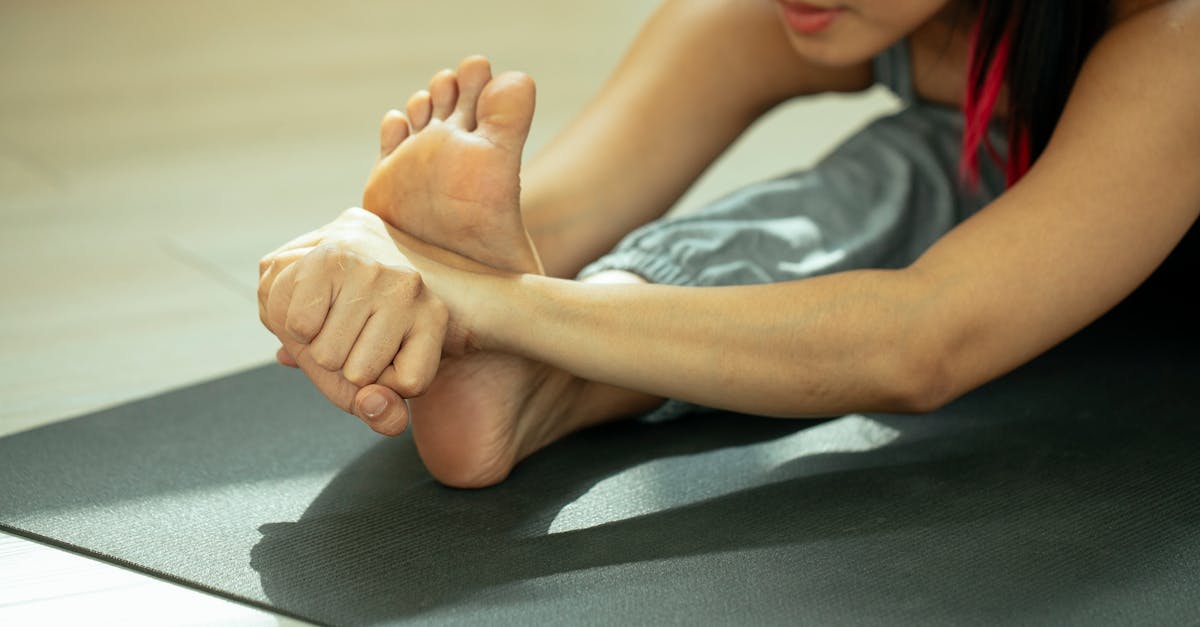
A dedicated daily stretching routine for the gastrocnemius and soleus muscles is mandatory for standing desk users. Standing wall stretches and downward dog yoga poses effectively lengthen these tissues.
Improving the flexibility of the calf dramatically reduces the baseline resting tension on the plantar fascia, making it far more resilient to the stress of standing.
13. Strengthening the Intrinsic Foot Muscles
To protect the passive plantar fascia, the active intrinsic muscles must be conditioned to bear more of the standing load. A strong muscular support system prevents the arch from collapsing.
“Towel scrunches” are a highly effective clinical exercise. While seated barefoot, place a small towel on smooth flooring. Use only the toes to scrunch the towel toward the heel, pulling the arch upward into a dome shape.
“Short foot” exercises involve drawing the ball of the foot toward the heel without curling the toes, actively lifting the arch off the floor. Performing these exercises daily builds muscular endurance, delaying the onset of the burning fatigue during the workday.
14. Orthotic Interventions
For individuals with naturally flat feet or severe overpronation, strengthening exercises may not be sufficient to combat the forces of static standing. In these cases, orthotic inserts are clinically indicated.
Over-the-counter firm orthotics provide a rigid structural bridge that matches the contour of the arch. They act as a physical crutch for the plantar fascia, preventing it from dropping into an overstretched position under body weight.
If over-the-counter options fail to provide relief, a podiatrist can cast the foot for custom orthoses. These medical devices are engineered to precisely correct biomechanical faults, aligning the heel and midfoot to optimize force distribution during prolonged weight-bearing.
15. When to Seek Medical Evaluation
While arch fatigue is an expected consequence of standing, certain clinical signs require professional evaluation. If the burning pain becomes a sharp, tearing sensation that prevents weight-bearing, you may have sustained a partial tear of the plantar fascia.
Pain that radiates up the inside of the ankle and shin, accompanied by a noticeable flattening of the arch that was not previously present, suggests posterior tibial tendon dysfunction. This progressive condition can lead to permanent structural collapse of the foot if left untreated.
If the pain is accompanied by numbness, tingling, or an electrical shooting sensation into the toes, a physician must evaluate for tarsal tunnel syndrome, a nerve entrapment condition caused by severe arch collapse.
16. Frequently Asked Questions FAQ
1. Is it better to stand in bare feet or shoes at a standing desk?
Unless you have spent years conditioning your bare feet to bear static loads, you should wear supportive shoes. Barefoot standing on a flat floor maximizes the tension on the plantar fascia and accelerates the burning pain.
2. How long should I stand at my desk each day?
There is no universal maximum, but ergonomics experts generally recommend a ratio of one hour of standing for every one to two hours of sitting. The key is frequent positional changes rather than attempting marathon standing sessions.
3. Will losing weight stop my feet from burning?
Body mass directly correlates with the mechanical load placed on the arches. Losing weight reduces the sheer compressive force on the plantar fascia and intrinsic muscles, which significantly decreases fatigue and pain.
4. Can a standing desk cause permanent damage to my feet?
If you chronically ignore severe pain and force yourself to stand for hours, you can develop severe, chronic plantar fasciitis or tendinopathy. While rarely permanently crippling, these conditions can take months or years of intense physical therapy to resolve.
5. Are gel insoles better than firm arch supports for standing?
Gel insoles provide cushioning, which feels nice initially but does not stop the arch from collapsing. Firm arch supports are clinically superior for static standing because they provide structural rigidity that actively prevents the plantar fascia from overstretching.
17. Bibliography
Disclaimer: The content is for informational purposes only and does not replace medical advice. Always consult your doctor for personalized treatment.