
1. Introduction
To stop foot arches from cramping during exercise, one must address intrinsic muscle fatigue, optimize footwear biomechanics, and correct systemic electrolyte imbalances. A foot cramp, clinically described as an acute plantar spasm, occurs when the small, intricate muscles supporting the arch of the foot contract involuntarily and fail to relax. This localized tetany is a painful disruption that abruptly halts physical activity, signaling a failure in the neuromuscular control of the lower extremity.
The human foot is an architectural marvel relying on a dynamic network of fascia, ligaments, and tiny intrinsic muscles to absorb the massive shock of body weight during movement. When an individual exercises, these structures operate under immense tension. If the intrinsic muscles become exhausted, or if the electrical signaling environment is compromised by dehydration, the motor neurons misfire, locking the foot into a rigid, agonizing arch.
Clinicians evaluate exercise-induced arch cramps by assessing the patient’s training load and footwear geometry. Resolving these spasms requires immediate mechanical stretching to break the acute contraction, followed by a long-term conditioning program to build endurance in the foot core and ensure the neuromuscular system remains stable under physiological stress.
2. Biomechanics of the Plantar Fascia and Arch
The arch of the foot is primarily supported by the plantar fascia, a thick band of connective tissue running from the heel bone to the base of the toes. However, the plantar fascia is a passive structure; it relies heavily on the active support of the intrinsic foot muscles located deep within the sole.
These tiny muscles, including the abductor hallucis and the flexor digitorum brevis, dynamically contract with every step. They act as active shock absorbers, lifting the arch just before the foot hits the ground and slowly releasing tension as body weight transfers forward. This synchronized action is known as the windlass mechanism.
During intense or prolonged exercise, the demand on these intrinsic muscles increases exponentially. If the mechanics of the foot are poor, or if the individual has flat feet, these small muscles must work twice as hard to maintain structural integrity. This biomechanical overload is the primary structural catalyst for severe arch cramping.
3. Intrinsic Foot Muscle Fatigue
Muscular fatigue is the leading physiological cause of exercise-induced cramping. When the intrinsic muscles of the foot are pushed beyond their endurance capacity, they exhaust their local supply of adenosine triphosphate, the energy molecule required for muscle relaxation.
As fatigue sets in, the chemical environment within the muscle cell deteriorates. The accumulation of metabolic waste products, combined with energy depletion, alters the sensitivity of the muscle spindles and Golgi tendon organs. These are specialized sensory receptors that tell the central nervous system how much tension is in the muscle.
When fatigue disrupts these sensors, the spinal cord loses its normal inhibitory control over the muscle. It sends a continuous, unregulated signal telling the tired muscle fibers to contract maximally. The result is a sudden, rigid, and intensely painful arch cramp that locks the foot into a downward-pointing position.
4. The Impact of Improper Footwear
Footwear dictates the biomechanical environment in which the foot operates. Shoes that lack adequate arch support, such as flexible minimalist shoes or worn-out running sneakers, force the intrinsic foot muscles to absorb the entire impact of exercise without any mechanical assistance.
Conversely, shoes that are too tight or have a narrow toe box physically restrict the natural splay of the toes. When the toes cannot spread upon impact, the intrinsic muscles are cramped and cannot contract through their full, natural range of motion. This restricted movement severely accelerates muscle fatigue and poor blood circulation within the foot.
Exercising in shoes with a very stiff sole can also provoke spasms. A rigid sole prevents the natural flexion of the midfoot, transferring all the mechanical stress directly to the plantar fascia and the underlying musculature, rapidly pushing them to the point of tetanic spasm.
5. Electrolyte Depletion and Fluid Shifts
Systemic hydration and electrolyte balance directly govern nerve conduction and muscle contraction. Sodium, potassium, magnesium, and calcium are electrically charged minerals that flow in and out of muscle cells to initiate and terminate contractions.
During vigorous exercise, the body loses significant amounts of fluid and sodium through sweat. As blood volume decreases, the concentration of extracellular fluid shifts. This dehydration lowers the firing threshold of peripheral motor nerves, making them hyper-excitable.
A localized deficiency in magnesium or potassium prevents the muscle fibers from properly resetting after a contraction. While systemic electrolyte depletion typically causes cramps in larger muscle groups like the calves or hamstrings, the small, highly active muscles of the foot arch are incredibly susceptible to these microscopic chemical imbalances.
6. Training Load and Sudden Increases in Volume
The neuromuscular system requires time to adapt to new physical demands. A sudden spike in training volume, intensity, or a change in exercise surface frequently precipitates foot cramping.
Switching from running on a soft treadmill to a hard asphalt road forces the foot muscles to absorb significantly more shock. Similarly, beginning plyometric workouts, such as jump roping or box jumps, demands rapid, explosive contractions from the foot arch that it may not be conditioned to handle.
This abrupt overload causes micro-trauma to the muscle fibers. The body responds with localized inflammation and an altered reflex arc, leaving the foot highly vulnerable to acute spasms during the latter half of the workout as the unconditioned muscles inevitably fail.
7. Neuromuscular Control and Spasm Mechanisms
Recent clinical research indicates that exercise-associated muscle cramps are often a failure of neuromuscular control rather than simple dehydration. The central nervous system regulates muscle tone by balancing excitatory signals from muscle spindles with inhibitory signals from the Golgi tendon organs.
Extreme exertion creates an imbalance in this reflex arc. The excitatory signals overwhelm the inhibitory ones. The motor neuron becomes locked in an active state, sending a continuous barrage of electrical impulses to the foot arch.
This neural mechanism explains why stretching is the most effective immediate remedy for a cramp. Physically lengthening the cramped muscle stimulates the Golgi tendon organs to fire massive inhibitory signals, essentially rebooting the neural circuit and forcing the central nervous system to turn off the excitatory spasm command.
8. Identifying the Type of Cramp
Clinicians categorize foot cramps based on their timing and environmental context to prescribe the correct preventative strategy.
| Cramp Characteristic | Primary Trigger | Suggested Intervention |
|---|---|---|
| Occurs near the end of a long, heavy workout | Neuromuscular and intrinsic muscle fatigue | Immediate stretching, reducing training volume |
| Occurs during hot weather, accompanied by heavy sweating | Dehydration and sodium depletion | Electrolyte replacement, fluid intake optimization |
| Occurs immediately after changing to new shoes | Biomechanical restriction or lack of support | Footwear assessment, utilizing supportive orthotics |
9. Immediate Relief Strategies During Exercise
When a foot arch cramp strikes during exercise, the individual must stop activity immediately. Attempting to push through a spasm will inevitably cause muscle fiber tearing. The immediate goal is to mechanically stretch the arch to initiate the inhibitory neural reflex.
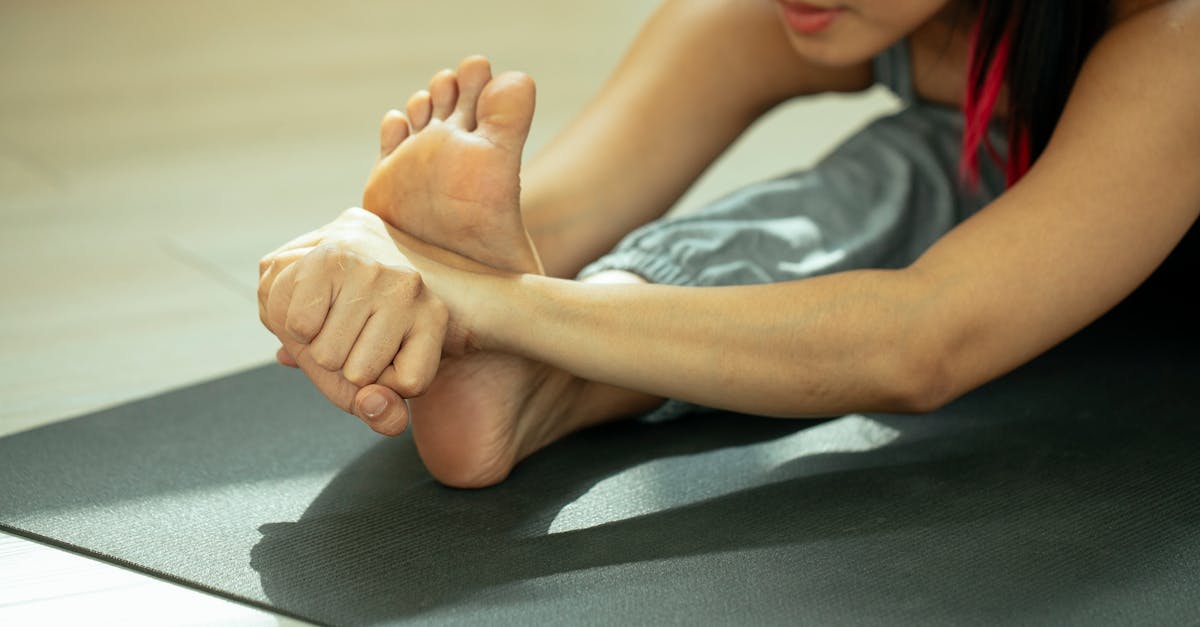
The most effective maneuver involves sitting down, keeping the affected leg straight, and using the hands to pull all five toes aggressively backward toward the shin. This action places maximum stretch on the plantar fascia and the intrinsic flexor muscles, overpowering the neural spasm signal.
Applying deep, firm pressure with a thumb directly into the center of the cramped muscle belly can also help dissipate the tension. Once the cramp breaks, the individual should walk slowly on the heels for several minutes to ensure the motor neurons have fully reset before attempting to resume light activity.
10. Pre-Exercise Stretching and Mobilization
Preventing arch cramps requires preparing the tissues before applying heavy loads. Dynamic warm-ups increase blood flow to the lower extremities, raising the tissue temperature and making the fascia more pliable.
Rolling the arch of the foot over a dense lacrosse ball or a specialized foot roller for three to five minutes before exercise is a highly effective clinical technique. This self-myofascial release breaks up micro-adhesions in the plantar tissue and stimulates the proprioceptive nerves, preparing them for the complex demands of balance and shock absorption.
Stretching the calf muscles is equally vital. The Achilles tendon connects to the heel bone and shares a fascial connection with the plantar fascia. A tight calf creates a constant upward pull on the heel, which in turn stretches and strains the foot arch before the workout even begins.
11. Strengthening the Foot Core
Long-term prevention relies on building the endurance of the intrinsic foot muscles. Just as athletes train their abdominal core for spinal stability, they must train their foot core for arch stability.
Towel scrunches are a foundational exercise. The individual sits barefoot, places a flat towel on a smooth floor, and uses only their toes to pull the towel toward them. This movement heavily isolates and strengthens the deep arch flexors.
Toe yoga, which involves attempting to lift the big toe while keeping the other four toes flat on the ground, and vice versa, trains the fine motor control and neural pathways of the foot. Strengthening these muscles ensures they do not fatigue prematurely, eliminating the primary trigger for neuromuscular cramping.
12. Nutritional and Hydration Protocols
Maintaining an optimal chemical environment is critical for individuals prone to cramping. Proper hydration begins the day before a strenuous workout. Consuming water alongside a balanced intake of dietary electrolytes ensures the fluid is retained in the vascular system rather than immediately excreted.
During exercise lasting longer than one hour, or in high-heat environments, plain water is insufficient. An isotonic sports drink containing sodium, potassium, and magnesium replaces the specific minerals lost in sweat, preventing the extracellular fluid shifts that irritate the motor nerves.
Some endurance athletes find success with sharp sensory interventions. Consuming a small amount of pickle juice or a specialized sports shot containing acetic acid provides a strong sensory shock to the nerves in the back of the throat. This neural distraction has been clinically shown to interrupt the central nervous system’s spasm signals rapidly, often breaking a cramp within seconds.
13. When to Seek Podiatric Evaluation
If foot arch cramps become a chronic, daily occurrence that prevents exercise despite proper hydration and stretching, a podiatric evaluation is necessary. Persistent muscle spasms may indicate an underlying structural pathology, such as an undiagnosed stress fracture, severe flat feet, or a tarsal coalition, where the bones of the foot are abnormally fused.
A podiatrist will perform a comprehensive gait analysis to determine exactly how the foot is absorbing impact. They may prescribe custom orthotics, which are medical devices inserted into the shoes.
Custom orthotics provide precise mechanical support to the medial arch, drastically reducing the workload on the intrinsic foot muscles. By correcting the biomechanical alignment of the entire lower leg, orthotics can permanently eliminate exercise-induced foot cramps and prevent long-term degenerative conditions like plantar fasciitis.
14. Frequently Asked Questions FAQ
1. Why do my foot arches only cramp when I do certain exercises like lunges?
Exercises like lunges require your back foot to bend deeply at the toes, placing maximum mechanical tension and workload on the arch muscles; if these muscles are weak, this specific position causes rapid fatigue and immediate cramping.
2. Does eating a banana before a workout stop foot cramps?
While bananas contain potassium, which is necessary for muscle function, it takes hours for the body to digest and utilize it; eating a banana immediately before a workout will not stop an acute cramp caused by muscle fatigue.
3. Can tying my shoes too tight cause my foot to cramp?
Yes, tying your laces excessively tight compresses the blood vessels and nerves on the top of your foot and restricts the natural spreading of your arch, starving the muscles of oxygen and leading to severe spasms.
4. Should I roll my cramped foot on a frozen water bottle?
Yes, rolling a frozen water bottle under your foot provides immediate mechanical stretching to break the spasm while the intense cold numbs the irritated nerve endings and reduces localized inflammation.
5. How do I know if the cramp is actually a torn muscle?
A cramp is a sudden, rigid locking of the muscle that completely resolves after stretching, whereas a torn muscle causes an immediate popping sensation, sharp pain that persists after stretching, and is followed by bruising and swelling.
15. Bibliography
Disclaimer: The content is for informational purposes only and does not replace medical advice. Always consult your doctor for personalized treatment.

