1. Introduction
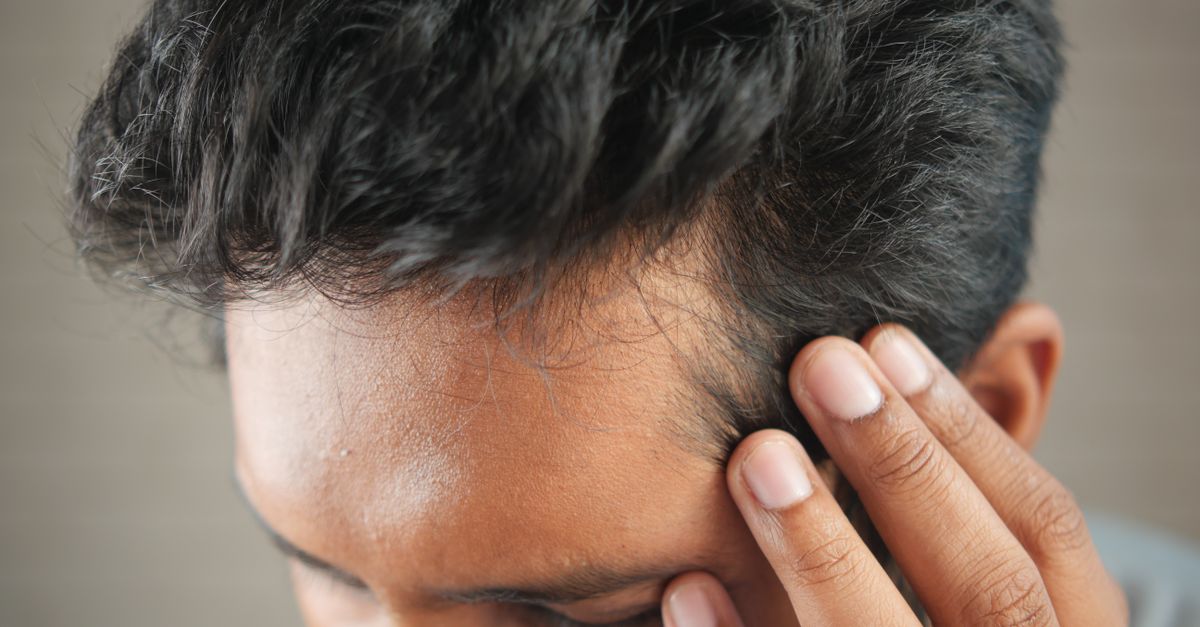
Stress can indeed cause your scalp to feel severely tender due to the sustained, involuntary contraction of the pericranial muscles. This prolonged tension restricts local blood flow and irritates the nerve endings across the skull, resulting in a painful condition often directly linked to tension-type headaches.
Experiencing a scalp that feels bruised or painfully sensitive to the touch, even when simply brushing hair, is a highly distressing symptom. The scalp is a remarkably complex anatomical structure, richly supplied with sensory nerves and overlaid on a network of thin, flat muscles. When the central nervous system is bombarded by psychological stress, this anatomical network becomes structurally rigid and chemically inflamed.
Understanding the physiological bridge between emotional distress and physical cranial pain empowers patients to seek appropriate non-pharmacological relief. By targeting the muscular spasms and calming the hyperactive nerve pathways, individuals can resolve the localized tenderness and prevent the escalation of chronic pericranial pain syndromes.
2. The Anatomy of the Scalp and Cranial Musculature
To comprehend why the scalp becomes tender, it is necessary to examine the anatomical layers covering the skull. The scalp consists of five distinct layers: the skin, dense connective tissue, the epicranial aponeurosis, loose areolar tissue, and the periosteum covering the bone.
The most critical structure involved in tension-related tenderness is the epicranial aponeurosis, also known as the galea aponeurotica. This is a broad, tough, and fibrous sheet of connective tissue that stretches entirely across the top of the skull. It acts as a mechanical bridge connecting the frontal muscle located on the forehead with the occipital muscle located at the base of the skull.
These muscles, collectively termed the occipitofrontalis, do not function in isolation. They are highly responsive to facial expressions, jaw movements, and cervical spine positioning. When any part of this interconnected system contracts, it places mechanical tension on the entire fibrous sheet stretching across the top of the head.
3. The Physiology of the Stress Response
The biological link between anxiety and physical pain is governed by the autonomic nervous system. When an individual encounters a stressful situation, the brain activates the sympathetic nervous system, initiating the fight-or-flight response. This response floods the bloodstream with catecholamines, specifically adrenaline and noradrenaline.
These stress hormones are designed to prepare the body for immediate physical exertion. They increase the heart rate, dilate the pupils, and crucially, cause a global, involuntary increase in skeletal muscle tone. The body essentially braces itself for impact.
The muscles of the face, jaw, neck, and scalp are exquisitely sensitive to this hormonal surge. During periods of chronic psychological stress, these muscles remain in a perpetual state of low-grade contraction. The brain never sends the neurological signal indicating the danger has passed, forcing the pericranial muscles to remain rigid and locked.
4. Sustained Muscular Contraction and Ischemia
A muscle requires a continuous flow of oxygenated blood to function and eventually relax. When the occipitofrontalis muscles and the surrounding cervical musculature remain contracted for hours or days due to stress, they physically compress the microscopic capillary beds that supply them with blood.
This localized reduction in blood flow is known as ischemia. In an ischemic environment, the muscle cells are forced to produce energy anaerobically, generating significant amounts of lactic acid and other metabolic waste products. Because the capillaries are compressed, these toxic byproducts cannot be flushed away efficiently.
The accumulation of lactic acid chemically burns the surrounding tissue and severely irritates the local nociceptors, which are the specialized nerve endings responsible for detecting pain. The brain interprets this chemical irritation as a deep, aching tenderness across the surface of the scalp.
5. The Galea Aponeurotica and Referred Pain
The fibrous galea aponeurotica itself lacks contractile muscle fibers, but it is heavily innervated with sensory nerves. When the frontal and occipital muscles contract simultaneously, they pull the galea incredibly taut across the rigid bone of the skull, much like a drum skin being tightened.
This immense mechanical stretching causes micro-trauma and inflammation within the connective tissue layer. The pain is often diffuse, meaning the patient cannot pinpoint a single source; instead, the entire top of the head feels bruised or painfully tight.
Furthermore, the mechanical tension can compress the greater and lesser occipital nerves that travel up from the back of the neck and weave through the connective tissue of the scalp. When these nerves are pinched by the tight fascia, they generate a burning or stinging tenderness that radiates forward toward the crown of the head.
6. Peripheral Nerve Sensitization
When the nociceptors in the scalp are subjected to constant chemical irritation from ischemia and mechanical stretching from muscle tension, their biological behavior changes. They undergo a process called peripheral sensitization.
In a healthy state, it takes a significant stimulus, like a hard bump, to activate these pain receptors. However, once sensitized by chronic stress and inflammation, their activation threshold drops drastically. The nerves begin to fire pain signals in response to normal, non-painful stimuli.
This explains why activities that are normally benign, such as brushing the hair, wearing a loose hat, or even feeling a light breeze across the scalp, suddenly provoke a sharp, painful response. The nerves are essentially trapped in a hyper-reactive state, misinterpreting light touch as a damaging force.
7. Differentiating Tension Pain from Dermatological Issues
While stress is a leading cause of scalp tenderness, a clinician must carefully differentiate this muscular pain from primary dermatological or infectious conditions affecting the skin of the scalp. Accurate diagnosis ensures the appropriate therapeutic pathway is selected.
| Diagnostic Feature | Stress-Induced Tenderness (Tension) | Dermatological/Infectious Condition |
|---|---|---|
| Visual Appearance | Scalp looks completely normal; no redness or flakes. | Presence of redness, scaling, sores, or rash. |
| Nature of Sensation | Deep, bruised feeling, tightness, muscle ache. | Superficial burning, intense itching, or sharp stinging. |
| Triggering Factors | High emotional stress, poor posture, end of workday. | Use of new hair products, seasonal changes, poor hygiene. |
Conditions such as severe seborrheic dermatitis, psoriasis, or an acute fungal infection can cause the scalp to feel tender. However, these conditions invariably present with visible changes to the skin. If the scalp hurts but appears visually pristine, the etiology is almost certainly musculoskeletal or neurological.
8. The Role of Bruxism and Jaw Tension
A highly prevalent but frequently overlooked contributor to scalp tenderness is bruxism, the subconscious clenching or grinding of the teeth. Bruxism is heavily correlated with psychological stress and often occurs exclusively during sleep, leaving the patient entirely unaware of the behavior.
The masseter and temporalis muscles are the primary engines of jaw movement. The temporalis muscle is a large, fan-shaped muscle that spans the side of the head, attaching directly to the skull. When a patient grinds their teeth with immense force throughout the night, the temporalis muscle becomes severely fatigued and inflamed.
Because of the interconnected fascial network of the head, the profound inflammation in the temporalis muscle radiates upward and across the top of the skull. The patient wakes up with a tight jaw, a tension headache, and a scalp that feels exquisitely tender to any touch.
9. Allodynia in Chronic Pain Syndromes
When stress-induced scalp tenderness persists for months without relief, it can evolve into a complex neurological symptom known as allodynia. Allodynia represents a shift from peripheral nerve sensitization to central nervous system sensitization.
In central sensitization, the pain processing centers within the brain and spinal cord become structurally and chemically altered. They amplify sensory input, treating all touch signals arriving from the scalp as severe pain. This is a common feature in patients suffering from chronic migraines or severe chronic tension-type headaches.
For a patient with allodynia, the act of resting their head on a soft pillow or washing their hair in the shower can be agonizing. Treating allodynia requires comprehensive medical management, often utilizing neurological medications to reset the hyperactive pain pathways within the central nervous system.
10. Physical Interventions and Scalp Massage
Mechanical disruption of the muscle spasms is the most direct method for relieving stress-induced scalp tenderness. Targeted massage therapy effectively releases the tight bonds within the muscle fibers and stretches the rigid galea aponeurotica.
Patients can perform self-massage by placing the pads of their fingers on the scalp and applying firm, circular pressure, attempting to physically move the skin over the underlying bone rather than just rubbing the hair. This mechanical action restores local capillary blood flow, flushing out the irritating lactic acid and drawing in fresh oxygen.
Special attention should be given to the suboccipital muscles at the base of the skull and the temporalis muscles above the ears. Releasing the anchor points of the cranial fascia frequently provides immediate, profound relief to the tenderness radiating across the top of the head.
11. Thermal Therapy for Muscular Relaxation
Applying thermal modalities directly to the head and neck is a clinically proven method for reducing pericranial muscle tension. A warm compress is generally the most effective intervention for a bruised, tender scalp caused by stress.
The application of heat induces localized vasodilation, expanding the blood vessels and improving tissue perfusion. The warmth also penetrates deep into the muscle layers, altering the stretch reflex of the muscle spindles and forcing the contracted fibers to relax. A hot towel wrapped around the head or a warm shower directed at the base of the neck provides significant symptomatic relief.
If the scalp tenderness is accompanied by a severe, throbbing headache, alternating heat on the neck with a cold pack on the forehead may be more effective. The cold constricts the dilated superficial blood vessels contributing to the throbbing sensation, while the heat simultaneously treats the underlying muscular cause.
12. Stress Management and Biofeedback
Because psychological stress is the primary catalyst, long-term resolution of scalp tenderness requires addressing the central nervous system’s reactivity. Implementing daily stress management techniques lowers the baseline level of circulating catecholamines, preventing the involuntary muscle bracing that causes the pain.
Biofeedback is an exceptionally effective clinical tool for this specific condition. During a biofeedback session, sensors are placed on the patient’s forehead and jaw to measure the resting electrical activity of the muscles. The patient views this data on a monitor in real-time.
Through guided relaxation techniques, the patient learns to recognize the subtle, subconscious feeling of muscle tension and actively lower the electrical activity on the screen. This somatic retraining empowers the patient to consciously relax their pericranial muscles during stressful events, halting the progression of scalp tenderness before it begins.
13. Pharmacological Options for Muscle Spasms
When physical interventions and stress management fail to provide adequate relief, pharmacological support is warranted to break the cycle of pain and spasm. Over-the-counter nonsteroidal anti-inflammatory drugs, such as ibuprofen, are effective at reducing localized tissue inflammation and blocking the transmission of pain signals.
If severe bruxism or intractable neck spasms are driving the scalp tenderness, a physician may prescribe a short course of skeletal muscle relaxants. These medications act on the central nervous system to depress motor nerve excitability, allowing the exhausted cranial muscles to rest and recover during sleep.
For chronic, severe tension resulting in allodynia, tricyclic antidepressants, such as amitriptyline, are frequently utilized in low doses. These medications modulate the neurotransmitters involved in pain processing, effectively calming the sensitized nerve pathways and increasing the activation threshold of the peripheral nociceptors.
14. When to Consult a Neurologist or Dermatologist
While stress-related tenderness is common and benign, certain clinical presentations require professional evaluation to rule out more sinister pathologies. A sudden, severe pain on one side of the scalp, particularly in a patient over the age of fifty, demands immediate medical attention to rule out temporal arteritis.
Temporal arteritis is a dangerous inflammation of the cranial blood vessels that can cause sudden, irreversible blindness if not treated promptly with high-dose corticosteroids. The hallmark symptom is severe scalp tenderness localized over the temples, often accompanied by jaw pain when chewing.
Additionally, if the scalp tenderness is accompanied by patches of hair loss, severe scaling, or the appearance of distinct lumps under the skin, a consultation with a dermatologist is necessary to evaluate for autoimmune alopecia, severe fungal infections, or benign cysts causing localized structural pressure.
15. Frequently Asked Questions FAQ
1. Can wearing my hair in a tight bun cause a tender scalp?
Yes, this is known as traction alopecia or traction headache; pulling the hair tightly places continuous mechanical strain on the hair follicles and the galea aponeurotica, leading to localized inflammation and severe tenderness when the hair is finally released.
2. Why does my scalp hurt more at the end of the workday?
Scalp tenderness typically peaks in the late afternoon because the muscles of your neck, jaw, and face have been engaged in continuous, subconscious contraction due to stress and poor posture throughout the entire workday.
3. Does washing my hair help with scalp tenderness?
Taking a warm shower and gently massaging the scalp with shampoo provides beneficial thermal therapy and mechanical release, significantly improving local blood flow and reducing the muscular tension causing the pain.
4. Can a lack of sleep make my scalp sensitive?
Severe sleep deprivation lowers your pain threshold and leaves your central nervous system in a hyperactive state, making the sensory nerves in your scalp much more reactive to minor muscular tension or light touch.
5. Is a tender scalp a sign of a stroke?
No, a tender, bruised-feeling scalp is a muscular and fascial issue, not a symptom of a stroke; a stroke presents with sudden neurological deficits like facial drooping, slurred speech, or profound weakness on one side of the body.
Bibliography
Disclaimer: The content is for informational purposes only and does not replace medical advice. Always consult your doctor for personalized treatment.