1. Introduction
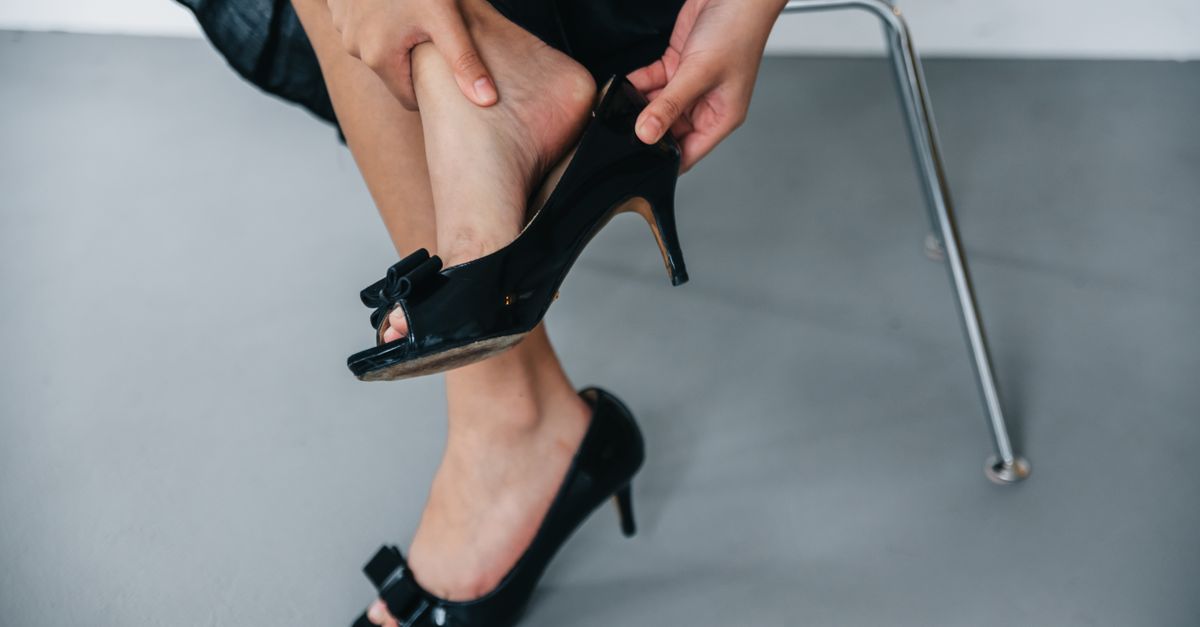
Throbbing calf pain after wearing high heels all night is the result of prolonged muscular shortening, fascial tension, and localized ischemia in the gastrocnemius and soleus muscles. High heels force the foot into a sustained state of plantar flexion, an unnatural anatomical position that chronically contracts the calf muscles and stiffens the Achilles tendon. When the shoes are removed and the heel drops back to the floor, these tightened structures are suddenly subjected to a profound stretching force, triggering micro-trauma, inflammation, and nociceptive pain signals.
The human lower leg is biomechanically designed for a natural, flat-footed gait where the heel strikes the ground, stretching the calf muscle to store elastic energy. Elevated footwear disrupts this fundamental mechanism. By propping the heel up, the calf muscles are robbed of their full range of motion. They remain continuously engaged in a shortened state for hours, leading to rapid cellular fatigue and metabolic waste accumulation.
This sustained isometric tension compresses the blood vessels within the muscle tissue, restricting vital oxygen delivery. The resulting throbbing sensation experienced later is the vascular and nervous system’s response to this severe mechanical and chemical stress. Understanding the anatomical chain reaction caused by elevated heels is crucial for mitigating this common musculoskeletal complaint.
2. Biomechanics Of Plantar Flexion
Plantar flexion is the anatomical term for pointing the toes downward or elevating the heel, mimicking the exact position dictated by a high-heeled shoe. This movement relies entirely on the posterior muscles of the lower leg. When an individual stands in a three-inch heel, the ankle joint is locked into severe plantar flexion.
In this position, the distance between the back of the knee and the heel bone is significantly reduced. Because muscles adapt to the positions they are held in, the gastrocnemius and soleus muscles physiologically adapt to this shorter distance. They remain in a constant state of partial contraction, never fully relaxing or lengthening.
This sustained contraction alters the resting length-tension relationship of the muscle fibers. The sarcomeres, the microscopic contractile units within the muscle, become tightly overlapped and structurally bound. This biomechanical lock-in makes any subsequent attempt to stretch the muscle back to a neutral position highly traumatic to the tissue.
3. Anatomy Of The Triceps Surae
The calf is primarily composed of the triceps surae, a powerful muscle group consisting of the gastrocnemius and the soleus. The gastrocnemius is the larger, visible muscle that crosses both the knee and the ankle joints, making it highly susceptible to tension from both ends. The soleus lies deeper and crosses only the ankle joint, functioning primarily as a postural stabilizer.
Both of these muscles taper down and merge to form the Achilles tendon, the thickest and strongest tendon in the human body, which inserts into the calcaneus (heel bone). The triceps surae acts as the primary engine for walking, running, and jumping.
When high heels are worn, both the gastrocnemius and soleus are forced to operate in a structurally compromised, shortened state. The soleus, responsible for endurance and posture, bears a significant isometric load to maintain balance on an unstable heel, leading to profound, deep muscle exhaustion.
4. Achilles Tendon Rigidity And Strain
Tendons are tough bands of fibrous connective tissue that attach muscle to bone. The Achilles tendon relies on regular, full-range stretching during a normal gait cycle to maintain its elasticity and strength. High heels eliminate this stretching phase entirely.
When the heel is elevated for hours, the Achilles tendon becomes stiff, rigid, and dehydrated. It loses its viscoelastic properties, meaning it can no longer absorb shock or stretch efficiently. When the individual finally takes off the heels and stands barefoot, the heel drops abruptly to the floor.
This sudden demand for dorsiflexion (bringing the toes toward the shin) pulls violently on the rigid Achilles tendon. The tendon transfers this massive mechanical tension directly into the already shortened and fatigued calf muscles. This abrupt stretching force causes microscopic tearing in the muscle fibers and the tendon-muscle junction, initiating an acute inflammatory response.
5. Ischemia And Metabolic Waste Accumulation
Muscle contractions require a constant supply of oxygen and nutrients delivered via the bloodstream, while metabolic waste products, such as lactic acid, must be continuously flushed away. During a normal walking cycle, the rhythmic contraction and relaxation of the calf muscles act as a pump, facilitating this fluid exchange.
Standing or walking in high heels forces the calf muscles into a sustained, isometric contraction. This continuous tension physically squeezes the microscopic capillaries running through the muscle tissue, restricting arterial blood flow. This localized oxygen deprivation is known as ischemia.
Without sufficient oxygen, the muscle cells resort to anaerobic metabolism, which rapidly produces acidic waste products. Because the veins are also compressed by the tight muscle, these toxins cannot be efficiently cleared. The accumulation of these acidic by-products chemically burns the surrounding pain receptors, contributing to the deep, throbbing ache.
6. The Failure Of The Skeletal Muscle Pump
The veins in the lower legs rely on the skeletal muscle pump to return deoxygenated blood back to the heart against gravity. When the calf muscle contracts, it squeezes the deep veins, pushing blood upward past one-way valves. When the muscle relaxes, the veins refill.
High heels severely restrict the ankle’s range of motion, effectively neutralizing the calf muscle pump. The muscles do not fully relax, and the powerful, sweeping contractions required to propel venous blood are absent.
Consequently, blood pools in the lower legs. This venous stasis increases the hydrostatic pressure inside the blood vessels, forcing fluid out into the surrounding tissues. This localized swelling (edema) increases tissue pressure within the tight fascial compartments of the calf, causing a throbbing sensation as the heart beats against this high-pressure resistance.
7. Delayed Onset Muscle Soreness (DOMS)
The throbbing pain experienced the night after or the morning following wearing high heels is a classic presentation of Delayed Onset Muscle Soreness (DOMS). DOMS is not caused by lactic acid, which clears from the muscles shortly after activity stops, but rather by the inflammatory response to structural micro-trauma.
The eccentric loading phase of walking in heels—when the calf muscle must lengthen slightly under tension to control the descent of the foot—is highly damaging to shortened muscle fibers. The z-discs that hold the muscle fibers together sustain microscopic tears.
The immune system responds to this damage by dispatching macrophages and inflammatory cytokines to repair the tissue. This inflammatory cascade causes localized swelling, sensitizes nociceptors, and produces the characteristic stiffness and throbbing pain that peaks 24 to 48 hours after the mechanical insult.
8. Fascial Restrictions And Trigger Points
Fascia is the tough connective tissue web that envelopes the calf muscles. Fascia responds to chronic tension by becoming thick, dense, and restrictive. Prolonged plantar flexion causes the fascia wrapping the gastrocnemius to adapt to the shortened length.
When the heels are removed, the restrictive fascia prevents the muscle fibers from gliding smoothly. This combination of fascial binding and muscle fatigue frequently leads to the development of myofascial trigger points, commonly known as muscle knots.
These trigger points are hyper-irritable nodules within a taut band of muscle. They restrict local blood flow and can cause acute, localized spasms (charley horses) or refer a deep, throbbing ache throughout the entire lower leg, significantly worsening the overall discomfort.
9. Altered Posture And The Kinetic Chain
High heels do not just affect the calves; they disrupt the biomechanics of the entire body. Elevating the heel shifts the body’s center of mass forward. To prevent falling forward, the individual must subconsciously lean back, increasing the curvature of the lower spine (lumbar lordosis) and flexing the knees slightly.
This compensatory posture creates a cascade of tension up the posterior kinetic chain. The hamstrings, glutes, and lower back muscles must contract continuously to maintain this artificial equilibrium.
The slight knee flexion prevents the gastrocnemius from functioning optimally, placing even more stress on the soleus and the Achilles tendon. The fatigue generated by this full-body postural compensation compounds the localized exhaustion in the lower legs, making recovery slower and more painful.
10. Differentiating Heel-Induced Pain From Pathology
It is important to distinguish the expected muscular fatigue of wearing heels from potentially serious vascular or neurological conditions.
| Condition | Primary Mechanism | Distinguishing Features |
|---|---|---|
| Heel-Induced DOMS | Micro-trauma and muscle shortening | Bilateral aching, stiffness upon waking, resolves within a few days with rest and stretching. |
| Deep Vein Thrombosis (DVT) | Blood clot in the deep veins | Unilateral (one leg only), sudden severe swelling, red/hot skin, deep calf pain unrelated to stretching. |
| Achilles Tendinitis | Chronic tendon inflammation | Sharp pain specifically localized to the back of the heel and tendon, highly tender to the touch. |
| Peripheral Artery Disease | Narrowed arteries reducing blood flow | Cramping pain during walking that stops immediately with rest, cool skin temperature. |
11. Immediate Recovery Protocols
Upon removing high heels, the priority is to restore blood flow and gently reintroduce the calf muscles to their neutral length. Immediately stepping flat-footed can be shocking to the tight tissues. Instead, performing gentle ankle circles while seated helps lubricate the joint and initiates mild muscular pumping without bearing weight.
Contrast hydrotherapy is highly effective for reducing the throbbing sensation. Alternating between warm and cool water in the shower induces a vascular pumping effect. The heat promotes vasodilation to bring in fresh, oxygenated blood, while the cold constricts vessels to flush out inflammatory fluids and metabolic waste.
Elevating the legs above the level of the heart enlists gravity to drain the pooled venous blood and interstitial fluid from the lower extremities, rapidly decreasing the internal tissue pressure that contributes to the throbbing pain.
12. Safe Stretching Techniques
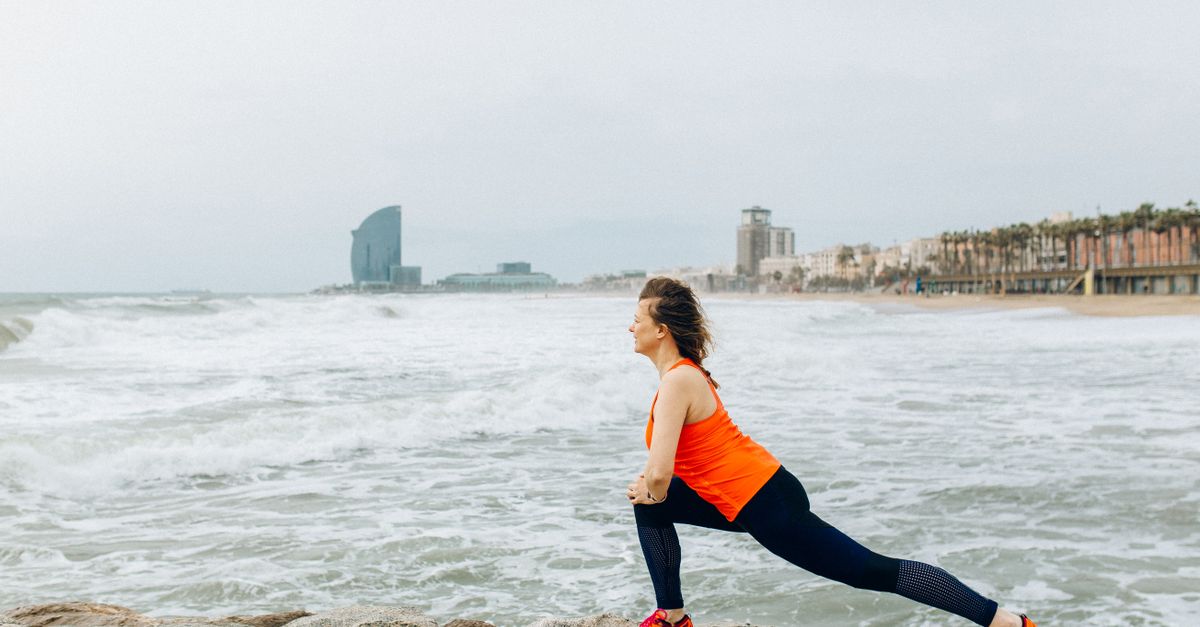
Stretching shortened calf muscles must be done gradually. Aggressive, bouncing stretches will trigger a protective muscle spasm and risk tearing the compromised tissue. The focus should be on slow, static holds.
A gentle towel stretch is ideal. Seated on the floor with legs extended, loop a towel around the ball of the foot and gently pull the toes backward until a mild tension is felt in the calf. Hold this position for thirty seconds, allowing the muscle spindles to relax and the fascia to yield.
The standard wall stretch—standing facing a wall, placing one foot back with the heel flat and bending the front knee—targets the gastrocnemius. To stretch the deeper soleus muscle, perform the same stretch but bend the back knee slightly, which takes the tension off the gastrocnemius and isolates the lower calf.
13. Myofascial Release And Massage
Manually addressing the fascial tension and trigger points accelerates recovery. Using a foam roller on the calves helps break up fascial adhesions and stimulates deep tissue blood flow. The rolling should be slow and deliberate, pausing over tight knots to allow the ischemic compression to release the trigger point.
A massage ball or tennis ball can be used for more targeted release along the sides of the calf and around the Achilles tendon. Gentle manual massage, using upward strokes from the ankle toward the back of the knee, also assists the lymphatic system in clearing the localized edema caused by the failure of the muscle pump.
Applying a topical analgesic containing menthol or camphor can provide temporary neurological relief. These compounds create a cooling sensation that competes with the pain signals traveling to the brain, providing symptomatic relief while the tissue physically repairs.
14. Long-Term Prevention And Adaptation
For individuals who wear high heels frequently, proactive maintenance of calf flexibility is mandatory to prevent chronic structural changes. Daily stretching of the Achilles tendon and calf muscles, even on days heels are not worn, preserves the necessary ankle dorsiflexion required for a healthy gait.
Strengthening the anterior tibialis muscle, located on the front of the shin, creates better muscular balance. A strong anterior tibialis can help pull the foot upward, opposing the constant downward pull of the tight calf muscles.
When selecting heels, opting for wedges or thicker block heels provides a more stable base of support, reducing the extreme isometric workload on the soleus. Limiting the continuous duration of wearing heels—such as wearing flat shoes during a commute and changing into heels only at the event—drastically reduces the cumulative ischemic damage.
15. When To See A Doctor
While calf pain after wearing high heels is generally a benign musculoskeletal issue, specific warning signs warrant immediate medical evaluation. If the pain is severe, localized entirely to one leg, and accompanied by significant swelling, redness, or warmth, it could indicate a deep vein thrombosis, a medical emergency requiring urgent ultrasound evaluation.
Patients should seek a clinical assessment if they experience a sudden, sharp “pop” in the back of the heel followed by an inability to push off the toes. This clinical presentation suggests a partial or complete rupture of the Achilles tendon, requiring immediate orthopedic intervention.
Furthermore, if the throbbing pain persists for more than a week despite rest and conservative stretching, or if it causes a noticeable, persistent limp, a physical therapist or sports medicine physician should be consulted to address potential chronic tendinopathy or severe fascial dysfunction.
16. Frequently Asked Questions (FAQ)
1. Why does the pain throb in time with my heartbeat?
The tight, inflamed muscle tissues and accumulated fluid increase the internal pressure in your calf. As your heart pumps blood into the restricted blood vessels of the lower leg, the vessels expand slightly against this high pressure, creating a palpable, throbbing sensation.
2. Is it better to walk barefoot after taking heels off to stretch my calves?
Walking completely barefoot immediately after taking off high heels can cause micro-tears in your shortened Achilles tendon. It is safer to transition into supportive sneakers or a shoe with a slight heel lift to let the muscles lengthen gradually.
3. Do higher heels cause exponentially more damage?
Yes. Biomechanical studies show that moving from a two-inch heel to a three-inch heel vastly increases the forces placed on the forefoot and dramatically shortens the available range of motion for the calf, accelerating muscle fatigue and ischemia.
4. Can taking ibuprofen prevent the throbbing pain?
Taking an NSAID like ibuprofen can reduce the acute inflammatory response and block pain signaling temporarily. However, it does not correct the physical muscle shortening or clear the metabolic waste, so the underlying mechanical issue remains.
5. Why do my calves cramp violently when I point my toes in bed after wearing heels?
Your calves are already trapped in a shortened, highly irritable state. Pointing your toes (plantar flexion) while lying down forces the already-shortened muscle to contract further. This extreme mechanical overlap triggers a severe, involuntary defensive muscle spasm.
17. Bibliography
Disclaimer: The content is for informational purposes only and does not replace medical advice. Always consult your doctor for personalized treatment.