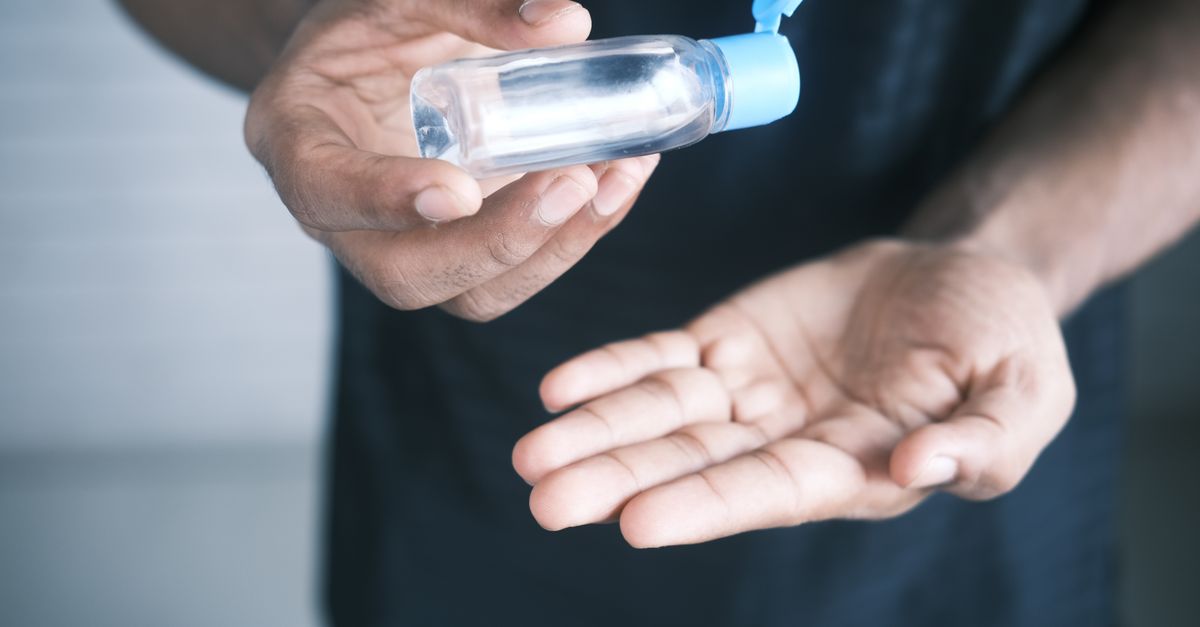
Doctor Inks Hand Sanitizer is a topical antimicrobial formulation that utilizes Benzalkonium Chloride to reduce transient pathogenic bacteria on the hands. The most frequently reported side effect is superficial epidermal dryness and mild contact dermatitis resulting from repetitive daily application. Maintaining proper dermal hydration is required to prevent chronic disruption of the skin barrier and preserve long-term tissue integrity.
1. Introduction & Mechanism of Action of Doctor Inks Hand Sanitizer
Benzalkonium Chloride is a structurally robust quaternary ammonium compound serving as a potent broad-spectrum antiseptic. When applied to intact skin, the positively charged molecules of this active agent are rapidly attracted to the negatively charged exterior lipid membranes of transient bacterial pathogens.
Upon establishing this electrostatic bond, the chemical effectively penetrates and destabilizes the bacterial cell wall. This structural compromise induces a catastrophic leakage of essential intracellular fluids and proteins, resulting in immediate microbial cell death. Unlike alcohol formulations that evaporate entirely, this specific compound is designed to leave a microscopic chemical residue on the epidermis, offering a highly transient bacteriostatic shield against subsequent microbial encounters.
2. Warnings & Before Taking Doctor Inks Hand Sanitizer
This antimicrobial product is explicitly designed for external topical application only. Accidental ingestion poses a critical toxicological hazard, necessitating stringent storage protocols in environments accessible to pediatric populations. Users must exercise extreme caution to prevent the solution from making contact with the eyes, as quaternary ammonium compounds are highly caustic to delicate corneal tissue and can induce irreversible ocular damage.
Individuals with a documented clinical hypersensitivity to Benzalkonium Chloride must completely abstain from using this hand sanitizer. Furthermore, patients suffering from chronic dermatological barrier defects, such as active weeping eczema or unhealed deep lacerations, must seek medical guidance before applying synthetic antimicrobial agents directly to compromised tissue to avoid severe localized stinging and delayed tissue regeneration.
3. Indications & Dosage Guide for Doctor Inks Hand Sanitizer
Doctor Inks Hand Sanitizer is clinically indicated for routine skin decontamination when traditional washing facilities utilizing soap and water are practically unavailable. It is frequently employed in clinical, artistic, and corporate settings to minimize the transmission of infectious microorganisms.
Effective usage requires dispensing an adequate volume of the liquid directly into the palm of dry hands. The user must vigorously and systematically rub the solution across all dermal surfaces, ensuring friction is applied to the back of the hands, between the digits, and under the nail beds. The rubbing action must continue until the hands feel entirely dry. Wiping the hands prematurely with a towel completely negates the intended antimicrobial efficacy.
4. In-Depth Side Effects Analysis of Doctor Inks Hand Sanitizer
Because the active ingredient is engineered to remain on the exterior surface of the stratum corneum, systemic pharmacological side effects are virtually absent under normal conditions. However, the chemical aggression required to neutralize bacteria inevitably affects human epidermal cells through repetitive daily exposure.
Common Side Effects
Frequent daily users will routinely experience mild to moderate epidermal dehydration. The chemical actively strips away the natural protective sebum, resulting in skin that feels tight, chapped, and rough to the touch. Mild localized erythema is highly common, particularly during colder months when low ambient humidity exacerbates preexisting skin dryness.
Serious Side Effects you should report
Prolonged and excessive application can precipitate severe allergic contact dermatitis. Patients must immediately report the development of painful vesicular blisters, severe localized swelling, or deep dermal cracking that exposes raw underlying tissue. Broken skin actively invites secondary bacterial infections, such as staphylococcal cellulitis, and requires prompt medical evaluation.
Rare Side Effects
Extreme systemic allergic responses, including anaphylaxis following standard topical application, are exceedingly rare. In isolated clinical scenarios involving prolonged exposure to sub-lethal concentrations of the chemical over many months, localized paradoxical bacterial resistance has been theoretically documented.
Side effects that usually do not require medical attention
A brief sensation of warmth or minor tingling immediately upon application is a normal physiological response as the chemical interacts with microscopic surface abrasions. Light superficial skin flaking can typically be resolved easily by applying standard hand creams throughout the day.
| Side Effect Category | Specific Symptoms |
|---|---|
| Routine Dermatological | Dry skin, minor chapping, mild redness |
| Severe Dermatological | Blistering, deep bleeding fissures, intense burning |
| Ocular Emergencies | Corneal damage, intense pain, severe redness |
5. Overdose on Doctor Inks Hand Sanitizer
Using the product excessively over a short duration functions as a localized dermatological overdose. This rapidly destroys the protective lipid barrier and leads directly to painful, raw contact dermatitis.
Accidental ingestion represents a severe medical emergency. Swallowing Benzalkonium Chloride induces acute toxic gastroenteritis characterized by severe abdominal cramping, vomiting, potential esophageal necrosis, and profound systemic hypotension. Emergency medical services and a poison control center must be contacted immediately. Vomiting must strictly not be induced to prevent further corrosive damage to the esophagus during regurgitation.
6. Missed Dose & What to avoid while taking Doctor Inks Hand Sanitizer
Hand sanitization is an event-driven preventative measure rather than a scheduled pharmaceutical regimen. A missed application simply dictates that the user should sanitize their skin at the next available opportunity, particularly prior to eating or after touching highly contaminated surfaces.
Users must stringently avoid applying this product immediately after using traditional anionic soaps. The negative ions left on the skin will chemically neutralize the positively charged Benzalkonium Chloride, rendering it therapeutically useless. Additionally, users must avoid relying on this sanitizer if their hands are heavily soiled with thick grease or organic dirt, as the chemical cannot penetrate heavy physical barriers.
7. Drug & Alcohol Interactions with Doctor Inks Hand Sanitizer
Topical quaternary ammonium compounds do not generate meaningful interactions with internal oral medications. However, applying prescription topical corticosteroids to the skin immediately before or after using this sanitizer can trap the residual antimicrobial chemicals against the epidermis, drastically increasing the risk of localized chemical burns.
Patients managing severe localized skin conditions with medicinal ointments must utilize alternative, gentler hygiene methods. For additional context on managing active skin barrier inflammation and topical treatment absorption, reading our clinical guide on topical steroids is highly recommended.
8. Precautions, Safety & Duration of Action for Doctor Inks Hand Sanitizer
While this formulation leaves a microscopic residual layer on the skin intended for prolonged protection, the actual duration of true clinical efficacy is highly fragile. Normal physical activities, sweating, and contact with contaminated surfaces quickly degrade this barrier. Reapplication remains absolutely necessary following any significant new exposure to pathogens.
To guarantee long-term skin health, the concurrent use of secondary moisturizers is mandatory. Routine application of a high-quality, ceramide-based lotion helps rapidly restore the protective lipid barrier and minimizes the chronic cumulative irritation caused by multiple daily chemical exposures.
9. How to stop taking Doctor Inks Hand Sanitizer & Storage/Disposal
Discontinuing the use of this sanitizer requires no medical protocol. If severe chemical irritation or contact dermatitis occurs, the user must immediately pivot to washing their hands with a highly gentle, pH-balanced cleanser and warm water to allow the damaged epidermal tissue to regenerate naturally.
The sanitizer must be stored securely at room temperature in a dry location, kept strictly out of the reach of young children to prevent accidental ingestion or ocular exposure. Empty containers should be recycled in accordance with local municipal environmental guidelines.
10. When to see a doctor regarding Doctor Inks Hand Sanitizer
A formal medical assessment is strictly necessary if the user develops weeping blisters, unyielding generalized redness on the skin, or signs of secondary bacterial cellulitis such as expanding red streaks, localized heat, and throbbing pain.
Any accidental ingestion mandates immediate emergency room intervention. Furthermore, if the sanitizer makes contact with the eyes, the user must flush the eyes continuously with lukewarm water for a minimum of fifteen minutes. If visual impairment or severe pain continues after flushing, an emergency ophthalmological consult is absolutely required.
Frequently Asked Questions FAQ
1. How does an alcohol-free sanitizer destroy bacteria?
It utilizes Benzalkonium Chloride, which relies on a positive electrical charge to attract and completely destroy the negatively charged cell walls of bacteria, causing them to rupture.
2. Is this product safer for my skin than alcohol-based sanitizers?
It is generally less immediately dehydrating than high-concentration alcohol, but repeated daily use will still strip natural oils and cause skin irritation if you do not use moisturizing lotion.
3. Can I use this product to clean a deep cut or puncture wound?
No. Harsh antimicrobial chemicals must never be placed inside deep wounds, as they will cause intense pain, damage healthy healing tissue, and potentially delay the overall healing process.
4. Why do my hands feel slightly sticky after using this?
Unlike alcohol which evaporates entirely into the air, quaternary ammonium compounds leave a very fine, microscopic chemical film on the skin to provide residual protection, which can feel slightly tacky.
5. Is this sanitizer effective against all types of viruses?
It is highly effective against a broad range of bacteria and enveloped viruses, but it has limited clinical efficacy against certain highly resistant non-enveloped viral strains.
6. Will this sanitizer interfere with my prescription hand cream?
Yes. If applied concurrently, the residual chemical can become trapped under the cream, drastically increasing your risk of severe localized skin irritation and chemical burns.
7. Is it safe for young children to use?
It can be used by children under strict adult supervision to ensure they rub it in completely and do not inadvertently rub their eyes or put their fingers in their mouths while the product is wet.
8. What should I do if my child accidentally drinks this hand sanitizer?
Call emergency services and a poison control center immediately. Do not induce vomiting, as the caustic chemical can cause severe corrosive damage to the throat and esophagus upon regurgitation.
Bibliography
Disclaimer: The content is for informational purposes only and does not replace medical advice. Always consult your doctor or pharmacist for personalized treatment.