1. Introduction & Mechanism of Action of Foster and Thrive Povidone-Iodine
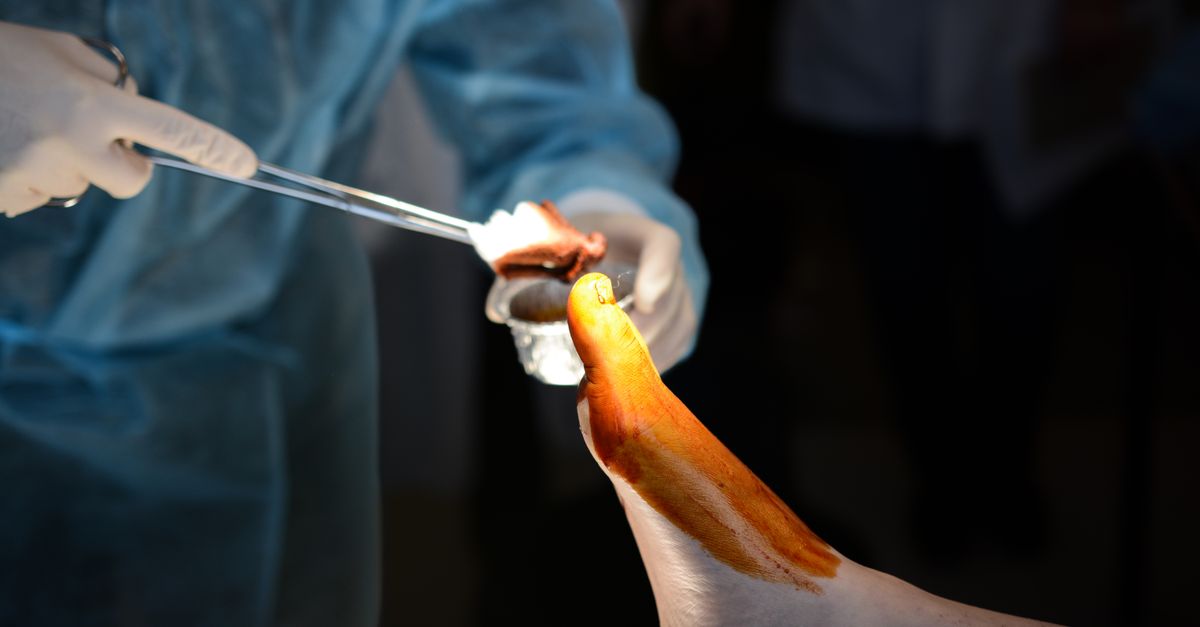
Foster and Thrive Povidone-Iodine is a broad-spectrum topical microbicide utilized extensively for wound care, surgical skin preparation, and first aid antisepsis. The most notable side effect is mild localized skin irritation and the characteristic golden-brown staining of the treated epidermal tissue.
Povidone-iodine is scientifically classified as an iodophore. It consists of elemental iodine complexed with povidone, a synthetic water-soluble polymer. This complex acts as a sustained-release reservoir for the free iodine. Once applied to the skin or wound bed, the complex slowly and continuously liberates active free iodine into the surrounding tissues.
The released free iodine quickly penetrates the cell walls of surface pathogens, including gram-positive and gram-negative bacteria, fungi, viruses, and protozoa. Inside the microbial cell, the iodine acts as a powerful oxidizing agent, directly attacking the sulfhydryl groups of amino acids and disrupting critical enzymatic processes. This mechanism ensures profound bactericidal activity while the slow-release nature of the polymer complex significantly reduces the caustic tissue irritation commonly associated with traditional iodine tinctures.
2. Warnings & Before Using Foster and Thrive Povidone-Iodine
While substantially less irritating than raw iodine tinctures, povidone-iodine must not be applied to serious full-thickness burns, extensive deep puncture wounds, or large areas of heavily denuded tissue without strict clinical supervision. Extensive application over massively compromised skin barriers allows significant transdermal absorption of the iodine complex, which can precipitate serious systemic toxicities.
Patients with pre-existing renal impairment must exercise profound caution. Systemically absorbed iodine relies primarily on the kidneys for clearance. In the presence of serious renal dysfunction, iodine clearance is drastically delayed, leading to toxic systemic accumulation. Furthermore, individuals with autoimmune thyroid disorders should consult an endocrinologist prior to extensive use, as the absorbed iodine can temporarily suppress or alter thyroid hormone synthesis.
Pregnant and lactating individuals must use this medication under the strict guidance of an obstetrician. Systemic iodine readily crosses the placental barrier and is excreted in human breast milk. Significant maternal absorption can induce transient hypothyroidism or goiter in the developing fetus or nursing infant.
3. Indications & Dosage Guide for Foster and Thrive Povidone-Iodine
This topical microbicide is clinically indicated for the preparation of the skin prior to surgical procedures, the treatment of superficial skin infections, and as a first aid antiseptic for minor cuts, scrapes, and minor burns.
For minor first aid applications, the affected area should be cleaned gently and dried. Adults and pediatric patients should apply a small amount of the solution directly to the wound using a sterile applicator. The application may be repeated one to three times daily. The treated area may be covered with a sterile, breathable bandage once the solution has dried.
When utilized as a preoperative skin preparation, the solution is applied aggressively to the surgical site working from the center outward in concentric circles. The solution must remain on the skin for a minimum of two minutes to ensure maximum bactericidal efficacy before the surgical incision is made.
4. In-Depth Side Effects Analysis of Foster and Thrive Povidone-Iodine
Povidone-iodine boasts an excellent safety profile for localized use, though it can induce mild dermal reactions and carries risks of systemic absorption under improper usage parameters.
Common Side Effects
The most frequently observed reaction is a mild, transient localized irritation or a slight burning sensation immediately upon application to raw tissue. The product leaves a distinct, temporary golden-brown film on the skin, which visually confirms the area of antimicrobial coverage. Mild skin dryness may occur with repeated daily use.
Serious Side Effects You Should Report
Patients must seek immediate medical evaluation if they experience signs of a serious allergic reaction. The development of a rapidly spreading contact dermatitis, profound localized tissue swelling, or the sudden onset of respiratory distress indicates a severe hypersensitivity to the povidone-iodine complex. Worsening wound pain with purulent exudate strongly suggests an advancing infection requiring systemic antimicrobial therapy.
Rare Side Effects
In exceptionally rare clinical scenarios involving prolonged application to large, deep wounds or serious burns, patients can experience systemic iodine toxicity. This serious condition manifests as metabolic acidosis, renal impairment (evidenced by decreased urine output), and thyroid dysfunction. Prolonged pooling of the solution under a patient during surgery can also cause serious chemical tissue burns.
Side Effects That Usually Do Not Require Medical Attention
The visual discoloration of the skin and a faint, characteristic iodine odor are expected physical properties of the medication and do not require clinical intervention. The color naturally fades as the free iodine is utilized and the product is washed away.
| Side Effect Category | Specific Symptoms |
|---|---|
| Dermatological | Golden-brown staining, mild irritation, skin dryness |
| Immunological | Severe contact dermatitis, respiratory distress |
| Systemic (Rare) | Renal impairment, metabolic acidosis (from serious overuse) |
5. Overdose Symptoms & Management for Foster and Thrive Povidone-Iodine
Topical overdose resulting in systemic toxicity is exceedingly rare in routine first aid but remains a serious clinical risk during the management of large-surface-area burns. The primary danger of acute toxicity occurs via accidental oral ingestion.
Symptoms of oral ingestion include a strong metallic taste, serious burning pain in the gastrointestinal tract, severe nausea, vomiting, and diarrhea. If massive quantities are consumed, systemic iodine toxicity rapidly ensues, leading to profound cardiovascular collapse, hypotension, delirium, and serious renal failure due to the toxic effects on the renal tubules.
In cases of suspected oral ingestion, emergency medical services must be contacted immediately. Vomiting should not be intentionally induced. Clinical management typically involves the administration of starch or milk in the early phase to bind the unabsorbed iodine, followed by aggressive intravenous fluid resuscitation and symptomatic support in an intensive care setting.
6. Missed Dose & What to Avoid with Foster and Thrive Povidone-Iodine
As a topically applied antiseptic used entirely on an as-needed basis for acute wound management, the concept of a missed dose does not apply. Patients should simply reapply the solution to the healing wound up to three times daily as required for continued protection.
Patients must meticulously avoid allowing the solution to pool extensively in the skin folds or under the body of an immobilized patient. Prolonged, sustained contact with concentrated pools of povidone-iodine under pressure causes serious chemical maceration and deep tissue burns.
Furthermore, patients should avoid applying heavy, non-breathable occlusive dressings over wet povidone-iodine. The solution should be allowed to dry and form its protective film before any breathable sterile gauze is applied over the injury site.
7. Drug & Alcohol Interactions with Foster and Thrive Povidone-Iodine
Systemic drug interactions are highly unlikely when the product is used properly on minor epidermal wounds due to the negligible transdermal absorption of the complex.
However, significant localized dermatological interactions are well documented. Povidone-iodine must never be applied simultaneously with topical products containing hydrogen peroxide, as the oxidative agents will neutralize each other and potentially cause localized tissue damage. Similarly, it must not be combined with topical silver preparations, as this interaction creates a caustic silver iodide precipitate that seriously damages the healing wound bed.
Alcohol consumption yields no direct chemical interaction with the topical application of this microbicide. Nevertheless, serious systemic dehydration caused by heavy alcohol intake can theoretically delay overall tissue regeneration and wound healing.
8. Precautions, Safety & Duration of Action of Foster and Thrive Povidone-Iodine
The antimicrobial action of povidone-iodine begins within minutes of application. The characteristic golden-brown color serves as a built-in clinical indicator; as long as the color remains visible on the skin, active free iodine is still being released, and the bactericidal effect is maintained.
Continuous self-treatment of minor injuries should be limited to a maximum of seven to ten days. If a wound fails to demonstrate healthy granulation tissue, remains highly painful, or exhibits expanding erythema after a week, the patient must discontinue self-treatment and obtain a professional medical assessment.
Because the liquid is deeply pigmented, it can cause staining on fabrics and porous surfaces. However, unlike traditional tinctures, povidone-iodine stains can often be washed out of most fabrics with standard soap and water if treated promptly.
9. How to Store & Dispose of Foster and Thrive Povidone-Iodine
The solution must be stored securely at a stable room temperature, strictly protected from freezing conditions and intense, direct sunlight. Extreme heat or freezing temperatures can irreversibly damage the povidone polymer, breaking the complex and rendering the medication ineffective.
Disposal must be handled with care to avoid environmental contamination. Unused or expired solution should not be poured directly into the municipal sewage system, as large volumes of antimicrobial agents can disrupt local water treatment processes.
Small amounts of leftover liquid can be absorbed into a solid waste material, such as paper towels or cat litter, sealed tightly in a durable container, and placed securely in the standard household trash.
10. When to See a Doctor
Immediate medical intervention is required if the treated wound begins exhibiting signs of a serious bacterial infection that the antiseptic failed to prevent. Warning signs include increasing localized heat, red streaks radiating away from the injury, severe deep-tissue pain, or the onset of a systemic fever.
A physician must be consulted urgently if the patient develops a serious hypersensitivity reaction, such as a rapidly expanding rash, hives, or unexpected facial swelling. Furthermore, if the original injury involves a deep puncture from a contaminated object, immediate professional care is mandatory to evaluate the need for a tetanus booster and prescription systemic antibiotics.
Frequently Asked Questions (FAQ)
1. How is povidone-iodine different from regular iodine tincture?
Povidone-iodine is complexed with a special polymer that slowly releases the active iodine. This makes it significantly less stinging, less irritating to the skin, and less likely to cause tissue damage compared to harsh, alcohol-based tinctures.
2. Can I use this product to clean my surgical incision after I go home?
You must strictly follow your surgeon’s specific discharge instructions. While it is often used for surgical prep, some surgeons prefer gentle soap and water for post-operative care to avoid delaying the final stages of healing.
3. Will the brown color wash off my skin?
Yes. The golden-brown film will naturally fade as the active iodine is used up by the body, and any remaining residue can be easily washed away with mild soap and warm water.
4. Is it safe to put a tight bandage over the area right after applying the liquid?
You should wait for the povidone-iodine to dry completely before applying a bandage. Covering the wet solution with a tight bandage can trap the chemicals and cause localized skin irritation.
5. Can I use this to treat a fungal infection like athlete’s foot?
While iodine has antifungal properties, it is not the most effective treatment for targeted fungal infections like athlete’s foot. You should use a specific over-the-counter antifungal cream for those conditions.
6. What should I do if the liquid accidentally gets into my eyes?
You must immediately flush your eyes with large amounts of cool, clean water for at least fifteen minutes. Seek urgent ophthalmological evaluation, as the iodine can cause serious irritation to the cornea.
7. How long should I keep using the solution on my cut?
You should only use it until the cut has firmly closed and formed a solid scab, usually within a few days. You must not use the product for more than ten consecutive days without consulting a doctor.
Bibliography
Disclaimer: The content is for informational purposes only and does not replace medical advice. Always consult your doctor or pharmacist for personalized treatment.