1. Introduction
A sharp shooting pain down the right buttock when walking fast is primarily caused by the compression or irritation of the sciatic nerve, frequently due to piriformis syndrome or lower lumbar radiculopathy. Fast walking increases the stride length and mechanical demand on the pelvic stabilizers, specifically the piriformis muscle. When this muscle contracts forcefully to externally rotate and stabilize the hip, it can impinge the underlying nerve structures.
The human gait cycle requires precise coordination between the lumbar spine, the pelvis, and the lower extremities. During a brisk walk, the body experiences greater impact forces and requires more robust muscular stabilization than during a leisurely stroll. This heightened demand places significant stress on the deep gluteal muscles and the surrounding fascial networks.
When these tissues are overworked, tight, or inflamed, they can compress adjacent neural pathways. The nervous system registers this mechanical compression and chemical irritation as a sharp, electrical pain. Understanding the biomechanical relationship between stride mechanics and pelvic anatomy is essential for addressing this precise musculoskeletal complaint.
2. Anatomy Of The Sciatic Nerve
The sciatic nerve is the longest and thickest nerve in the human body. It originates from the nerve roots in the lower lumbar and upper sacral spine, specifically segments L4 through S3. These nerve roots merge deep within the pelvis to form the main trunk of the sciatic nerve.
From the pelvis, the nerve exits through the greater sciatic foramen and travels straight down the back of the buttock, extending into the posterior thigh and eventually branching out to the lower leg and foot. Its sheer size and anatomical path make it particularly vulnerable to mechanical compression at several points along its route.
Because the nerve provides both motor control and sensory feedback to the lower extremity, any impingement along its path can manifest as shooting pain, tingling, or numbness in the buttock and leg. The location of the compression dictates the exact presentation of the symptoms.
3. Piriformis Syndrome And Nerve Compression
The piriformis is a small, pear-shaped muscle located deep within the buttock, situated underneath the larger gluteus maximus. It originates on the anterior surface of the sacrum and inserts into the greater trochanter of the femur. Its primary function is to externally rotate the hip and stabilize the pelvic joint during ambulation.
In most individuals, the sciatic nerve runs directly beneath the piriformis muscle. However, anatomical variations exist where the nerve pierces directly through the muscle belly. When the piriformis becomes tight, spasms, or hypertrophies from overuse, it can physically clamp down on the sciatic nerve.
This localized entrapment is clinically diagnosed as piriformis syndrome. The compression restricts local blood flow to the nerve tissue and triggers an inflammatory response. During fast walking, the continuous and forceful engagement of the piriformis muscle exacerbates this compression, sending sharp pain signals down the right buttock.
4. Biomechanics Of Fast Walking
Walking fast fundamentally alters normal gait biomechanics. To increase speed, an individual must either increase their cadence or lengthen their stride. A longer stride requires greater extension of the trailing leg and more pronounced flexion of the leading hip.
This exaggerated range of motion requires the pelvic stabilizers to work significantly harder to keep the torso upright and centered over the legs. The right piriformis muscle, along with the other deep external rotators, must contract eccentrically to decelerate the internal rotation of the femur upon heel strike.
The repetitive, high-impact nature of fast walking forces these small stabilizing muscles to endure substantial mechanical stress. If the right leg is the dominant push-off leg, or if there is a subtle leg length discrepancy, the right piriformis absorbs a disproportionate amount of this force, predisposing it to fatigue and subsequent spasm.
5. Lumbar Radiculopathy And Spinal Involvement
While peripheral entrapment like piriformis syndrome is common, the root cause of the shooting pain can originate higher up in the lumbar spine. Lumbar radiculopathy occurs when a spinal nerve root is compressed or inflamed before it even joins the sciatic nerve bundle.
This compression is often the result of a herniated intervertebral disc or age-related degenerative disc disease. When the soft inner core of a spinal disc bulges outward, it can press directly against the exiting right L5 or S1 nerve root.
During fast walking, the rotational forces transmitted through the spine can temporarily narrow the space where these nerves exit the spinal column. This dynamic narrowing pinches the inflamed nerve root, sending a sharp, electric shock sensation down the pathway of the nerve into the right buttock.
6. Sacroiliac Joint Dysfunction
The sacroiliac joint connects the sacrum at the base of the spine to the ilium of the pelvis. This joint is designed for stability and shock absorption, possessing very little natural movement. However, when an individual engages in brisk walking, the sacroiliac joint must transfer substantial kinetic energy between the upper body and the lower limbs.
If this joint becomes hypermobile or structurally restricted, it creates a condition known as sacroiliac joint dysfunction. This dysfunction alters the normal load-bearing mechanics of the pelvis.
The surrounding musculature, including the piriformis and the gluteus medius, must instinctively tighten to splint the unstable joint. This secondary muscular spasm can indirectly compress the sciatic nerve. Alternatively, the inflammation within the sacroiliac joint itself can irritate the adjacent nerve roots, referring pain directly into the right buttock.
7. The Role Of Gluteal Weakness
A sedentary lifestyle often leads to a condition characterized by weak, underactive gluteus maximus and gluteus medius muscles. When these primary movers and stabilizers fail to perform their duties during the gait cycle, the body must recruit secondary muscles to compensate.
The piriformis and the hamstring muscles are frequently forced to take over the workload of the weakened glutes. This phenomenon is known as synergistic dominance. Because the piriformis is not designed to be a primary load-bearing muscle, it quickly becomes overworked, rigid, and prone to chronic spasms.
When a person with gluteal amnesia attempts to walk fast, the functional demand exceeds the capacity of the compensating muscles. The resulting piriformis spasm physically crushes the sciatic nerve, resulting in acute, shooting pain during the activity.
8. Identifying Neuropathic Versus Nociceptive Pain
Understanding the nature of the pain helps pinpoint the underlying structure involved. Buttock pain during walking generally falls into two distinct categories based on nerve involvement.
| Pain Characteristic | Origin Type | Clinical Indicators |
|---|---|---|
| Sharp, shooting, electric shock | Neuropathic | Originates from nerve compression. Often accompanied by tingling or numbness radiating down the leg. |
| Dull, deep ache, localized throbbing | Nociceptive (Muscular/Joint) | Originates from tissue strain or joint inflammation. Pain stays localized to the buttock or lower back. |
| Burning sensation over the skin | Superficial Neuropathic | Often related to cluneal nerve entrapment in the upper buttock rather than the deeper sciatic nerve. |
| Pain exclusively upon heel strike | Mechanical Load | Suggests sacroiliac joint inflammation or a subtle stress reaction in the pelvic bones. |
9. Ischemia And Muscular Oxygen Demand
Sustained muscular contraction, such as the constant engagement of the pelvic stabilizers during a brisk walk, requires a continuous supply of oxygenated blood. If a muscle is chronically tight, the internal tissue pressure compresses the microscopic capillaries running through it.
This restriction in blood flow causes localized ischemia, meaning the muscle cells are deprived of oxygen. Without sufficient oxygen, the cells rely on anaerobic metabolism, producing acidic byproducts that irritate local pain receptors.
Furthermore, a muscle locked in an ischemic spasm acts as a rigid barrier. It cannot stretch to accommodate the mechanical sliding of the sciatic nerve during the gait cycle. The nerve becomes trapped and physically stretched against this hard, oxygen-deprived muscle, triggering severe shooting pain.
10. Fascial Tension And Kinetic Chains
The human body operates through interconnected fascial webs known as kinetic chains. The posterior oblique sling is a critical fascial chain connecting the latissimus dorsi of the back to the opposite gluteus maximus. This sling stabilizes the pelvis during walking.
If there is tension or restriction anywhere along this chain, it alters pelvic alignment. For example, a tight left shoulder can lead to compensatory tightening in the right buttock.
When walking fast, these fascial restrictions limit normal rotational mobility. The right side of the pelvis may be forced into an anterior tilt, over-stretching the hamstring attachments and placing the piriformis under constant tension. Addressing buttock pain often requires evaluating the mobility of the entire posterior kinetic chain.
11. Differential Diagnosis
It is important to distinguish sciatic nerve irritation from other pathologies that cause right-sided buttock pain. Trochanteric bursitis involves inflammation of the fluid-filled sac located over the outside of the hip bone. While it causes pain during walking, the pain is typically located on the lateral aspect of the hip rather than deep within the buttock.
Hamstring tendinopathy occurs where the hamstring muscles attach to the ischial tuberosity, the bony part of the pelvis used for sitting. Pain from this condition is usually a dull ache located precisely at the base of the buttock crease and worsens with stretching the back of the leg.
Vascular claudication, a condition caused by narrowed arteries in the pelvis or legs, can also cause exercise-induced pain. However, this pain is typically described as a heavy, cramping sensation that begins in the calves and predictably resolves entirely after a few minutes of rest.
12. Immediate Relief And Activity Modification
When sharp shooting pain occurs during a walk, the immediate response should be to reduce the stride length and slow the pace. Shortening the stride decreases the degree of hip flexion and pelvic rotation, immediately reducing the mechanical tension on the piriformis muscle and the sciatic nerve.
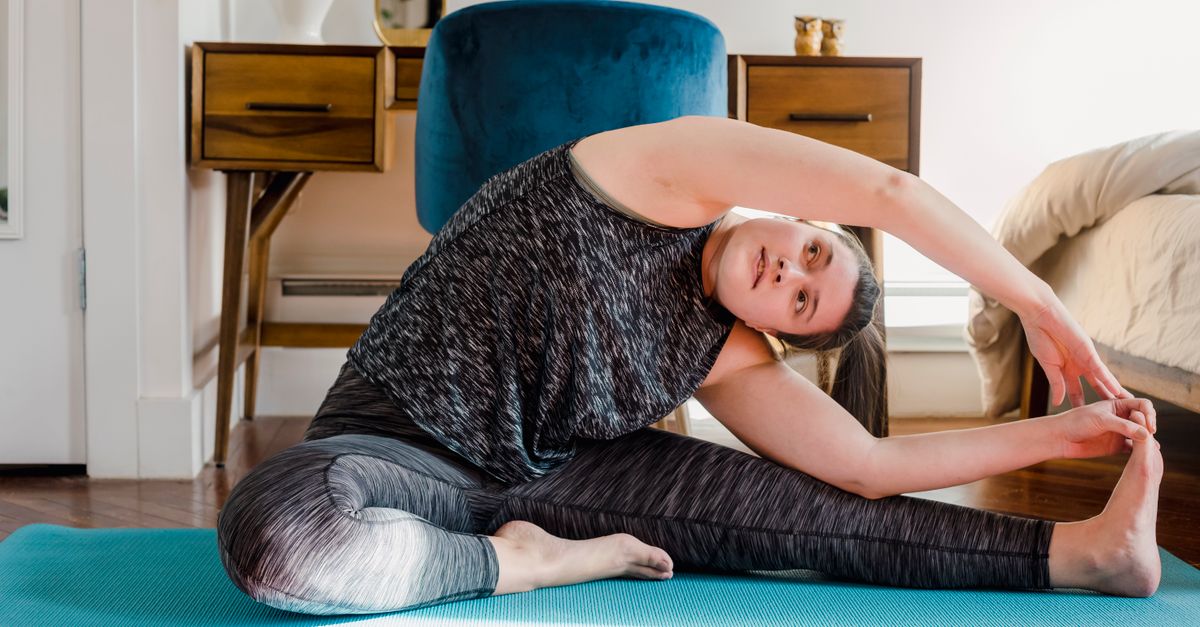
If the pain persists, stopping to perform a gentle piriformis stretch can provide acute relief. Seating on a bench, crossing the right ankle over the left knee, and gently leaning forward elongates the right external rotators, temporarily relieving the nerve compression.
Applying ice to the buttock area after the walk helps constrict local blood vessels, reducing acute inflammation around the nerve root. Once the initial inflammatory phase subsides, heat therapy can be used to promote vasodilation and relax the tense gluteal musculature.
13. Physical Therapy And Structural Rehabilitation
Long-term resolution of fast-walking buttock pain requires correcting the underlying biomechanical faults. A physical therapy program focused on strengthening the primary pelvic stabilizers is the most effective clinical intervention.
Targeted exercises, such as clamshells and lateral band walks, isolate and strengthen the gluteus medius. A robust gluteus medius prevents the pelvis from dropping during the single-leg stance phase of the gait cycle, reducing the compensatory burden on the piriformis.
Therapists also employ myofascial release techniques, such as deep tissue massage or dry needling, to manually deactivate trigger points within the piriformis muscle. Restoring normal tissue length allows the sciatic nerve to glide freely without impingement during ambulation.
14. Ergonomics And Footwear
The foundation of a healthy gait begins with proper footwear. Shoes that lack adequate arch support or shock absorption transmit excess kinetic energy up the kinetic chain directly into the sacroiliac joint and the pelvic musculature.
Overpronation, where the foot rolls inward excessively, causes the leg to rotate internally. This internal rotation places a constant stretch on the piriformis muscle, predisposing it to fatigue and spasm. Orthotic inserts can correct this structural misalignment and provide a neutral foundation for walking.
Individuals must also evaluate their seated posture throughout the day. Sitting on a thick wallet in the right back pocket creates an asymmetrical pelvic tilt and places direct physical pressure on the right piriformis muscle and sciatic nerve, leading to a condition colloquially known as “wallet sciatica.”
15. When To See A Doctor
While most cases of buttock pain during walking respond well to conservative management, certain clinical signs require professional medical evaluation. If the shooting pain is accompanied by profound muscle weakness, such as an inability to lift the front of the right foot (foot drop), a physician must be consulted immediately.
Patients should also seek medical attention if the pain radiates past the knee into the calf or foot, or if there is a sudden loss of bowel or bladder control. These symptoms suggest severe compression of the lumbar nerve roots or cauda equina syndrome, which is a neurological emergency.
A clinical assessment is necessary for any pain that does not improve after a few weeks of rest and stretching, or pain that awakens the patient from sleep, as this may indicate a more serious underlying spinal pathology requiring advanced imaging.
16. Frequently Asked Questions (FAQ)
1. Why does the pain only happen when I walk fast, but not when I jog?
Jogging alters your foot strike and pelvic mechanics, sometimes utilizing a more mid-foot strike and different muscular recruitment patterns. Fast walking requires a locked knee and a long heel-to-toe stride, which places maximum rotational stress specifically on the piriformis and sacroiliac joint.
2. Can stretching make sciatic pain worse?
Yes. If the sciatic nerve is already severely inflamed or physically trapped by a bulging disc, aggressive stretching can further irritate the nerve tissue. It is better to focus on gentle mobility and core stability rather than forcing a deep stretch.
3. Is a foam roller effective for buttock pain?
A foam roller can help release superficial gluteal tension. However, a firmer tool, like a lacrosse ball or tennis ball, is often needed to target the deep piriformis muscle effectively. Care must be taken not to press directly onto the sciatic nerve, which can worsen the pain.
4. Could my lower back be causing this even if my back does not hurt?
Absolutely. A compressed nerve root in the lower lumbar spine often refers pain entirely into the buttock and leg without causing localized back pain. This is a hallmark presentation of lumbar radiculopathy.
5. How long does piriformis syndrome take to heal?
With appropriate rest, activity modification, and targeted physical therapy, mild cases can resolve in a few weeks. Chronic cases involving severe muscular imbalances may require several months of consistent rehabilitation to correct the underlying biomechanics.
17. Bibliography
Disclaimer: The content is for informational purposes only and does not replace medical advice. Always consult your doctor for personalized treatment.