1. Introduction
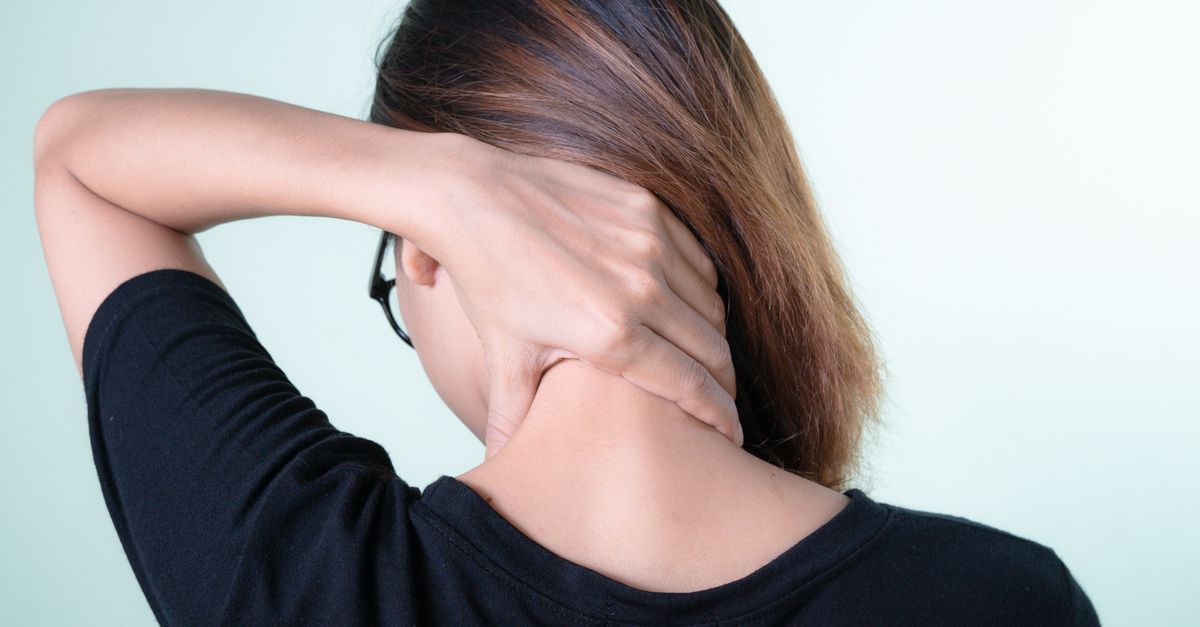
Soreness and pain in the neck when turning the head to the right are generally caused by a mechanical strain of the levator scapulae muscle, dysfunction within the right cervical facet joints, or a protective muscular spasm limiting rotation. The cervical spine is a highly complex structure designed to support the weight of the head while providing a vast range of motion. When the intricate balance of muscles, ligaments, and joints is disrupted by poor posture, sudden movements, or underlying degeneration, executing a simple rotational movement can trigger acute, localized pain. Understanding the specific biomechanics of cervical rotation helps pinpoint the exact anatomical structure generating the discomfort.
2. Anatomy of the Cervical Spine
The cervical spine consists of seven vertebrae, labeled C1 through C7. These bones protect the spinal cord and support the cranium. Between each vertebra, with the exception of C1 and C2, lies an intervertebral disc that acts as a shock absorber and provides flexibility.
The back of each vertebra features bony projections that link together to form the facet joints. These synovial joints dictate the direction and limits of movement in the neck.
A complex network of superficial and deep muscles surrounds this skeletal framework, providing dynamic stability and executing precise movements. A rich supply of nerves exits the spinal cord through small openings between the vertebrae, branching out to innervate the shoulders and arms.
3. Biomechanics of Cervical Rotation
Turning the head is not a simple hinge movement. It is a complex, coupled motion distributed across multiple segments of the cervical spine. Approximately fifty percent of total neck rotation occurs entirely at the atlantoaxial joint, the specialized articulation between the first and second cervical vertebrae.
The remaining fifty percent of rotation is distributed relatively evenly among the lower cervical segments, from C2 down to C7. When the head turns to the right, the right facet joints glide downward and backward, closing slightly, while the left facet joints glide upward and forward, opening slightly.
Any restriction, inflammation, or mechanical block in these joint gliding mechanics instantly limits the range of motion and produces sharp pain during the attempted rotation.
4. Muscular Strain and the Levator Scapulae
The levator scapulae is a long muscle originating from the upper cervical vertebrae and attaching to the superior angle of the shoulder blade. It functions to elevate the shoulder and assist in lateral flexion and rotation of the neck.
This muscle is highly susceptible to mechanical strain and overuse, particularly from sustained poor posture or sleeping in an awkward position. A strain involves microtearing of the muscle fibers, leading to localized inflammation.
When the head is turned to the right, a strained right levator scapulae muscle is forced to contract, while a strained left levator scapulae is stretched. Either scenario generates significant soreness, often radiating from the base of the skull down into the shoulder blade.
5. Sternocleidomastoid Dysfunction
The sternocleidomastoid is a prominent, thick muscle located on the front and side of the neck, running from the sternum and clavicle up to the mastoid process behind the ear. It plays a primary role in turning the head to the opposite side.
To turn the head to the right, the left sternocleidomastoid muscle must contract. If this left muscle is tight, strained, or in spasm, attempting to turn right will produce a pulling, aching pain along the front or side of the neck.
Trigger points within the sternocleidomastoid can also cause referred pain patterns, sending aching sensations into the jaw, the forehead, or deep within the ear during rotational movements.
6. Cervical Facet Joint Syndrome
The cervical facet joints are lined with cartilage and encased in a capsule rich in nerve endings. These joints can become inflamed due to acute trauma, such as whiplash, or chronic mechanical overload from poor head posture.
When the right facet joints are inflamed, the mechanical compression that naturally occurs when turning the head to the right pinches the swollen joint capsule. This pinching elicits a sharp, catching pain that strictly limits further rotation.
Pain originating from the facet joints is typically unilateral and does not radiate past the shoulder. It is often worst first thing in the morning and improves slightly with gentle movement as synovial fluid circulates within the joint.
7. Postural Overload and Text Neck
Modern lifestyles heavily emphasize prolonged forward head posture, commonly referred to as text neck. Staring down at mobile devices or slumping forward toward a computer monitor fundamentally alters the resting mechanics of the cervical spine.
For every inch the head moves forward of the center of gravity, the mechanical load on the posterior neck muscles doubles. These muscles must remain in constant isometric contraction to prevent the head from falling forward.
This chronic overload leads to tissue fatigue, fascial restriction, and muscular ischemia. The exhausted tissues become rigid and painful, turning a normal rotational movement into a difficult and highly uncomfortable effort.
8. Sleep Ergonomics and Acute Torticollis
Waking up with an inability to turn the head to the right, accompanied by severe pain, is a classic presentation of acute torticollis, often informally called a wry neck. This condition frequently stems from poor sleep ergonomics.
Using pillows that are too high, too flat, or sleeping on the stomach forces the cervical spine into maximum rotation or side-bending for hours. This prolonged extreme position compromises blood flow and places immense stretch on the ligaments and joint capsules.
Upon waking, the nervous system detects the tissue irritation and initiates a severe protective muscle spasm to lock the neck and prevent further movement, making turning to the affected side nearly impossible.
9. Cervical Disc Herniation and Radiculopathy
An intervertebral disc can bulge or herniate, pushing its inner gelatinous core outward through a tear in the tough outer annulus. If this disc material compresses or chemically irritates an adjacent cervical nerve root, it causes cervical radiculopathy.
Turning the head to the right narrows the neural foramen, the bony opening where the nerve root exits, on the right side. If a herniated disc is already occupying space in that foramen, turning the head directly compresses the nerve.
This generates a distinct type of pain that is often described as electric, burning, or shooting. It radiates from the neck down into the right shoulder, arm, or hand, and may be accompanied by numbness or muscle weakness.
10. Degenerative Joint Disease
Cervical spondylosis is the clinical term for age-related degenerative changes in the cervical spine. Over time, the intervertebral discs lose hydration and height, transferring more mechanical stress to the facet joints.
The body responds to this altered loading by forming osteophytes, or bone spurs, along the joint margins. These bony overgrowths can physically block the normal gliding motion of the facet joints.
In advanced spondylosis, turning the head to the right forces the inflamed and deformed joint surfaces to grind against each other, causing a deep, stiff, and grinding pain, often accompanied by audible crepitus.
11. The Role of Stress and Myofascial Tension
Psychological stress has a profound physiological impact on the musculoskeletal system, particularly in the cervical and shoulder regions. Stress triggers a fight-or-flight response, causing an involuntary elevation of the shoulders and tightening of the neck muscles.
Chronic stress maintains this low-level muscular tension for prolonged periods, leading to the development of myofascial trigger points. These hyperirritable nodules within the taut muscle bands become acutely painful when mechanically stimulated.
Turning the head engages these taut bands, triggering localized soreness and referred pain patterns throughout the upper back and cranium.
12. Clinical Diagnostic Evaluation
Diagnosing the precise cause of rotational neck pain requires a thorough clinical assessment. A clinician will perform a neurological examination, testing reflexes, dermatomal sensation, and myotomal muscle strength in the upper extremities.
Palpation of the cervical paraspinal muscles, the levator scapulae, and the facet joints identifies areas of acute tenderness and muscular spasm.
| Symptom Profile | Probable Anatomical Source |
|---|---|
| Dull ache in the muscle belly, worse with stretching. | Muscular strain (e.g., levator scapulae). |
| Sharp, catching pain isolated to the right side of the neck. | Cervical facet joint dysfunction. |
| Burning pain radiating down the right arm with numbness. | Cervical radiculopathy or disc herniation. |
| Severe morning stiffness, grinding sensation. | Cervical spondylosis (osteoarthritis). |
13. Conservative Management and Physical Therapy
Most mechanical neck pain responds excellently to conservative management. The initial goal is to modulate pain and reduce protective muscle spasm. Applying heat promotes vasodilation, relaxing tense muscles, while short courses of nonsteroidal anti-inflammatory medications reduce localized joint swelling.
Physical therapy is the definitive intervention for restoring normal biomechanics. Treatment involves manual therapy techniques, such as joint mobilization, to restore the gliding motion of restricted facet joints.
Therapeutic exercises focus on stretching tight anterior structures and strengthening the deep cervical flexors and scapular stabilizers, ensuring long-term postural support and preventing recurrence.
14. Red Flags and When to Seek Medical Attention
While neck soreness is ubiquitous and often benign, certain accompanying symptoms require urgent medical investigation. Pain that is severe, unrelenting, or awakens the patient from deep sleep is concerning for non-mechanical pathology.
Immediate medical assessment is required if the neck pain is accompanied by systemic symptoms such as an unexplained fever, profound weight loss, or difficulty swallowing.
Furthermore, any sudden onset of neurological deficits, such as progressive weakness in the arm, a loss of manual dexterity, or difficulty maintaining balance while walking, necessitates emergent neurological imaging to rule out spinal cord compression.
15. Frequently Asked Questions (FAQ)
1. Should I push through the pain to stretch my neck out?
No. Pushing into sharp, catching pain can further irritate an inflamed facet joint or exacerbate a pinched nerve. Gentle, pain-free range of motion is beneficial, but aggressive stretching should be avoided until the acute inflammation subsides.
2. Is a cervical collar recommended for a stiff neck?
Soft cervical collars are rarely recommended for mechanical neck pain. Immobilizing the neck rapidly leads to muscle atrophy and increased joint stiffness. Early, gentle mobilization is the standard clinical approach to speed recovery.
3. Can cracking my own neck relieve the pressure?
Self-manipulation of the cervical spine is strongly discouraged. It often fails to target the specific restricted joint and places unnecessary torque on adjacent hypermobile segments, potentially worsening joint instability or causing vascular injury.
4. How does my sleeping position affect my neck?
Sleeping on your stomach forces the cervical spine into maximum rotation to allow for breathing, placing immense stress on the joints. Sleeping on your back or side with a pillow that maintains neutral spinal alignment is critical for tissue recovery.
5. How long does a typical neck strain take to heal?
Mild muscular strains generally resolve within a few days to two weeks with proper rest and basic conservative care. If pain persists beyond two weeks or begins to radiate into the shoulder, a professional clinical evaluation is indicated.
16. Bibliography
Disclaimer: The content is for informational purposes only and does not replace medical advice. Always consult your doctor for personalized treatment.