1. Introduction
Sleeping with wet hair causes a rapid and prolonged drop in scalp temperature, which triggers reflexive muscle spasms in the neck and head. The localized cooling constricts blood vessels and places sustained tension on the muscles and fascia covering the skull. This mechanical strain irritates the trigeminal and occipital nerves, resulting in the deep, pounding sensation characteristic of a tension headache upon waking. The body’s thermoregulatory effort to re-warm the chilled tissues creates a cycle of muscular bracing that inevitably leads to cranial discomfort.
The human head is highly vascularized and contains a complex network of thin muscles and sensitive nerve pathways. Unlike the rest of the body, the scalp lacks a thick layer of insulating subcutaneous fat. This anatomical reality makes the head exceptionally vulnerable to rapid temperature fluctuations.
When a person goes to sleep with saturated hair, the moisture evaporates slowly over several hours. Evaporation is an endothermic process, meaning it pulls heat away from the surrounding environment—in this case, the scalp. This creates a localized, sustained chilling effect that the body must actively combat.
Understanding the thermodynamics of evaporative cooling and the neuromuscular response to cold exposure elucidates why a simple grooming habit can induce severe physiological pain. Addressing this thermal imbalance and ensuring proper hair care routines can entirely prevent this specific manifestation of nocturnal head pain.
2. Thermal Regulation of the Head
Thermoregulation is a critical autonomic function designed to maintain the core body temperature within a strict, narrow range. The head plays a disproportionately large role in this process due to its high density of blood vessels and proximity to the brain.
Blood flow to the scalp is copious, ensuring that the brain receives a constant supply of oxygen and glucose. Because the blood vessels are located very close to the surface of the skin, the head is a highly efficient radiator, capable of rapidly dissipating internal heat into the environment.
Conversely, the head is also highly susceptible to heat loss. When exposed to a cold stimulus, the thermoregulatory center in the hypothalamus initiates defensive mechanisms. The primary response is vasoconstriction, the narrowing of the superficial blood vessels, to conserve warm blood within the core.
When wet hair rests against the scalp for hours, the hypothalamus detects the continuous thermal drain. It initiates prolonged vasoconstriction, reducing the blood supply to the superficial muscles of the scalp and neck, setting the stage for ischemic muscle cramping.
3. The Physics of Evaporative Cooling
The fundamental cause of the profound temperature drop is the physics of evaporative cooling. Water requires energy to transition from a liquid state to a gaseous state. When wet hair air-dries, the water molecules absorb thermal energy directly from the scalp to fuel this phase change.
During the day, walking around in a warm environment facilitates rapid evaporation. The process is quick, and the body can easily compensate for the brief thermal loss.
However, during sleep, the dynamic changes. The bedroom environment is typically cooler, and the individual is largely immobile. The wet hair is pressed between the scalp and a pillow, which often restricts airflow and significantly slows the evaporation rate.
Because the evaporation is prolonged, the scalp is subjected to a slow, relentless extraction of heat that lasts for hours. This creates a state of localized, mild hypothermia in the cutaneous and muscular tissues of the cranium.
4. Muscular Bracing and Spasms
The body’s natural reflex to a cold stimulus is muscular contraction. When you step into a cold environment, you instinctively tense your shoulders and neck muscles to generate heat through friction and reduce surface area exposure. This process is known as muscular bracing.
When the scalp is continuously chilled by wet hair, the muscles of the head, neck, and upper back engage in this same bracing reflex. The frontalis muscle over the forehead, the temporalis muscles on the sides, and the suboccipital muscles at the base of the skull undergo sustained, low-level contraction.
Muscles are not designed to remain in a state of continuous contraction for eight hours. They require rhythmic cycles of contraction and relaxation to allow fresh blood to deliver oxygen and flush out metabolic waste.
The sustained bracing caused by the cold, wet hair leads to rapid muscular fatigue and the accumulation of lactic acid. This fatigue transitions into involuntary muscle spasms, creating tight, painful bands of tissue known as trigger points around the circumference of the skull.
5. The Epicranial Aponeurosis and Fascial Tension
The muscles of the scalp are connected by a broad, tough sheet of fibrous tissue called the epicranial aponeurosis, or the galea aponeurotica. This fascial layer stretches tightly over the top of the cranium, linking the forehead muscles to the muscles at the back of the head.
Fascia is highly sensitive to temperature and mechanical stress. When the surrounding muscles go into spasm due to the cold stimulus, they pull violently on this aponeurotic sheet.
The entire fascial network across the top of the head becomes taut like a drum skin. This immense mechanical tension places direct pressure on the underlying periosteum (the membrane covering the bone) and the superficial nerve endings.
The resulting pain is classically described as a tight band squeezing the head—the definitive hallmark of a tension-type headache. The mechanical restriction prevents normal tissue mobility and causes a deep, persistent, pounding ache.
6. The Trigeminal Nerve Pathway
The sensory innervation of the face and the front half of the scalp is governed by the trigeminal nerve, the largest and most complex of the cranial nerves. The trigeminal nerve is exquisitely sensitive to physical pressure, inflammation, and temperature changes.
When the frontalis and temporalis muscles spasm and pull the epicranial aponeurosis tight, they exert mechanical compression directly onto the branches of the trigeminal nerve.
Furthermore, the prolonged vasoconstriction caused by the cooling effect reduces the delivery of oxygen to the nerve fibers, a state known as localized ischemia. This ischemic stress lowers the firing threshold of the nerve endings.
The combination of physical squeezing from tight muscles and the chemical stress of ischemia causes the trigeminal branches to fire erratic pain signals to the brainstem. This manifests as a throbbing or aching pain located over the forehead, the temples, and behind the eyes.
7. Occipital Neuralgia Mechanics
The back of the head and the upper neck are supplied by the greater and lesser occipital nerves. These nerves originate from the cervical spine and must weave their way through the thick, complex muscles of the upper back and neck, specifically the suboccipital triangle, to reach the scalp.
Sleeping with wet hair often involves resting the heavy, damp mass of hair directly against the nape of the neck. The suboccipital muscles, responding to the cold, contract fiercely and remain rigid throughout the night.
Because the occipital nerves pass directly through these muscle bellies, the severe muscular spasms physically clamp down on the nerves. This entrapment causes a condition known as occipital neuralgia.
Occipital neuralgia produces a distinct, sharp, or pounding pain that originates at the base of the skull and radiates upward and forward over the top of the head, perfectly mimicking the trajectory of a severe tension headache.
8. The Impact of Sleep Posture and Pillows
The physical act of sleeping on wet hair exacerbates the muscular tension through poor ergonomics. Wet hair is significantly heavier than dry hair. When an individual lays their head on a pillow, the wet mass creates an uneven surface.
To avoid the uncomfortable, cold dampness, individuals often adopt unnatural, contorted sleeping postures. They may twist their neck at an awkward angle or elevate their head excessively to keep the wet ends away from their face and shoulders.
Maintaining an unaligned cervical spine for hours places tremendous mechanical strain on the ligaments and facet joints of the neck. This postural strain, combined with the cold-induced muscular bracing, creates a synergistic effect that guarantees severe cervical stiffness.
Additionally, standard pillows absorb the water, remaining cold and damp against the skin, essentially functioning as a continuous cold compress applied to the neck muscles throughout the entire sleep cycle.
9. Differentiating Tension Headaches from Migraines
It is important to accurately identify the type of headache experienced, as the physiological mechanisms differ.
| Characteristic | Tension Headache (Wet Hair) | Migraine |
|---|---|---|
| Quality of Pain | Dull, tight, pressing band around the head. | Severe, pulsating, or throbbing. |
| Location | Bilateral (both sides), forehead, and base of skull. | Often unilateral (one side of the head). |
| Accompanying Symptoms | Neck and shoulder stiffness, scalp tenderness. | Nausea, visual auras, sensitivity to light/sound. |
| Aggravating Factors | Physical palpation of the neck muscles. | Routine physical activity worsens the throb. |
A headache caused directly by sleeping with wet hair is overwhelmingly mechanical and muscular in nature, fitting the profile of a tension headache. If the pain includes severe nausea or visual disturbances, other neurological triggers must be evaluated.
10. The Sinus Congestion Connection
While muscular tension is the primary driver of the headache, the cold stimulus can also affect the sinus cavities. The paranasal sinuses are hollow, air-filled spaces within the skull lined with mucous membranes.
Prolonged chilling of the forehead and facial region can cause reactive changes in the sinus linings. The cold can induce localized swelling of the mucous membranes and slow down the action of the cilia, the microscopic hairs responsible for clearing mucus.
This can lead to a feeling of mild sinus congestion or fullness upon waking. The increased pressure within the frontal and ethmoid sinuses adds a deep, aching component to the overall head pain.
This sinus pressure, combined with the fascial tension across the skull, creates a heavy, pounding sensation that makes opening the eyes or moving the head profoundly uncomfortable.
11. Fungal Overgrowth and Scalp Health
Beyond the neurological and muscular pain, sleeping with wet hair introduces significant dermatological risks to the scalp environment. The scalp naturally harbors various microorganisms, including a yeast called Malassezia.
Malassezia thrives in warm, dark, and highly humid environments. When wet hair is pressed against a pillow for eight hours, it creates the perfect incubator for fungal overgrowth.
An overgrowth of this yeast leads to a condition called seborrheic dermatitis, which causes severe itching, redness, and prominent dandruff. While this does not directly cause the tension headache, the severe scalp irritation and the resulting urge to scratch can increase localized inflammation and discomfort.
Maintaining a dry scalp is a fundamental dermatological necessity to preserve the balance of the skin microbiome and prevent chronic inflammatory conditions that degrade hair and skin health.
12. Structural Damage to the Hair Shaft
The structural integrity of the hair itself is highly compromised when wet. Hair is composed of a protein called keratin. When saturated with water, the hydrogen bonds within the keratin structure temporarily break down.
This makes wet hair exceptionally elastic and fragile. It can stretch up to thirty percent of its original length without breaking, but it is highly susceptible to structural damage from friction.
Tossing and turning on a pillowcase with wet hair subjects the fragile strands to severe mechanical abrasion. This friction tears the outer cuticle of the hair shaft, leading to profound breakage, split ends, and a dull, frizzy appearance.
While hair damage does not cause physical pain, the necessity to avoid aggressive detangling and further damage in the morning adds unnecessary stress to the start of the day.
13. Immediate Relief for Morning Headaches
When waking up with a pounding tension headache induced by wet hair, immediate interventions should focus on reversing the muscular spasms and restoring normal blood flow.
Applying a warm compress or taking a hot shower is the most effective initial step. The heat induces vasodilation, opening the constricted blood vessels and rushing oxygenated blood back to the ischemic scalp and neck muscles. The warmth also physically softens the rigid fascia of the epicranial aponeurosis.
Gentle, sustained stretching of the neck and shoulders helps release the muscular bracing. Rotating the neck slowly and applying gentle downward pressure on the trapezius muscles can relieve the tension clamping down on the occipital nerves.
Over-the-counter nonsteroidal anti-inflammatory drugs (NSAIDs) like ibuprofen can be utilized to reduce the localized tissue inflammation and block the pain signals transmitting through the trigeminal pathway.
14. Preventive Hair Care Routines
The absolute prevention of this specific tension headache requires modifying evening hygiene routines. The primary goal is to ensure the hair and scalp are completely dry before laying the head on a pillow.
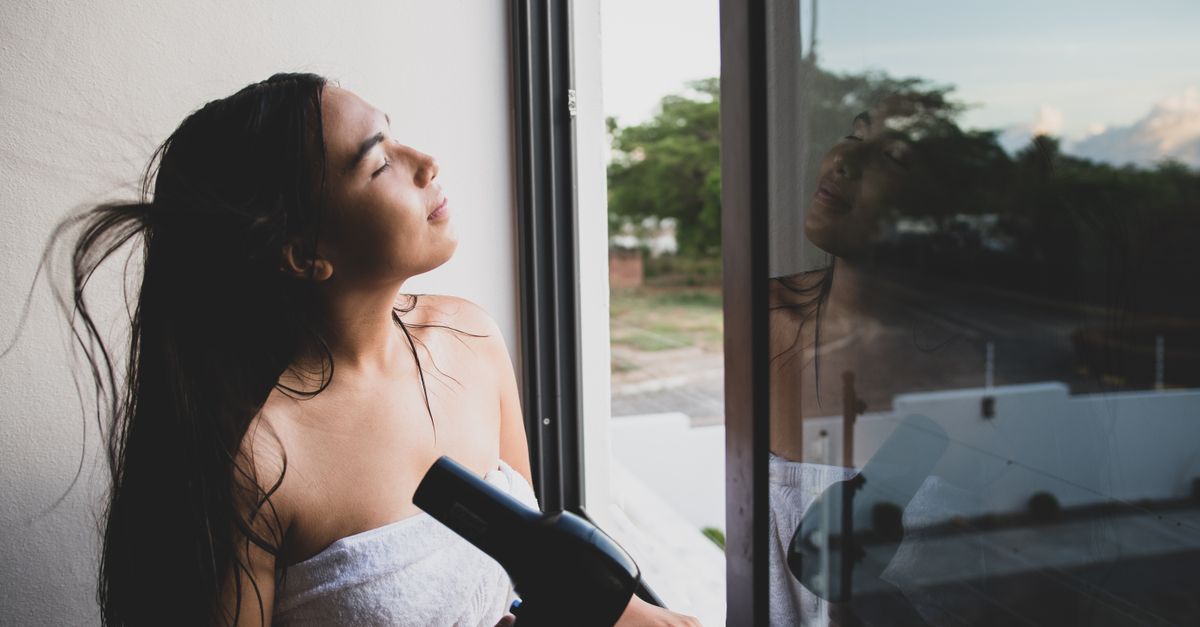
If washing hair in the evening is unavoidable, utilizing a blow dryer on a warm, not hot, setting to dry at least the roots and the scalp is mandatory. The ends of the hair may remain slightly damp, but the skin of the cranium must be protected from evaporative cooling.
If air-drying is preferred, the hair washing must be scheduled several hours before bedtime to allow sufficient time for natural evaporation in a warm, ambient environment.
Wrapping the hair in a highly absorbent microfiber towel for twenty minutes post-shower aggressively removes excess water, significantly reducing the required drying time and minimizing the thermal drain on the head. For individuals experiencing chronic head and neck pain despite dry hair, evaluating ergonomic workstation setups or exploring cervicogenic headache triggers is recommended.
15. Frequently Asked Questions (FAQ)
1. Does sleeping with wet hair actually cause a cold or a virus?
No. Viruses cause colds, not wet hair. However, prolonged chilling of the body can cause mild physiological stress, which may temporarily lower your immune system’s efficiency, making you slightly more susceptible to a virus if you are already exposed to one.
2. Why do I only get this headache in the winter and not the summer?
In the summer, the ambient room temperature is higher, which speeds up the evaporation process and prevents your scalp from dropping to a temperature that triggers muscle spasms. In the winter, the cold room air combined with the wet hair causes a severe and rapid thermal drop.
3. Will braiding my wet hair prevent the headache?
No, braiding wet hair often makes the problem worse. A tight braid holds the moisture tightly against the scalp and prevents air circulation, prolonging the evaporative cooling process. It also adds mechanical pulling tension to the scalp, increasing the headache risk.
4. Can this type of headache cause permanent nerve damage?
No. The trigeminal and occipital nerve irritation is caused by temporary muscle spasms and mechanical compression. Once the muscles relax and the scalp warms up, the nerves return to normal function without any permanent structural damage.
5. Is it safe to sleep with a shower cap on over wet hair?
Sleeping with a plastic shower cap over wet hair prevents evaporative cooling, which might stop the headache, but it creates a sealed, humid incubator on your scalp. This massive buildup of moisture and heat practically guarantees a severe fungal overgrowth and scalp irritation.
16. Bibliography
Disclaimer: The content is for informational purposes only and does not replace medical advice. Always consult your doctor for personalized treatment.