1. Introduction
Severe arch cramps in the feet while swimming laps are the result of sustained plantar flexion combined with the profound physiological stresses of muscular fatigue and cold-induced vasoconstriction. The flutter kick requires the foot to be pointed rigidly downward to maximize hydrodynamic propulsion. This locks the intricate intrinsic muscles of the foot arch and the powerful calf muscles into a shortened, highly contracted state for an extended duration. As these muscles work relentlessly against the dense resistance of the water, they rapidly deplete local cellular energy reserves.
Simultaneously, immersion in a pool, which is significantly colder than normal body temperature, triggers the sympathetic nervous system to restrict peripheral blood flow. The blood vessels in the feet clamp shut to preserve core body heat, creating an ischemic environment. This drastic reduction in warm, oxygen-rich arterial blood leaves the highly active foot muscles starved of oxygen and unable to clear acidic metabolic waste products.
The combination of biomechanical shortening, energy depletion, and poor blood flow disrupts the delicate neuromuscular communication within the foot. The motor neurons become hyper-excitable and begin to fire erratic, continuous signals. The muscle fibers lock into an involuntary, agonizing spasm that physically contorts the arch.
Understanding the unique biomechanical demands of swimming and the physiological impact of the aquatic environment provides the framework necessary to prevent these painful interruptions. By implementing targeted stretching, optimizing hydration, and refining kick technique, swimmers can mitigate neuromuscular misfiring and maintain smooth, powerful propulsion.
2. Anatomy of the Plantar Arch
The human foot is an architectural marvel designed to bear weight and absorb shock during walking and running. The underside of the foot features a longitudinal arch supported by a dense, fibrous band of connective tissue known as the plantar fascia. Beneath this fascia lies a complex network of intrinsic foot muscles, arranged in four distinct layers.
These small intrinsic muscles, such as the flexor digitorum brevis and the abductor hallucis, are primarily responsible for fine motor control of the toes and dynamic stabilization of the arch. They act like biological springs, expanding and contracting to absorb ground reaction forces.
In a normal walking gait, these muscles cycle through stretching and contracting. Swimming completely removes this natural loading cycle. Instead of bearing weight, the foot is suspended in a fluid medium.
To swim efficiently, the foot must act as a rigid flipper. This requires the intrinsic muscles of the arch to contract statically, holding the bones of the foot in a tight, streamlined position against the continuous, heavy drag of the water.
3. Biomechanics of the Flutter Kick
The flutter kick is the fundamental propulsive movement in freestyle and backstroke swimming. It generates forward momentum by displacing water rapidly. To achieve maximum hydrodynamic efficiency, the ankle must be completely plantarflexed—pointing the toes as far away from the shin as possible.
This pointed-toe position places the muscles of the calf (gastrocnemius and soleus) and the intrinsic muscles of the plantar arch in their most mechanically shortened state. A muscle contracting from a shortened position operates at a severe mechanical disadvantage and fatigues significantly faster than a muscle working through its full range of motion.
Furthermore, the water provides continuous, uniform resistance in every direction. As the leg drives downward, the top of the foot pushes against the water. As the leg recovers upward, the bottom of the foot drags against the water.
This relentless bidirectional resistance means the muscles of the arch never receive a moment of true relaxation. They are trapped in a sustained, high-intensity isometric contraction for the duration of the lap, setting the stage for rapid metabolic failure.
4. Cold Water Vasoconstriction
The aquatic environment introduces a massive thermal challenge. Water conducts heat away from the human body approximately twenty-five times faster than air of the same temperature. Even in a heated lap pool, the water temperature is typically kept between seventy-eight and eighty-two degrees Fahrenheit, well below core body temperature.
The rapid loss of thermal energy through the skin of the extremities alarms the hypothalamus, the brain’s thermoregulatory center. To prevent dangerous core hypothermia, the autonomic nervous system initiates aggressive peripheral vasoconstriction.
The smooth muscles lining the small arteries in the feet contract tightly, drastically narrowing the blood vessels. This shunts the warm arterial blood away from the skin and feet, redirecting it to the vital organs in the torso.
This survival reflex creates localized ischemia in the working muscles of the foot. At the exact moment the arch muscles require a massive influx of oxygen and nutrients to fuel the flutter kick, their primary delivery system is clamped shut by the cold water.
5. Hypoxia and Metabolic Waste Accumulation
The combination of intense muscular work and severe vasoconstriction leads to a state of localized hypoxia, or oxygen starvation. Without sufficient oxygen, the muscle cells cannot produce adenosine triphosphate efficiently through aerobic metabolism.
To sustain the kicking motion, the cells shift to anaerobic metabolism. This rapid energy production mechanism generates significant metabolic waste, primarily lactic acid and hydrogen ions. Because the blood vessels are restricted by the cold, these acidic byproducts cannot be flushed out of the foot tissue.
The accumulation of hydrogen ions lowers the intracellular pH, making the muscle environment highly acidic. This acidity interferes with the biochemical mechanism of muscle contraction, specifically disrupting the calcium ion channels required for the muscle fibers to relax.
Without the ability to clear the waste or obtain fresh energy, the cross-bridges within the muscle fibers lock together. The muscle becomes rigid, setting the physiological foundation for a severe, unyielding cramp.
6. Neuromuscular Misfiring and Cramp Physiology
A muscle cramp is not simply a mechanical failure; it is an acute neurological malfunction. Muscle contractions are governed by a delicate balance of sensory feedback from muscle spindles, which initiate contraction when a muscle stretches, and Golgi tendon organs, which inhibit contraction when tension becomes dangerously high.
Extreme fatigue disrupts this neurological harmony. Studies suggest that when a muscle is highly fatigued, especially in a shortened position like a pointed toe, the inhibitory signals from the Golgi tendon organs become depressed, while the excitatory signals from the muscle spindles become hyperactive.
This imbalance removes the neurological safety brakes. The motor neurons in the spinal cord begin firing continuous, high-frequency signals, commanding the intrinsic muscles of the arch to contract maximally.
This barrage of errant electrical signals manifests as a violent, involuntary spasm. The muscle fibers seize, twisting and contorting the arch of the foot, causing acute, agonizing pain that immediately halts the swimmer’s progress.
7. Electrolyte Depletion During Aquatic Exercise
While systemic electrolyte imbalance is rarely the sole cause of a localized cramp, it serves as a powerful compounding factor. Muscle contraction relies heavily on the precise cellular exchange of sodium, potassium, calcium, and magnesium.
Swimming is a highly demanding cardiovascular exercise. Despite being submerged in water, swimmers sweat profusely to dissipate internal metabolic heat. This sweat results in a significant loss of water and vital electrolytes, particularly sodium and magnesium.
Because the swimmer is already wet, they often fail to notice the volume of sweat being produced and may neglect intra-workout hydration. As systemic electrolyte levels drop, the resting electrical potential of the muscle cell membranes becomes unstable.
This instability lowers the threshold for an electrical misfire. When combined with the local hypoxia and mechanical fatigue in the arch, even a mild systemic electrolyte deficiency can be the final trigger that sends the foot into a full-blown spasm.
8. The Impact of Swim Fins
Training with swim fins is a common practice to build leg strength and improve ankle flexibility. However, utilizing fins exponentially increases the biomechanical load on the arch and calf muscles.
Fins increase the surface area of the foot, catching significantly more water with every kick. This massive increase in hydrodynamic resistance requires the muscles of the foot and lower leg to generate substantially more force to complete the movement.
Furthermore, the rigid structure of the fin acts as a long lever arm attached to the toes. This leverage places extreme torque on the delicate intrinsic muscles of the plantar arch and severely stretches the tendons crossing the ankle joint.
If a swimmer relies heavily on their feet rather than initiating the kick from the powerful hip flexors, the small muscles of the arch will fatigue almost instantaneously under the exaggerated load of the fin, almost guaranteeing an acute cramp.
9. Differentiating Cramps from Structural Foot Pathologies
It is vital to distinguish between a transient, fatigue-induced muscle cramp and an underlying structural pathology of the foot.
| Characteristic | Exercise-Induced Muscle Cramp | Plantar Fasciitis / Structural Strain |
|---|---|---|
| Onset | Sudden, explosive spasm during or immediately after the swim. | Gradual onset, often worst with the first steps in the morning. |
| Physical Signs | Visible contortion and hardening of the arch muscle. | No visible spasm; deep, localized pain near the heel. |
| Resolution | Resolves within minutes of stretching and rest. | Pain persists for days or weeks, dull and aching. |
| Trigger | Specific mechanical fatigue and cold exposure. | Chronic overuse, poor footwear, structural arch collapse. |
If arch pain persists for days after swimming or sharply limits the ability to walk on land, a podiatric evaluation is warranted to rule out plantar fascial tearing or tendinopathy.
10. Acute Management of an Arch Cramp
When a severe arch cramp strikes mid-lap, the immediate priority is safety. The swimmer must stop, hold onto the lane line or pool wall, and avoid panicking, as panic increases heart rate and oxygen consumption, worsening the localized hypoxia.
The primary mechanical intervention is reciprocal inhibition. By forcefully contracting the opposing muscle group, the nervous system is forced to send an inhibitory relaxation signal to the cramping muscle.
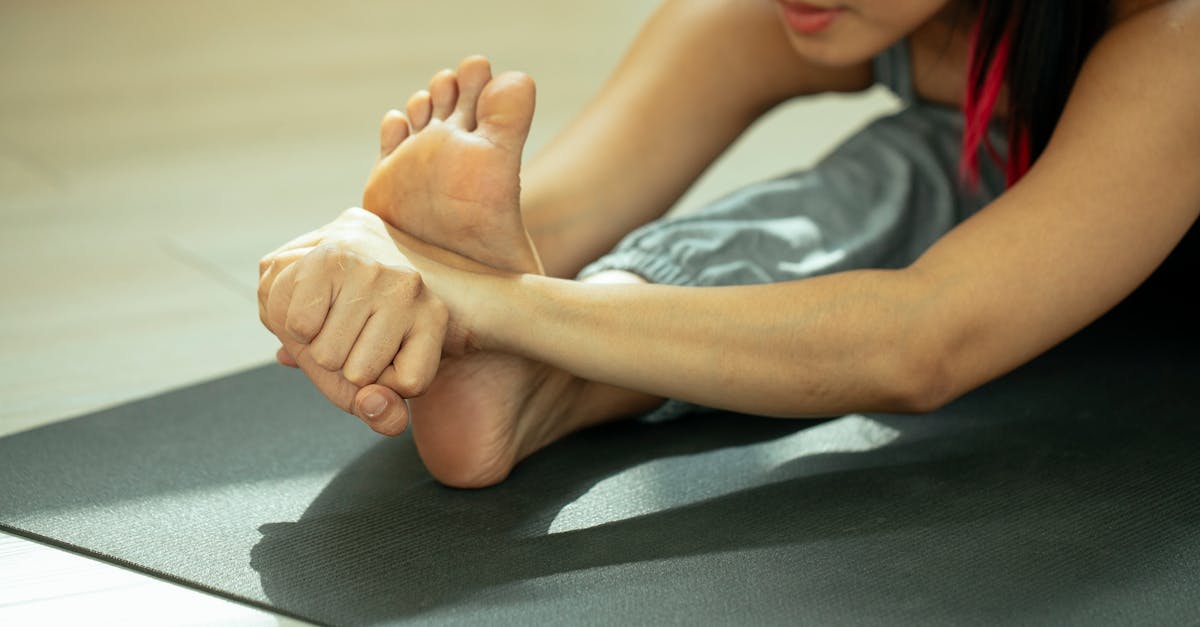
For an arch cramp, grab the toes and manually pull them upward toward the shin (dorsiflexion) while actively trying to flex the muscles on the top of the foot. This physically lengthens the spasming intrinsic muscles and disrupts the erratic motor neuron firing.
Exiting the pool temporarily is highly recommended. Standing on the warm, hard pool deck and placing full body weight onto the flat foot provides an intense, static stretch to the plantar fascia and arch muscles, completely reversing the pointed-toe posture that caused the spasm.
11. Post-Swim Tissue Recovery
Once the cramp has subsided, the affected muscles require targeted recovery to prevent a recurrence later in the day. The violent spasm creates significant micro-trauma within the muscle fibers, leaving the foot feeling bruised and deeply tender.
Thermal therapy is a crucial post-swim intervention. Applying a warm compress or soaking the feet in a warm bath induces profound local vasodilation. The heat opens the clamped blood vessels, reversing the cold-water ischemia.
The rush of warm arterial blood flushes out the trapped lactic acid and delivers the oxygen and nutrients required to heal the micro-trauma.
Self-myofascial release utilizing a lacrosse ball or a frozen water bottle is highly effective. Rolling the arch of the foot over the firm object breaks up temporary fascial adhesions and physically relaxes the taut muscle fibers that remained locked after the acute spasm broke.
12. Pre-Swim Biomechanical Preparation
Preventing foot cramps requires preparing the tissues for the unique demands of the aquatic environment. A thorough dynamic warm-up on the pool deck ensures the peripheral blood vessels are dilated and the tissues are highly oxygenated before entering the cold water.
Ankle mobility is critical. If the ankle joint lacks natural flexibility (dorsiflexion and plantarflexion), the swimmer must forcefully use the small foot muscles to achieve the pointed-toe position required for the flutter kick.
Performing targeted stretches for the calves, Achilles tendon, and the top of the foot increases the passive range of motion. When the ankle can easily drop into a streamlined position, the intrinsic muscles of the arch do not have to contract as violently to hold it there, saving immense metabolic energy.
Practicing toe-splaying exercises builds endurance in the intrinsic foot muscles, ensuring they possess the structural resilience to withstand the repetitive isometric loading of a long swim session.
13. Kick Technique Refinement
Flawed swimming technique is a primary driver of premature fatigue. Many novice swimmers attempt to generate power by violently kicking from the knees down, treating the lower leg like a bicycle pedal.
This improper biomechanics places the entirety of the propulsive workload onto the quadriceps, calves, and feet. An efficient flutter kick must originate entirely from the hips, utilizing the massive, powerful gluteal and hamstring muscles to drive the leg downward.
When the kick originates from the hip, the knee and ankle act as relaxed, fluid hinges. The foot acts like a flexible fin, snapping like a whip rather than remaining rigidly locked.
Relaxing the ankles and allowing the water pressure to naturally point the toes removes the need for constant, intense isometric contraction in the arch, drastically reducing the likelihood of metabolic failure and cramping.
14. Nutritional Interventions for Prevention
Systemic hydration and electrolyte balance must be managed aggressively to protect the neuromuscular junction from becoming hyper-excitable. Swimmers should consume adequate fluids throughout the day leading up to the workout, not just immediately before jumping into the pool.
Keeping a water bottle on the pool deck and drinking periodically during rest intervals ensures that the sweat lost during the intense cardiovascular effort is continuously replaced, preventing drops in blood plasma volume.
Consuming a pre-workout snack rich in potassium, magnesium, and sodium provides the chemical reserves necessary for optimal muscle contraction. Bananas, avocados, and lightly salted nuts are excellent sources of these vital minerals.
For individuals highly prone to cramping, consuming a specialized sports drink containing an optimal ratio of electrolytes during prolonged swim sessions provides a biological buffer against the cellular imbalances that trigger neurological spasms.
15. Frequently Asked Questions (FAQ)
1. Is it safe to keep swimming after the cramp goes away?
If the cramp was mild and resolves completely, you can continue, but you must focus on relaxing your ankles. If you resume swimming with maximum effort immediately, the fatigued muscle will almost certainly cramp again within a few laps.
2. Why do I only get cramps in my feet and not my calves?
The small intrinsic muscles in the arch are significantly smaller and have less energy reserve than the massive calf muscles. When holding the pointed-toe position against water resistance, the tiny foot muscles reach metabolic failure much faster.
3. Does drinking pickle juice actually stop a cramp?
Yes, clinical studies suggest the sharp, acidic taste of pickle juice triggers a reflex in the back of the throat that sends an inhibitory signal to the nervous system, rapidly shutting down the erratic motor neuron firing causing the cramp.
4. Why do my feet cramp mostly at the end of the workout?
Cramps are primarily a fatigue issue. By the end of a long swim, your muscle glycogen stores are depleted, lactic acid has accumulated, and your electrolyte levels have dropped through sweating, creating the perfect physiological storm for a spasm.
5. Will wearing swim socks prevent the cold-water cramps?
Neoprene swim socks can be highly effective. They provide a thermal insulating barrier, preventing the cold water from chilling the skin, which stops the severe vasoconstriction and ensures the foot muscles maintain a healthy, warm blood supply.
16. Bibliography
Disclaimer: The content is for informational purposes only and does not replace medical advice. Always consult your doctor for personalized treatment.